When Farm Work Waives the Texas Helmet Rule
Riding an off-highway vehicle (OHV) in Texas, especially on public roads, often brings up a lot of questions about safety gear, and frankly, it can be a real headache trying to sort through all the rules. Many folks get frustrated, wondering why a state that celebrates freedom has so many stipulations, especially when they’re just trying to get farm work done. This guide is here to untangle the complexities of Texas’s helmet law for OHV riders, specifically focusing on when and how performing agricultural duties might actually waive that requirement, helping you understand the exact conditions under which you might be exempt.
Understanding the General Texas Helmet Law for OHVs
Let's start by getting a clear picture of the baseline. When you're out there on your ATV or UTV, enjoying the vast landscapes Texas has to offer, the general rule of thumb is that helmets are a must in many situations, especially if you find yourself on certain public lands or roads. This isn't just a suggestion; it's a safety regulation designed to protect riders from the inherent risks of off-road adventuring. Imagine hitting a particularly gnarly section of trail at Barnwell Mountain Recreation Area or navigating a rocky descent at Hidden Falls Adventure Park – a helmet is your first line of defense against serious injury.
The state’s approach to OHV safety is pretty serious, and for good reason. Accidents can happen in the blink of an eye, whether you're a seasoned rider or just starting out. The law aims to mitigate these risks by mandating proper head protection for most instances of OHV operation on designated public access areas. This includes not just the person operating the machine, but often passengers as well, depending on the type of OHV and its design. It's a blanket rule meant to cast a wide net of safety for anyone venturing out on public property with their quad or side-by-side.
Now, while we often think of "public land" as dedicated off-road parks or national forest trails, it’s important to remember that this general helmet requirement can also extend to any public road or highway where OHVs are permitted to operate under very specific, limited circumstances. Texas is fairly restrictive about [Are ATVs Street Legal in Texas?], meaning most of your riding will be off-road or on private property. However, in the rare instances where you might legally find yourself on a public thoroughfare – say, crossing a road or traveling a short distance on a low-speed county road where local ordinances allow – that helmet rule typically kicks right back in. It’s a crucial detail that many riders overlook, thinking that a quick hop onto a paved surface changes the rules of engagement. Always assume the helmet is required unless you know, definitively, that an exemption applies.
Why Texas Requires Helmets for Most Riders
The reason behind the helmet mandate is pretty straightforward: safety, plain and simple. Head injuries are among the most devastating consequences of OHV accidents, and studies have consistently shown that wearing a properly fitted, DOT-approved helmet significantly reduces the risk of severe injury or fatality. Texas, like many other states, recognizes this statistical reality and has legislated accordingly to protect its citizens. This isn't about hindering your fun; it's about minimizing the catastrophic outcomes that can turn an enjoyable ride into a life-altering tragedy.
Think about the dynamics of riding an ATV or UTV. These machines are powerful, capable of high speeds, and often used on challenging, uneven terrain. A sudden jolt, a hidden rut, or an unexpected obstacle can quickly unseat a rider or cause the machine to roll. In such scenarios, even at relatively low speeds, the impact to an unprotected head can be severe. This is especially true for younger riders, whose developing bodies are even more vulnerable. The state’s helmet laws are a direct response to these dangers, serving as a preventative measure to reduce the burden on emergency services and, more importantly, to save lives and prevent permanent disabilities.
Furthermore, the requirement for helmets often extends beyond just public riding areas. While private property typically falls outside the direct purview of state helmet laws for adults, many OHV parks and organized riding events, even those on private land, will have their own rules mirroring or even exceeding state requirements. They do this because they understand the inherent risks and want to maintain a safe environment for everyone. So, even if you’re riding on land you own or have permission to use, a helmet is always a smart choice, and often, it’s still legally required if that private land has received state grant funding or if you’re under a certain age.
What Constitutes a "DOT-Approved" Helmet
When the law specifies a helmet, it's not just any old piece of headwear. It needs to be a "DOT-approved" helmet. What does that actually mean? DOT stands for the U.S. Department of Transportation, and they set specific safety standards for helmets sold in the United States. A DOT-approved helmet has met these rigorous testing requirements, which involve criteria for impact absorption, penetration resistance, and retention system effectiveness. You'll typically find a "DOT" sticker on the back of any helmet that meets this standard, often near the manufacturer's label.
The importance of a DOT certification cannot be overstated. Helmets that don't meet these standards, such as novelty helmets or those designed for other sports, might look cool, but they simply don't offer the same level of protection. They might not absorb impact effectively, could shatter on impact, or might even come off your head during a crash. When you're dealing with the forces involved in an OHV accident, you need a helmet that is engineered to protect, not just to look the part. [Texas Helmet Law for ATV Riders] specifically outlines these requirements, and it's something every rider needs to take seriously.
Choosing the right DOT-approved helmet also involves getting the correct fit. A helmet that's too loose won't stay in place during an impact, and one that's too tight can be uncomfortable and distracting. When you try one on, it should fit snugly without causing painful pressure points. It shouldn't shift easily if you move your head from side to side or up and down. The chin strap is equally vital; it needs to be securely fastened at all times to ensure the helmet remains on your head during a fall. Investing in a quality, well-fitting, DOT-approved helmet is one of the best safety decisions you can make as an OHV enthusiast, regardless of whether an exemption might apply in a specific scenario.
The Agricultural Exemption: What It Is and Why It Matters
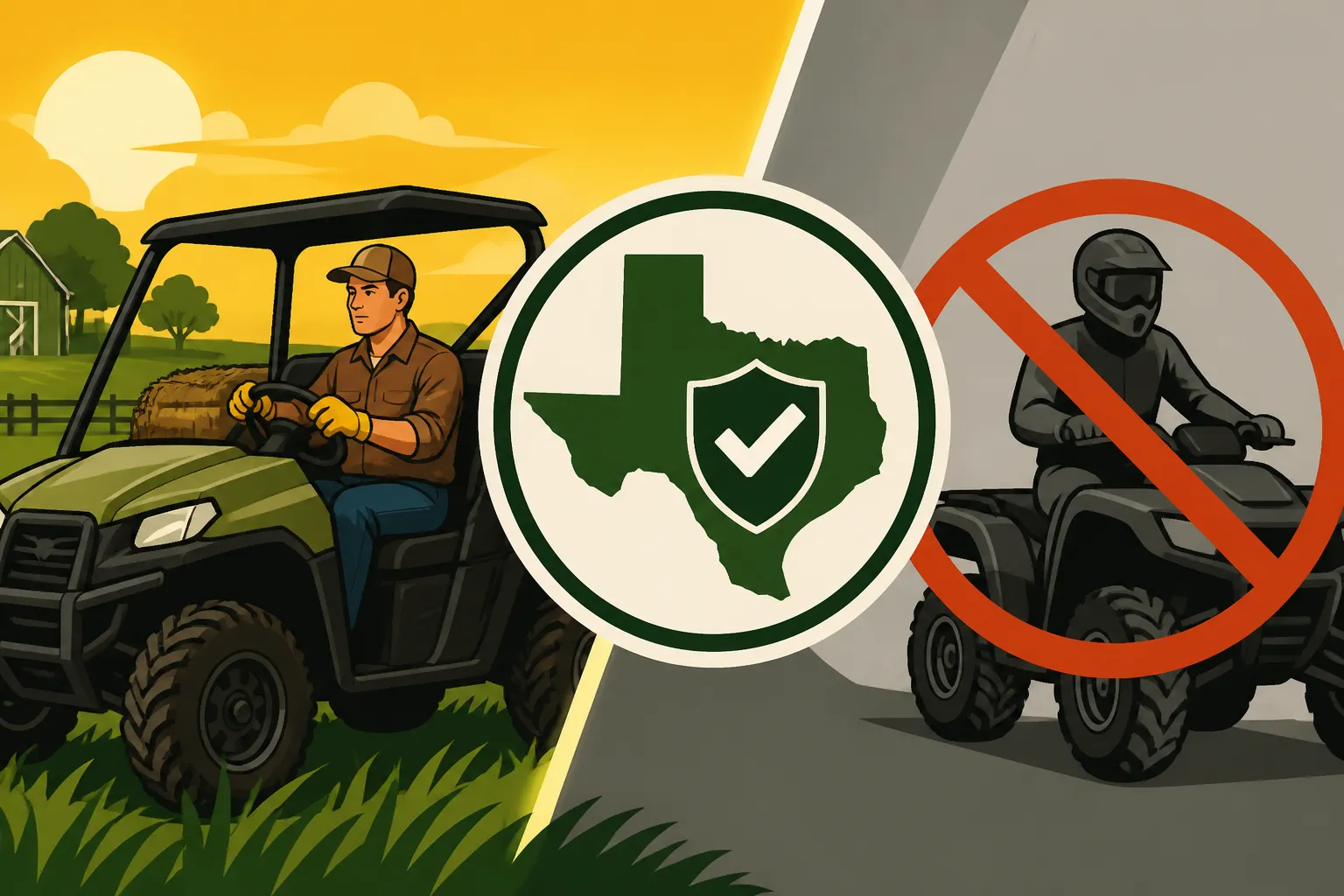
Now, let's talk about the specific exception that can bring a sigh of relief to many ranchers, farmers, and landowners across Texas. The state of Texas understands that an OHV is often not just a recreational toy, but a vital piece of equipment for daily operations on farms, ranches, and timberlands. Hauling feed, checking fences, moving tools, or tending to livestock often requires traversing both private land and, occasionally, short stretches of public roads or highways. Recognizing this practical necessity, Texas law provides a limited exemption to the helmet rule when an OHV is being operated for a legitimate "agricultural purpose."
This exemption is a common-sense provision that acknowledges the unique role OHVs play in the agricultural sector. Imagine trying to quickly get from one pasture to another, or from your barn to a field on the other side of a county road, while loaded down with equipment. Having to stop, put on a helmet, take it off, put it back on, and so on, for very short trips between parcels of land or to access different parts of your operation, would be incredibly impractical and inefficient. The agricultural exemption cuts through this red tape, allowing those actively engaged in farm work to perform their duties more effectively without compromising safety in ways that aren’t really relevant to their task.
It's important to stress that this isn't a blanket "no helmet needed on the farm" rule. It's specifically tailored to situations where the OHV is actively being used for a bona fide agricultural task, and often when those tasks require brief travel on public roads. This exemption doesn't magically make riding without a helmet safe, nor does it apply to joyriding or recreational use on public roads, even if that road happens to be near a farm. It's a precise legal carve-out, and understanding its exact parameters is crucial for any rural landowner or worker. Misinterpreting this exemption could lead to fines, or worse, serious injury.
The Rationale Behind the Exemption
The legislative intent behind the agricultural exemption is rooted in the economic and logistical realities of farming and ranching. Texas boasts a massive agricultural industry, from sprawling cattle ranches to cotton fields and timber operations. For these operations to function efficiently, OHVs like ATVs and UTVs are indispensable. They can navigate rough terrain that traditional trucks might struggle with, carry tools and supplies, and provide quick access to remote areas of a property. Interrupting these tasks with constant donning and doffing of safety gear for short, low-speed road crossings would genuinely impede productivity.
Consider a rancher needing to mend a fence line that spans across a county road. Driving a UTV, perhaps equipped with tools from SuperATV for enhanced utility and durability, to the exact spot is far more practical than driving a truck, parking it, and walking the rest of the way with heavy gear. The exemption recognizes that in these specific, work-related scenarios, the nature of the task and the typical speeds involved are different from those encountered during recreational riding. The focus shifts from high-speed trail adventure to utilitarian transport.
Furthermore, this exemption aligns with other agricultural allowances in Texas law, such as those related to vehicle registration or certain tax benefits for farm equipment. It's part of a broader framework designed to support the state's agricultural backbone. However, this support comes with precise definitions and conditions to prevent abuse and ensure that the spirit of the law – enabling practical farm work – is upheld, rather than providing a loophole for general helmet avoidance. It's about proportionality and recognizing the unique operational demands of agriculture.
How This Exemption Differs from Other Road Rules
It's absolutely critical to understand that the agricultural helmet exemption is a very specific carve-out and does not automatically make your OHV street legal for other purposes. Texas generally does not allow OHVs on public roads. Period. There are very few exceptions, such as crossing a road, specific low-speed county roads in certain counties, or for emergency services. The agricultural use exemption primarily relates to how you operate your OHV when you are already legally allowed to be on a public road for farm work. [Texas Agricultural Exemption for ATVs on Roads] details many of these other rules.
For example, simply because you're using your ATV for farm work doesn't mean you can drive it 20 miles down a state highway to the feed store without a helmet. That's a different scenario altogether, likely violating multiple laws regarding OHV road use and potentially still requiring a helmet. The agricultural helmet exemption typically applies when an OHV is performing a specific, localized farm task that necessitates a brief, low-speed trip on a public road where OHV use is otherwise conditionally allowed (e.g., crossing a road at a 90-degree angle, or traveling on a public farm road). It’s not a get-out-of-jail-free card for all road travel.
Another key difference is the intent. Recreational road riding, even if permitted in certain very limited areas, would still generally fall under the standard helmet laws. The agricultural exemption zeroes in on the purpose of the ride – it must be directly related to the production of crops, livestock, or timber. This distinction is vital, as law enforcement officers will look at the specific circumstances of your operation to determine if the exemption truly applies. If you’re not actively engaged in farming or ranching duties, then the standard helmet rules almost certainly apply, along with all the other restrictions on OHV road use.
Defining "Agricultural Use" in Texas
This is where the rubber meets the road, so to speak. For the helmet exemption to apply, your OHV use must unequivocally fall under the definition of "agricultural purpose." Texas law is fairly specific about what constitutes agricultural use, and it's not as broad as simply living on a piece of land in the countryside. It relates directly to the business of producing and harvesting crops, raising livestock, and timber operations. If you're using your OHV to tend to your personal garden or drive to a fishing spot on your property, that's not typically considered an "agricultural purpose" in the eyes of the law for this exemption.
The key is often commercial intent or the scale of the operation. This could include, but isn't limited to, transporting feed or water to animals, inspecting fences and irrigation systems, moving implements or supplies between fields, herding livestock, or performing maintenance on agricultural machinery. Think of the daily tasks that keep a farm or ranch productive and profitable. Using your UTV, perhaps outfitting it with heavy-duty components from SuperATV to handle the rigors of farm life, for these specific tasks is what the law generally aims to cover with the exemption. It’s about functionality and necessity within a working agricultural environment.
It’s not just about what you’re doing, but also where you’re doing it. The exemption comes into play when these agricultural tasks lead you onto a public road for a short, necessary duration. If you’re exclusively riding on private property, the state helmet law typically wouldn’t apply to an adult rider anyway, though landowners might still require it for safety or insurance reasons. The agricultural exemption is specifically designed to address the intersections of public roads and agricultural operations, providing a pragmatic solution for unavoidable transitions.
Examples of Exempt Agricultural Activities
Let's paint some clearer pictures of what might qualify as "agricultural use" for the helmet exemption:
- Ranch Operations: A rancher drives their ATV down a half-mile stretch of a low-traffic county road to move a small herd of cattle from one pasture to another, or to check on a water well that's on a separate parcel across the road. They are actively engaged in livestock management.
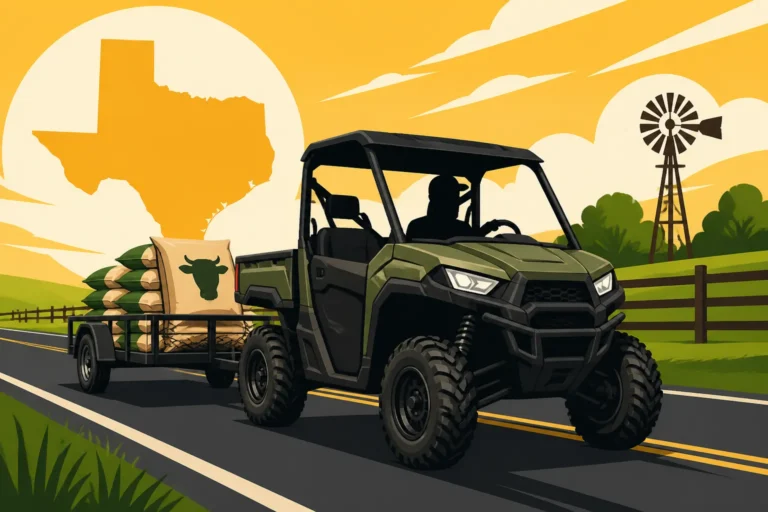
- Crop Farming: A farmer uses their side-by-side to transport tools and bags of fertilizer from their barn across a short public easement to a different field during planting season. The OHV is an integral part of their crop production process.
- Timber Management: An individual involved in timber harvesting drives their UTV for a few hundred yards on an unpaved county road to access a logging area that abuts the road, carrying chainsaw equipment and safety gear. Their activity is directly related to managing timber.
- Fence Repair/Inspection: A property owner whose large agricultural property is bisected by a public road uses their OHV to quickly move along the fence line, stopping periodically to make repairs or inspect for damage, necessitating brief use of the road shoulder or crossing the road.
In these scenarios, the OHV is being used as a utility vehicle, a workhorse, rather than a recreational machine. The speed is generally low, the distance on the public road is typically minimal, and the purpose is clearly defined by agricultural necessity. This is distinct from, say, riding your quad for fun on a county road that happens to pass through farmland. The intent and nature of the activity are paramount when claiming this exemption. It's less about the vehicle itself and more about the role it's playing in the moment.
What Does Not Qualify as Agricultural Use
Just as important as knowing what does qualify, is understanding what doesn't. The agricultural exemption is not a loophole for general helmet avoidance. Simply living in a rural area or owning some land doesn't automatically mean all your OHV use is "agricultural." Here are some common situations that typically would not qualify for the helmet exemption on public roads:
- Recreational Riding: Taking your ATV out for a spin on a county road just for fun, even if that road is surrounded by fields or ranch land, would not be covered. This is considered recreational use, and the standard helmet laws would apply if OHV road use were even permitted in that area (which it generally isn't).
- Commuting to Town: Using your UTV to run errands into the nearest town, such as going to the grocery store or post office, even if you’re a farmer, does not constitute agricultural use for this exemption. This is personal transportation, not direct farm work.
- Hunting or Fishing Access: Driving your OHV down a public road to reach a hunting blind or a fishing spot, even on your own property, typically falls under recreational activity. While these activities occur in rural settings, they are not directly related to the production of crops, livestock, or timber.
- Property Maintenance (Non-Agricultural): Mowing a large lawn, hauling garden tools, or transporting materials for a home improvement project, while certainly "work," doesn't usually meet the legal definition of agricultural production for this exemption. This distinction is crucial; it must be about the direct business of farming or ranching.
The key takeaway is that the activity must be a core part of operating a farm, ranch, or timber business. If the primary purpose of your trip on a public road with your OHV isn't directly supporting these operations, then you should assume the standard helmet laws (and strict OHV road restrictions) are in full effect. Always err on the side of caution, and if there's any doubt, wear your helmet. It's better to be safe than sorry, and to avoid a citation or, worse, an injury.
Requirements for Claiming the Helmet Exemption
Okay, so you believe your use case falls squarely into "agricultural purpose." Great! But it’s not just about the intent; there are specific conditions that must be met to legitimately claim the helmet exemption when operating an OHV on a public road in Texas. This isn’t a wink and a nod situation; it’s a legal provision with rules that need to be followed meticulously. Failing to meet these requirements can not only result in a citation but also demonstrates a lack of understanding of the law, which isn't a good look if you ever find yourself in an accident scenario.
First and foremost, the OHV itself must be clearly identifiable as being used for an agricultural purpose. This often means it should be equipped in a way that visibly supports its utility role. Think about attachments like sprayers, small trailers for hauling feed, toolboxes, or even just the general "farm-worn" appearance of a machine that clearly works for a living. While the law doesn't provide an exhaustive list of required modifications, a beat-up sport quad with no visible farm implements is less likely to convince a law enforcement officer of its agricultural intent than a UTV loaded with fencing supplies.
Secondly, and perhaps most critically, the operator must be directly engaged in agricultural work at the time of operation on the public road. This means you can't just be heading out to town and claim you're going to "think about farming." You should be actively performing a task, or on the way to or from performing a task, that is integral to your agricultural operation. If an officer pulls you over, they might ask about your destination, your purpose, and what you're carrying. Your answers should clearly and consistently point to legitimate farm or ranch work.
Proving Your Agricultural Intent
When interacting with law enforcement, being able to articulate and demonstrate your agricultural intent is crucial. It’s not enough to simply state "I'm farming." You need to be prepared to show that your OHV use aligns with the exemption. This could mean:
- Visible Equipment: As mentioned, having visible tools, supplies (feed, seed, fertilizer), or implements on your ATV or UTV that are clearly related to farm work. A heavy-duty cargo box from SuperATV filled with fence repair tools or veterinary supplies would be a strong indicator.
- Route and Destination: Your travel path should be logical for connecting different parts of your agricultural property or accessing specific fields, barns, or pastures. A long detour for a non-farm purpose would undermine your claim.
- Time of Day/Year: While not a strict legal requirement, operating a UTV at 2 AM for fence repair might raise fewer eyebrows in a specific agricultural context than a leisure ride at the same time. Similarly, certain activities are seasonal.
- Verbal Explanation: Be ready to clearly and politely explain what agricultural task you are performing or traveling to/from. Describe your property, your operation, and how the OHV fits into your work flow.
It’s always a good idea to carry some form of identification that links you to your agricultural operation, such as a business card for your ranch, or an agricultural tax exemption number if you have one. While not legally mandated for the helmet exemption specifically, these can help establish your credibility and role as a bona fide agricultural worker. Remember, the burden of proof is often on the individual claiming an exemption, so being prepared can save you a lot of hassle.
Other Conditions for Road Use
Beyond the helmet exemption, remember that even with agricultural use, your OHV's presence on a public road is still subject to other specific rules and conditions. The helmet waiver doesn't give you free rein to disregard all other traffic laws or OHV restrictions.
Here’s a quick overview of some other general rules to keep in mind when an OHV is permitted on a public road for agricultural use:
| Condition | General OHV Road Use (Limited) | Agricultural Use Exemption (Roads) |
|---|---|---|
| Helmet Required | YES (for riders under 18, and generally for all on public roads) | NO (if actively performing agricultural duties, all other conditions met) |
| Orange Flag Required | YES (often 6 feet above ground) | YES (same requirement for visibility) |
| Headlights/Taillights | YES (if riding at night or low visibility) | YES (often required even in daylight for visibility on roads) |
| Crossing Roads | Permitted at 90-degree angle, full stop, yielding traffic | Permitted at 90-degree angle, full stop, yielding traffic |
| Distance on Road | Very limited, often less than 25 miles on certain roads | Limited, typically short distances connecting farm parcels |
| Insurance | Not state-mandated for OHVs (but always recommended) | Not state-mandated for OHVs (but always recommended) |
Note: This table summarizes general rules and specific conditions can vary by local ordinance and road type.
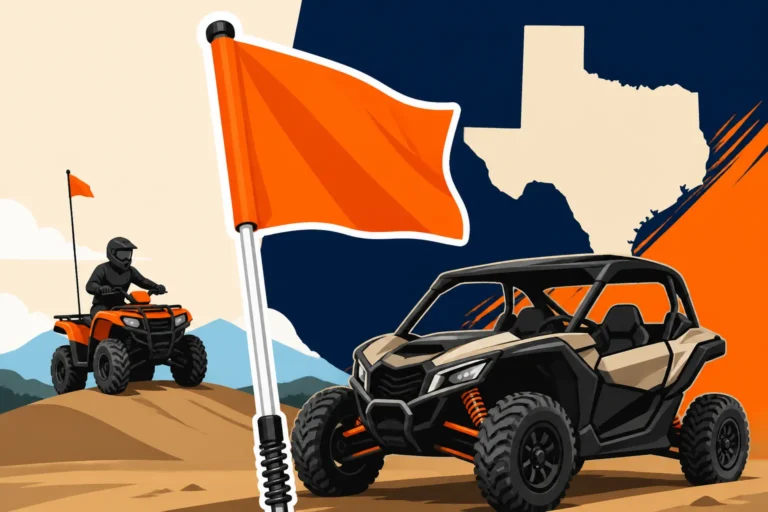
The requirement for an orange safety flag, typically mounted six feet above the ground, is particularly important. This flag significantly increases your visibility to other motorists, which is crucial for safety when operating a slower-moving OHV on a road where cars might be traveling at higher speeds. [The 6-Foot Orange Flag Texas Requires] is not optional. You also need to ensure your OHV has functional headlights and taillights, even during the day, to enhance visibility. These are basic safety measures that protect you and others sharing the road. Always treat public road use with an OHV, even for agricultural purposes, with the utmost caution and adherence to all applicable laws.
Beyond Helmets: Other Agricultural OHV Road Rules
Understanding the helmet exemption for agricultural use is a critical piece of the puzzle, but it's far from the only rule you need to know when operating an OHV on Texas roads for farm work. The helmet waiver does not grant you carte blanche to ignore other safety and traffic regulations. In fact, due to the unique nature of OHVs and their primary design for off-road use, there are a host of other specific rules that apply when they venture onto public thoroughfares, even for a quick trip between pastures. Navigating these rules successfully means staying safe and avoiding citations.
One of the most important aspects is the limited scope of road access. Texas law is incredibly restrictive about where and when an OHV can be on a public road. While the agricultural exemption allows for certain road use, it's typically for very short distances and specific types of roads. You generally cannot just take your ATV down the highway to the next county. Often, this road use is confined to crossing roads at a 90-degree angle, riding on certain farm-to-market roads, or within master-planned communities if specifically authorized. [Texas Rules for Riding a Farm Road] explains some of these limitations in detail. It’s all about necessity and minimal impact on public traffic.
Furthermore, proper lighting and visibility equipment are non-negotiable. Even if you're riding in broad daylight for agricultural purposes, an OHV needs to be as visible as possible to other motorists. This means having working headlights and taillights, and as we discussed, the tall, orange safety flag. Many an unsuspecting farmer has been pulled over for simply not having their visibility flag flying high. These devices aren't just for night riding; they're essential for making sure that fast-moving cars can spot your slower-moving OHV from a distance, giving them ample time to react and ensure everyone’s safety.
Visibility and Safety Equipment
When you're operating your OHV on a public road, even briefly for farm work, becoming a highly visible target for other drivers is paramount. OHVs are smaller, often slower, and sit lower than typical passenger vehicles, making them harder to spot, especially around curves or over hills. This is why Texas law places such emphasis on specific visibility requirements, even when the helmet rule might be waived.
- Orange Safety Flag: This is a universal requirement for most OHV road use in Texas. The flag must be at least 6 feet above the ground, making your machine visible over hedges, fences, and even other vehicles. It's a simple, yet incredibly effective, piece of safety gear that you absolutely cannot skip. Many farmers attach these to the rear of their UTVs or ATVs where they can clearly extend upwards.
- Headlights and Taillights: Your OHV must be equipped with working headlights and taillights. While these are obviously crucial for nighttime operation, Texas law often mandates their use even during daylight hours when on public roads. This "lights on" policy further enhances your visibility to oncoming and following traffic, regardless of how bright the sun is shining.
- Reflectors: Many OHVs come with factory-installed reflectors, but ensuring they are clean and intact can add another layer of visibility, especially from the side. Some farmers even add extra reflective tape to their machines for enhanced safety.
- Proper Signage (Optional but Recommended): While not legally required, some agricultural operations will place "Slow Moving Vehicle" triangles or placards on their OHVs when operating on public roads. This isn't just a courtesy; it's a clear signal to other drivers to exercise caution and reduces the likelihood of rear-end collisions.
Neglecting any of these visibility requirements, even if you're just traveling a hundred yards to the next field, can not only lead to a ticket but significantly increase your risk of an accident. Always assume that if you're on a public road, your OHV needs to be as bright and noticeable as possible.
Crossing and Traveling on Public Roads
The agricultural exemption for helmets often goes hand-in-hand with the very limited allowances for OHVs on public roads. Understanding these precise road rules is just as important as knowing when you can skip the helmet.
- Crossing Roads: This is the most common and widely allowed form of OHV road use for agricultural purposes. You can cross a public road, street, or highway at a 90-degree angle to the roadway. Before crossing, you must come to a complete stop, yield to all approaching traffic, and only proceed when it is safe to do so. This is treated much like stopping at a stop sign or yielding to cross-traffic. [Crossing a Highway on an ATV in Texas] details this. This rule ensures that your OHV quickly enters and exits the traffic flow, minimizing disruption and danger.
- Limited Travel on Certain Roads: In some very specific instances, primarily on low-traffic county roads or farm-to-market roads, an OHV may be operated for a limited distance for agricultural purposes. The law often specifies that these roads must be posted for a certain speed limit (e.g., 35 mph or less) or be located in counties with populations below a certain threshold that have opted into allowing such use. This is not a universal right and varies significantly by county and specific road type. Always check with your local county sheriff’s office or the Texas Department of Transportation for precise local regulations.
- Daylight Hours Only: Most agricultural road use exemptions, particularly for travel, are restricted to daylight hours. Operating an OHV on a public road in the dark, even for farm work, adds a layer of risk that state law generally tries to avoid. This means planning your movements during daylight hours if you anticipate needing to use public roads.
It cannot be overemphasized that even for agricultural use, OHVs are generally not designed for road travel. Their tires, suspension, and steering are optimized for off-road terrain, making them less stable and predictable on paved surfaces. Always drive cautiously, maintain low speeds, and be acutely aware of your surroundings and other vehicles when on a public road.
Potential Pitfalls and Misunderstandings
Even with the best intentions, it's incredibly easy to misinterpret or misuse the agricultural helmet exemption, leading to potential fines, legal trouble, or, worst of all, serious accidents. This isn't a rule designed to be broadly applied to every situation where an OHV is on a farm; it's a very specific allowance. Many common assumptions people make about rural life and vehicle use simply don't align with the legal definitions. Being aware of these common pitfalls can save you a lot of headaches and ensure you're always operating within the bounds of Texas law.
One major misunderstanding revolves around the "private property" aspect. Some landowners incorrectly assume that because their property is large or rural, any road use that touches their property is automatically exempt or falls under different rules. While a helmet might not be required for adults solely on your own private land, the moment your wheels touch a public road, even briefly, the rules change dramatically. The agricultural exemption only waives the helmet for very specific road use, not for all private property riding that happens to be near a public road. It's the public aspect of the road that triggers the law.
Another pitfall is assuming the exemption covers all people on the OHV during agricultural use. While the operator might be exempt, laws regarding passengers, especially minors, can be different. Always check the specific wording of the statute, as safety regulations for children, regardless of agricultural context, are often stricter. [Texas Passenger Rules on an ATV] and [Texas Helmet Law for UTV Drivers] are separate considerations. Don’t let a perceived exemption for yourself inadvertently put a younger rider at risk or in violation of other safety laws.
Common Misinterpretations of "Agricultural Purpose"
As we’ve discussed, the definition of "agricultural purpose" is often narrower than people realize. Here are some frequent misinterpretations:
- Hobby Farming vs. Commercial Agriculture: If you have a few chickens and a vegetable patch for personal consumption, that's a hobby. While valuable, it generally doesn't meet the commercial scale or intent often implied by "agricultural purpose" for legal exemptions. The law typically looks at operations that are engaged in the business of producing crops, livestock, or timber.
- Property Management vs. Agricultural Production: Using an OHV to manage your personal property, such as clearing brush, moving firewood, or performing general landscaping, while productive, often falls under general property maintenance, not "agricultural production." This is a crucial distinction that can invalidate the exemption.
- Incidental Use: You might drive your UTV across a public road to get to a friend's property where you sometimes help with farm work. If the primary purpose of that specific trip isn't directly supporting your own bona fide agricultural operation, the exemption might not apply to you. The use must be direct and intentional for your agricultural work.
- "Anything on a Ranch": Just because you live on a ranch doesn't mean every trip on an OHV is for an "agricultural purpose." Going to check your mailbox on a public road, for example, is personal travel, not farm work. The context of the specific trip matters.
Always be honest with yourself about the true nature of your OHV activity. If you’re unsure, it’s always safer to wear a helmet, or avoid public roads altogether unless absolutely necessary and legally permitted.
Consequences of Misusing the Exemption
The consequences of misusing the agricultural helmet exemption, or any other OHV road rule, can range from inconvenient to severe.
- Fines and Citations: The most immediate consequence is typically a Class C misdemeanor, which can result in a fine. While not a huge sum, it’s an unnecessary expense and a mark on your record. [Texas Fines for Illegal ATV Road Use] outlines some of these penalties.
- Vehicle Impoundment: In some cases, law enforcement might have the authority to impound your OHV if it's being operated illegally on public roads. This can lead to significant impound fees, storage costs, and the hassle of retrieving your machine.
- Increased Insurance Premiums/Claims Denial: If you're involved in an accident while illegally operating your OHV on a public road, or while misusing an exemption, your insurance company might deny your claim. This means you’d be solely responsible for medical bills, property damage, and potential liability, which can quickly amount to tens or hundreds of thousands of dollars. Even if your claim is paid, a violation can lead to substantially higher premiums in the future.
- Personal Injury: The most serious consequence, of course, is personal injury. The helmet laws exist for a reason. Operating without one, especially if you crash, dramatically increases your risk of severe head trauma, brain injury, or even death. No amount of convenience is worth risking your life or livelihood.
Understanding and respecting the boundaries of the agricultural helmet exemption is not just about avoiding legal trouble; it’s fundamentally about ensuring your safety and the safety of those around you. When in doubt, wear the helmet. It’s a small price to pay for peace of mind and protection.
Disclaimer
This article is for general informational purposes only and does not constitute professional advice. Laws, prices and regulations vary by location and change over time. Consult a qualified professional for guidance on your specific situation.