Guadalupe River Counties and the Barrier Island Test
There's a lot of confusion out there about where you can and can't ride your ATV or UTV in Texas, especially when it comes to public roads. Many folks hear whispers about specific county rules or exceptions, like the elusive "Guadalupe River Counties and the Barrier Island Test," and wonder if it's their golden ticket to street-legal fun. This guide is here to untangle the web of Texas law, local ordinances, and specific exemptions to help you understand precisely what the "Barrier Island Test" means, who it applies to, and whether your Guadalupe River county ride is affected.
The Core Challenge: Texas's General Stance on OHVs on Public Roads
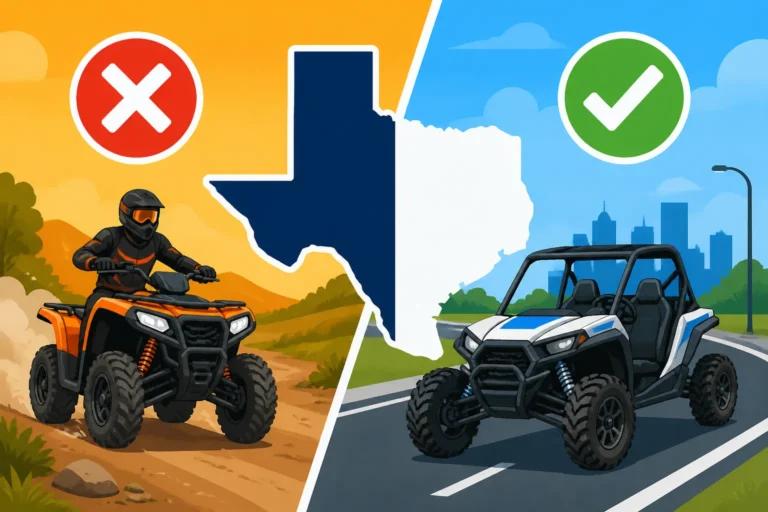
Let's just get this out of the way upfront, because it's the biggest hurdle for most off-road enthusiasts in Texas: generally speaking, you cannot ride your ATV, UTV, or other Off-Highway Vehicle (OHV) on public roads in the Lone Star State. I know, I know, it's a huge bummer for many of us who just want to get from Point A to Point B without having to load up a trailer. This isn't just a suggestion; it's enshrined in state law, specifically Chapter 663 of the Transportation Code, which defines what an OHV is and strictly limits its operation to off-highway settings.
Why Street-Legal Conversions are Usually Futile in Texas
You might be thinking, "Well, I'll just add some turn signals, a horn, and a rearview mirror, and I'll be good to go!" And bless your heart for trying, because that's what many of us would intuitively do. Unfortunately, Texas law doesn't really work that way for OHVs. Unlike some other states where you can technically convert an ATV or UTV to be street-legal with a few modifications and an inspection, Texas generally doesn't offer that pathway for machines that started life as off-highway vehicles. Adding a full windshield, DOT-approved tires, or even a fancy SuperATV light bar won't magically transform your quad or side-by-side into a street-legal vehicle in the eyes of the Texas Department of Motor Vehicles (TxDMV) or local law enforcement. It's a fundamental classification issue: if it's an OHV, it stays an OHV for most purposes regarding public roads. For more on this, check out [Why Modifying an ATV Will Not Make It Street Legal].
The law defines what counts as a "motor vehicle" that can be titled and registered for road use, and most ATVs and UTVs simply don't fit that definition, even with aftermarket parts. This can be incredibly frustrating, especially if you see OHVs on roads in other states or even certain areas within Texas and wonder why your machine can't do the same. It's not about the accessories; it's about the vehicle's initial manufacturing and legal designation.
The Limited Exceptions to the Road Ban
Now, before you lose all hope and chain your UTV to the barn, there are some very specific, narrowly defined exceptions where you might find an OHV operating legally on a public road in Texas. These aren't widespread, "ride anywhere" passes, but rather specific situations or locations. The law allows for things like agricultural use, utility work, emergency services, or crossing a road at a 90-degree angle to get to another off-road area. There are also exceptions for master-planned communities and certain types of roads within cities or counties that have opted in.
These exceptions are often what lead to confusion, as people see a rancher driving their side-by-side down a county road and assume everyone can. However, that rancher is likely operating under the agricultural exemption, which comes with its own set of rules, such as needing to display a slow-moving vehicle emblem and only traveling short distances for specific purposes. It's not a free pass for a joyride. Understanding these nuances is key to avoiding a hefty fine or worse. We'll delve deeper into some county-specific exceptions as we explore the "Barrier Island Test" further, because that's where some of the more complex rules lie. You might also find it helpful to read [The Two Exceptions to the Texas Road Ban] for a more general overview.
Unpacking the "Barrier Island Test" and Its Origins
The "Barrier Island Test" sounds like something out of a science fiction movie, but in Texas OHV law, it refers to a very specific set of criteria that allows certain coastal counties to permit the operation of OHVs on their public roads. This isn't a statewide rule; it's a carve-out designed to address the unique recreational and transportation needs of specific geographic areas. It emerged as part of House Bill 1548, enacted in 2019, which brought significant changes to Texas's OHV laws, including how counties could regulate their use. Before this bill, the rules were even more restrictive, and many coastal communities struggled to accommodate OHV use that was common for beach access or local travel.
What Exactly is the Barrier Island Test?
At its heart, the "Barrier Island Test" is a set of conditions a county must meet to be able to pass an ordinance allowing OHV use on certain public roads within its jurisdiction. These conditions are directly tied to the county's geography and population density. Specifically, the county must:
- Be located on a barrier island or have a substantial portion of its land area composed of a barrier island.
- Have a population of less than 37,000 people. This is a critical threshold.
- Have a significant amount of its economy tied to beach and coastal recreation, where OHVs play a role.
If a county meets these criteria, its Commissioners Court can then enact an ordinance to permit the operation of OHVs on public roads with a posted speed limit of 35 miles per hour or less. Even then, there are usually additional rules about lighting, flags, and speed, and it's almost always restricted to daylight hours. The spirit of the law is to help small, coastal communities that rely heavily on beach access and tourism, where OHVs are often a practical mode of transport for residents and visitors alike on the sand itself.
It's really important to stress that this isn't a free-for-all. Even in a county that passes the test and adopts an ordinance, you're not going to be cruising your UTV down a state highway at 60 mph. These permissions are typically confined to specific low-speed streets or paths that directly serve coastal access or very local community needs. They often go hand-in-hand with beach riding rules, which themselves can be quite complex.
How House Bill 1548 Changed Things for Some Counties
Prior to House Bill 1548, Texas law was even more rigid regarding OHVs on roads. The changes introduced by HB 1548 provided a much-needed mechanism for certain types of counties to address their unique circumstances. Before 2019, if a county wanted to allow OHVs on roads, it was often in a legal gray area, leading to inconsistent enforcement and confusion for riders and law enforcement alike. The bill clarified the definition of an OHV, set forth the general prohibition on public roads, and then detailed the specific exceptions we're discussing, including the barrier island provisions.
The intent was to create a framework that acknowledged the practical realities of certain communities without opening the floodgates for OHV use on all roads statewide. It was a recognition that a one-size-fits-all approach wasn't working for places like Galveston Island or some of the more remote coastal areas. So, while it didn't make OHVs street-legal everywhere, it did empower a select group of counties to tailor their local rules within the bounds of state law. This is why you might see OHVs on roads in some parts of Texas but not others, and it's not simply due to differing local opinions, but rather specific statutory allowances. You can learn more about which counties might open their roads by reading [Which Texas Counties May Open Roads].
Guadalupe River Counties: A Special Case or a Misconception?
This is where the direct connection to the "Guadalupe River Counties" often gets fuzzy. When people refer to "Guadalupe River Counties and the Barrier Island Test," there's frequently a misunderstanding of what that phrase actually entails. The "Barrier Island Test" is, as we've established, specifically for coastal counties meeting certain population and geographic criteria. The Guadalupe River, while certainly a significant and beautiful waterway in Texas, is primarily an inland river.
Identifying the Counties Along the Guadalupe River
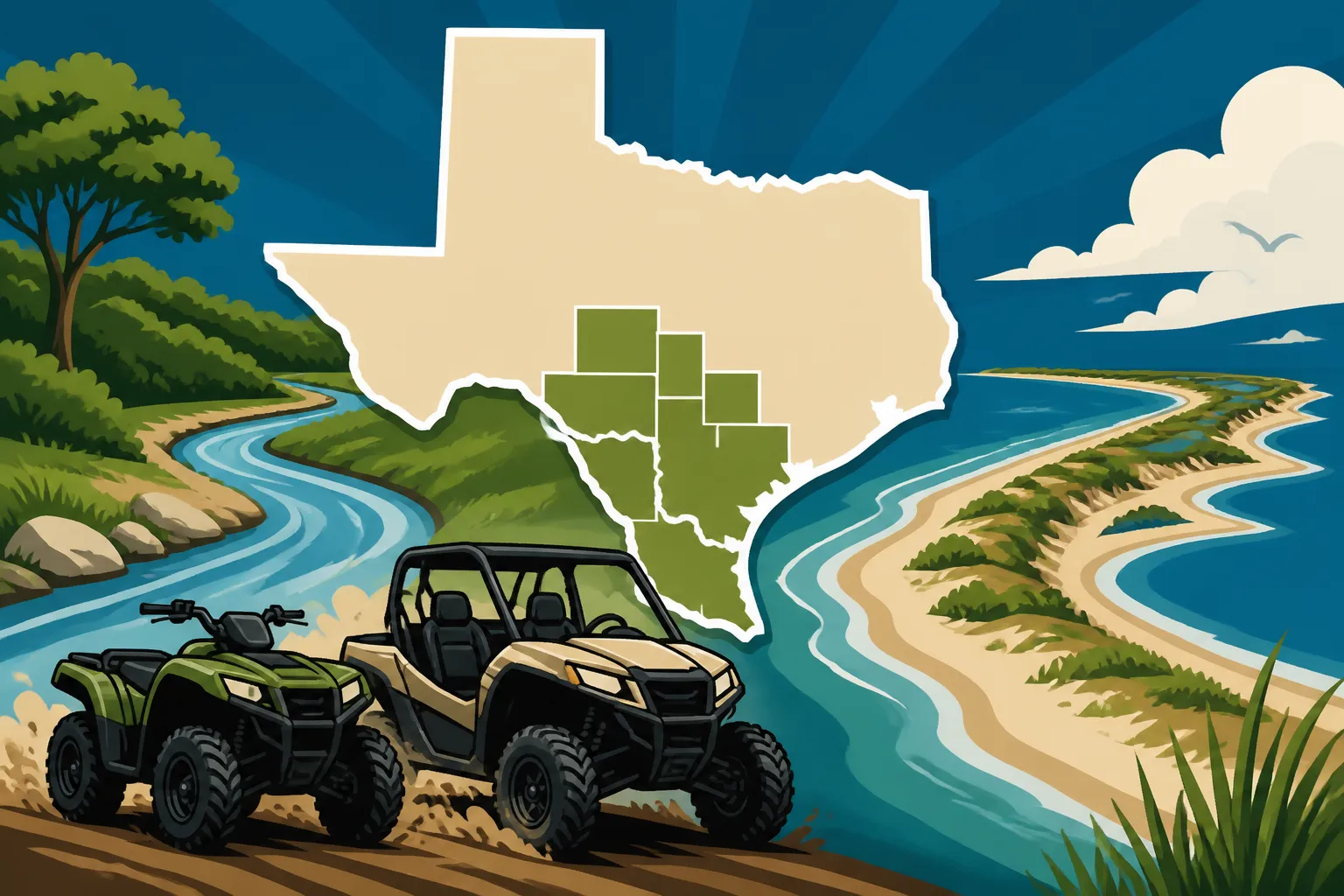
The Guadalupe River originates in Kerr County in the Hill Country and winds its way southeast through several counties, including Kendall, Comal, Guadalupe (yes, there's a county named after the river!), Caldwell, Gonzales, DeWitt, Victoria, and Calhoun, before emptying into San Antonio Bay on the Gulf Coast.
While Calhoun and Victoria counties are coastal or near-coastal, many of the other counties through which the Guadalupe flows – like Comal (New Braunfels, Canyon Lake) or Guadalupe County (Seguin, Cibolo) – are distinctly inland. These inland counties, despite their association with the Guadalupe River, do not meet the geographic "barrier island" criteria of the test. Therefore, the specific provisions of the "Barrier Island Test" would not apply to them.
Connecting the River Counties to the Barrier Island Exception
The confusion likely stems from the fact that a few counties at the very end of the Guadalupe River's journey are coastal. Calhoun County, for instance, which the Guadalupe flows through before reaching the bay, includes parts of barrier islands. However, even within those counties, the "Barrier Island Test" still requires a population under 37,000 and an ordinance passed by the Commissioners Court. So, it's not enough just to be on the coast; you have to be a small coastal county.
Therefore, for the vast majority of counties along the Guadalupe River, the "Barrier Island Test" is simply irrelevant to whether you can ride your OHV on their roads. Inland counties, regardless of how scenic their river access might be, do not qualify under this specific exception. Any road use in these areas would have to fall under one of the other very limited state exceptions (agricultural, utility, crossing, etc.) or a separate, valid local ordinance (which are themselves extremely rare for OHVs outside the specific state-allowed scenarios). This means that a lot of the speculation about riding your UTV freely in, say, Comal County because it's a "Guadalupe River County" is likely based on a misunderstanding of this very specific legal nuance.
Navigating Local Ordinances and State Law for OHV Road Use
This brings us to a crucial point: local rules versus state laws. It's easy to get tangled up trying to figure out which takes precedence. In Texas, state law generally sets the overarching framework for OHV use, including the prohibition on public roads. While cities and counties can pass their own ordinances, these local rules cannot contradict or supersede state law unless the state law itself provides an explicit exception or allowance for local variation. This is precisely what the "Barrier Island Test" and a few other specific provisions in House Bill 1548 did – they created state-level allowances for certain local jurisdictions to make their own rules within defined parameters.
When Local Rules Can't Override State Prohibitions
Let's say a well-meaning city council in an inland Texas town decides they want to boost tourism by allowing UTVs on all city streets. While their intentions might be good, such an ordinance would likely be invalid if it directly contradicted the state's general prohibition on OHVs on public roads and didn't fall under one of the state's recognized exceptions. A police officer in that town would still be within their rights, and likely their duty, to ticket you based on state law, regardless of what a local sign might say. This is a common point of contention and confusion.
It highlights why riders need to be so diligent about understanding the actual statutes, not just hearsay or local rumors. Many people believe that if a town has a golf cart ordinance, that automatically extends to ATVs or UTVs. Not true! Golf carts have their own, separate set of rules and classifications in Texas, and they are not considered OHVs. So, just because you can zip around town in a golf cart doesn't mean your SuperATV lifted Polaris RZR is good to go. The difference is critical, and misunderstandings can lead to fines. Take a look at [What Texas Cities Can and Cannot Allow] for a broader perspective on this dynamic.
Understanding the "Counties Under Thirty-Seven Thousand People" Exception
Beyond the "Barrier Island Test," there's another specific population-based exception that sometimes gets lumped in with river or coastal county discussions: the rule for "Counties Under Thirty-Seven Thousand People." House Bill 1548 also created an exception for any county, regardless of whether it's coastal or has barrier islands, if its population is less than 37,000. These smaller counties can pass ordinances to allow OHVs on certain public roads with a speed limit of 35 mph or less.
This is a much broader exception than the Barrier Island Test, designed to help sparsely populated rural counties where OHVs might be more practical for local travel or access to properties. However, just like the barrier island rule, it's not automatic. The county's Commissioners Court must pass an ordinance. So, simply being in a small county doesn't grant permission; the county has to actively make that choice. You still need to check the local ordinances for that specific small county. This is the exception that often applies to many of the smaller, more rural counties along the upper and middle parts of the Guadalupe River, if they choose to act on it. So, while the "Barrier Island Test" might not apply, the "Counties Under Thirty-Seven Thousand People" rule could be relevant for some Guadalupe River counties further inland, provided they meet the population threshold and have passed a specific ordinance. This level of detail is exactly why you can't just generalize.
Practical Implications for Riders in Affected Areas
So, if you happen to be in one of the very few coastal counties that does meet the "Barrier Island Test" and has passed an ordinance, or a small rural county that has passed one under the 37,000-person rule, what does that actually mean for your riding? It means a limited, conditional permission, not an open invitation to treat all roads like trails. These allowances are typically geared toward specific needs, like accessing a beach or moving between properties on low-speed local roads.
What This Means for Beach and Coastal Riding
For counties that qualify under the Barrier Island Test, the primary benefit often revolves around easier access to beaches or specific coastal zones. Imagine needing to transport gear from a rental house to the beachfront, or simply navigating short distances within a beach community where parking for trucks and trailers is scarce. An OHV can be incredibly convenient in these scenarios. However, even then, there are strict rules. You'll likely need to ensure your OHV has certain equipment – headlights, taillights, brake lights, a horn, and sometimes a flag or rearview mirrors. Speed limits will be enforced, often 15 mph on the beach itself and 35 mph on designated roads. Operating hours might be restricted to daylight, and of course, drinking and driving laws apply just as they would with any other vehicle. It's not uncommon for these ordinances to also require a valid driver's license to operate an OHV on a public road or beach. Before you head out, always verify the specific local rules, as they can differ slightly even between qualifying counties. [Texas Rules for Riding a Beach] has more details on this topic.
Gear and Safety Considerations for Permitted Road Use
Even if you're riding in a legally permitted area, safety remains paramount. While some of the state's helmet laws have specific exceptions (like if you're in an enclosed cab with a seatbelt, common in many UTVs), it's always wise to wear appropriate safety gear. This includes helmets, eye protection, sturdy footwear, and long sleeves/pants. When operating on any public thoroughfare, even a low-speed one, you're sharing the space with other vehicles, pedestrians, and cyclists. The risk of collision is always present.
Beyond personal safety gear, ensure your machine is equipped correctly. While SuperATV offers fantastic aftermarket accessories like durable windshields, robust mirrors, and powerful LED light kits, the key is to ensure they meet any specific requirements outlined in the local ordinance. Some ordinances might specify DOT-approved components for road use. Always keep your machine well-maintained, with properly inflated tires, functioning brakes, and clear visibility. Even on a short, low-speed road segment, defensive driving is crucial. Remember, while the law might allow you to be there, not everyone expects to see an OHV on a paved surface, and being predictable and visible is your best defense.
| Type of Texas County | Population Requirement | Geographic Requirement | OHV Road Use Potential (Ordinance Required) | Typical Road Speed Limit |
|---|---|---|---|---|
| Barrier Island County | < 37,000 | Substantial barrier island land | YES (specific roads only) | 35 mph or less |
| Other Small County | < 37,000 | None | YES (specific roads only) | 35 mph or less |
| Large Coastal County | > 37,000 | Substantial barrier island land | NO (Barrier Island Test not met) | N/A |
| Large Inland County | > 37,000 | None | NO | N/A |
| Guadalupe River Counties (Inland) | Varies | None | Only if population < 37,000 AND ordinance passed | 35 mph or less |
| Guadalupe River Counties (Coastal) | Varies | Barrier island potential | Only if population < 37,000 AND ordinance passed | 35 mph or less |
Disclaimer
This article is for general informational purposes only and does not constitute professional advice. Laws, prices and regulations vary by location and change over time. Consult a qualified professional for guidance on your specific situation.