Roads Posted Thirty-Five or Less in Texas
It's incredibly frustrating when you just want to get your ATV or UTV from point A to point B, maybe to another section of your property or to a nearby trail, only to be met with confusing rules about what's allowed on public roads. Texas law, in particular, can feel like a minefield when it comes to operating off-highway vehicles (OHVs) on paved surfaces. This guide aims to clear up the confusion surrounding riding your quad or side-by-side on public roads posted 35 miles per hour or less, helping you understand the specific exceptions and requirements so you can ride safely and legally without risking a ticket.
Understanding Texas's General Stance on Off-Highway Vehicles on Roads
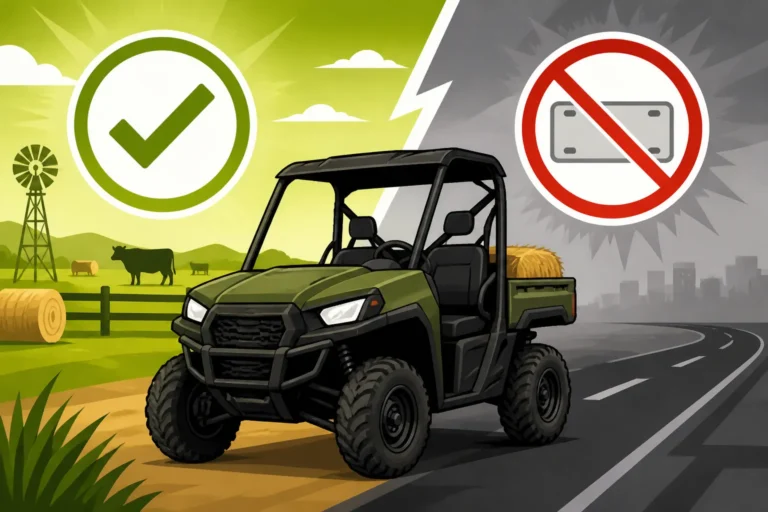
Texas has a pretty clear, and often restrictive, stance when it comes to off-highway vehicles (OHVs) and public roadways. For many riders, the dream of cruising down a quiet county road on their ATV or UTV is often met with the harsh reality that it's generally prohibited. This blanket restriction is designed to protect both OHV operators and other motorists, as these machines aren't typically built for sustained road travel and lack many safety features mandated for traditional street-legal vehicles.
Why Most OHVs Are Banned from Public Roads
The core issue boils down to design and safety. ATVs and UTVs are engineered for uneven terrain, mud, sand, and trails, not for asphalt or concrete. Their suspension systems, tire treads, and steering mechanisms are optimized for off-road performance, which can make them unstable and unpredictable at higher speeds on paved surfaces. Imagine trying to drive a tractor on a highway – it’s not what it was made for. Similarly, OHVs often lack standard safety equipment like turn signals, rearview mirrors, and DOT-approved tires, which are crucial for navigating traffic safely. This fundamental design difference is why [Why Texas Will Not Register an OHV for the Road], making street-legal conversion a complex and often futile endeavor under state law. The state sees these machines as designed for specific recreational or utility purposes away from the main flow of traffic, not as alternative transportation on public roads.
Moreover, the lack of standard safety features means that accidents involving OHVs on public roads can be particularly severe. Riders are often less protected than in a car or truck, and the difference in speed and maneuverability between an OHV and a conventional vehicle can lead to dangerous situations. This isn't just about what the vehicle can or cannot do; it's also about public safety for everyone sharing the road. Texas takes this seriously, aiming to prevent these mismatches in vehicle types from occurring on busy thoroughfares.
What Texas Considers an Off-Highway Vehicle
Before we dive into exceptions, it’s important to know exactly what Texas defines as an OHV. Generally, the state broadly categorizes ATVs, UTVs (or ROVs – Recreational Off-Highway Vehicles), and even dirt bikes as OHVs if they are primarily designed for off-road use and not manufactured for operation on public highways. This definition is crucial because it dictates which laws apply. A typical quad or side-by-side from a brand like Polaris, Can-Am, or Honda will fall squarely into this category. The legal distinction often hinges on the manufacturer's intent and whether the vehicle meets federal motor vehicle safety standards for highway use. If it doesn't have a VIN that qualifies it for regular vehicle registration and titling for street use, it's likely an OHV. This means that even if you've added some aftermarket accessories, like a sturdy SuperATV windshield or heavy-duty bumpers, it doesn't change the vehicle's fundamental classification in the eyes of the law. Your machine's original manufacturing intent is what counts here.
This strict definition means that simply adding a horn, mirrors, or turn signals won't automatically make your machine street legal. Texas law is quite specific about what qualifies a vehicle for road use, and OHVs, by their very nature, usually don't meet those qualifications. For a deeper dive into the overarching prohibitions, you might want to read [Are ATVs Street Legal in Texas?]. This foundational understanding is essential before exploring any specific exceptions that might allow limited road access.
The Specific Exception for Roads Posted Thirty-Five Miles Per Hour or Less
While the general rule in Texas is "no OHVs on public roads," there are specific, limited exceptions. One of the most frequently discussed, and often misunderstood, is the ability to operate an OHV on certain low-speed roadways. This exception isn't a free pass to drive anywhere under 35 mph; it comes with its own set of strict conditions and limitations. It's designed for very specific scenarios, usually where the OHV can blend more safely with slower-moving local traffic.
Where This Rule Applies
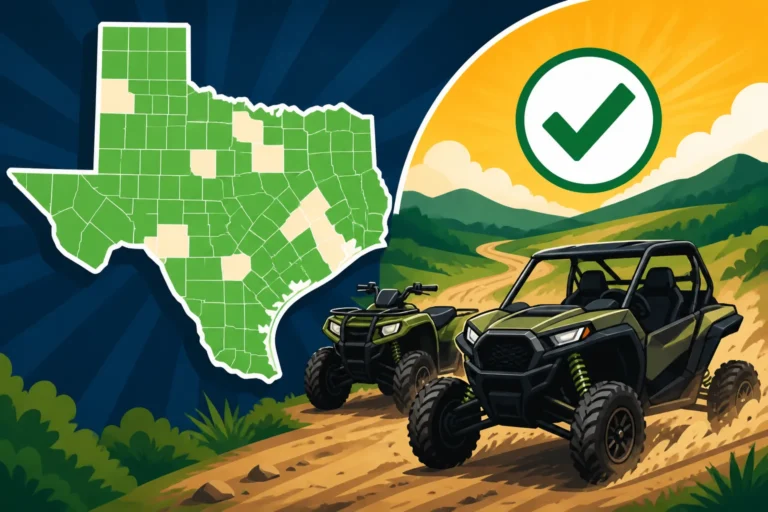
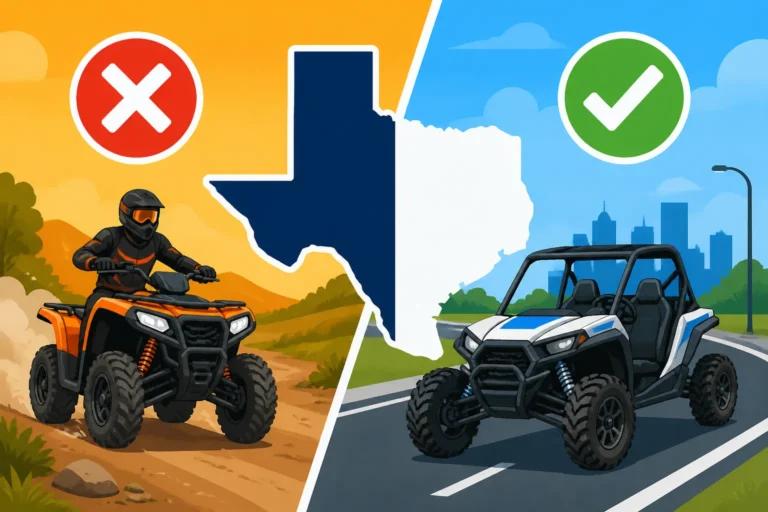
This specific exception allows for OHVs to be operated on a public street, road, or highway that has a posted speed limit of 35 miles per hour or less. But here's the critical nuance: this permission is only if the road is located in a county with a population of less than 37,000. Yes, you read that right – it's tied to the county's population. This means that a two-lane county road outside a small town in a sparsely populated West Texas county might be fair game, while an identical-looking road in a bustling suburban county near Dallas or Houston would be strictly off-limits, even if it has the same 35 mph speed limit. This distinction frustrates many riders who see similar roads everywhere but only certain ones are permissible. It’s all about the population density and the presumed traffic volume that comes with it.
Furthermore, this rule is not automatic. While the population threshold is a state-level provision, local jurisdictions within those eligible counties often have the power to further restrict or outright prohibit OHV use on any public road within their boundaries. So, even if your county qualifies, the specific city or town you're in might have its own ordinance. Always check with local authorities, like the county sheriff’s office or the city police department, to understand the precise rules for your area. Assuming an eligible county means every road is open is a common mistake that can lead to fines.
Limitations on the 35 MPH Road Use
Even when you find a road that meets the population and speed limit criteria, there are still significant limitations on how you can use it. This isn't intended for joyriding or long-distance travel. The statute is typically interpreted to allow for crossing or very short-distance travel for specific purposes, such as getting from one part of a ranch to another, or accessing a specific trail system. It’s not meant for commuting or running errands around town. The spirit of the law is to provide flexibility for landowners and residents in rural areas who need to move their OHVs short distances without having to load them onto a trailer.
One of the most important aspects is that even if a road is posted 35 mph or less in an eligible county, it does not mean your OHV is considered "street legal" in the traditional sense. It's a conditional exception, not a reclassification. You still won't be able to register it like a car or truck, and you won't get a regular license plate for it. The general prohibition on OHVs on public roads still stands, with this being a narrow carve-out. For a broader understanding of other specific situations where OHVs might be allowed on roads, refer to [The Two Exceptions to the Texas Road Ban]. Always remember: just because you can use it on a specific road doesn't mean you should without extreme caution and adherence to all safety protocols.
Conditions and Requirements for Riding on Low-Speed Roads
Navigating the exception for roads posted 35 mph or less in eligible counties isn't just about finding the right road; it's also about meeting a host of specific conditions and equipment requirements. Texas law is quite particular about what needs to be in place for an OHV to legally use these limited roadways. Overlooking any of these details can quickly turn a legal trip into a citation. These aren't suggestions; they are mandates designed to enhance safety for everyone on the road.
Mandatory Equipment for OHV Road Use
If you're operating your OHV on one of these eligible low-speed roads, it must be equipped with certain safety features. These are typically the bare minimum to make an off-road machine visible and somewhat predictable to other drivers. You'll need at least one headlamp, one taillamp, and a stop lamp (brake light). While many modern UTVs come with these from the factory, older ATVs might require aftermarket additions. Beyond lighting, you’re also required to have a horn, a muffler to keep noise levels reasonable, and a U.S. Forest Service-qualified spark arrester to prevent wildfires, especially if you're transitioning from private land to public roads. Reflectors on the front and rear are also a good idea, even if not explicitly required for this specific rule, as they increase visibility. A well-equipped UTV might even have a full hard-coat windshield from a company like SuperATV to protect against debris, though a windshield isn't a state requirement for this specific exception.
Another crucial piece of equipment, specifically for agricultural use which sometimes overlaps with these low-speed road exceptions, is a slow-moving vehicle emblem or an orange flag. While the core 35 mph rule doesn't always explicitly state this for general OHV use, if you're moving slowly and are not clearly visible, these additions are essential. For detailed information on broader equipment rules for any permitted road use, consult [Equipment a Texas OHV Needs on a Road]. It’s always better to over-equip for safety than to be caught lacking.
Driver and Passenger Safety Rules
Beyond the machine itself, Texas has rules for the operators and passengers. For anyone under the age of 15, they are generally prohibited from operating an OHV on a public road, even those under the 35 mph exception. This is a strict age limit reflecting the judgment and skill required to safely navigate public thoroughfares, regardless of how slow the speed limit. Adult supervision alone isn't enough to bypass this age restriction on public roads.
Helmets are another critical component of rider safety. Unless the OHV is equipped with a roll cage and seat belts (which would typically apply to UTVs, but not ATVs), every operator and passenger must wear a safety helmet. [Helmet Rules for Texas Riders] offers more detailed guidance on this, but the general rule is simple: if you're on a permitted road, wear a helmet. Furthermore, all passengers must be able to sit in a manufacturer-designed and designated passenger seat. You can't have someone riding on the handlebars or standing in the bed of a UTV; it must be a proper seat meant for a passenger, complete with proper restraints if available. This ensures that any passengers are as secure as possible during movement.
Navigating Local Ordinances and Jurisdictions
Even with the state-level exception for roads posted 35 mph or less in certain counties, the path to legal OHV road use can still be complicated by local ordinances. Texas grants a significant degree of home rule to its cities and counties, meaning they often have the power to create their own, more restrictive, rules regarding vehicle operation within their boundaries. This layered approach to regulation means that what might be legal on one side of a county line could be illegal on the other, or even block-by-block within a city.
The Role of County and City Regulations
While the state law provides a framework, counties with a population of less than 37,000 are allowed to permit OHV use on roads 35 mph or less. However, this isn't an automatic "opt-in" by the county; the county commissioners' court typically needs to pass an ordinance to officially open these roads. Even if a county does so, cities within that county can, and often do, enact their own ordinances that supersede county rules for roads within city limits. This means a rider might be perfectly legal on a rural county road but could face a fine the moment they cross into an incorporated town. This patchwork of regulations is a significant source of confusion for OHV enthusiasts. For more on the powers of local governments, see [What Texas Cities Can and Cannot Allow]. It's a constantly evolving landscape, and checking current local laws is paramount before you even think about hitting the pavement.
For instance, a smaller city might decide that even low-speed OHV traffic poses a safety risk on their residential streets or that it interferes with the character of their neighborhoods. They can then pass an ordinance prohibiting OHVs entirely, regardless of the state's provision for eligible counties. This is why a quick call to the local sheriff's department or city hall is always a good idea. Don't rely on what you think the law is, or what you heard from a friend; get it from the official source for the exact area you plan to ride.
Special Zones and Master Planned Communities
Beyond general city and county ordinances, Texas law also carves out specific provisions for certain types of communities or zones. For example, master planned communities sometimes have their own rules regarding OHV and golf cart use on their private roads, which may or may not align with state or county regulations. These communities, often gated or with uniform covenants, can establish their own rules for residents, which are usually outlined in their community bylaws. While these are typically private roads, if they intersect with or provide access to public roads, the distinction can become blurred.
Another example involves areas with special use permits or environmental sensitivities. While these might not directly relate to the 35 mph exception, they underscore how localized rules can override general state provisions. For example, some parts of the Texas coast have specific beach driving rules, and depending on the area, OHVs may be restricted or require special permits. While you might be tempted to just add some mirrors and a light bar from SuperATV and assume you're good to go, remember that these accessories won't change the underlying legal classification or local prohibitions. The takeaway here is that you cannot make assumptions; the law is highly granular when it comes to OHV road access in Texas.
Safety Considerations and Equipment for Limited Road Use
Even when operating your OHV within the legal exceptions for low-speed roads, safety should always be your absolute top priority. These machines are not cars, and treating them as such on public roads, even quiet ones, can have severe consequences. Responsible operation means not only adhering to the letter of the law but also understanding the inherent risks and taking proactive steps to mitigate them.
Enhancing Visibility and Awareness
The biggest challenge for OHVs on public roads is visibility. They are smaller than cars and trucks, often blend in with backgrounds, and can be harder for other motorists to spot, especially at dawn, dusk, or in bright sunlight. To combat this, always drive with your headlights on, even during the day. Consider adding a bright orange safety flag, mounted high on a whip antenna, especially if you're in an area with rolling hills or blind curves. [The 6-Foot Orange Flag Texas Requires] for some off-road parks is a great idea to adopt for limited road use as well, even if not explicitly mandated for every single road exception. Reflective tape on your machine, helmet, and clothing can also make a significant difference in how quickly other drivers see you.
Beyond equipment, operator awareness is key. Always assume other drivers don't see you. Be extra vigilant at intersections, driveways, and when turning. Make eye contact with drivers whenever possible to confirm they’ve acknowledged your presence. Avoid riding in large groups that might overwhelm other drivers or block traffic. Remember, the goal is to be seen and understood, not to surprise anyone. Your reaction time and awareness are your best defense against unexpected situations on the road.
Defensive Driving and Manufacturer Warnings
Driving an OHV defensively on a public road means anticipating potential hazards and being prepared to react. Because OHVs handle differently than cars (often with a higher center of gravity and more aggressive tires), sudden evasive maneuvers at road speeds can be dangerous. Maintain a safe following distance from other vehicles, and be extremely cautious on gravel shoulders or unpaved sections, as transitioning between surfaces can affect stability. Always respect the posted speed limit, even if your machine can go faster; remember, you're permitted on these roads because they are low speed. Exceeding the limit jeopardizes your legal status and safety.
It’s also crucial to remember that manufacturers universally warn against operating ATVs and UTVs on public roads. These warnings are not just for liability; they reflect real safety concerns about the design and handling characteristics of these machines. Paved surfaces can cause faster tire wear, lead to unpredictable handling, and put undue stress on components not designed for continuous high-speed road use. While you might add some accessories from SuperATV like a beefier skid plate or A-arm guards for off-road protection, these items won't magically transform your OHV into a street vehicle. Always read your owner's manual and heed the manufacturer's recommendations; they are your primary source of safe operation guidelines.
| Feature | Texas Road Use (35 MPH Exception) | Agricultural Use (Farm Roads) | Master Planned Communities |
|---|---|---|---|
| Speed Limit | 35 MPH or less | Any posted speed limit | Varies by community |
| County Pop. | Under 37,000 | No population restriction | No population restriction |
| Local Ordinance | Can be further restricted | Can be further restricted | Specific community rules |
| Headlights | Required | Required | Varies |
| Taillights | Required | Required | Varies |
| Brake Light | Required | Required | Varies |
| Horn | Required | Required | Varies |
| Muffler | Required | Required | Varies |
| Spark Arrester | Required | Required | Varies |
| Helmet (UTV) | Not required if roll cage/seat belt | Not required if roll cage/seat belt | Varies |
| Helmet (ATV) | Required | Not required for farm work | Varies |
| Passenger Seat | Manufacturer-designed | Manufacturer-designed | Varies |
| Age Limit | 15 years old for public roads | Can be younger with supervision | Varies, usually adult |
| "Street Legal" | No, conditional exception only | No, conditional exception only | No, private road use |
Common Misconceptions and Legal Pitfalls
The complexities of Texas OHV laws on public roads naturally lead to a lot of misinformation and misunderstanding. Many riders genuinely believe certain actions will make their machine compliant, only to find themselves facing fines or legal trouble. It’s crucial to separate fact from fiction and avoid common pitfalls that can undermine your ability to ride legally, even on those limited low-speed roads.
The Myth of "Street Legal Kits"
One of the most persistent myths is the idea that purchasing and installing a "street legal kit" will automatically make your ATV or UTV permissible on all public roads in Texas. These kits typically include turn signals, mirrors, horns, and sometimes even DOT-approved tires. While these accessories are necessary for legitimate street-legal vehicles and might help meet some equipment requirements for specific exceptions, they do not, by themselves, change the fundamental classification of an OHV. Texas law is clear: if a vehicle was manufactured for off-road use, adding these aftermarket parts does not reclassify it as a street-legal vehicle. [Why Adding Lights and Mirrors Changes Nothing] is a harsh reality for many. The state looks at the original manufacturer's intent and whether the vehicle meets federal highway safety standards, which most OHVs simply do not.
So, while a kit might make your machine safer and more visible, it won't grant you blanket permission to ride on all public roads, or even make you fully compliant with the conditional 35 mph exception if other criteria (like county population) aren't met. It’s a common mistake that can lead to disappointment and costly fines. Don't invest in these kits with the expectation that they'll solve all your road-riding problems in Texas; they simply won't.
Avoiding Fines and Penalties
Operating an OHV on a public road when it's not explicitly permitted, or without adhering to all the specific conditions of an exception, can lead to significant penalties. In Texas, illegal OHV road use is typically classified as a Class C misdemeanor. While this isn't a felony, a Class C misdemeanor can still result in fines, court costs, and show up on your record. [Texas Fines for Illegal ATV Road Use] can add up quickly, especially if you're also cited for other infractions like not wearing a helmet, lacking proper lighting, or carrying an underage passenger. Beyond the immediate financial impact, repeated offenses can lead to more serious legal consequences.
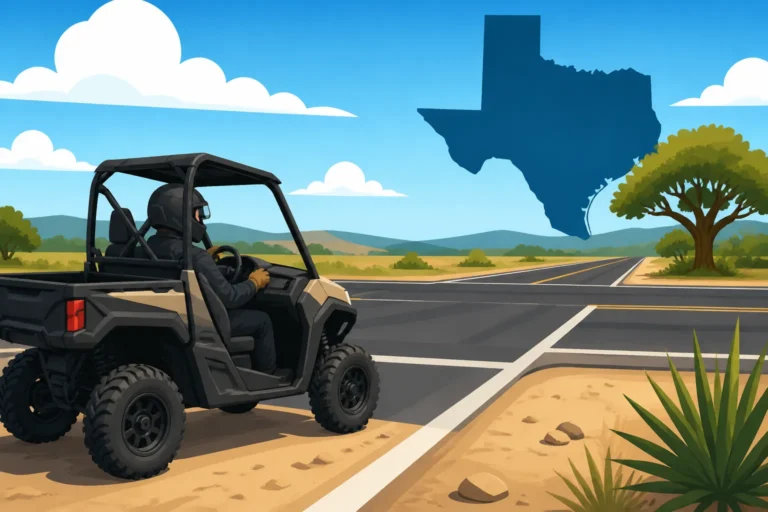
The best way to avoid these pitfalls is to be absolutely certain of the laws in your specific area before you ride on any public road. This means checking state statutes, county ordinances, and city regulations. Don't rely on assumptions, hearsay, or the idea that "everyone else does it." Law enforcement officers in Texas are well aware of the state's OHV laws, and ignorance of the law is never a valid defense. Always err on the side of caution, and if in doubt, keep your OHV strictly off public roads or transport it via a trailer. Even crossing a road improperly, without making a full stop or at a ninety-degree angle as outlined in [Crossing a Texas Road at an Intersection], can incur a penalty. Staying informed and compliant is your best defense.
Disclaimer
This article is for general informational purposes only and does not constitute professional advice. Laws, prices and regulations vary by location and change over time. Consult a qualified professional for guidance on your specific situation.