Texas’s 25 Mile Farm Road Rule
It’s a common frustration for anyone who owns an ATV or UTV in Texas: you’ve got a capable machine, but the thought of taking it on a public road, even for a short hop, fills you with dread about getting a ticket. Texas law is pretty strict when it comes to off-highway vehicles (OHVs) and public streets, but there are a few very specific, narrow exceptions. This guide is going to deep dive into one of those critical exceptions: the 25-mile farm road rule, helping you understand precisely what it means, who it applies to, and how to stay within the bounds of the law while getting your agricultural work done.
Understanding the Core Restriction: Why ATVs Aren't Generally Street Legal in Texas
Let's get this out of the way upfront: for the vast majority of Texans, your ATV or UTV is simply not street legal. You cannot just hop on your quad and run to the store or drive down a state highway for fun. This isn't just an arbitrary rule; it's rooted in the fundamental design and purpose of these machines, as well as the safety considerations of mixing them with conventional road traffic. The state of Texas has clear definitions for what constitutes an off-highway vehicle, and these definitions directly impact where you can and cannot ride.
The General Prohibition on Public Roads
Texas law, specifically the Transportation Code, generally prohibits the operation of an off-highway vehicle on a public road. This includes state highways, county roads, and city streets. The rationale is quite simple: OHVs are designed for off-road terrain, with features like high ground clearance, knobby tires, and suspension systems optimized for dirt, mud, and rocks, not smooth asphalt or concrete. They often lack essential safety equipment found on street-legal vehicles, such as turn signals, rearview mirrors, proper headlights and taillights for night visibility, and sometimes even basic braking systems adequate for high-speed road use. Trying to navigate busy traffic on a machine not built for it is inherently dangerous, not just for the OHV operator but for everyone else on the road. This general ban is the foundation upon which all exceptions are built, making those exceptions critically important to understand. You won't find [Why Texas Will Not Register an ATV for the Road] in any guide because it's simply not an option for most.
What Texas Considers an Off-Highway Vehicle OHV
Before we dive into any exceptions, it’s vital to know if your machine even falls under the OHV definition. Texas law broadly defines an off-highway vehicle as a motor vehicle that is: (1) designed by the manufacturer for off-highway use; (2) not designed by the manufacturer for operation on a public highway; and (3) is not required to be registered under Chapter 502 of the Transportation Code (which covers street-legal vehicles). This definition captures virtually all ATVs (All-Terrain Vehicles) and UTVs (Utility Terrain Vehicles), also commonly known as side-by-sides or ROVs (Recreational Off-Highway Vehicles). It also includes dirt bikes and some specialized vehicles like sand rails. The key here is the manufacturer's original design. If the factory built it for dirt, that’s what it is in the eyes of Texas law, regardless of what you might change later. For a deeper look, check out [What Texas Counts as an Off-Highway Vehicle].
Why Modifications Don't Create Street Legal Status
Many enthusiasts, naturally wanting to make their machines more versatile, often think about adding aftermarket parts like turn signals, mirrors, or street tires. While these modifications might improve safety or utility in certain contexts, they generally do not magically transform an OHV into a street-legal vehicle in Texas. The state doesn't have a formal process to inspect and approve modified OHVs for road use like some other states might. The original manufacturer's designation carries immense weight. Adding a full lighting kit, a horn, or even a windshield from a company like SuperATV can certainly enhance your machine's utility and safety on the ranch or trail, but it won't change its fundamental classification in the eyes of the Texas Department of Motor Vehicles or local law enforcement. Attempting to get a regular vehicle registration for an ATV simply won't work, which is why [Why Registration Is Not Available in Texas] is a reality for OHV owners. The bottom line is that the core design remains off-highway, and that's what the law focuses on.
The Specific Exception: The 25-Mile Farm Road Rule
Now that we've established the general rule, let's turn our attention to one of the most important exceptions for agricultural operators in Texas: the 25-mile farm road rule. This specific provision allows certain OHVs, under very strict conditions, to be operated on public farm-to-market roads for agricultural purposes. It’s a lifeline for farmers and ranchers who rely on their ATVs and UTVs to manage their properties, but it's not a free pass to hit the open road. Understanding the nuances of this rule is crucial to avoid costly mistakes.
What Qualifies as a "Farm Road" for OHV Use
The "farm road" in question refers specifically to farm-to-market roads or ranch-to-market roads designated by the Texas Department of Transportation (TxDOT). These are generally two-lane roads that connect rural areas to market towns or major highways. They are typically marked with black-and-white signs featuring "FM" or "RM" followed by a number. It's important to differentiate these from other public roads, such as state highways, U.S. highways, or even most county roads. The exception is explicitly tied to these specific classifications of roads. You cannot, for example, use this exception to drive your UTV down a major interstate access road or through the middle of a city, even if you’re heading to another part of your ranch that's 25 miles away. The intent is to facilitate agricultural movement in rural areas where these roads form the necessary connective tissue for farm operations.
The "25 Miles Origin to Destination" Limit
This is perhaps the most misunderstood part of the farm road rule. The law allows an OHV to operate on a public farm-to-market or ranch-to-market road for a distance of not more than 25 miles from the point of origin to the point of destination. This is not 25 miles total or 25 miles one way and then another 25 miles back. It means your entire trip, from where you start to where you intend to arrive, cannot exceed 25 miles. Imagine you're moving a piece of equipment from your barn on one side of your property to a leased field 20 miles away. That's a permissible trip. If that leased field were 30 miles away, however, this specific exception would not apply, and you'd need another method of transport, like loading your UTV onto a trailer. This limit reinforces the idea that this is for practical, short-distance agricultural movement, not extended travel. It is a very precise restriction on [Texas Rules for Riding a Farm Road].
Who Can Utilize This Exemption Agricultural Operations
The heart of the 25-mile farm road rule is its purpose: agricultural operations. This exception is not for recreational riding, casual joyrides, or even commuting to a non-agricultural job. It is explicitly designed to assist individuals involved in farming, ranching, or other bona fide agricultural pursuits. This could include tasks like hauling feed to livestock, moving equipment between fields, checking fence lines on a large property, or transporting tools for agricultural maintenance. The operator of the OHV must be engaged in one of these recognized agricultural activities. If a law enforcement officer pulls you over, they will likely inquire about your destination and the purpose of your trip to determine if it falls under this agricultural umbrella. Simply owning an ATV and living near a farm road doesn't automatically qualify you for this exception; you must be performing a legitimate agricultural task. This is a key part of the [Texas Agricultural Exemption for ATVs on Roads].
Key Requirements for Riding on Farm Roads Under the Exemption
Even when operating under the 25-mile farm road exemption, simply having an agricultural purpose isn't enough. Texas law imposes specific safety and equipment requirements to ensure that if an OHV is on a public road, it is as visible and safe as possible, given its off-road design. Failing to meet these requirements can lead to citations, even if your trip itself falls within the legal purpose and distance limits. These are non-negotiable aspects of using the exemption.
Lighting and Safety Equipment Needed
When you're operating an OHV on a farm-to-market road under this agricultural exception, your machine must be equipped with certain lighting and safety features. You need to have:
- Headlights: Functional headlights are required. While the specific brightness isn't always detailed, they must be sufficient to illuminate the road ahead and make your presence known to oncoming traffic.
- Taillights: Functional taillights are also a must, to make your OHV visible from behind, especially crucial when other vehicles might be approaching from the rear.
- Brake Lights: Operational brake lights are essential to signal when you're slowing down or stopping.
- Reflectors: Additional reflectors may be prudent, particularly if your machine isn't naturally very visible.
- Seat Belts: If your OHV (like many UTVs or side-by-sides) is equipped with seat belts from the manufacturer, all occupants must wear them. This is a common-sense safety measure that applies to most vehicles with seatbelts, even off-road ones.
While your factory lighting might be sufficient, many agricultural operators enhance their visibility with aftermarket LED light bars or auxiliary lights, often sourced from companies like SuperATV, to ensure they're seen in varying conditions, especially during dawn or dusk operations.
Signaling and Visibility Requirements Orange Flag
Beyond just lights, Texas law requires additional measures to make OHVs visible on farm roads. One of the most distinctive requirements is the orange flag. An OHV operating under this exception must display an orange safety flag on the vehicle. This flag must be at least 18 inches wide and 12 inches long and mounted on a staff that extends at least 6 feet above the ground. The flag serves as a critical visual cue, especially in areas with tall crops, uneven terrain, or blind spots, signaling to other drivers that a slow-moving, off-road vehicle is present. Think about it: a UTV can be hard to spot coming over a hill or around a bend. That bright orange flag, waving high above the vehicle, greatly increases its visibility and alerts others to its presence. This is a specific requirement often overlooked, so make sure you're compliant before heading out. The detail on [The 6-Foot Orange Flag Texas Requires] explains this fully.
Operator Age and Licensing Considerations
When it comes to who can actually operate the OHV under this exception, there are also rules to follow. Generally, to operate any motor vehicle on a public road in Texas, you need a valid driver's license. The agricultural exemption for OHVs is not an exception to this fundamental requirement. The person operating the ATV or UTV on the farm road must hold a valid Texas driver's license. This means a minor who only has an ATV safety certificate (which is for off-road riding on private land or permitted public lands) cannot operate an OHV on a public farm road, even for agricultural purposes. The intent is that anyone driving on a public thoroughfare, regardless of the vehicle type, must demonstrate basic driving competency and legal authorization. There's no special waiver for agricultural workers regarding the driver's license itself.
Practical Scenarios and Common Misconceptions
Understanding the letter of the law is one thing, but applying it to real-world scenarios and debunking common misconceptions is equally important. Many well-intentioned individuals have found themselves on the wrong side of the law because they didn't fully grasp the spirit or limitations of the 25-mile farm road rule. Let's look at some practical examples and clarify some frequently confused points.
Hauling Feed, Moving Equipment, and Ranch Errands
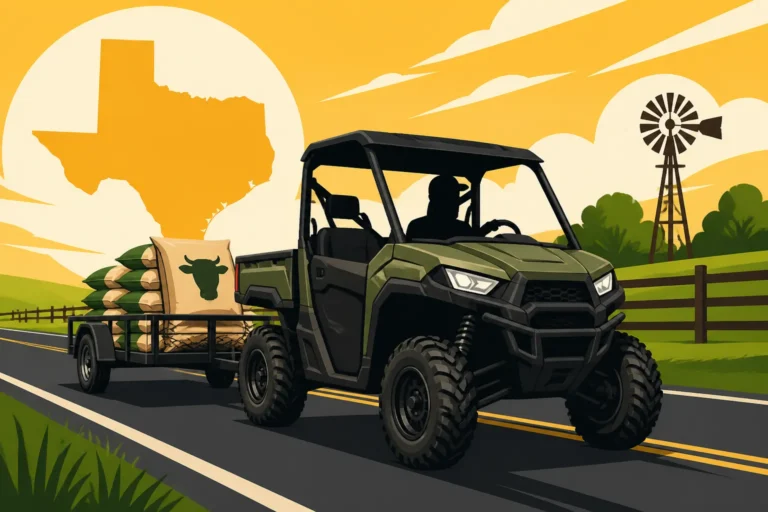
The 25-mile farm road rule is tailor-made for legitimate agricultural tasks. Imagine a rancher needing to haul a pallet of cattle feed from one corner of his sprawling property to a remote pasture located 15 miles away, with a segment of the trip requiring transit on a farm-to-market road. This is precisely the kind of scenario the rule is intended to cover. Similarly, moving a small trailer with fencing supplies, transporting tools for repairing a distant irrigation pump, or even moving livestock (if the OHV is equipped for it and the distance is within limits) between different sections of a large farm are all valid uses. The key is that the activity must be directly related to the farming or ranching operation and the OHV must be a practical means of accomplishing that task over the specified distance. It's about efficiency and necessity for agricultural productivity, not convenience. These are practical examples of [Riding an ATV for a Texas Agricultural Operation].
The Difference Between a Farm Road and Other Public Roads
This distinction cannot be stressed enough: the exception applies only to farm-to-market or ranch-to-market roads. It does not apply to:
- State Highways (SH): These are major arteries, often with higher speed limits and greater traffic volume.
- U.S. Highways (US): Similar to state highways, these are critical for long-distance travel.
- Interstate Highways (I): Absolutely off-limits for OHVs.
- Most County Roads: While many county roads are rural, they are not typically designated "farm-to-market" or "ranch-to-market" by TxDOT unless specifically identified. If a county road sign doesn't say "FM" or "RM," assume the exception doesn't apply.
- City Streets: Urban and suburban streets are generally off-limits.
Trying to use the 25-mile rule on any road other than a properly designated farm-to-market or ranch-to-market road will almost certainly result in a citation. Always verify the road classification before venturing out with your OHV.
Why This Rule Doesn't Apply to Recreational Riding
This is a critical point that trips up many OHV owners. The 25-mile farm road rule is strictly for agricultural use. It is not an invitation to use farm roads as a means to connect trails, get to a fishing spot, or simply enjoy a scenic ride. Even if you live on a farm and have an OHV, if your purpose for using the farm road is purely recreational, you are violating the law. Law enforcement officers are well aware of this distinction and will question the purpose of your trip if they see an OHV on a public road. Claiming you're "just taking it for a spin" or "going to meet friends for a ride" will not stand up under this specific exception. The exemption exists to support the vital agricultural industry of Texas, not to expand recreational riding opportunities on public roads. Therefore, you won't be [Riding 25 Miles to the Destination] for fun under this rule.
Navigating Other Limited Road Use Exceptions in Texas
While the 25-mile farm road rule is a significant exception for agricultural operations, it's not the only instance where an OHV might legally touch a public road in Texas. These other exceptions are equally narrow and come with their own stringent conditions. Understanding these various provisions can help you navigate different situations safely and legally, though none of them broadly permit street-legal status for OHVs.
Crossing a Public Road at an Intersection
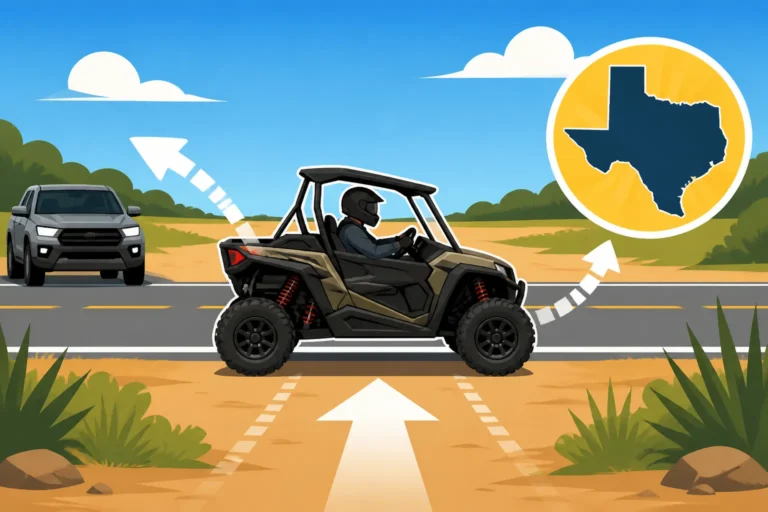
One of the most common and widely applicable exceptions is the ability to cross a public road. If you have a large property divided by a public road, or if you're moving between two adjacent parcels that require traversing a road, Texas law generally allows for this. However, it's not a free-for-all. When crossing a public road with an OHV:
- You must come to a complete stop before entering the roadway.
- Yield to all approaching traffic. You must ensure the intersection is clear before proceeding.
- Cross at a 90-degree angle to the roadway. Do not try to merge with traffic or drive down the road before turning off. The goal is to minimize your time on the paved surface.
- It must be safe to do so. If visibility is poor or traffic is heavy, you must wait for a safe opportunity.
This exception is for crossing, not traveling alongside, the road. It applies to a broad range of roads, not just farm roads, and is essential for connecting sections of private land. For more, see [Crossing a Texas Road at an Intersection].
The 35 MPH Posted Road Rule for Certain Counties
This is a very specific and often localized exception that allows OHV use on public roads with a posted speed limit of 35 miles per hour or less. However, it’s not statewide. This rule applies only in counties that have explicitly "opted in" by order of their commissioners court. Furthermore, even within an opt-in county, cities can still prohibit OHV use on roads within their municipal limits. This creates a patchwork of rules, making it incredibly important to check local county and city ordinances before assuming you can ride on lower-speed roads. If your county has opted in, and the road is posted 35 mph or less, and it's outside city limits, then you might be able to ride there. But again, this is a distinct exception with its own set of rules and limitations, and not a blanket street-legal permit. This falls under [Texas Rules for Riding on a 35 mph Road].
Special Rules for Golf Carts and NEVs Distinction from OHVs
It's crucial to understand that golf carts and Neighborhood Electric Vehicles (NEVs) are generally treated differently under Texas law than ATVs and UTVs. While they might superficially resemble smaller UTVs, their legal classifications are distinct, leading to different rules for road use.
- Golf Carts: Texas law allows golf carts on certain public roads, typically within master-planned communities or within two miles of where the cart is parked, during daylight hours, and in counties that have opted in. They must also have basic safety equipment. They have their own specific titling and plating requirements, often under [Texas Golf Cart Plate Rules].
- Neighborhood Electric Vehicles (NEVs): These are electric vehicles designed for low-speed travel (typically 20-25 mph) on roads with speed limits of 35 mph or less. Unlike OHVs, NEVs are designed for street use and are subject to registration, titling, and insurance requirements, much like a regular car, albeit with specific restrictions.
Neither of these classifications applies to the vast majority of ATVs or UTVs, which remain off-highway vehicles in the eyes of the law, even if some UTVs might look like beefed-up golf carts. The legal distinction is critical.
Potential Penalties and Enforcement
Operating an off-highway vehicle on a public road in Texas outside of the very specific exemptions discussed can lead to significant legal trouble. It's not just a slap on the wrist; violations can result in fines, court appearances, and even more serious consequences depending on the circumstances. Understanding the potential penalties and how law enforcement approaches these situations is vital for any OHV owner.
What Happens if You're Caught Violating the Rules
If you're caught operating your ATV or UTV on a public road without meeting one of the strict exemptions, you're generally committing a Class C misdemeanor. A Class C misdemeanor in Texas can carry a fine of up to several hundred dollars, plus court costs. While it's not a jail offense, these fines can quickly add up, especially if you're a repeat offender. Beyond the immediate financial penalty, there's also the inconvenience of court dates, the potential for a mark on your record, and the hassle of dealing with the legal system. Moreover, if your operation of the OHV contributes to an accident, you could face civil liability, and your personal insurance policies (which typically exclude off-road vehicle use on public roads) might not cover any damages or injuries. This underscores the importance of adhering to the rules, as discussed in [Texas Fines for Illegal ATV Road Use].
The Role of Local Law Enforcement
Local law enforcement, including county sheriffs, city police, and state troopers (Texas Department of Public Safety), are all authorized to enforce OHV laws on public roads. They are generally well-versed in the distinctions between different vehicle types and the specific exemptions. Officers are often looking for the bright orange flag if you're claiming the farm road exemption, or they'll ask about your purpose and destination. They understand that ATVs and UTVs are primarily off-road vehicles and that their presence on public roads is highly restricted. Don't assume that just because you're in a rural area, you won't be pulled over. Law enforcement takes these laws seriously due to the inherent safety risks involved when OHVs mix with regular road traffic. They are there to ensure public safety, and illegal OHV road use is a direct violation of that.
Best Practices to Avoid Issues
The best way to avoid any legal issues related to OHV road use in Texas is to operate under the assumption that your ATV or UTV is not street legal, unless you are absolutely certain you meet one of the very specific exemptions.
- Educate Yourself: Thoroughly understand the specific rules and exemptions, especially the 25-mile farm road rule if you're an agricultural operator.
- Verify Road Classifications: Before heading out, confirm that the road you intend to use is indeed a farm-to-market or ranch-to-market road.
- Comply with Equipment Rules: Ensure your OHV has all required lighting, safety equipment, and the orange flag if you're using the farm road exemption. Consider aftermarket upgrades from companies like SuperATV for enhanced visibility and safety, even if they don't change your legal status.
- Possess a Valid Driver's License: If you're on a public road, even under an exemption, you need a valid driver's license.
- Stick to the Purpose: Only use the exemptions for their intended purpose (e.g., agricultural work for the farm road rule, or direct crossing for that exception). Do not use them as an excuse for recreational riding.
- Trailer Your Machine: When in doubt, or if your trip exceeds the exemption limits, trailer your OHV to your destination. It's the safest and most legally sound option.
By following these best practices, you can enjoy your ATV or UTV responsibly and legally in Texas, avoiding the headaches and penalties that come with non-compliance.
| Feature / Rule | General OHV Road Use | 25-Mile Farm Road Exemption | Crossing Public Road | 35 MPH Posted Road Rule | Golf Carts / NEVs |
|---|---|---|---|---|---|
| Street Legal? | No | No (Limited Exemption) | No (Limited Exemption) | No (Limited Exemption) | Yes (Specific Classes) |
| Applicable Roads | None (generally) | Farm-to-Market/Ranch-to-Market | Any Public Road | Roads ≤ 35 MPH (Opt-in counties) | Specific roads/zones |
| Purpose | None | Agricultural Operations | Connecting Private Land | Varies by Local Ordinance | Transportation |
| Distance Limit | N/A | ≤ 25 miles (origin to destination) | At intersection only | N/A | ≤ 2 miles from parking |
| Required Equipment | N/A | Headlights, Taillights, Brake Lights, 6ft Orange Flag | N/A (lights advised) | Varies by Local Ordinance (often lights, mirrors) | Varies (lights, reflectors, horn) |
| Driver's License | Required (if applicable) | Required | Required | Required | Required (for NEVs) |
| Statewide? | Yes (Prohibition) | Yes (Exemption) | Yes (Exemption) | No (County Opt-in) | No (Specific Zones) |
| Penalties for Violation | Class C Misdemeanor, fines | Class C Misdemeanor, fines | Class C Misdemeanor, fines | Class C Misdemeanor, fines | Fines, Impoundment |
Disclaimer
This article is for general informational purposes only and does not constitute professional advice. Laws, prices and regulations vary by location and change over time. Consult a qualified professional for guidance on your specific situation.