Do You Need a Texas OHV Decal on Private Land?
If you ride an ATV or UTV only on private property, it can be hard to tell whether Texas’s OHV decal rules still apply. The short answer is generally no: the state decal is tied to riding on public land, not simply to owning or using an off-highway vehicle. The place you ride and the rules of that property still matter.
The short answer: usually no on private land
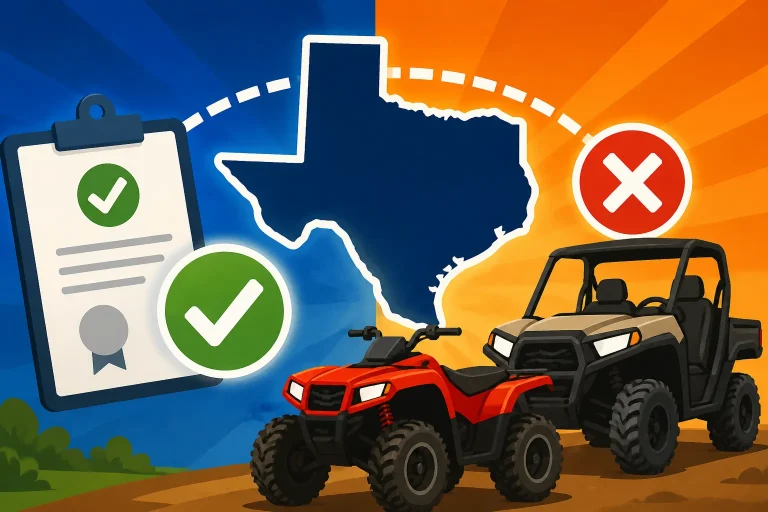
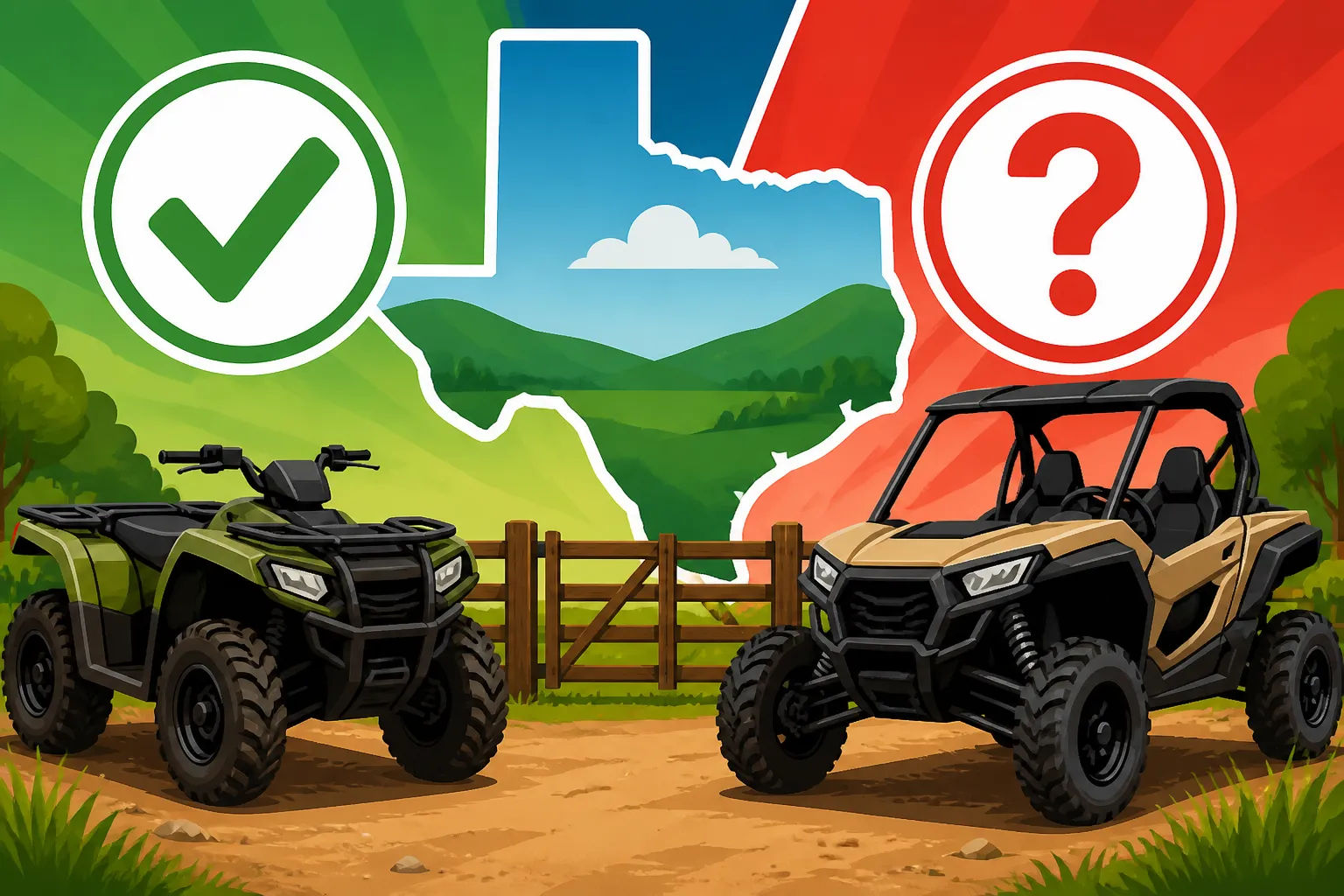
Texas generally does not require an OHV decal just to ride on privately owned land. If you have the owner’s permission and stay on private property, the state decal requirement that applies to public-land riding normally does not apply. The distinction is about where the machine is operated—not whether you own a decal, how often you ride, or whether the ATV or UTV is used for recreation or work.
That does not mean every place that looks private is exempt. A private business may operate a riding area with specific entry requirements, or the property may be managed under an arrangement that affects what riders must show. A site’s admission rules and the state decal requirement are related questions, but they are not necessarily the same question. Check with the operator before hauling your machine to a park or trail system.
For the basic distinction between public and private riding, see The Texas OHV Decal Explained and Where a Texas OHV Decal Is Required. The practical rule is: determine who owns or manages the land, then check the riding site’s own requirements.
| Where you plan to ride | Is the Texas OHV decal generally required? | What else to check |
|---|---|---|
| Private ranch or other private property, with permission | Generally no | Permission, boundaries, and any property rules |
| A private riding park | Do not assume either way | Ask the park whether a decal or other permit is required |
| Public land open to OHV riding | Generally yes | Site permits, access conditions, and rider requirements |
| A public road | The decal does not make riding legal | Road-use rules and any narrow legal exceptions |
This is a general guide to the decal question, not a decision about a particular parcel. If the land’s ownership or management is unclear, ask the landowner, park operator, or responsible agency rather than relying on how the entrance looks or what another rider carries.
What counts as private land—and where confusion starts
A ranch, farm, or privately owned recreational property is the straightforward case: if the owner allows you to ride and the area is genuinely private, the state OHV decal is generally not required merely because you are operating an ATV or UTV there. That is different from riding on land owned or managed for public use.
The confusing cases usually involve places that are privately operated but have public access, or places where a public agency has a role. A riding business may be privately owned and still have its own operating conditions. Conversely, a privately owned property might be subject to a public-access arrangement or other management terms. The word “private” in a business name, on a website, or in casual conversation does not tell you exactly which rules apply to a particular trail.
Private parks and organized riding areas
Before riding at a commercial or club-run park, ask the operator whether the Texas OHV decal is required at that specific location. Also ask whether the park charges its own entry or riding fee, requires a waiver, limits machine types, or has separate trail rules. Those requirements can apply even if the state decal is not required on ordinary private property.
A fee paid at a gate is not automatically the same thing as buying a Texas OHV decal. Likewise, having the decal does not automatically cover admission, parking, camping, or a facility’s other charges. The operator can explain what the payment covers and what you must display or carry.
Public funding or management can also make a site’s status less obvious. If a private riding area has received public support or operates under an agreement with a government entity, do not assume the usual private-property answer applies without checking. Ask the site directly whether a decal is required and, if the answer is yes, whether the requirement comes from state rules, a grant or management condition, or the site’s own policy. How to Tell If a Park Took an OHV Grant explains why a riding location’s funding can be worth checking.
Ranch leases and permission
A hunting lease or ranch may be privately owned, but the person who invited you may not have authority to grant access to every part of it. Confirm that the permission covers ATV or UTV use, the dates you plan to ride, and the trails or roads you intend to use. If the land is managed by a leaseholder, club, or property manager, check with the person responsible for those riding rules.
Permission is not the same as a decal, and a decal is not permission. A state sticker cannot authorize you to cross a neighbor’s land, ride past a locked gate, or use a trail that the owner has closed. For more on access and permission, see Texas Rules for Riding Private Land With Permission and [Texas Rules for Riding a Hunting Lease].
If you are not sure whether a trail is inside the property boundary, ask for a map or a clear route. A route can pass from private land onto a county road, public recreation area, utility corridor, or another owner’s property without an obvious change in the ground. The decal answer can change when the land status changes, so do not assume the whole route is private because the ride started on a ranch.
What the decal does not replace
An OHV decal addresses a specific part of riding rules. It is not a title, road registration, land-use permission, or general pass for every park. Keeping those documents and permissions separate helps prevent a common mistake: believing that one sticker makes a machine legal or permitted everywhere.
It is not proof of ownership
A decal does not establish that you own the ATV or UTV, and it does not replace ownership paperwork. Texas title requirements are a separate issue from where you ride. For the difference between a title remark and road authority, see The Off-Highway Use Only Remark on a Texas Title.
It is not road registration
A Texas OHV decal does not make an off-highway vehicle street legal. It does not authorize you to use a public road simply because the machine is registered or allowed at a particular recreation site. Texas has limited exceptions for certain road use, but the decal itself does not create one. Check the rules for the specific road and situation before riding there; Why Texas Will Not Register an OHV for the Road covers the broader distinction.
A route that leaves private property and crosses or follows a public road needs separate attention. Do not treat a ranch gate as a boundary between “decal rules” and “no rules” for the entire trip. The rules that apply depend on the land and route at each point.
It is not a site admission pass
A private park can charge for access or impose conditions for using its trails. A state OHV decal does not necessarily pay those charges or satisfy the park’s entry process. Conversely, paying an entry fee to a private operator does not necessarily mean you have bought the state decal if one is required for the site.
Ask the operator what you need to buy, display, or carry. If the park sells a decal or permit at the gate, clarify whether it is the state OHV decal or a separate park product. [Texas OHV Decal for a Rented Machine] may also help if you are renting a vehicle rather than bringing your own.
It does not override rider or vehicle rules
The decal question is only one part of riding legally and safely. A property owner can set rules about speed, passengers, helmets, noise, trails, or operating hours. Public-land sites may have their own conditions too. A machine’s width, equipment, or intended use can matter under rules that are separate from the decal.
For example, a vehicle allowed on a private trail may not be allowed on a public road. A rider permitted on private property may still need to follow the property’s minimum-age or safety requirements. Check both the state rules and the site’s rules; do not infer that exemption from one decal requirement means exemption from every other requirement.
How to check before you ride
A quick check before loading the trailer can settle the issue and prevent a wasted trip. Use these steps when the property or riding area is unfamiliar.
- Identify who owns or manages the land. Ask the owner or operator if you cannot tell from the property information. A private business name alone does not establish the legal status of every trail it uses.
- Confirm that your permission covers motorized riding. Make sure you are allowed to ride an ATV or UTV, not just enter the property or hunt there. Confirm the route, dates, and any closed areas.
- Ask the riding site about its decal policy. If you are visiting a private park, club trail, or organized event, ask specifically whether the Texas OHV decal is required and whether the site has a separate permit or admission charge.
- Check whether the route reaches public land or a public road. A private starting point does not make every part of a longer route private. If the route crosses a boundary, ask what rules apply there.
- Keep the decal question separate from title and road-use questions. A decal is not proof of ownership and does not authorize road riding. Check those issues independently if they apply to your trip.
If the property manager says a decal is required, ask what rule or site condition applies. That is especially useful when the location is privately owned but receives public support or is managed through an agreement. The operator should be able to tell you whether the requirement is a state condition or a separate park policy.
If you ride only on your own or another person’s private property, the usual answer is simple: the Texas OHV decal is generally not required for that private-land use. If you ride at a public site, a privately operated park, or a route with changing land status, verify the location’s requirements before you go. A little clarification can keep a decal, entry permit, landowner permission, and road-use rule from getting mixed together.
Disclaimer
This article is for general informational purposes only and does not constitute professional advice. Laws, prices and regulations vary by location and change over time. Consult a qualified professional for guidance on your specific situation.