Off-Highway Use Only Stamped on the Paper
Getting your hands on that Texas title for your ATV or UTV should be an exciting moment, but for many folks, seeing "OFF-HIGHWAY USE ONLY" stamped right there on the paper can lead to confusion, frustration, and a lot of head-scratching. You might wonder if you bought the wrong machine, if there's a problem with the title, or if it means you can never take it anywhere beyond your private land. This guide will cut through that confusion, explaining exactly what that stamp means for your machine, your riding, and your responsibilities as a Texas OHV owner.
What "OFF-HIGHWAY USE ONLY" Really Means on Your Texas Title
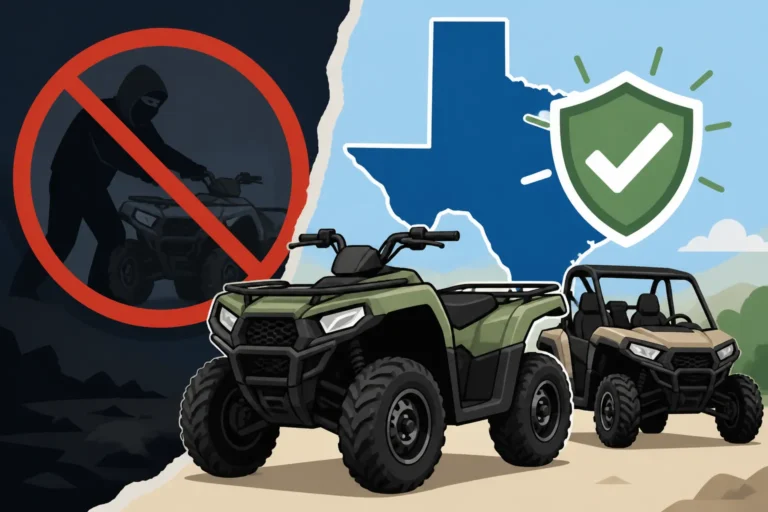
When you receive a Texas title for your ATV, UTV, or other off-highway vehicle (OHV), that "OFF-HIGHWAY USE ONLY" stamp isn't a mistake or a defect; it's a deliberate and crucial part of how the state classifies your machine. It's Texas's way of making it crystal clear that your vehicle, by its very nature and design, is intended for dirt, trails, fields, and dunes, not for cruising down Main Street. This stamp isn't meant to limit your fun off-road, but rather to legally define the boundaries of where and how your OHV can be used.
The Core Purpose of the Notation
Think of this stamp as a big, official declaration. Texas law differentiates sharply between vehicles designed for public road use—like cars, trucks, and motorcycles—and those designed strictly for off-road environments. Unlike many other states that might simply register an OHV without a specific road-use designation, Texas takes a definitive stance. While the state absolutely requires you to get a [Titling an ATV in Texas] title for your OHV, it simultaneously ensures that this title clearly states its non-roadworthy status. This is why you'll often hear that [Why Texas Titles But Never Registers an OHV]. The notation confirms that your machine lacks the safety features, emissions controls, and design specifications typically required for street legality. It’s a fundamental classification, not a temporary restriction.
Why Texas Won't Register Your OHV for the Road
The core reason Texas won't register your OHV for the road comes down to safety and legal definitions. An ATV, UTV, sand rail, or even many golf carts (unless specifically designed as a low-speed vehicle or neighborhood electric vehicle) simply doesn't meet the standards for highway use. These machines are often designed with high ground clearance, knobby tires, limited suspension travel for high-speed road use, and minimal protection for occupants in a collision with a road vehicle.
The state's vehicle code is quite specific. What Texas Counts as an Off-Highway Vehicle includes quads, side-by-sides, and other machines primarily used for recreational or utility purposes off paved roads. This legal framework doesn't allow for an OHV to be simply "converted" or "modified" into a street-legal vehicle through aftermarket parts. The state's position is that the inherent design and manufacturing purpose of these vehicles make them unsuitable for integration into general road traffic. The stamp reinforces this unchanging legal status from the moment the title is issued.
Implications of the Off-Highway Stamp for Riders
Understanding the "OFF-HIGHWAY USE ONLY" stamp is critical for every Texas OHV owner because it directly impacts where and how you can legally ride your machine. Ignoring this designation can lead to serious legal consequences, including fines, impoundment, and even injury if you venture onto public roads where your vehicle simply isn't designed to be.
Legal Restrictions and Public Road Use
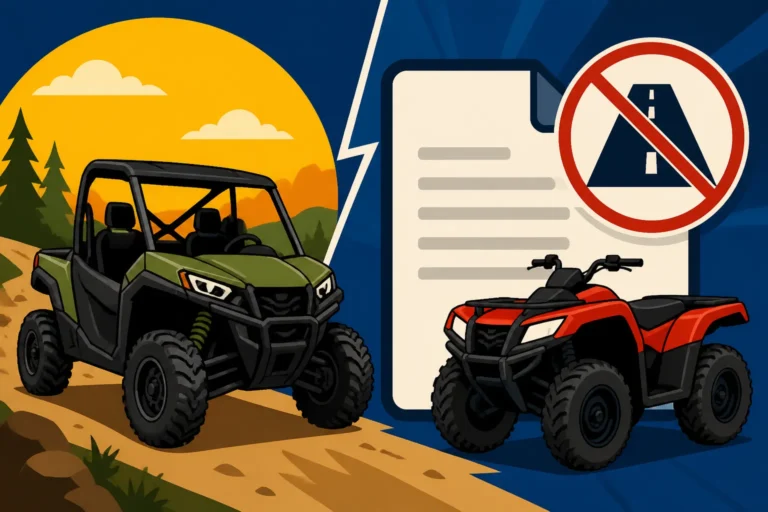
This is where the rubber meets the road—or rather, where it emphatically doesn't. The "OFF-HIGHWAY USE ONLY" stamp serves as a constant reminder that your ATV or UTV is generally prohibited from operating on public streets, highways, and most county roads in Texas. If you're pulled over by law enforcement on a public road with a machine carrying this title designation, you're likely facing a Class C Misdemeanor. This can include significant fines, and your machine could be towed. The consequences are not trivial.
Imagine you've just bought a used side-by-side with a clear [Texas ATV Title for a Side-by-Side] bearing this stamp. You can't just hop on it and ride it to the local store for groceries, even if it's just a mile down a quiet county road. The law is clear on this: the vehicle is designated for off-highway use. This means riding parks like Hidden Falls Adventure Park, Barnwell Mountain Recreation Area, or your own sprawling private ranch are perfectly fine. But taking it on an unpermitted joyride through a subdivision or across town is a definite no-go.
Here's a quick look at the typical differences between a standard vehicle title and an OHV title in Texas:
| Feature | Standard Vehicle Title (Car/Truck) | OHV Title (ATV/UTV) |
|---|---|---|
| Primary Purpose | Public Road Transportation | Off-Road Recreation/Utility |
| Road Legality | Designed for and Registered for Road Use | Designed for Off-Road, Not Registered for Road Use |
| Title Notation | Typically no specific "Use Only" remark | "OFF-HIGHWAY USE ONLY" stamp is standard and expected |
| Annual Registration | Required, with annual fees and renewal | Not available for road use; [Why Registration Is Not Available in Texas] |
| License Plate | Standard vehicle license plate for road identification | Optional [Texas Off-Highway Vehicle License Plate] for ID, not road legality |
| Safety Equipment | Headlights, taillights, turn signals, seatbelts, airbags, mirrors, horn | Varies; often basic lights, no airbags, minimal occupant protection |
Exceptions Where Limited Road Use Is Permitted
Now, here's where it gets a little nuanced. While the "OFF-HIGHWAY USE ONLY" stamp means your OHV isn't street legal, Texas law does provide very specific, limited exceptions where an OHV can temporarily operate on public roads. It's crucial to understand these are exceptions to the general prohibition, not loopholes to make your machine street-legal. Think of them as strictly controlled permissions, not an open invitation.
Some common exceptions include:
- Agricultural Operations: If you're actively engaged in a legitimate agricultural operation, you might be able to use your OHV on public roads within a certain distance from your primary operation. This is usually for hauling feed, checking fences, or moving equipment. The machine must display the required orange flag and have proper lighting. This specific allowance is covered under [Texas Agricultural Exemption for ATVs on Roads].
- Road Crossings: You can generally cross a public road or highway at a right angle, after coming to a complete stop and yielding to traffic. This is for getting from one side of your property to another, or from one trail section to another. This isn't for riding along the road.
- Master Planned Communities: Some master-planned communities, with specific city or county ordinances in place, might allow OHVs on certain designated roads within their boundaries. This is highly localized and requires explicit approval from the governing authority. Check [Texas Rules for Riding in a Master Planned Community] for more details.
- Certain County Roads: A few select counties in Texas, meeting very specific population and geographic criteria (like [Red River Counties and Their Road Rules]), have the option to open certain low-speed roads to OHV traffic. This is rare and requires local approval.
- Volunteer Firefighters: In the course of official duties, volunteer firefighters might be able to use OHVs on public roads.
In all these scenarios, your "OFF-HIGHWAY USE ONLY" titled machine still retains its fundamental off-road classification. These exceptions are about purposeful and limited movement, not general transportation. You'll often still need safety gear like helmets, and lights, and adherence to speed limits. The intent is to facilitate specific activities, not to blur the lines of road legality.
How This Affects Buying, Selling, and Modifying Your OHV
The "OFF-HIGHWAY USE ONLY" stamp doesn't just dictate where you can ride; it also plays a significant role in the lifecycle of your OHV, from the moment you acquire it to when you eventually pass it on to a new owner. Understanding its implications ensures smooth transactions and prevents misguided attempts to alter your vehicle's legal status.
Impact on Title Transfers and Sales
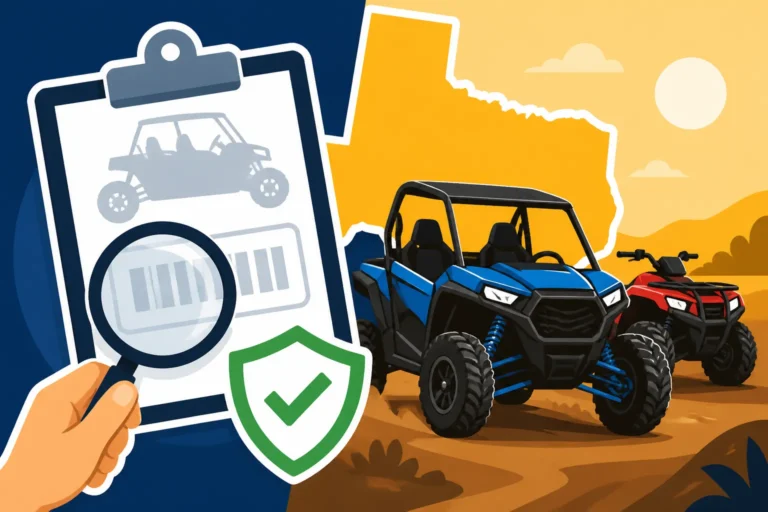
When you're buying or selling an OHV in Texas, seeing "OFF-HIGHWAY USE ONLY" on the title is completely normal and expected. It's not a red flag; it's just the way Texas titles these machines. If you're the buyer, don't let this stamp surprise you or make you think there's something wrong with the vehicle or its documentation. It simply confirms that it is, indeed, an OHV as defined by Texas law. When you apply for your own [The Texas Title Application Every OHV Buyer Files], the new title you receive will carry the same designation. This consistency is important for maintaining clear legal records.
For sellers, it means you're providing the correct and expected documentation. You'll sign the back of the title just like you would for a car, but the "OFF-HIGHWAY USE ONLY" remark will carry over. There's no special process to remove it, because it's inherent to the vehicle's classification. You might also prepare a [A Texas Bill of Sale for an ATV] to document the transaction, which LawDepot could help you create. This can provide an extra layer of protection for both parties, detailing the terms of the sale, the purchase price, and confirming the vehicle's title status. This ensures that the buyer understands the vehicle's classification from the start.
Why Modifications Won't Change Its Off-Highway Status
This is a common point of confusion and frustration for many OHV enthusiasts. People often assume that if they add certain accessories—like turn signals, a horn, a rearview mirror, or even DOT-approved tires—their ATV or UTV can then be reclassified and made street-legal. Unfortunately, in Texas, that's almost never the case. The "OFF-HIGHWAY USE ONLY" stamp on your title isn't a suggestion; it's a fundamental legal classification based on the vehicle's original manufacturer's design and intent.
No matter how many road-safety features you bolt onto your quad or side-by-side, the Texas Department of Motor Vehicles (TxDMV) or your county tax office will not remove that stamp or issue a new title that permits road registration. The vehicle's underlying certification as an OHV remains unchanged. [Why an Altered Quad Still Cannot Be Plated] is a crucial piece of information for anyone considering these modifications. These upgrades might make your off-road machine safer or more convenient for limited, permitted road use (like agricultural exemptions), but they will not transform it into a street-legal vehicle for general public road travel. Always remember that the stamp reflects the inherent nature of the machine, not a lack of accessories.
The Off-Highway Vehicle Plate and Its Role
Given that "OFF-HIGHWAY USE ONLY" is stamped on your title, you might be scratching your head about the Texas Off-Highway Vehicle License Plate. It sounds like something that would make your machine street-legal, right? This is another area where Texas law often differs from what people expect, and it's essential to understand the distinction.
Understanding the Texas OHV Plate
The [Texas Off-Highway Vehicle License Plate] is often confused with a traditional vehicle license plate. However, its purpose is entirely different. This is a small, typically square plate that you can obtain for your OHV, primarily for identification purposes. It exists to give your machine a unique identifier that can be tracked by law enforcement or property managers, especially when operating on designated public lands or crossing roads under specific exemptions.
Crucially, this plate does not make your ATV or UTV street-legal. Not in the slightest. Its primary function is identification, not registration for public road use. You might get one if you frequently ride on public lands that require visible identification, or if you want to ensure your machine is easily identifiable for other reasons. The cost for this plate is typically low, as evidenced by [The $10 Cap on a Texas Plate]. This nominal fee further underscores that it's not a road-registration fee, which would be significantly higher. When you apply for your [Texas OHV Plate Application], you'll still be subject to the "OFF-HIGHWAY USE ONLY" title status.
How the Plate and the "Off-Highway Use Only" Stamp Work Together
So, if the title says "OFF-HIGHWAY USE ONLY" and the plate doesn't make it street-legal, what's the point? Think of them as two separate, but related, components of OHV ownership in Texas:
- The "OFF-HIGHWAY USE ONLY" Stamp (on the title): This is the fundamental legal classification of your vehicle. It defines what your machine is—an off-highway vehicle, not a road vehicle. This status is permanent and applies to the very core of your machine's identity. It dictates the broad legal framework for its use.
- The Texas OHV Plate: This is an identification tool for a vehicle that has already been classified as an OHV. It provides a unique number for your specific machine, which can be useful for various reasons, but it doesn't alter its fundamental "OFF-HIGHWAY USE ONLY" designation.
For example, if you're taking your UTV to a state park or a managed OHV riding area, they might ask to see your title, and they'll expect it to say "OFF-HIGHWAY USE ONLY." The optional OHV plate then provides an easy visual identifier for that specific machine within the park. In some agricultural or utility scenarios where limited road use is allowed, the plate can help law enforcement identify the machine as an OHV that might be legitimately operating under an exception, rather than a rogue road-user.
It's a common misconception that getting this plate is the first step towards making your OHV street legal. It is not. It's simply an optional identification feature for an off-road machine. The stamp on your title remains the ultimate legal truth about your vehicle's road status in Texas. It's important to remember that [Why a Texas OHV Plate Never Expires] because it's not an annual registration, further distinguishing it from a standard vehicle plate.
Disclaimer
This article is for general informational purposes only and does not constitute professional advice. Laws, prices and regulations vary by location and change over time. Consult a qualified professional for guidance on your specific situation.