Texas Rules for Riding a Water District Park
Texas water district parks may allow, limit, or ban ATV and UTV use; confirm site permission, permits, decals, safety rules, and trail closures before riding.
Your sticker stops at the state line.
Non-resident permits, what they cost and how long they last, and which states honor each other’s — or, increasingly, none at all.
Texas water district parks may allow, limit, or ban ATV and UTV use; confirm site permission, permits, decals, safety rules, and trail closures before riding.
Texas city park ATV and UTV access depends on local rules and designated areas; a state OHV decal does not grant permission to ride there.
Texas Corps of Engineers land does not automatically allow ATV or UTV riding; confirm designated routes, closures, decals and permits with the project office.
Texas ATV and UTV rules at national recreation areas depend on site permits, Texas OHV decal rules, and riding only on routes open to motorized use.
Texas National Forest trail riding requires checking route width and closures, carrying the Texas OHV decal, and paying any separate Forest Service fee.
A park’s Texas OHV grant status can affect decal rules, but confirm the funded site, land status, and current entry requirements before riding.
The Texas National Forest OHV fee is separate from the state decal; check trailhead payment rules, annual-pass coverage, and trail status before riding.
Texas rules for riding without an OHV safety certificate depend on land: public-land riders need certification or direct supervision; private sites set rules.
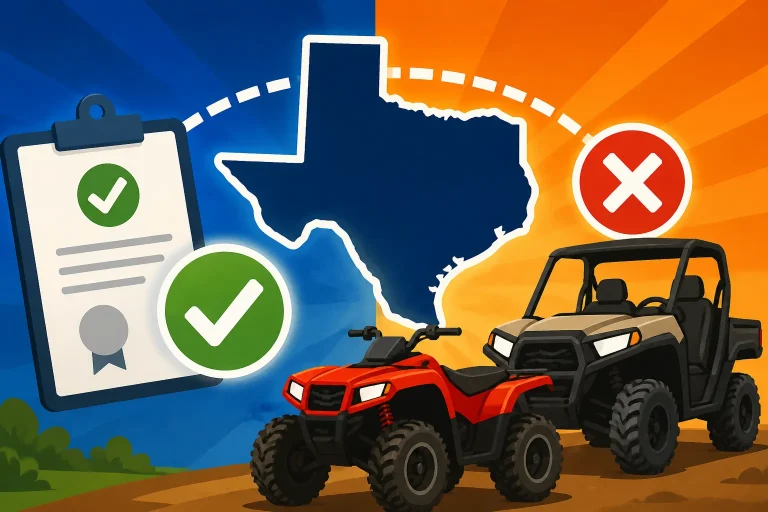
Texas generally accepts qualifying out-of-state OHV safety certificates, but riders still need to check age, supervision, decal, and site-specific rules.

Texas supervision rules for young ATV and UTV riders require under-14s on covered public land to ride with an 18+ safety-certificate holder.