Asking a Utility for Access
We’ve all been there: cruising along a backroad, maybe on your way to a friend’s ranch or heading home from a long day on the trails, when you spot it—a perfectly maintained, often unpaved, path disappearing into the distance, running parallel to a power line or a gas pipeline. It looks like an open invitation, a dream stretch of riding, and your mind immediately thinks, "Can I ride that?" Unfortunately, accessing these utility right-of-ways (ROWs) isn't as simple as just rolling onto them. This guide is here to walk you through the complex world of utility access roads in Texas and help you understand how to respectfully and, hopefully, successfully seek permission to ride them.
Understanding Utility Right-of-Ways and Access Roads in Texas
Texas is a big state, and with its vast expanse comes an intricate network of utilities crisscrossing our landscape. From towering electrical transmission lines to underground natural gas pipelines, these vital arteries of infrastructure often come with their own dedicated access roads. While they might look like tempting shortcuts or private trails, understanding their true nature is the first step toward responsible riding.
What is a Utility Right-of-Way (ROW) Anyway?
Think of a utility right-of-way as a designated strip of land where a utility company has a legal easement to operate, maintain, and access its infrastructure. This isn't necessarily land owned outright by the utility, though sometimes it is. More often, it's an easement granted by a private landowner to a utility company. This means the utility has the right to use that specific strip of land for a defined purpose – laying pipes, installing power poles, or running communication cables – even if someone else owns the land underneath.
These easements are crucial for utilities to perform necessary tasks like routine inspections, emergency repairs, and new construction. They need clear, unobstructed access to ensure our homes have power, our gas stoves light up, and our internet stays connected. Because of this, they often build and maintain their own access roads within these ROWs. It’s important to remember that just because a utility has the right to use this land, it doesn't automatically grant public access for recreation. These aren't public parks or designated trails; they are private access routes for specific operational needs.
Why These Roads Are So Appealing to Riders
It’s easy to see why these utility access roads catch the eye of ATV and UTV enthusiasts across Texas. For one, they often cut straight across long distances, sometimes through areas with few other public roads. Imagine a perfectly graded, gravel path stretching for miles, offering a clear shot through some beautiful countryside. They promise a sense of adventure, an escape from crowded public parks, and a chance to explore parts of Texas rarely seen from a paved road.
Many riders, myself included, have looked at these trails and envisioned a peaceful Sunday ride, free from the typical traffic of designated [Where to Ride an ATV in Texas] areas. You might be scouting near your own property, notice a power line trail, and think, "That would be perfect for a quick spin." They’re often wide enough for larger side-by-sides, can present varied terrain depending on the region of Texas, and offer a unique riding experience that feels a bit more "off-grid." The allure is strong, but so are the reasons why access is often restricted.
The Hurdles: Why Access Isn't a Given
While the idea of exploring utility access roads is undeniably appealing, there are significant reasons why utility companies are very cautious about granting public access. These aren't arbitrary rules; they stem from real concerns about safety, liability, and the integrity of critical infrastructure.
Safety and Liability Concerns for Utilities
For utility companies, safety is paramount, both for their workers and the general public. Their right-of-ways are active work zones, often with hidden dangers that aren't immediately apparent to a recreational rider. Consider the hazards: high-voltage power lines overhead, unmarked underground pipelines carrying flammable materials, active construction or maintenance crews, and heavy machinery operating in unexpected places. If a rider were to accidentally strike an underground pipe, come into contact with a downed power line, or interfere with a work crew, the consequences could be catastrophic.
From a liability standpoint, a utility company faces immense risk if they allow unauthorized public access and someone gets hurt. If an ATV rider suffers an injury or worse on their property, the utility could be held responsible, leading to costly lawsuits and significant public relations challenges. This is why many companies have strict "no trespassing" policies. Even if you, as a responsible rider, carry excellent [Texas ATV Insurance Requirements], that doesn't mitigate the utility's broader liability concerns for general public access. They have a legal and ethical obligation to keep these areas safe and secure, and allowing recreational riding often directly conflicts with that.
Security and Environmental Stewardship
Beyond immediate safety, utility right-of-ways are also critical for national infrastructure security. Pipelines, power grids, and communication lines are all vulnerable to theft, vandalism, or even more nefarious activities. Allowing unrestricted access, even to well-meaning individuals, makes these areas harder to monitor and protect. Imagine the disruption if someone tampered with a major pipeline or cut a fiber optic cable – these aren't just inconveniences, they can impact entire communities or even regions.
Furthermore, utility companies often have environmental responsibilities to uphold. Unauthorized ATV and UTV traffic can lead to severe soil erosion, especially in sensitive areas or during wet conditions. Littering, improper waste disposal, and disturbing local wildlife habitats are also concerns. A utility might have invested heavily in erosion control measures or specific ecological programs, and recreational riding, if not managed carefully, could undermine those efforts. For example, a hypothetical scenario where a utility has faced issues with illegal dumping on their ROWs means they're already on high alert for any unauthorized activity. They're tasked with maintaining these corridors not just for their equipment, but for the health of the surrounding ecosystem.
Strategies for Respectfully Requesting Access
Given the hurdles, approaching a utility company for access requires a thoughtful, professional, and well-prepared strategy. Simply showing up or calling with a casual request is likely to be met with a polite but firm "no." You need to demonstrate that you understand their concerns and are committed to being a responsible user of their property.
Identifying the Right Utility and Contact Point
Before you even think about crafting your request, you need to identify which utility company owns or manages the specific right-of-way you're interested in. This isn't always obvious. A power line might belong to a local electric co-op, a major investor-owned utility like Oncor or CenterPoint, or even a transmission-only company. Pipelines could be owned by dozens of different oil and gas entities.
Here’s how you can usually figure it out:
- Look for signs: Utility companies often post signs along their ROWs indicating ownership and contact information.
- Check local county appraisal district maps: These maps can often show property lines and easements, identifying the entities holding those easements.
- Call your local electric or gas provider: Even if they don't own the specific line or pipe, they might be able to direct you to the correct company responsible for that infrastructure.
- Online mapping tools: Satellite imagery can sometimes reveal logos on structures or equipment that help identify the utility.
- Neighboring landowners: If you know who owns the private land adjacent to the ROW, they might know which utility holds the easement.
Once you identify the company, resist the urge to just call their general customer service line. You'll likely get someone who isn't equipped to handle such requests. Instead, try to find a specific department like "land management," "right-of-way administration," "real estate," or "public affairs." Look for a contact number or email on their corporate website. Persistence and finding the right department are key. Remember, you're not trying to get your power bill adjusted; you're seeking a unique form of land access for your ATV or UTV, which is handled by a specialized team. It's also wise to research [Texas Rules for Riding Under a Power Line] to show you've done your homework on general safety.
Crafting Your Request: Be Prepared and Professional
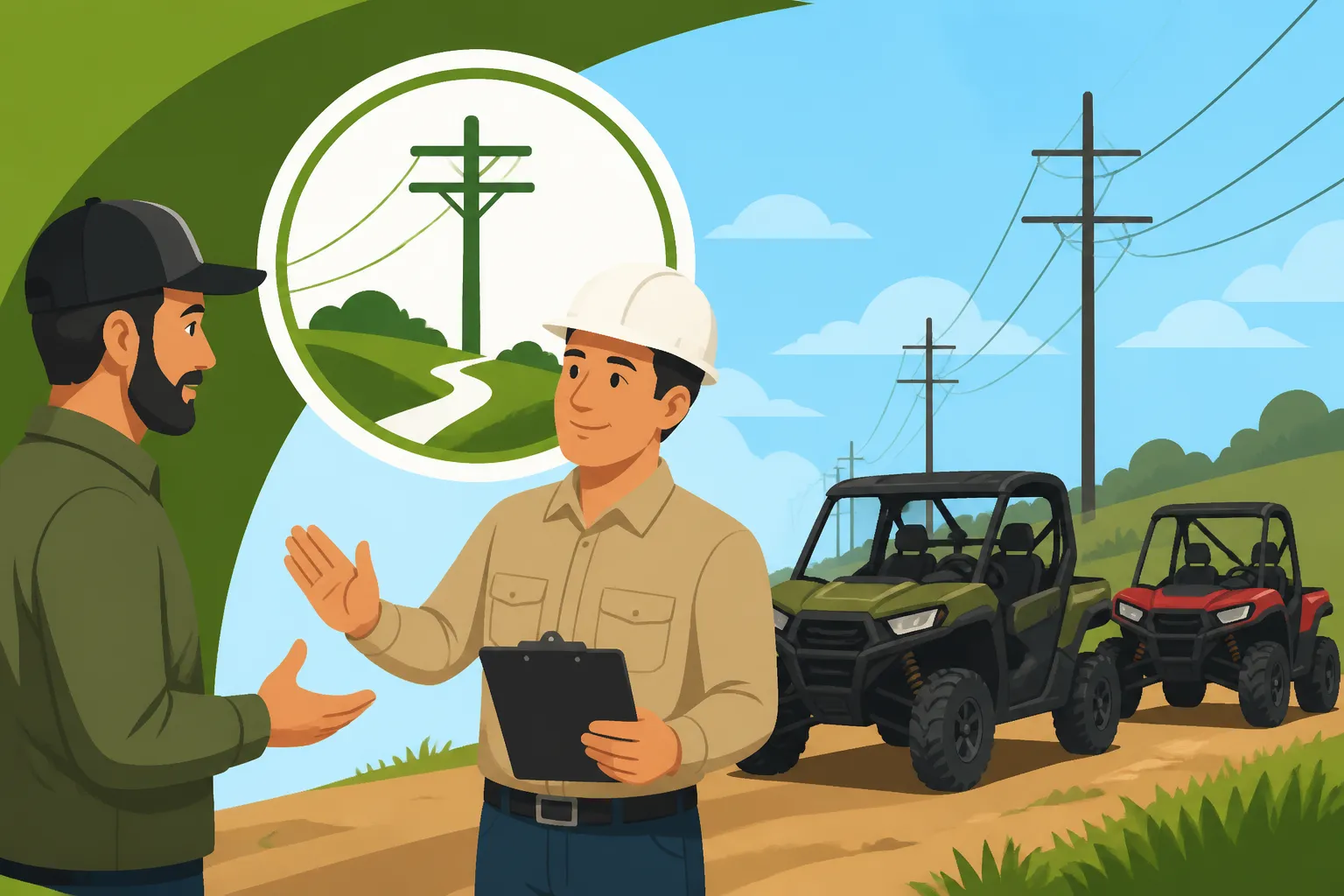
When you finally make contact, whether by phone, email, or formal letter, your professionalism and preparedness will set you apart. This isn't a casual chat; it's a proposal.
Here’s what you should aim to include in your request:
- Your Identity and Contact Information: Full name, address, phone, email. Be clear and direct.
- Specific Location: Provide precise details. GPS coordinates are best, but also include nearest physical address, major crossroads, or identifiable landmarks (e.g., "the power line ROW running east-west from FM 1488 to County Road 200, approximately 2 miles north of the Brazos River").
- Why You Want Access: Be honest and specific. Are you part of an organized off-road club seeking a route for a charity event? Do you own adjacent property and need occasional access for maintenance? Are you seeking a one-time permit for a specific recreational outing for your family? Frame it as a specific, limited-use request, not a general desire to "ride whenever."
- Proposed Dates/Times: If it’s for a specific event or limited timeframe, provide those details. This shows you're not asking for open-ended access.
- Proof of Safety Training: Demonstrate your commitment to safety. If you or your group members have completed an ATV safety course, mention it. A [Texas OHV Safety Certificate Requirements] shows you’re a responsible rider who takes training seriously.
- Proof of Insurance: Offer to provide proof of personal liability insurance for your machines. Even though Texas doesn't require ATV insurance for off-road use, showing you carry it speaks volumes about your responsibility.
- Details About Your Machine(s): Briefly describe the type of machines you'll be riding (ATVs, UTVs, specific models). Mentioning that you use quality parts, perhaps from
SuperATV, can subtly convey that you're a serious, responsible rider who invests in reliable equipment.
What to expect: It’s important to manage your expectations. A "no" is a common response, often a blanket policy to avoid setting precedents or dealing with the aforementioned liability. Don't be discouraged, but also don't push aggressively. If they say no, ask if there are any circumstances under which they might consider it in the future, or if there's a different department to speak with.
Here’s a summary of key information to prepare:
| Category | Details to Include |
|---|---|
| Personal Info | Full Name, Address, Phone, Email |
| ROW Location | GPS Coordinates, Nearest Address, Crossroad, Landmarks |
| Purpose of Access | Specific event, property access, limited recreational outing, organized group |
| Timeframe | Proposed Dates/Times (e.g., "Saturday, 9 AM – 4 PM," or "monthly access for property checks") |
| Safety Credentials | Mention [Texas OHV Safety Certificate Requirements] (if applicable), commitment to safety gear. |
| Insurance Proof | Offer to provide liability insurance declaration page. |
| Machine Details | Type of machines (ATV/UTV), number of vehicles, any relevant modifications (e.g., SuperATV upgrades for reliability). |
| Waiver Willingness | Offer to sign a liability waiver. |
| Environmental Plan | Commitment to "leave no trace," stay on designated paths, avoid wet conditions. |
Offering Solutions and Assurances
To increase your chances, position yourself as part of the solution, not a potential problem. Think about the utility’s concerns and offer ways to alleviate them.
- Proposing a Liability Waiver: Offer to sign a comprehensive liability waiver that explicitly releases the utility from responsibility should an incident occur. This doesn’t eliminate all risk for them, but it’s a strong gesture.
- Offering a Utility Representative Presence: For organized group rides or events, suggest that a utility representative could accompany the group, or that you'd be willing to pay for a utility employee to be present during your access period. This demonstrates transparency and a willingness to cooperate.
- Demonstrating Knowledge of Safe Riding Practices: Reiterate your commitment to safe riding speeds, wearing appropriate safety gear (helmets, goggles), and adhering to all laws, including [Texas Rules for Riding a Utility Right of Way]. Highlight that your machines are well-maintained, perhaps equipped with robust parts from
SuperATVthat ensure reliability and control, minimizing mechanical failures that could strand you or cause an accident. - Environmental Responsibility: Pledge to practice "leave no trace" principles, stay strictly on existing roads, avoid riding in excessively wet conditions to prevent erosion, and carry out all trash.
- Suggesting a Restricted Area or Route: If the entire ROW is too sensitive, ask if there's a specific, less critical section or a designated route within the ROW they might consider. Perhaps a small portion that provides access to your private property.
- Emphasizing Limited Use: Reiterate that you are seeking limited, controlled access, not open-ended public use. This could be for a specific annual event, occasional property access, or a short-term recreational permit.
By proactively addressing their concerns and offering tangible solutions, you show that you're a responsible individual who respects their property and operations. This approach, while still no guarantee, significantly improves your standing compared to a simple, unthoughtful request.
Alternatives and Best Practices if Direct Access Isn't Possible
Even with the most professional and well-crafted request, the reality is that many utility companies will decline access to their right-of-ways. Their reasons are often deeply ingrained in corporate policy and risk management, making it difficult for even the most persuasive individual to sway them. But don't despair! Texas offers a wealth of other fantastic riding opportunities.
Exploring Legal, Dedicated Riding Areas
If direct access to utility roads remains elusive, turn your attention to the numerous legal, dedicated riding areas across Texas. These parks and recreation areas are specifically designed for off-highway vehicle use, meaning you can ride with peace of mind, knowing you're on sanctioned trails.
- Private Parks: Texas is home to some incredible private OHV parks that cater to all skill levels. Places like Barnwell Mountain Recreation Area in Gilmer (managed by the Texas Motorized Trails Coalition) and Hidden Falls Adventure Park near Marble Falls offer miles of marked trails, challenging terrain, and often amenities like camping. These parks are set up for recreational riding, with staff on hand, safety rules in place, and varied trails, from easy scenic routes to intense rock crawling. You simply pay an entry fee or membership, and you're good to go.
- Public Lands: While limited, Texas does have some public land available for OHV use. The Sam Houston National Forest, for example, offers an 85-mile trail system near New Waverly, although it has width restrictions (usually 50 inches or less) and specific rules about permits and decals. Lake Meredith National Recreation Area in the Panhandle also has designated areas like Rosita Flats for off-road fun. These public options often require a [Texas OHV Plate Application] or an OHV decal and sometimes a daily or annual permit.
The beauty of these dedicated riding areas is that they eliminate the stress of seeking permission, dealing with liability concerns, and worrying about trespassing. They are built for riders, by riders (or at least, with riders in mind), and provide a safe, legal environment for your adventures.
Connecting with Landowners and Off-Road Clubs
Another fantastic avenue for legal riding access is through private landowners or by joining local off-road clubs. The power of community in the Texas ATV and UTV scene is huge.
- Private Landowners: Many Texas ranches and large properties have extensive internal road networks perfect for ATV and UTV riding. If you have friends, family, or acquaintances who own such land, a polite request for permission can open up incredible opportunities. When approaching a landowner, always be respectful, offer to follow any rules they set, and consider offering a small token of appreciation or even offering to help with light ranch work in exchange for access. A written agreement, even a simple one, outlining the terms of access can be beneficial for both parties, reflecting the spirit of [Texas Rules for Riding Private Land With Permission].
- Off-Road Clubs: Joining an organized ATV or UTV club in Texas can unlock access to places you might never find on your own. Many clubs have established relationships with private landowners, manage their own dedicated riding properties, or organize group rides on specific, permitted trails. These clubs often advocate for responsible riding, share knowledge, and provide a social network for fellow enthusiasts. They are excellent resources for discovering new, legal places to ride and learning about local regulations and etiquette.
The Importance of Never Trespassing
This point cannot be stressed enough: never, ever trespass. Unauthorized access onto utility right-of-ways or private land without permission carries severe consequences. You could face legal penalties, including significant fines, your machine could be impounded, and you might even face criminal charges depending on the jurisdiction and the nature of the trespass. These [Texas Fines for Illegal ATV Road Use] can be steep.
Beyond the legal ramifications, trespassing damages the reputation of the entire off-road community. It makes it harder for legitimate riders to gain access in the future, erodes trust with landowners and utility companies, and creates a negative image for our sport. If a utility company denies your request, that’s their definitive answer. Respect it. Finding a property with [Texas Rules for Riding a Ranch Road] or a similar setup where you have permission is always the better, and legal, route. Remember, part of being a responsible ATV or UTV owner, who understands the [What Texas Counts as an Off-Highway Vehicle] definition and the [Texas ATV Title Cost] for their machine, is knowing where you can and cannot legally ride. The thrill of illicit access is never worth the risk or the potential harm to our riding community.
Disclaimer
This article is for general informational purposes only and does not constitute professional advice. Laws, prices and regulations vary by location and change over time. Consult a qualified professional for guidance on your specific situation.