Private Land on Both Banks
It's incredibly frustrating when you're out exploring the vast and beautiful landscapes of Texas on your ATV or UTV, and you come across a tempting riverbed or creek, only to hit a wall of uncertainty. You see what looks like an open area, but then you spot "No Trespassing" signs or hear whispers from locals about private property. This guide is here to untangle the knot of confusion surrounding riding off-highway vehicles on Texas waterways, especially when both banks appear to be privately owned, so you can ride confidently and legally.
Understanding Texas Waterway Access and Riparian Rights
Texas, with its unique history and vast stretches of both arid and lush landscapes, has a complicated relationship with water and land ownership. What seems like a simple question – "Can I ride in that creek?" – quickly turns into a complex legal discussion involving ancient statutes and property rights. Many riders assume that if there's water, it's public, but that's not always the case in the Lone Star State, especially when you encounter what's commonly referred to as "private land on both banks."
The Navigable Waters Concept in Texas
When we talk about public access to Texas waterways, the concept of "navigable waters" is absolutely critical. It’s not about whether your kayak can float down it or if a small fishing boat can pass; it's a legal definition that dictates whether the streambed itself is considered public property, even if the surrounding land is privately owned. This is where a lot of riders get tripped up, thinking "water equals public," but Texas law is far more nuanced.
Historically, Texas determined navigability based on an 1837 law that declared all streams to be navigable if they retained an average width of 30 feet from the mouth up. Later, this was refined to mean if a stream maintained an average width of 10 feet for any length of its course. While this "10-foot average width" rule is still a major factor, modern courts also consider a "public use" test, looking at whether the stream has been used by the public for recreation or commerce. If a waterway meets these criteria, the bed and banks up to the gradient boundary (the line where the water usually meets the land) are considered state-owned public land. This means you could potentially ride an OHV on these public beds, subject to other regulations, even if the land on either side is private. However, the vast majority of smaller creeks, streams, and seasonal washes you encounter are not legally navigable under this definition. They simply don't meet the width requirements, and haven't historically been used for public commerce. This makes them prime examples of where "private land on both banks" becomes a significant hurdle.
Riparian Landowners and Their Rights
If a waterway is not legally navigable, the situation changes drastically. In these cases, the adjacent landowners, known as riparian owners, generally own the streambed itself, usually extending to the center of the streambed. This means that if you own land on both sides of a non-navigable creek, you literally own the creek bed and the water flowing over it. For OHV riders, this is a crucial distinction. It means that without explicit permission from the landowner, riding in such a streambed is considered trespassing.
This reality can be a source of immense frustration for riders who see an inviting, sandy creek bed and assume it's fair game. They might have heard stories about riding riverbeds in other states or even local legends about open access, only to be confronted by a landowner who asserts their rights. It’s important to remember that these landowners often rely on these waterways for livestock, irrigation, or simply peace and quiet, and unauthorized vehicle traffic can cause erosion, disturb wildlife, or damage their property. So, if a waterway isn't legally designated as navigable, the landowner's rights typically extend to its core, effectively making it private property through and through.
"Private Land on Both Banks": What It Really Means for Riders
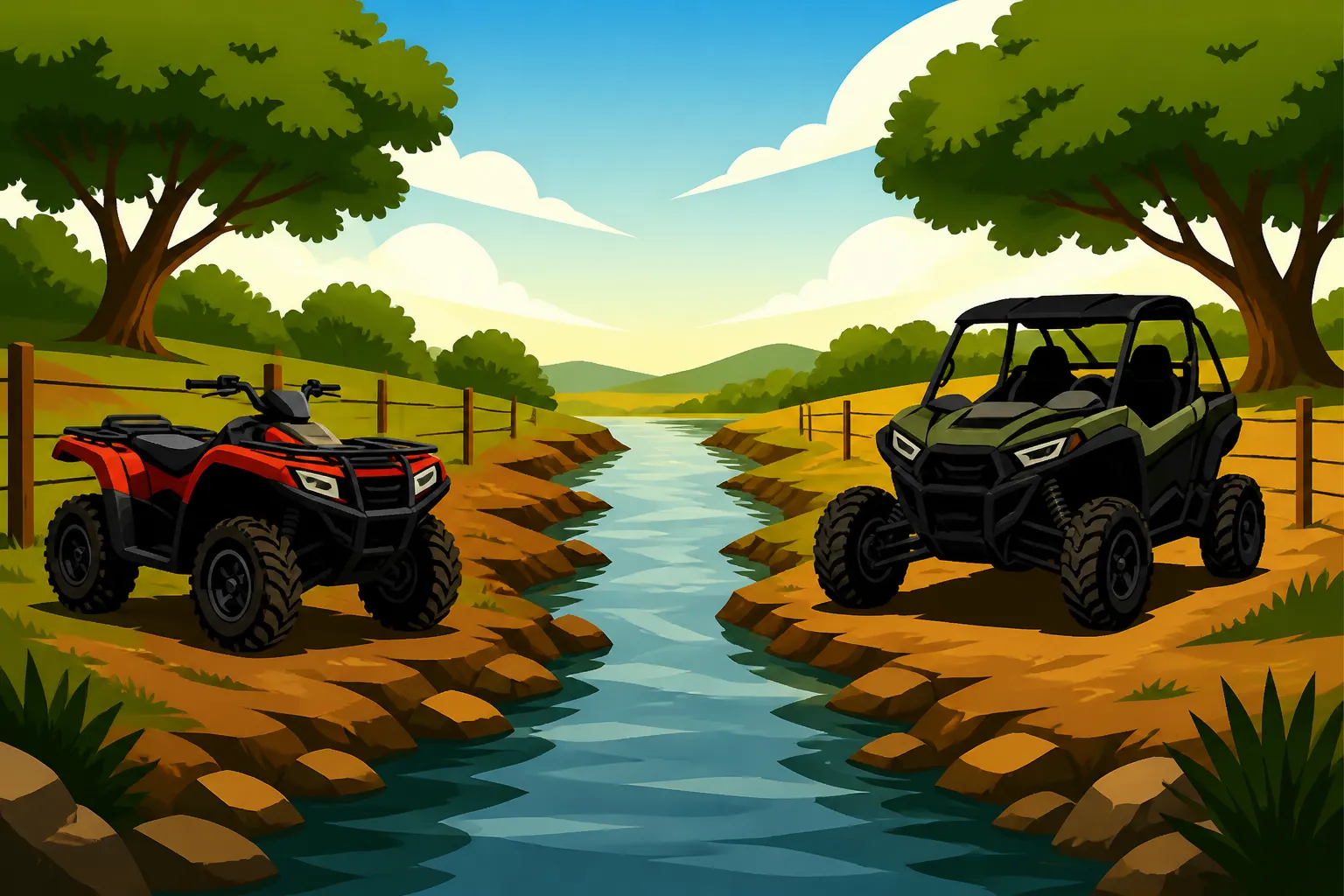
The phrase "private land on both banks" isn't just some legal jargon; it's a stark reality for many Texas ATV and UTV enthusiasts. It means that the seemingly open creek or river you're eyeing for a ride might actually be someone's private property, from the fence line on one side, across the water, and right up to the fence line on the other. This scenario is far more common than many riders realize and carries significant implications for your riding plans.
Non-Navigable Streams and Rivers
Let’s be crystal clear: if a stream or river in Texas is classified as "non-navigable" – meaning it doesn't meet the legal criteria for public waterways we discussed earlier – then the streambed and its banks are typically owned by the adjacent landowners. When these private land parcels meet across a non-navigable stream, you have the classic "private land on both banks" situation. This effectively means the entire segment of the waterway, including the streambed itself, is private property.
For you, the rider, this translates to one simple rule: no riding without explicit permission. It doesn't matter how dry the creek bed is, how wide it looks, or how much fun it seems. If it's not a legally navigable waterway and both banks are privately owned, you are trespassing if you ride there. This can be a huge disappointment, especially for those who grew up in areas with more liberal interpretations of public access to water. The frustration of being told you can't ride in a seemingly natural, undeveloped area is completely valid. It can feel like an unfair restriction on your enjoyment of the outdoors. However, this is the legal reality in much of Texas, and ignoring it can lead to serious consequences, from fines to legal action and even vehicle impoundment. Understanding this distinction is paramount for responsible riding.
The Doctrine of Accretion and Avulsion
Adding another layer of complexity to waterway boundaries in Texas is the fascinating, yet often confusing, doctrine of accretion and avulsion. These are legal terms that describe how natural changes in a river's course can impact property lines, and they can sometimes blur the lines even further for riders trying to discern public from private land.
Accretion refers to the gradual and imperceptible accumulation of soil, sand, or sediment on the banks of a waterway, slowly shifting the property line outward over time. Think of it like a slow, natural expansion of a property. If your land borders a non-navigable stream and accretion occurs, your property line subtly moves with the new bank. Avulsion, on the other hand, is a sudden, visible, and dramatic change in a river's course, often due to a major flood. In cases of avulsion, the original property lines typically remain where they were, even if the river has carved a new channel. Imagine a sudden, powerful storm that causes a river to jump its banks and forge an entirely new path, leaving the old bed dry. In such a scenario, the property lines usually don't move with the new river course. The old riverbed might still belong to the original landowner, even though it's now dry land.
For an ATV or UTV rider, this means that even if you've ridden a particular "dry creek" bed for years, a major flood could have legally shifted the watercourse, but not necessarily the property lines. What was once considered a boundary might now be firmly within someone's private land, or vice-versa. This highlights why relying on historical usage or casual observation for determining legal access to a waterway can be incredibly risky. These natural changes, while infrequent, underscore the difficulty in definitively knowing property boundaries without consulting official surveys or legal experts. This is another reason why it’s often safer to assume private ownership unless you have clear evidence to the contrary.
Navigating the Legalities: Permission and Due Diligence
Given the complexities of Texas waterway laws and property rights, the burden of knowing where you can and cannot ride largely falls on you, the rider. It's not enough to simply guess or rely on hearsay. Being proactive and performing your due diligence is the best way to ensure you're riding legally and respectfully.
Always Seek Explicit Permission
This is the golden rule, the absolute cornerstone of responsible OHV riding in Texas, especially when you're near waterways that might have "private land on both banks." If there's any doubt about whether a piece of land or a streambed is public or private, or if it's explicitly marked as private property, you absolutely must seek and obtain explicit permission from the landowner before you even think about putting a tire on it.
Approaching landowners can feel daunting, but a polite and respectful request goes a long way. Explain what you want to do, how long you plan to be there, and assure them you will leave no trace. Consider offering to provide your contact information or even sign a liability waiver. In many cases, a written agreement is the best approach, outlining the terms of your access. This protects both you and the landowner. While it can be incredibly frustrating to track down landowners, especially in rural areas where properties are vast and owners might live off-site, it's a necessary step. The alternative – trespassing – carries significant risks. Texas law enforcement takes private property rights seriously, and you could face hefty fines, have your vehicle impounded, or even be subject to civil lawsuits from angry landowners. A few bad experiences with trespassers can sour a landowner's willingness to grant access to anyone, making it harder for responsible riders in the future.
Identifying Legally Navigable Waters
So, if knowing whether a waterway is "legally navigable" is so crucial, how do you, as a regular rider, figure it out? The honest answer is that it's often incredibly difficult for the average person to definitively determine. The legal tests for navigability are complex, involving historical records, surveys, and sometimes even court decisions. This lack of a clear, easily accessible database is another major frustration for riders.
While there isn't a simple app or map that shows every legally navigable stream in Texas, you can start by looking at resources from the Texas General Land Office (GLO). They are responsible for managing state-owned lands, which includes the beds of legally navigable rivers. However, their maps might not always delineate every small stream, and interpreting them can require a degree of expertise. You could also try checking with county appraisal districts or commissioners' courts, as they sometimes have records related to local waterways. But for a truly definitive answer, especially in disputed areas, you might need to consult with a land surveyor or an attorney specializing in property law. For most riders, this level of investigation just isn't practical for a casual weekend ride. This difficulty is why, for the vast majority of small creeks and rivers that don't look like the mighty Brazos or Colorado, it's safest to assume they are non-navigable and therefore private property unless you have strong evidence or clear signage indicating otherwise. Instead of risking a legal headache trying to decipher obscure legal definitions, focusing on known public access points or dedicated OHV areas is often the wisest path. You can explore public access points along major rivers, but always be aware of where the public bed ends and private land begins on the banks. [Riding a Navigable River in Texas] can offer more insights into this specific type of riding.
Practical Advice for Responsible Texas Riders
Navigating the rules and respecting property rights while still enjoying your ATV or UTV in Texas can feel like a maze. However, there are clear, practical steps you can take to ensure your rides are both thrilling and entirely legal. It’s all about making informed choices and being a good steward of the land, whether it’s public or private.
Stick to Designated OHV Parks and Trails
The absolute safest, easiest, and most straightforward way to avoid all the headaches and legal ambiguities of "private land on both banks" and waterway access is to stick to designated off-highway vehicle (OHV) parks and trails. Texas boasts a growing number of incredible places specifically designed for ATV and UTV riding, offering everything from challenging rock crawling to wide-open trails and muddy tracks.
These parks have clear boundaries, often well-maintained trails, and established rules, eliminating any guesswork about permission or property lines. You pay an entry fee, sometimes a membership, and you get to ride all day without a worry in the world. Places like [Barnwell Mountain Recreation Area] in Gilmer, run by the Texas Motorized Trails Coalition, or [Hidden Falls Adventure Park at Marble Falls] offer hundreds, if not thousands, of acres of diverse terrain. You know exactly what you're getting into, and you're supporting places that keep riding legal and accessible. This approach eliminates the frustration of being turned away from a seemingly open area and allows you to focus purely on the joy of riding. Many parks also offer amenities like camping, restrooms, and sometimes even rentals, making for a fantastic full-day or weekend adventure.
Respecting Private Property and Local Laws
Beyond just avoiding trespassing, being a responsible rider means adopting a general attitude of respect for private property and all local laws, even when you're on public land or a designated park. Your actions reflect on the entire OHV community, and a few bad actors can ruin access for everyone.
Always be on the lookout for "No Trespassing," "Private Property," or "No Motorized Vehicles" signs. These are not suggestions; they are legal warnings. Ignoring them can lead to serious consequences, including fines that can range from a few hundred dollars to much more, depending on the county and the specific violation. In some cases, landowners or law enforcement might even impound your vehicle, which is a costly and time-consuming ordeal to get back. Remember, even if you are on a legally navigable streambed, exiting onto the private banks, disturbing wildlife, or leaving trash is still disrespectful and potentially illegal. It's crucial to understand that while a waterway's bed might be public, the land immediately adjacent to it almost certainly isn't. Good etiquette includes staying on marked trails, minimizing noise, packing out everything you pack in, and being mindful of local wildlife and livestock. For example, if you're riding a county road that also serves as a ranch road, you might encounter slow-moving farm vehicles or cattle. Always yield and drive respectfully.
Exploring Alternatives to Riverbed Riding
While the allure of riding a vast, sandy riverbed can be strong, the legal complexities of "private land on both banks" make it a risky proposition unless you have ironclad permission or are absolutely certain it's a legally navigable public area. Thankfully, Texas offers plenty of other amazing riding experiences that don't involve navigating such tricky legal waters.
Consider exploring other types of public or privately-owned, permitted trails. For instance, some areas might allow riding on designated utility rights-of-way, provided you have permission from the utility company. You might find areas with [Texas Rules for Riding a Canal Bank] or [Texas Rules for Riding a Levee Road], which can offer similar open, linear riding experiences without the same riparian land ownership issues. These are often managed by water districts or local authorities, and rules for access will be clearly posted or available upon request. Furthermore, many ranches across Texas offer paid access for OHV riding, either through direct arrangements with landowners or through outfitters. This allows you to legally enjoy extensive private lands, often including natural features like creek beds, with the full permission of the owner. When outfitting your machine for these diverse terrains, remember that companies like SuperATV offer a huge range of parts and accessories, from lift kits and heavy-duty axles to robust winches and tires designed for mud or sand, all of which can enhance your riding experience, regardless of whether you’re on a public trail or a private ranch with permission. The key is to find legal avenues for your adventures, ensuring your passion for riding doesn't put you in legal jeopardy or cause conflict with landowners.
Here's a quick summary of the key differences:
| Feature | Legally Navigable Waterway (Bed is Public) | Non-Navigable Waterway (Bed is Private) |
|---|---|---|
| Legal Status | Bed and banks (to gradient line) are state-owned | Bed and banks typically owned by adjacent private landowners |
| Riding Access | Potentially permissible on the bed (check local rules) | No access without explicit landowner permission |
| "Both Banks" | Private land on banks adjacent to public bed | Private land on banks and the entire streambed |
| Permit/Fee | No state-wide permit for bed, but local rules vary | Requires permission, potentially a fee from landowner |
| Commonality | Major rivers, some larger streams | Most creeks, smaller streams, seasonal washes |
| Risk of Trespass | Low on bed, high if you exit onto private banks | High, as the entire waterway is private |
Disclaimer
This article is for general informational purposes only and does not constitute professional advice. Laws, prices and regulations vary by location and change over time. Consult a qualified professional for guidance on your specific situation.