Lights On While You Cross
Oh, the open road! Or, more accurately, the open trail that sometimes gets interrupted by, well, an actual road. For us ATV and UTV enthusiasts across the great state of Texas, those moments when our beloved off-highway vehicles (OHVs) need to traverse a public road can be a real head-scratcher. It's not like we're trying to make them street legal – we know that's a whole different can of worms – but simply getting from one piece of private land to another, or moving between trail sections, often means a quick dash across asphalt. This guide is all about one crucial, often misunderstood, aspect of those crossings: keeping your lights on, and why it matters immensely for your safety and staying on the right side of Texas law.
The Texas Mandate: Why Your Lights Need to Be On When Crossing a Road
Let's face it, operating an ATV or UTV is a blast, but it comes with responsibilities, especially when you encounter public roads. Many riders assume that if it's broad daylight, their lights are optional, especially for a quick hop across a two-lane road in the middle of nowhere. But Texas law, born from years of safety considerations, sees things a little differently. When you’re crossing a public road on your OHV, your lights aren't just a suggestion; they're a requirement, regardless of whether the sun is shining brightly or setting low. This isn't about illuminating your path through the darkness – it's about making sure you are seen, clearly and unequivocally, by everyone else on that road.
Visibility as a Primary Safety Concern
Think about the sheer size and speed difference between your UTV and a typical passenger car or a heavy-duty truck. Even the most brightly colored quad can be surprisingly hard to spot, especially in rural areas where drivers might not expect an OHV to suddenly appear at the edge of the road. Your headlights and taillights cut through that visual clutter, making your presence unmistakable. They provide an active warning to oncoming and approaching traffic that something is happening at the side of the road, giving drivers precious extra seconds to react. Without them, you're relying solely on the other driver's attentiveness, and that's a gamble you simply don't want to take with your safety or the safety of others.
We’ve all seen those moments where a driver is distracted, maybe looking at a phone or just deep in thought. A bright set of headlights, even in daylight, can break that trance and grab their attention. It’s a proactive measure, a way to visually shout, "Hey, I'm here!" before you even start to move. This heightened visibility is critical for preventing accidents, particularly when you’re attempting to make a quick crossing and need to be seen from a distance.
The Letter of the Law: What Texas Statutes Say
While Texas law generally restricts OHV use on public roads, it does provide very specific allowances for crossing. And embedded in those allowances are clear mandates about lighting. Texas Transportation Code Chapter 663, which governs off-highway vehicles, along with other related statutes, outlines the equipment requirements for any OHV operating on any public land or even temporarily interacting with public roadways. This isn't just about nighttime safety; it’s about making sure that even during the day, your machine stands out.
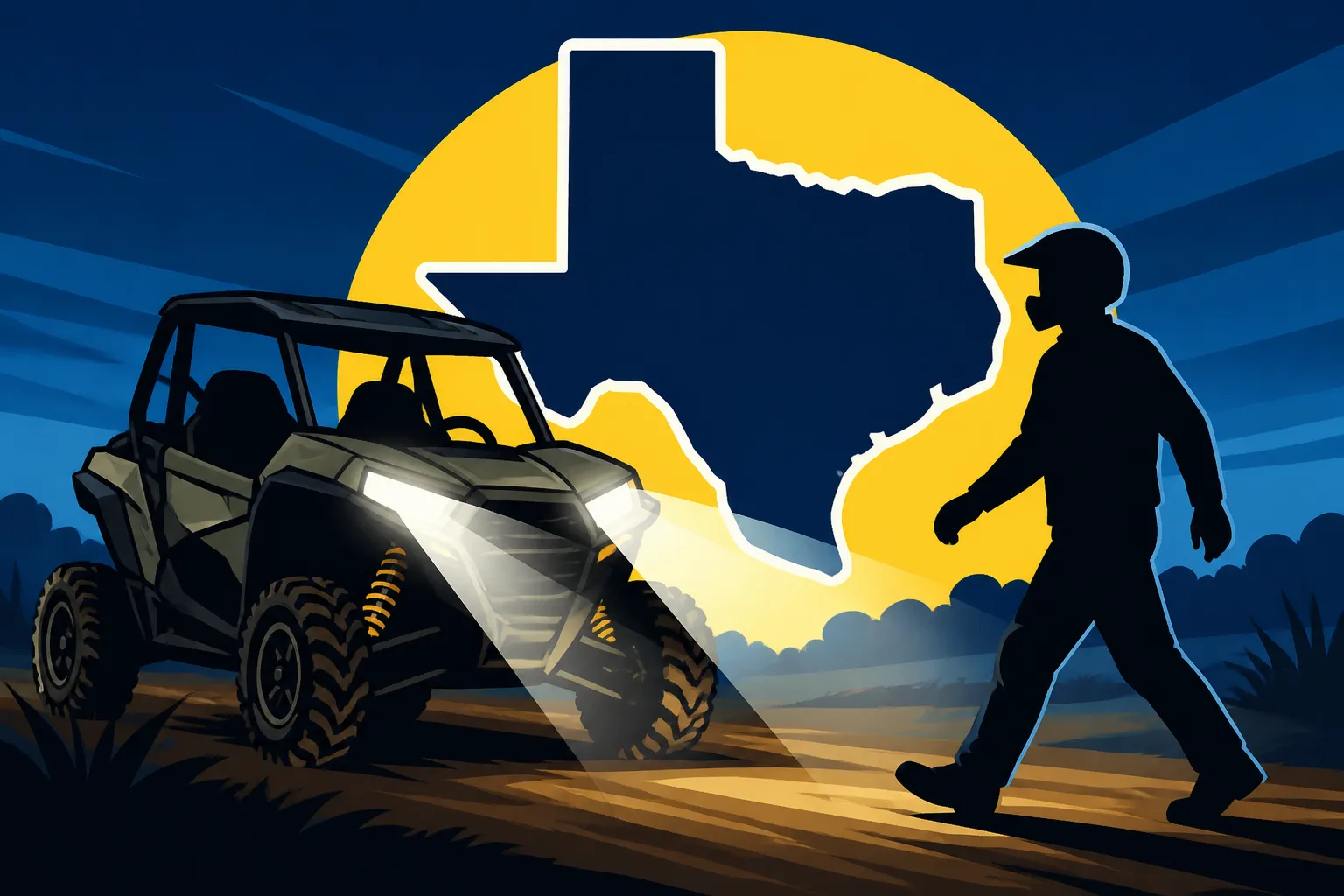
The requirement for [Texas Lighting Requirements for OHVs] explicitly states that OHVs must be equipped with at least one headlight and one taillight, and these must be illuminated when crossing a public street or highway. It’s not a gray area; it's a black-and-white rule designed to standardize safety across the state. Failing to comply can lead to a Class C misdemeanor, which means a fine. But more importantly, it puts you at a significantly higher risk of an accident, and that's a cost no one wants to pay. So, before you even think about nudging your tires onto the asphalt, take that extra second to flip those lights on.
Specific Lighting Requirements for Texas ATV/UTV Road Crossings
Okay, so we know why the lights need to be on. Now, let's talk about what kind of lights and what that actually means for your machine. It's not just any old light; there are standards for effectiveness and placement that are implied by the safety goals of the law.
Headlights and Taillights: Non-Negotiables
At a minimum, your ATV or UTV must have a functioning headlight and taillight for any public road crossing in Texas. These aren't fancy, high-beam, street-legal specific lights; these are the standard lights your machine came with from the factory. The headlight needs to project a white light visible from a certain distance (think hundreds of feet), and the taillight needs to emit a red light, also visible from a similar distance. This ensures you’re visible from both the front and the rear as you make your crossing.
Many modern UTVs, like those from popular manufacturers, often come with robust lighting systems as standard. However, if you're rocking an older quad or a custom build, it's absolutely crucial to double-check that your lights are in good working order. Are they bright enough? Are they obstructed by mud or gear? Is your electrical system up to snuff? A burnt-out bulb or a wiring issue could turn a simple crossing into a legal and safety hazard. Some riders even opt for aftermarket upgrades from companies like SuperATV to ensure their lighting is top-tier, not just for aesthetics but for absolute clarity and visibility during those critical road interactions.
Additional Lighting Considerations for Enhanced Safety
While headlights and taillights are the legal minimum, you can always go above and beyond for safety. Think about the added benefits of brake lights (which typically come standard and activate when you press the brakes, providing an additional warning), or even amber turn signals if your machine has them. While not strictly required for a basic crossing, turn signals can be incredibly helpful if you're approaching a road where you might briefly hesitate or need to signal a specific direction before executing your right-angle maneuver.
Some riders also install auxiliary lights, such as light bars or additional floodlights. While these are usually intended for illuminating trails in the dark, they can certainly contribute to your overall visibility during a daytime crossing, making your machine appear even larger and more prominent. Just be mindful of blinding oncoming traffic; these powerful lights are best used briefly and strategically during a crossing, rather than as continuous running lights. The goal is to be seen, not to cause a hazard for others. Remember, every little bit of extra illumination adds to your safety margin when you're momentarily sharing space with much faster, heavier vehicles.
Navigating the Crossing: Beyond Just Your Lights
Having your lights on is paramount, but it's just one piece of the puzzle for a safe and legal road crossing in Texas. There are other critical procedures you need to follow to minimize risk and avoid potential fines. These rules are designed to make your brief interaction with the public road as predictable and safe as possible for everyone involved.
The Full Stop and Right Angle Rule
Texas law is very clear on how an OHV must cross a public road: you must make a complete and full stop before entering the roadway. This isn't a rolling stop or a hesitant creep; it's a definitive halt, allowing you to thoroughly assess traffic in both directions. Once you've stopped and determined it's safe to proceed, you must cross the road at approximately a 90-degree angle to the flow of traffic. This isn't just an arbitrary rule; it's a safety measure. Crossing at a right angle minimizes the time your vehicle spends in the lanes of travel and makes your trajectory predictable for other drivers. You're not trying to merge into traffic or drive on the road; you're simply making the shortest, most direct path across it.
Imagine a busy intersection or even a quiet country road. Coming to a full stop gives you the precious seconds needed to accurately judge the speed and distance of approaching vehicles. Then, crossing at a right angle means you are moving perpendicular to the traffic flow, reducing the chances of a side-swipe or a misunderstanding of your intentions. This rule applies whether you're crossing [a Texas Road at an Intersection] or [a Texas Road Away From an Intersection]. You can find more details on this specific maneuver in [Ninety Degrees and a Full Stop in Texas]. It's a fundamental aspect of responsible OHV operation whenever a public road is involved.
Assessing Visibility and Traffic Conditions
Even with your lights on and ready to stop, you need to be an active participant in your own safety. Before you even approach the edge of the road, do a thorough scan of the area. What are the sight lines like? Is there a blind curve? Are there hills or dips that might obscure oncoming traffic? If your view is limited, you might need to approach with even greater caution, perhaps having a spotter if you’re riding with a group, or making multiple checks before easing forward.
Consider the traffic conditions. Is it rush hour on a major farm-to-market road? Or is it midday on a seldom-used [Riding a Ranch Road]? The level of caution you exercise should directly correspond to the amount and speed of traffic. Even in broad daylight, sun glare can be a huge factor for drivers, potentially reducing their ability to see your already smaller vehicle. Your illuminated lights help, but they don't negate the need for you to be hyper-aware of your surroundings. If you're encountering a [Divided Highways and Where You May Cross], the rules become even more nuanced, often requiring you to cross each section independently, with separate stops and assessments. Ultimately, if it doesn't feel safe, don't cross. There's no ATV ride worth risking a collision.
Practical Scenarios: When and How to Light Up for Your Crossing
Understanding the rules is one thing, but applying them in real-world situations is another. Texas is a vast state with incredibly diverse terrain and road types, meaning your crossing strategy might need slight adjustments depending on where you are. Let's look at some common scenarios and how to ensure you're always visible and compliant.
Crossing Rural County Roads vs. Busy Intersections
A short hop across a quiet county road in the early morning might feel less intimidating than navigating a multi-lane state highway with a higher speed limit. However, the requirement to have your lights on remains constant. On a rural road, while traffic might be sparse, vehicles often travel at higher speeds, and drivers might be less alert to unexpected cross-traffic. Your lights, even in daylight, serve as that critical advance warning. When you come to a full stop on the shoulder, waiting for a break in traffic, those illuminated lights make your presence known long before you make your move.
For busier intersections, the stakes are even higher. While you might only be crossing a single lane at a time, the sheer volume of vehicles, coupled with potential distractions like signage and other turning cars, means you need maximum visibility. Here, the standard lights are non-negotiable, and any additional lighting you have, perhaps from a SuperATV light bar you installed for night riding, can really help you stand out. Always remember that [Why Texas Will Not Register an ATV for the Road] means you are never truly part of the traffic flow; you are an anomaly, and you need to communicate your presence aggressively.
Equipping Your Machine: Aftermarket Lights and Upgrades
If you're an avid rider in Texas, regularly needing to cross public roads, investing in reliable lighting for your OHV is a smart move. While factory lights meet the minimum, wear and tear, mud, and water can take their toll. Upgrading to brighter, more durable LED headlights and taillights can significantly boost your visibility. Companies like SuperATV offer a wide range of lighting solutions that are not only rugged but also provide superior output, ensuring you're seen no matter the conditions. These aren't just for aesthetics; they are a critical safety upgrade.
Beyond just the bulbs, consider the overall condition of your machine's electrical system. Frayed wires or a weak battery could leave you in a lurch. A quick pre-ride check, including testing all your lights, should be standard practice, especially if you know you'll be encountering public roads. And while not strictly a "light," a highly visible flag, like those required at many OHV parks, can also contribute to making your machine more noticeable from a distance, adding another layer to your safety strategy.
When all is said and done, riding an OHV in Texas is about enjoying the trails and the great outdoors responsibly. A big part of that responsibility is ensuring your safety and the safety of others when those trails intersect with public roads. Flipping that light switch on every single time you need to cross isn't just a legal obligation; it's a simple, effective way to drastically reduce your risk and keep the adventures going.
Road Crossing Checklist for Texas OHV Riders
Here's a quick checklist to help ensure you're always prepared for a safe and legal road crossing in Texas:
| Requirement | Description | Applies Day? | Applies Night? |
|---|---|---|---|
| Full Stop | Come to a complete stop before entering any paved public road or highway. | Yes | Yes |
| Right Angle | Cross the road at approximately a 90-degree angle to the flow of traffic. | Yes | Yes |
| Lights On | Headlights and taillights must be illuminated, even during daylight hours. | Yes | Yes |
| Yield | Yield the right-of-way to all other vehicles and pedestrians. | Yes | Yes |
| Visibility | Ensure clear sight lines in both directions before proceeding. If not, use extreme caution or a spotter. | Yes | Yes |
| No Riding On | Do not ride on the public road or highway; only cross directly. | Yes | Yes |
| Helmet | Riders under 15 are legally required to wear a helmet, though it's advised for all riders for safety. | Yes | Yes |
| Eye Protection | Recommended at all times, especially for crossings to avoid debris and glare. | Yes | Yes |
| Spark Arrester | Your machine needs a U.S. Forest Service-qualified spark arrester if operating on public land or crossing roads. | Yes | Yes |
You can find more helpful guidance on [Texas Equipment Rules for an ATV on a Road] and [Texas Safety Apparel Rules for ATV Riders] to ensure you're fully prepared for any ride that might involve a road crossing. Remember, ignoring these rules not only puts you in danger but can also lead to fines, categorized as [What a Class C Misdemeanor Costs a Rider]. Stay safe out there!
Disclaimer
This article is for general informational purposes only and does not constitute professional advice. Laws, prices and regulations vary by location and change over time. Consult a qualified professional for guidance on your specific situation.