Mounting the Orange Flag 6 Feet Above Ground
Riding your ATV or UTV in Texas can be an absolute blast, whether you're tackling sandy trails or navigating a lease road. But when you need to take your machine on certain public roads, even just for a short hop, the rules can feel like a tangled mess of red tape. One of the most common head-scratchers is the requirement for that bright orange safety flag, specifically that it needs to be mounted "6 feet above ground." This guide is here to untangle that rule, explaining exactly why it's there, how to achieve it, and when you absolutely need to make sure your flag is flying high.
Why Texas Requires an Orange Safety Flag on Roads
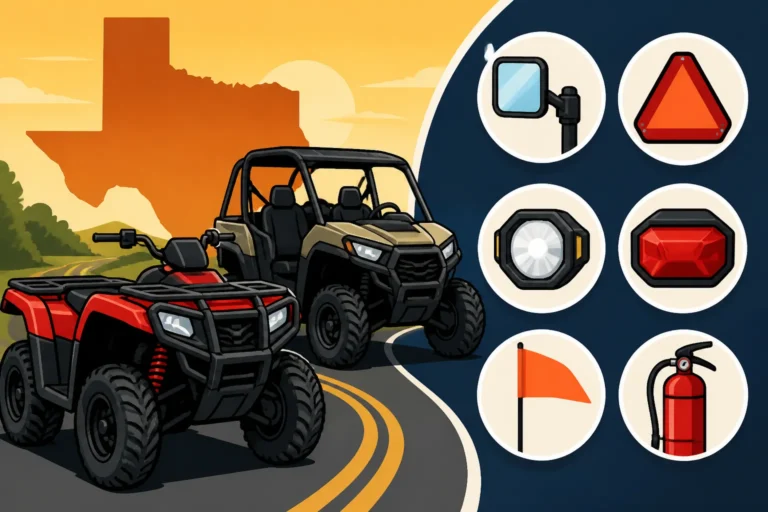
It's easy to dismiss safety rules as just another hoop to jump through, but when it comes to riding your off-highway vehicle (OHV) on a public road in Texas, that orange flag isn't just for show. It's a critical safety measure designed to protect you and others sharing the road. Texas law has carved out very specific, limited instances where an OHV can legally operate on public roads, and in many of these cases, the flag is a non-negotiable part of the safety equipment.
Visibility: A Matter of Life and Death
Imagine you're driving a lifted pickup truck down a county road. Now imagine a small ATV or UTV pulling out from a hidden drive or cresting a hill just ahead of you. Because of their lower profile and often smaller overall size compared to regular road vehicles, ATVs and UTVs can be incredibly hard to spot, especially if they blend into the background or are obscured by vegetation or other traffic. This isn't just an inconvenience; it's a serious hazard that can lead to catastrophic accidents.
The orange safety flag acts as an early warning system. Mounted high, it extends above most visual obstructions, giving drivers of larger vehicles a much-needed heads-up that an OHV is present. This is particularly crucial on roads where speeds might be higher, or visibility is limited by hills, curves, or even dense roadside brush. Think of it as your machine's way of shouting, "Hey, I'm here!" from above the visual clutter. Without it, you're relying purely on drivers spotting your machine, which is a much taller order. This proactive visibility can be the difference between a close call and a serious collision, especially when you're traversing a busy road.
The Specifics of the 6-Foot Rule
So, why exactly 6 feet? It's not an arbitrary number. The "6 feet above ground" requirement for the orange safety flag in Texas is all about ensuring the flag is visible over the majority of passenger cars and light trucks on the road. When your OHV is operating within the narrow confines of allowed public road use, you're sharing that space with vehicles that have much higher sightlines than your machine might.
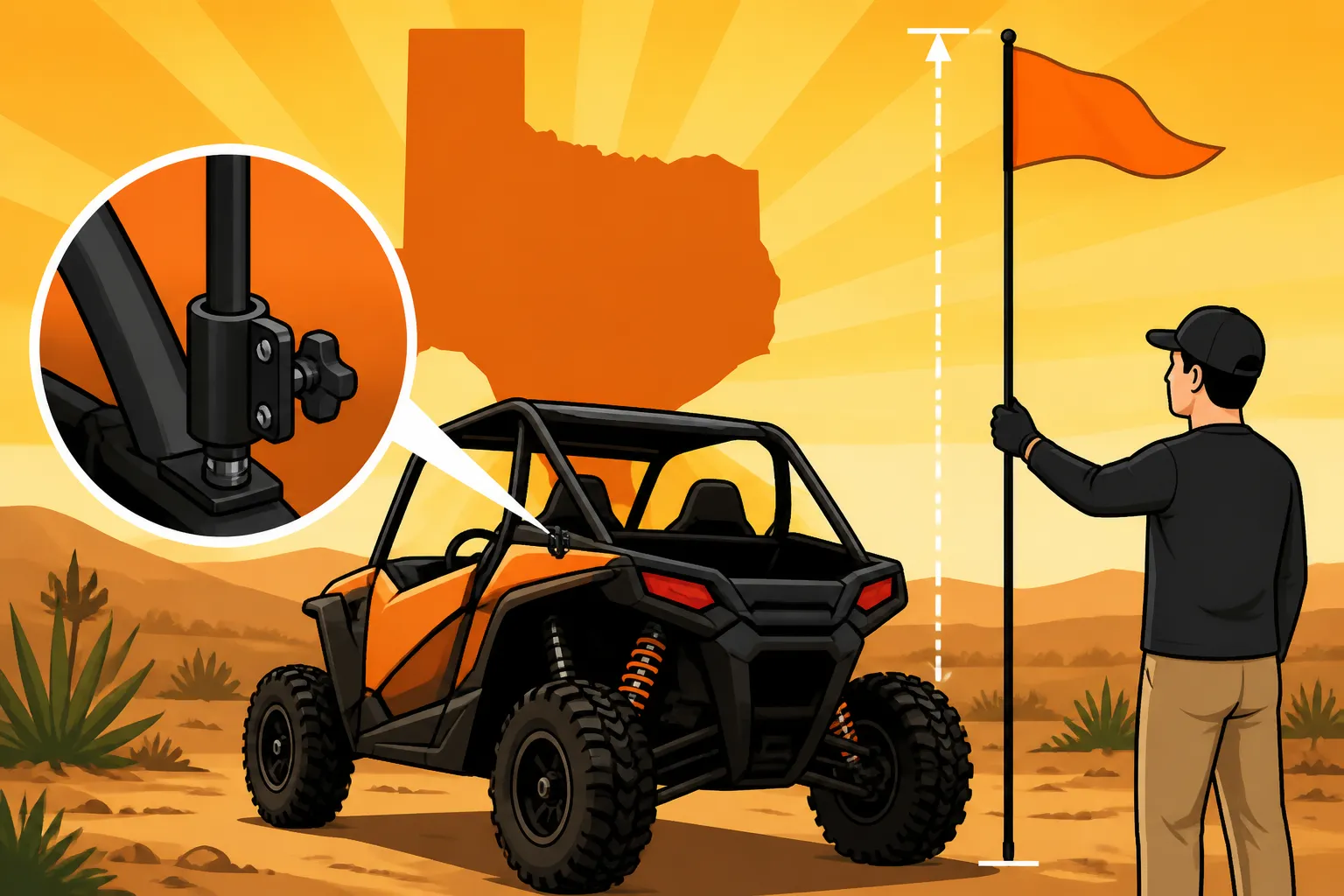
This measurement is crucial. It means the very top of your flag, not the pole, must be at least 6 feet from the surface of the road. Park your ATV or UTV on a flat, level surface, and take a tape measure from the ground straight up to the highest point of your flag. If it's anything less than 6 feet, you're not in compliance, and you're compromising the safety intent of the rule. This height is intended to place the flag firmly within the sightline of most drivers, allowing it to clear the roofs of most sedans, SUVs, and even some pickup truck beds, providing that critical advanced warning. It's about being seen above the general flow of traffic, not just at eye level with your machine.
Choosing the Right Flag and Mounting Hardware
Meeting the 6-foot requirement isn't just about sticking any old flag on any old pole. The choice of your flag and, more importantly, your mounting hardware directly impacts both compliance and safety. You want something that will last, stay securely in place, and genuinely provide the visibility that the law intends. Investing in reliable equipment here is not just about avoiding a ticket, but about ensuring you have a safe ride on public roads.
Flag Type and Construction
When it comes to the flag itself, bright orange is the standard and often the legal requirement. This isn't a suggestion; it's because orange stands out against almost any background, whether it's green foliage, grey asphalt, or blue sky. The size of the flag also matters. While Texas law typically specifies the height of the flag, it's generally understood that a flag should be large enough to be easily seen. Common dimensions are around 12×12 inches, or even larger, to maximize visibility. A small, flimsy flag won't do the job effectively.
Durability is another key factor. Your flag will be exposed to wind, sun, dust, and potentially rain. A cheap fabric flag might fray or tear quickly, leaving you non-compliant or, worse, creating a roadside hazard. Look for flags made from robust, weather-resistant materials like nylon or polyester, often with reinforced stitching. Some flags are designed with mesh or a slight cut to reduce wind resistance, which helps prevent the pole from bending or breaking. You might find flags specifically designed for off-road use, which are generally built to withstand tougher conditions than a parade flag. Reputable brands that specialize in off-road accessories, like SuperATV, often have flags designed with these considerations in mind, ensuring they can handle the rigors of both trail riding and occasional road use.
Mounting Options for ATVs and UTVs
Achieving that 6-foot height while keeping the flag securely attached requires suitable mounting hardware. There's a variety of options out there, each with its own advantages, depending on your machine and how often you plan to use the flag.
- Roll Cage Clamps: For UTVs and many modern ATVs with roll bars or racks, roll cage clamps are a popular choice. These clamps secure directly to a frame member, providing a very sturdy attachment point. They are often adjustable, allowing you to position the pole exactly where you need it. Make sure the clamp is the correct size for your tubing diameter to ensure a tight, secure fit.
- Bumper Mounts: If your machine has a robust front or rear bumper, a bumper-mounted bracket can be an excellent option. These are typically bolted directly to the bumper, offering a solid base. They keep the flag pole away from the passenger compartment, which can be useful.
- Hitch Mounts: For UTVs or ATVs with a receiver hitch, a hitch-mounted flag pole holder offers easy installation and removal. These slide into the hitch receiver and are secured with a pin, making them very convenient if you only need the flag occasionally. However, ensure the pole is still positioned to achieve the 6-foot height when mounted low.
- Universal Brackets: Many manufacturers offer universal brackets that can be adapted to various points on your machine, such as cargo racks, grab bars, or even footwells. These often require drilling or more creative installation but can be a good solution if dedicated mounts aren't available for your specific model.
Regardless of the method, the key is stability. The mounting hardware must be able to withstand the vibrations of your machine, wind resistance, and the potential for jostling on uneven roads. A wobbly flag pole is not only distracting but could eventually detach. Look for heavy-duty metal construction and ensure all bolts and clamps are tightened thoroughly. Again, companies like SuperATV specialize in durable accessories, and their mounting hardware options are generally designed to be robust enough for demanding off-road use, making them a solid choice for public road flag requirements too.
Here's a quick comparison of common mounting types:
| Mounting Type | Pros | Cons | Ideal For |
|---|---|---|---|
| Roll Cage Clamp | Very sturdy, easy to install/remove, adjustable | Requires existing roll cage/tube, can interfere with accessories | UTVs, ATVs with racks/roll bars |
| Bumper Mount | Extremely robust, clear of passenger area | May require drilling into bumper, less flexible positioning | ATVs/UTVs with strong bumpers |
| Hitch Mount | Quick install/removal, no drilling needed | Low mounting point may require longer pole, can obstruct hitch use | UTVs/ATVs with receiver hitches, temporary use |
| Universal Bracket | Adaptable to various locations, versatile | May require drilling, less 'clean' installation, potentially less stable | Custom setups, unique machine designs, creative solutions |
Practical Tips for Achieving the 6-Foot Height
Now that you understand why the flag needs to be 6 feet high and have a good idea of your mounting options, let's talk about the practical steps to make sure you're compliant. This isn't a "set it and forget it" task; it requires careful measurement and consideration of your specific machine.
Measuring and Adjusting for Your Specific Machine
Achieving that 6-foot height isn't a one-size-fits-all solution, as ATVs and UTVs vary wildly in size, suspension height, and even tire diameter. Here's a step-by-step approach to get it right:
- Park on Level Ground: This is critical. If your machine is on an incline or decline, your measurement will be inaccurate. Find a flat, paved surface, ideally where you'd be riding on a road.
- Mount Your Flag Pole: Install your chosen mounting hardware and flag pole as you intend to use it. Make sure it's secure and tight before measuring.
- Extend Your Flag: If your flag pole is telescopic or adjustable, extend it to its full height. Attach your orange flag to the top of the pole. Remember, the measurement is to the top of the flag, not just the pole tip.
- Measure from the Ground: Use a reliable tape measure. Stand perpendicular to your machine and extend the tape from the ground directly to the highest point of your flag. This should be a straight, vertical line.
- Adjust as Needed: If your measurement is short of 6 feet, you'll need to make adjustments. This might involve:
- Longer Pole: The simplest solution is often a longer flag pole. Standard off-road flag poles come in various lengths, so choose one that, when combined with your machine's height and mounting point, will easily reach 6 feet.
- Adjustable Mounts: Some mounting brackets offer vertical adjustment.
- Extensions: You can sometimes find pole extensions that screw into the top of your existing pole, though be mindful of stability with excessive length.
Consider your machine's suspension. If you've got a heavily modified UTV with a lift kit, it will inherently start higher off the ground, making it easier to hit the 6-foot mark. Conversely, a smaller youth ATV or a machine with lowered suspension will need a significantly longer pole. Don't eyeball it; a few inches can make all the difference between compliance and a potential citation, as outlined in [Class C Misdemeanors Under Texas OHV Law].
Ensuring Stability and Longevity
A flag that's wobbling or threatening to detach isn't just a nuisance; it's a safety hazard. Ensuring stability for your 6-foot flag pole is paramount, especially when riding on public roads where speeds are higher than typical trail riding.
First, secure the mount firmly. This means using the correct tools to tighten all bolts, clamps, or fasteners to their recommended torque. Over-tightening can strip threads or damage tubing, but under-tightening will lead to movement. For roll cage clamps, make sure they are snugly fitted to the tube diameter. If there's any play, you might need shims or a different clamp size. If you've drilled into a bumper, use washers and lock nuts for maximum hold.
Second, consider the flag pole itself. A cheap, flimsy pole can bend or break under wind pressure, especially at higher road speeds. Fiberglass poles are popular for their flexibility and durability, as they can flex without snapping. Aluminum poles are also common, offering good strength-to-weight. Avoid anything that feels too thin or easily bendable.
Third, think about the flag's interaction with the machine. Ensure the flag, even when whipping in the wind, won't snag on wires, roll cage components, or your person. Route any excess flag pole material away from potential entanglement points. Some riders also add a small, flexible spring at the base of the pole to absorb shock and reduce stress on the mount and pole, adding another layer of longevity. Reputable brands like SuperATV understand these dynamics and often design their flag poles and mounts with these stability and longevity considerations in mind, using materials and designs that can withstand the vibrations and forces of both off-road and limited on-road use. Regular inspection of your flag and mount before each ride is a simple habit that can prevent problems down the road.
When and Where the Orange Flag Is Required in Texas
Texas isn't universally street-legal friendly for ATVs and UTVs. In fact, [Why Texas Will Not Register an OHV for the Road] clearly explains that they are generally not street legal. However, there are very specific, limited exceptions where an OHV can be operated on public roads, and these are precisely the times when the 6-foot orange flag requirement comes into play. You need to know these rules inside and out to avoid fines and ensure safety.
Specific Road Use Cases Requiring the Flag
The orange flag isn't just a suggestion; it's a mandatory piece of equipment for specific, limited public road access under Texas law. If your particular scenario falls into one of these exceptions, the flag, at the prescribed 6-foot height, is required:
- Riding on Farm Roads: If you're operating your OHV for agricultural purposes on a public farm-to-market road, typically within 25 miles of your farm or ranch headquarters, the flag is usually required. This is a common exemption for ranchers and farmers needing to move equipment or check fences. You can learn more about this in [Texas Rules for Riding a Farm Road]. The agricultural exemption allows for certain operations on public roads, but it doesn't waive safety equipment like the flag.
- Roads Posted 35 MPH or Less: Some specific local ordinances and state statutes allow OHV use on public roads with a posted speed limit of 35 miles per hour or less. These are usually shorter distances or in specific counties. In such cases, the flag is a critical part of the visibility requirements. Check out [Texas Rules for Riding on a 35 mph Road] for more detail on these specific conditions.
- Master Planned Communities: Certain master-planned communities, with specific design and approval criteria, may permit OHV use on their internal streets. Even in these controlled environments, the state's safety requirements, including the flag, typically apply for any public road use. This is explored further in [Texas Rules for Riding a Master Planned Community].
- Utility Operations: Employees of utility companies, or individuals working under contract for them, often use OHVs to access and maintain utility infrastructure. When these operations require crossing or driving along public roadways, the orange flag is typically mandated to ensure their visibility to other motorists. This applies even if you're just accessing a right-of-way, as detailed in [Texas Rules for Riding a Utility Right of Way] or [Texas Rules for Riding Under a Power Line].
In all these scenarios, the flag isn't just about avoiding a ticket; it's about making your presence known to unsuspecting drivers of larger vehicles. Failure to comply with this specific requirement can lead to a Class C Misdemeanor, as highlighted in [Class C Misdemeanors Under Texas OHV Law], carrying fines and potentially more serious consequences if an accident occurs. Always carry proof of your eligibility for these exemptions and ensure your machine has all the required [Texas Equipment Rules for an ATV on a Road].
When the Flag is Not Needed
While the orange flag is vital for specific road uses, it's equally important to understand when you don't need it. Attaching it unnecessarily can be cumbersome, and removing it when not required can save you time and hassle.
- Private Land: If you're riding exclusively on private land – whether your own property, a friend's ranch, or a lease – there's no state requirement for the 6-foot orange flag. Property owners or lease agreements might have their own rules, but Texas state law doesn't mandate it for private property. This applies whether you're working the land under an [Texas Agricultural Exemption for ATVs on Roads] (which applies to sales tax, not road use per se for private land) or just recreational riding.
- Designated OHV Parks and Trails: When you're within the confines of a dedicated off-highway vehicle park or trail system (like Barnwell Mountain or Hidden Falls), the state's public road flag requirement typically does not apply. These areas have their own specific safety rules, which might include flags for certain types of riding (e.g., dune riding often requires flags for visibility over crests), but these are park-specific rules, not the statewide 6-foot public road rule. Always check the park's rules before you go.
- Non-Road Use Activities: If your OHV is being used for purely off-road purposes and never touches a public asphalt or gravel road that falls under state jurisdiction, the flag isn't required. This includes riding across fields, through forests, or on unmaintained dirt paths that are not designated public roads.
Remember, the overarching principle is that the 6-foot orange flag is a visibility enhancement for limited, legally permissible use of an OHV on public roads in Texas. If your riding doesn't fall into those narrow exceptions, then the flag, while a good general safety item for some off-road conditions, isn't a state-mandated requirement. Always be clear on [What Texas Counts as an Off-Highway Vehicle] to ensure you're applying the rules correctly to your machine.
Disclaimer
This article is for general informational purposes only and does not constitute professional advice. Laws, prices and regulations vary by location and change over time. Consult a qualified professional for guidance on your specific situation.