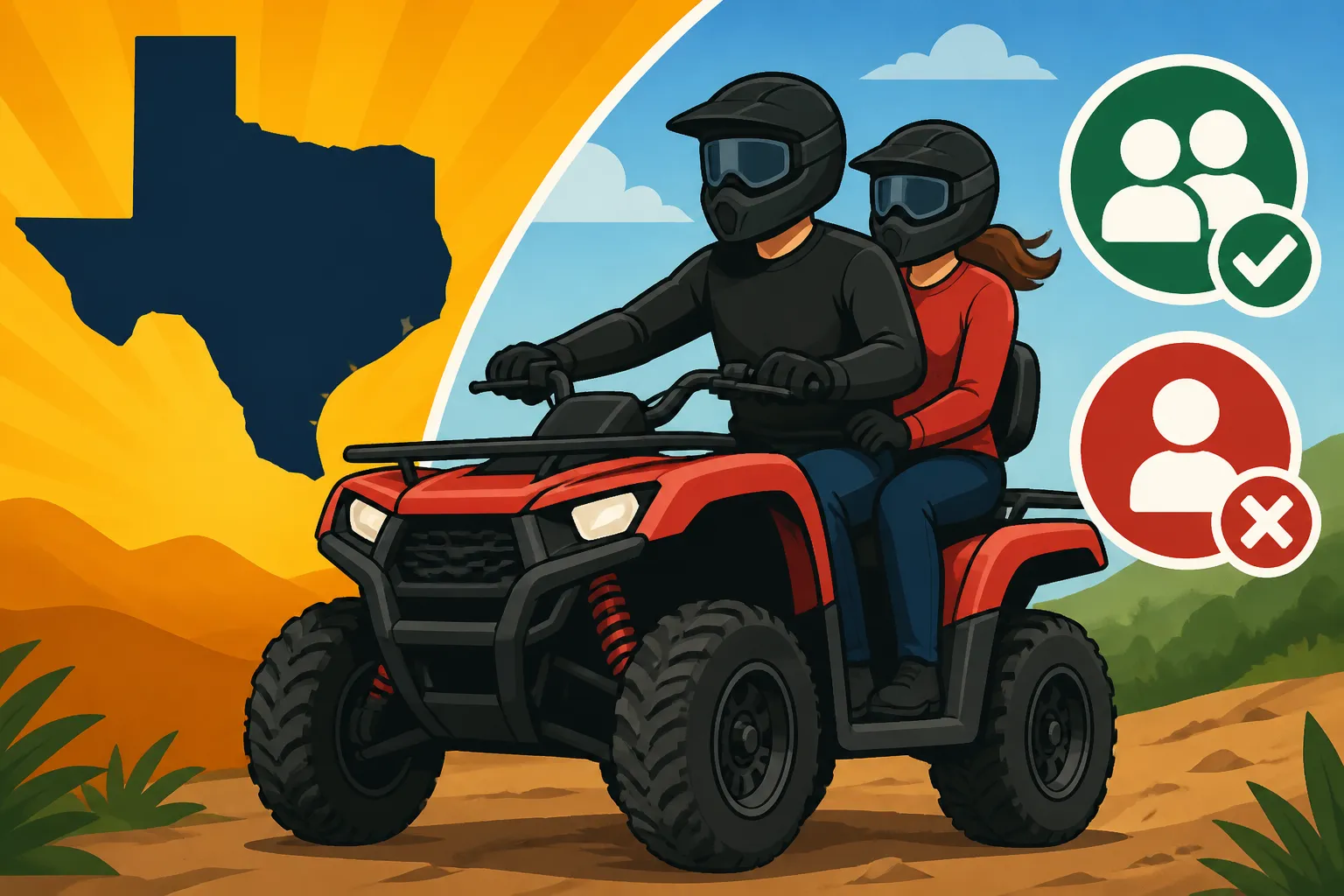
Texas Passenger Rules on an ATV
One of the trickiest things about owning an ATV or UTV in Texas is figuring out who can actually ride on it, especially when you have kids or friends eager to tag along. It feels like everyone has a different idea, and the thought of getting a ticket or, even worse, putting someone at risk, is enough to make you scratch your head. This guide will walk you through the clear rules in Texas regarding passengers on ATVs and how UTVs fit into the picture, helping you understand what's safe, what's legal, and what could land you in hot water.
The Core Rule: One Rider Per ATV
Let's get straight to the point: for the vast majority of ATVs, the golden rule in Texas, and pretty much everywhere else, is one rider per machine. This isn't just some arbitrary guideline; it's deeply rooted in how these vehicles are designed and engineered for safety and performance.
Why ATVs Are Generally Single-Rider Machines
Think about the fundamental design of an ATV, or a "quad" as many of us call them. They're built for agility, balance, and responsive control. The rider uses their body weight to shift and counter-steer, especially when navigating turns, hills, or uneven terrain. Adding a passenger completely throws off this delicate balance. Suddenly, you're trying to control a vehicle meant for one person's weight distribution with two, making it incredibly difficult to lean into turns or react quickly to obstacles. It's like trying to ride a bicycle built for one with someone perched precariously behind you – it just doesn't feel right, and it certainly isn't safe.
The chassis, suspension, and steering geometry of a typical ATV are optimized for a single operator. Overloading it can strain components, reduce braking effectiveness, and make the machine unpredictable. When you're out on the trails, whether it's the rough terrain of Barnwell Mountain Recreation Area or the sandy washes near the Red River, you need every ounce of control you can get.
The Manufacturer's Sticker: Your First Clue
If you're ever in doubt, the very first place to look is right on your ATV itself. Every manufacturer places clear warning labels and stickers on their machines, and these aren't just for show. These labels explicitly state the machine's capacity, and almost without exception, for a standard ATV, they will say "Operator Only" or "No Passengers." This isn't just a recommendation; it's a critical safety warning from the people who designed and built the machine.
These labels also often detail maximum weight capacities. When you add a second person, even if they're small, you very quickly exceed these limits, putting undue stress on the frame, tires, and suspension. It's a clear indicator that the machine simply isn't built to safely carry more than one person. Ignoring these warnings not only puts your passengers at risk but can also void warranties or complicate insurance claims in the event of an accident.
Safety Concerns of Doubling Up
The dangers of carrying a passenger on a single-rider ATV are numerous and serious. The most immediate concern is stability. An ATV's center of gravity is carefully calibrated for one rider. With two people, especially if the passenger is not experienced or doesn't know how to properly shift their weight in sync with the driver, the machine becomes significantly more prone to rollovers. This is particularly true on side hills, sharp turns, or when crossing obstacles.
Beyond rollovers, control is severely compromised. Braking distances can increase, acceleration can be sluggish, and steering responsiveness can be reduced. A passenger can obstruct the driver's view or interfere with their ability to quickly get off the machine in an emergency. The lack of proper handholds or footrests for a passenger also means they are more likely to be thrown off, leading to severe injuries. These aren't just hypothetical scenarios; they are common causes of ATV accidents that unfortunately lead to serious harm. This is precisely why manufacturers design them as single-rider units, prioritizing the safety and control of the operator.
Texas Law and Passengers on OHVs
Texas law is pretty clear when it comes to riding off-highway vehicles (OHVs) and, specifically, passengers. It largely mirrors the manufacturer's intent, prioritizing safety above all else. Understanding the legal specifics can help you avoid fines and, more importantly, keep everyone safe.
What Texas Transportation Code Says
The Texas Transportation Code, specifically Chapter 663, addresses off-highway vehicles. While it doesn't explicitly say "no passengers on an ATV" in big, bold letters, it does establish a framework that strongly implies and enforces the single-rider rule for ATVs. The key here is the legal definition and how it relates to the manufacturer's design. The law defines an OHV based on its design for off-highway use, and critically, how it's equipped by the manufacturer.
This means that if your ATV was designed by the manufacturer for only one operator, then carrying a passenger goes against the intended and legal use of that vehicle on public lands or shared trails. It's important to remember that these rules are in place not to restrict fun, but to prevent accidents and injuries. For instance, if you're riding at Hidden Falls Adventure Park, park staff will often enforce these rules rigorously because they understand the safety implications.
The "Designed by the Manufacturer" Clause
This clause is the linchpin of Texas's passenger rules for OHVs. The law explicitly references the manufacturer's design for seating. If an ATV comes from the factory with only one seat, and no provisions for an additional passenger – meaning no extra footrests, handholds, or seating area – then it is considered a single-rider vehicle. This is where ATVs and UTVs diverge quite sharply in the eyes of the law and safety standards. UTVs, by their very nature, are designed with multiple seats, often bench-style or bucket seats, complete with individual seatbelts, and that's precisely why they can carry passengers legally and safely.
You might see aftermarket accessories advertised, for example, from SuperATV, that offer bolt-on rear seats for ATVs. While these products exist, it's crucial to understand that simply adding an aftermarket seat does not change the original manufacturer's design intent or the vehicle's fundamental stability characteristics. A bolt-on seat, no matter how sturdy it seems, doesn't re-engineer the ATV's suspension, frame, or balance point to safely accommodate a second person. In Texas, the focus remains on the original design by the manufacturer.
Penalties for Non-Compliance
Breaking these passenger rules isn't just a theoretical safety concern; it carries real legal consequences. Operating an OHV with a passenger when it's not designed to carry one can result in a Class C misdemeanor in Texas. While the exact fine can vary, a Class C misdemeanor can range from $25 to $500. This is a significant penalty that can quickly add up, especially if you're ticketed multiple times.
Beyond the immediate fine, there's the added stress of potential legal proceedings, and if an accident were to occur while carrying an unauthorized passenger, the legal ramifications could be far more severe. This could include liability issues, insurance complications, and even more serious charges if injuries are involved. It's a stark reminder that adhering to the manufacturer's guidelines and the state's laws is not only about personal safety but also about legal and financial protection.
UTVs and Their Multi-Passenger Design
While ATVs are generally single-rider machines, UTVs, or Side-by-Sides, are a completely different animal when it comes to carrying passengers. This distinction is vital for understanding Texas rules and ensuring you're operating your machine within legal and safe parameters.
The Fundamental Difference: ATVs vs. UTVs
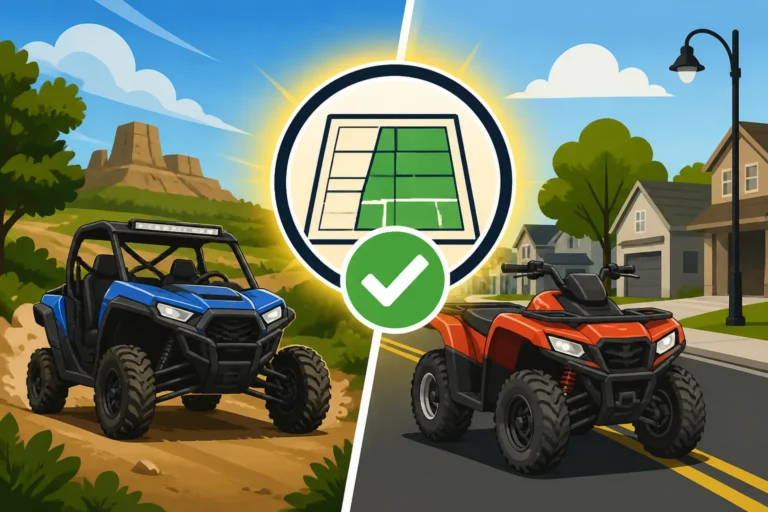
The core difference between an ATV and a UTV lies in their fundamental design and intended purpose. An ATV is designed for a single rider who straddles the machine, using handlebars for steering, and relying on body English for balance and control. It's built for individual agility and sporty performance.
A UTV, on the other hand, is built more like a miniature car. Riders sit side-by-side (hence "Side-by-Side"), often in bucket seats or a bench seat, use a steering wheel, and operate foot pedals similar to a car. Their wider stance, often roll cages, and multi-passenger seating are all deliberate design choices that make them inherently more stable and safer for multiple occupants. Where an ATV relies on the rider's active balance, a UTV provides a more stable, passive ride for its occupants. This fundamental difference in engineering is why UTVs can legally and safely carry passengers in Texas, provided they adhere to their manufacturer's specifications.
Manufacturer-Designed Seating and Seatbelts
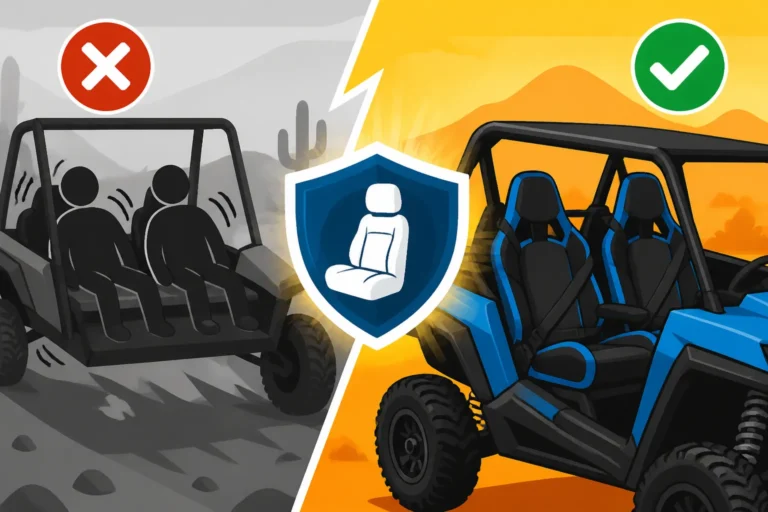
For a UTV to legally carry passengers in Texas, it must be equipped with seating designed by the manufacturer for that purpose. This isn't just about having a place to sit; it's about integrated safety features. Most modern UTVs come standard with multiple seats, each with its own seatbelt. These seatbelts are crucial. They are designed to keep occupants safely restrained within the vehicle's protective structure, especially in the event of a sudden stop, rough terrain, or rollover.
Any passenger riding in a UTV must be in a manufacturer-designed seat and properly secured with a seatbelt. Attempting to squeeze more people into a UTV than there are designated seats and seatbelts is just as dangerous as putting a passenger on an ATV. Even if you're just going for a quick spin around the ranch, everyone needs to be properly buckled in. Some UTVs also offer additional grab handles or protective nets, further enhancing passenger safety. Companies like SuperATV offer various accessories for UTVs, including harnesses and supplemental safety equipment, but these should always be used to enhance existing manufacturer safety features, not as a replacement for them.
When a UTV Can Carry Passengers
A UTV can carry passengers when it has seating explicitly designed for them by the manufacturer. This typically means:
- Dedicated Seats: Each passenger must have their own designated seating position, whether it's a bucket seat or a portion of a bench seat.
- Seatbelts: Every designated seat must be equipped with a functional seatbelt, and the passenger must be wearing it.
- Within Capacity Limits: The total number of passengers (and driver) must not exceed the UTV's maximum occupant capacity as specified by the manufacturer. This usually means a two-seater, four-seater, or even six-seater configuration.
If you're unsure about your specific UTV model's capacity, check your owner's manual. It will clearly state the maximum number of occupants and the total weight capacity. Always err on the side of caution. Overloading a UTV, even one designed for multiple passengers, can compromise its handling and safety, leading to serious risks on the trail, whether you're at Sam Houston National Forest or out in West Texas.
Exceptions and Practical Considerations
While the rules are generally clear, there are always unique situations and practical considerations that can make things seem a little murky. Let's delve into some of those, keeping safety and compliance firmly in mind.
Agricultural and Ranch Use: A Different Standard?
Texas is a big state with a lot of ranches and agricultural operations. It's common to see folks using ATVs and UTVs as workhorses, hauling feed, checking fences, or moving equipment. You might even occasionally see someone carrying a helper or a child on a quad for a short distance on private land. While the law focuses on public land and roads, the spirit of the safety rules still applies even on private property.
For ranch work, there's no specific legal exemption in Texas that allows you to carry an unauthorized passenger on an ATV just because it's for agricultural purposes. The core safety principles remain. However, on private land, enforcement might be different than on public trails. That said, if an accident occurs, liability and insurance could still become major issues, especially if someone is injured while riding unsafely. Many ranch owners, prioritizing the safety of their workers and family, choose to use multi-passenger UTVs for tasks that require more than one person, simply because they are built for it. This aligns with [Texas Agricultural Exemption for ATVs on Roads] which discusses certain waivers for road use, but doesn't change the passenger capacity.
Aftermarket Passenger Seats: Are They Legal or Safe?
We touched on this briefly, but it deserves a deeper dive. The market is full of aftermarket products claiming to turn your single-seat ATV into a two-seater. These often consist of a bolt-on seat, sometimes with footpegs. The critical question isn't whether you can attach one, but whether it makes your ATV safe and legal for passengers in Texas.
From a legal standpoint, as previously discussed, Texas law focuses on the manufacturer's original design. Adding an aftermarket seat does not magically transform your ATV's engineering, weight distribution, or stability characteristics. It won't convert it into a "manufacturer-designed" multi-passenger vehicle in the eyes of the law or safety experts. Therefore, even with an aftermarket seat, carrying a passenger on a single-rider ATV on public lands or roads in Texas would likely still be considered illegal and unsafe.
From a safety perspective, these seats often don't provide the same level of security or ergonomics as a purpose-built UTV. Passengers might be perched too high, making the machine top-heavy, or lack adequate handholds and footrests. While SuperATV offers a wide array of excellent ATV and UTV accessories, for critical safety components like passenger seating, it's always best to stick to the vehicle's original manufacturer specifications and design for carrying people. When it comes to modifying your machine for specific tasks, like adding storage or utility racks, aftermarket solutions can be fantastic, but for passenger capacity, the rules are much stricter for good reason.
Crossing Public Roads with Passengers
Texas law does allow for very limited, specific instances where OHVs can cross public roads or operate on certain low-speed roadways, particularly for agricultural purposes or in designated communities. However, even in these narrow exceptions, the passenger rules still apply rigorously.
If your ATV is a single-rider machine, you cannot legally carry a passenger even for a quick road crossing. If you are operating a UTV that is designed for multiple passengers, then those passengers must be in their designated seats, wearing seatbelts, and you must adhere to all other road-crossing regulations, such as obeying traffic laws, having appropriate lighting (even in daylight), and stopping before entering the roadway. For more details on these specific road rules, you can refer to [Crossing a Highway on an ATV in Texas] or [Texas Rules for Getting Across a Road]. The strictness of these rules, even for short distances, underscores the high-risk nature of operating these vehicles, especially with added complexity like passengers, on or near public thoroughfares.
Understanding these passenger rules is vital for anyone who enjoys riding ATVs and UTVs in the Lone Star State. Prioritizing safety and adherence to manufacturer guidelines, backed by Texas law, ensures everyone can enjoy the trails responsibly.
Texas OHV Passenger Rules Summary
To help clarify the differences between ATVs and UTVs regarding passenger rules in Texas, here's a quick overview:
| Feature/Criterion | Typical ATV (Quad) | Typical UTV (Side-by-Side) | Texas Passenger Legality & Safety Implication |
|---|---|---|---|
| Manufacturer Design | Single operator, straddle seat | Multi-passenger, bucket/bench seating | Crucial distinction: Basis for legality. |
| Steering Mechanism | Handlebars | Steering wheel | Affects driver control & passenger interaction. |
| Body Weight for Balance | Essential for rider control and stability | Less dependent on occupant body weight | ATV passengers severely compromise balance. |
| Integrated Safety Features | None for passengers; often no seatbelts | Seatbelts, roll cage, grab handles | UTVs built with passenger safety in mind. |
| Aftermarket Passenger Seats | Available, but do not change original design | Not typically needed for primary seating | Not legal or safe for ATVs in Texas. |
| Texas Legal Status | Generally not permitted to carry passengers | Permitted to carry passengers within design limits | Fines for non-compliance on ATVs. |
| Risks with Passengers | High risk of rollover, loss of control, ejection, injury | Lower risk if within design limits and occupants belted | Major safety concern on ATVs. |
Disclaimer
This article is for general informational purposes only and does not constitute professional advice. Laws, prices and regulations vary by location and change over time. Consult a qualified professional for guidance on your specific situation.