Texas Helmet Law for UTV Drivers
It can feel incredibly confusing trying to figure out the exact safety gear requirements when you're hitting the trails in your side-by-side. Many UTV drivers assume that because they have a roll cage and maybe even seat belts, they don't have to worry about a helmet, but Texas law has some specific nuances that can trip up even experienced riders. This guide is here to clear up the muddy waters around Texas helmet law for UTV drivers, helping you understand when a helmet is required and when it's just a really good idea.
The Core Question: Do UTV Drivers Need Helmets in Texas?
Let's dive right into the heart of the matter because this is where a lot of the confusion lies. Unlike traditional ATVs, which almost universally require helmets for younger riders and often for adults on public lands, UTVs (or side-by-sides as they're often called) have a slightly different set of rules in Texas. This distinction often comes down to the vehicle's design and how the law categorizes it.
Understanding the "Off-Highway Vehicle" Definition
First things first, what exactly does Texas consider a UTV or side-by-side? For the purposes of Texas law, most UTVs fall under the umbrella of "off-highway vehicles" (OHVs). This broad category includes ATVs, UTVs, and even some recreational off-road vehicles like sand rails. The law often treats these machines similarly in many respects, but there are crucial differences, especially when it comes to safety equipment like helmets. You can learn more about this by reading [What Texas Counts as an Off-Highway Vehicle]. The key takeaway is that your UTV is an OHV, and that's the framework we're working within.
Texas Law's Stance on Passengers and Drivers
Here's where it gets interesting for UTVs. Texas law, specifically Transportation Code Chapter 663, outlines the requirements for OHV operation. While it mandates helmets for most ATV riders under certain conditions, it carves out a specific exception for UTVs due to their inherent design. The law generally says that an operator or passenger of an OHV must wear a helmet if they are under 15 years of age. However, for those 15 and older, the requirement is often tied to the specific type of OHV and where you're riding. For UTVs, the presence of certain safety features can override the helmet requirement for adult riders.
The Roll Cage Exemption: A Key Distinction
This is the big one for UTV drivers. Texas law provides an exemption from the helmet requirement if the OHV (your UTV, in this case) is equipped with a roll bar or roll cage and seat belts. This means that if your side-by-side, as it came from the factory or with approved aftermarket modifications, has a sturdy roll cage and you and your passengers are properly belted in, then you are generally exempt from the helmet law on public lands or during legal road crossings, if you are 15 years or older. This is a significant difference from many ATVs, which typically don't offer such protection. This exemption acknowledges the added layer of safety a roll cage and seat belts provide. You can dive deeper into this specific exemption with [The Roll Cage Exemption From a Texas Helmet].
Where the Helmet Law Applies (and Doesn't)
Understanding the letter of the law is one thing, but knowing where those laws are enforced is just as important. Texas offers a diverse range of riding environments, and the rules for helmets can shift depending on whether you're on public land, a sanctioned OHV park, or your own private property.
Riding on Public Land and OHV Parks
When you head out to a public riding area, like parts of the Sam Houston National Forest or one of the many dedicated OHV parks across the state, you're generally subject to state law and any additional rules the park itself might impose. This means the roll cage and seat belt exemption for UTVs typically applies. However, it's absolutely crucial to check the specific rules of the park you plan to visit. Some privately run or grant-funded parks might have stricter rules, requiring helmets for all riders regardless of age or vehicle type, or [Texas OHV Parks That Require Helmets at All Times]. Always look up their regulations before you load up and go. For example, some parks, especially those designed with more extreme terrain, might strongly recommend or even mandate helmets for everyone, even if state law technically exempts you.
Limited Road Use Exceptions and Helmet Rules
Texas law generally prohibits OHVs from being operated on public roads. This is a common point of frustration for many UTV owners who just want to get to a nearby store or a friend's house. However, there are several narrow exceptions where UTVs can legally operate on certain public roads, such as for agricultural purposes, utility work, or specific types of roads in particular counties or master-planned communities. When operating your UTV under one of these limited exceptions, the helmet rules generally follow the same guidelines as outlined above: if your UTV has a roll cage and seat belts, and you're 15 or older and belted in, a helmet is usually not legally required by the state. Nevertheless, using common sense is paramount. Even when not legally mandated, wearing a helmet on a public road, even briefly, provides an extra layer of protection against unexpected traffic or road conditions. It's always wise to be extra cautious when mixing with other vehicles. For more on road use, check out [Texas Rules for Riding a Farm Road] or [Texas Rules for Riding a Master Planned Community].
Private Property: Your Rules, Mostly
This is the simplest scenario: if you're riding your UTV entirely on your own private land, or on private land with the owner's explicit permission, state helmet laws generally do not apply. On private land, the owner sets the rules. This means if you're on your ranch, a friend's deer lease, or any other private property, the decision to wear a helmet is largely up to you and the property owner.
However, just because it's not legally mandated doesn't mean it's not a good idea. Many experienced riders will tell you that even on familiar private trails, accidents can happen quickly. It's your responsibility to ensure your own safety and the safety of anyone riding with you, especially children. If you have younger riders, even on private land, adhering to the state's age-related helmet guidelines is a smart practice.
Here's a quick reference table for Texas UTV helmet requirements:
| Riding Location/Scenario | Roll Cage & Seat Belts (15+ years old) | No Roll Cage / No Seat Belts / Under 15 | Additional Notes |
|---|---|---|---|
| Public OHV Park | Not legally required (state law) | Required | Always check park-specific rules; some may mandate helmets for all. |
| Limited Public Road Use | Not legally required (state law) | Required | Exercise extreme caution; helmet highly recommended. |
| Private Land | Not legally required (owner's rules) | Owner's rules, but recommended | Owner sets rules; safety is still paramount. |
Beyond the Helmet: Other Safety Considerations for UTVs
While the helmet question often takes center stage, there's a whole suite of other safety measures and equipment that are just as, if not more, critical for UTV drivers and passengers. These elements work together to provide a comprehensive safety net when you're out exploring.
Seat Belts and Manufacturer Seating
This is non-negotiable for UTVs. The very exemption from helmet law in Texas is contingent upon the use of seat belts. It's not enough for your UTV to have seat belts; you and all your passengers must be properly buckled up at all times while the vehicle is in motion. This includes ensuring that everyone is seated in a manufacturer-designed seating position. Trying to squeeze extra people onto a bench seat not designed for three, or allowing someone to ride in the bed of the UTV, is incredibly dangerous and could negate any legal protection offered by the roll cage and seat belts. For more detailed information, see [Texas Seat Belt Rules in a Side-by-Side].
Eye Protection and Other Gear
Even if you're not wearing a helmet, eye protection is almost always a good idea, and often a legal requirement in many riding scenarios. Dust, debris, branches, and even insects can pose a serious hazard to your eyes, leading to temporary blindness or serious injury. Goggles or safety glasses are inexpensive and provide crucial protection. Many UTVs, especially if they have an aftermarket windshield from a company like SuperATV, might offer some front-facing protection, but side impacts or dust swirling from behind can still be an issue. Beyond eyes, consider sturdy footwear, long pants, and long sleeves to protect against scrapes, sun, and flying debris. [Texas Safety Apparel Rules for ATV Riders] offers good general advice that applies to many OHV situations.
Age and Supervision for Young Riders
Texas has clear rules about who can operate an OHV and who needs supervision. Regardless of whether it's an ATV or UTV, anyone under the age of 14 operating an OHV on public land must be under the direct supervision of a parent or guardian, or another adult who has a valid OHV safety certificate and is at least 18 years old. For riders under 15, a helmet is generally required, regardless of the UTV's roll cage or seat belts, when operating on public lands. It's a fundamental rule designed to protect the most vulnerable riders. Always ensure you understand and adhere to these age-related requirements, especially when bringing children along for the ride. More on this topic can be found in [Texas Minimum Age to Ride on Public Land].
Navigating the Nuances: Common Scenarios and What to Do
The law can be a maze, and real-world situations rarely fit neatly into a single paragraph. Let's look at a few common scenarios and discuss how to navigate them safely and legally.
When Your UTV Has Modifications
Many UTV owners love to customize their machines, adding accessories like aftermarket roofs, full windshields, doors, or upgraded harnesses. These modifications, especially those from reputable brands like SuperATV, can enhance your riding experience and comfort. But how do they affect the helmet law?
If your UTV originally came with a roll cage and seat belts, adding a full windshield or a hard top won't typically negate the helmet exemption for adults (15+). In fact, a good windshield might even make eye protection less critical in some conditions, though it's still wise to carry it. The key is that the core safety features – the roll cage and seat belts – are still present and being used. However, if you've modified your UTV in a way that compromises the structural integrity of the roll cage or interferes with the proper function of the seat belts, you could be putting yourself at risk and potentially falling outside the legal exemption. Always ensure any modifications are done safely and don't undermine the vehicle's original safety design.
Riding with Kids: Who Needs What
This is a scenario where caution and compliance are non-negotiable. If you're riding with children under 15, Texas law is pretty clear: they need a helmet when on public land or during legal road crossings, even if the UTV has a roll cage and seat belts. There's no exception for their age group based on the vehicle's design. This is a critical point that many UTV owners overlook. Additionally, ensuring children are in appropriate seating for their size and weight, and that their seat belts fit correctly, is vital. Never allow a child to ride in a position not designated for a passenger. [Texas Passenger Rules on an ATV] provides some general guidance applicable to UTVs as well.
The "Better Safe Than Sorry" Approach
Even with the exemptions for UTVs in Texas, many seasoned riders choose to wear a helmet anyway, especially in certain conditions or environments. Why? Because accidents can happen anywhere, anytime. A helmet provides crucial protection against head injuries, which can be life-altering.
Consider these scenarios:
- Aggressive Riding: If you're pushing your UTV hard, tackling challenging trails, or engaging in any kind of spirited driving, the risk of rollover or impact increases. A helmet adds an extra layer of defense.
- Unfamiliar Terrain: Exploring new trails, especially those with unknown obstacles, steep inclines, or tricky turns, inherently carries more risk.
- Poor Visibility: Dusty conditions, rain, or low light can obscure hazards.
- Rock Crawling or Technical Trails: These activities put significant stress on the vehicle and can lead to unexpected lurches or rollovers.
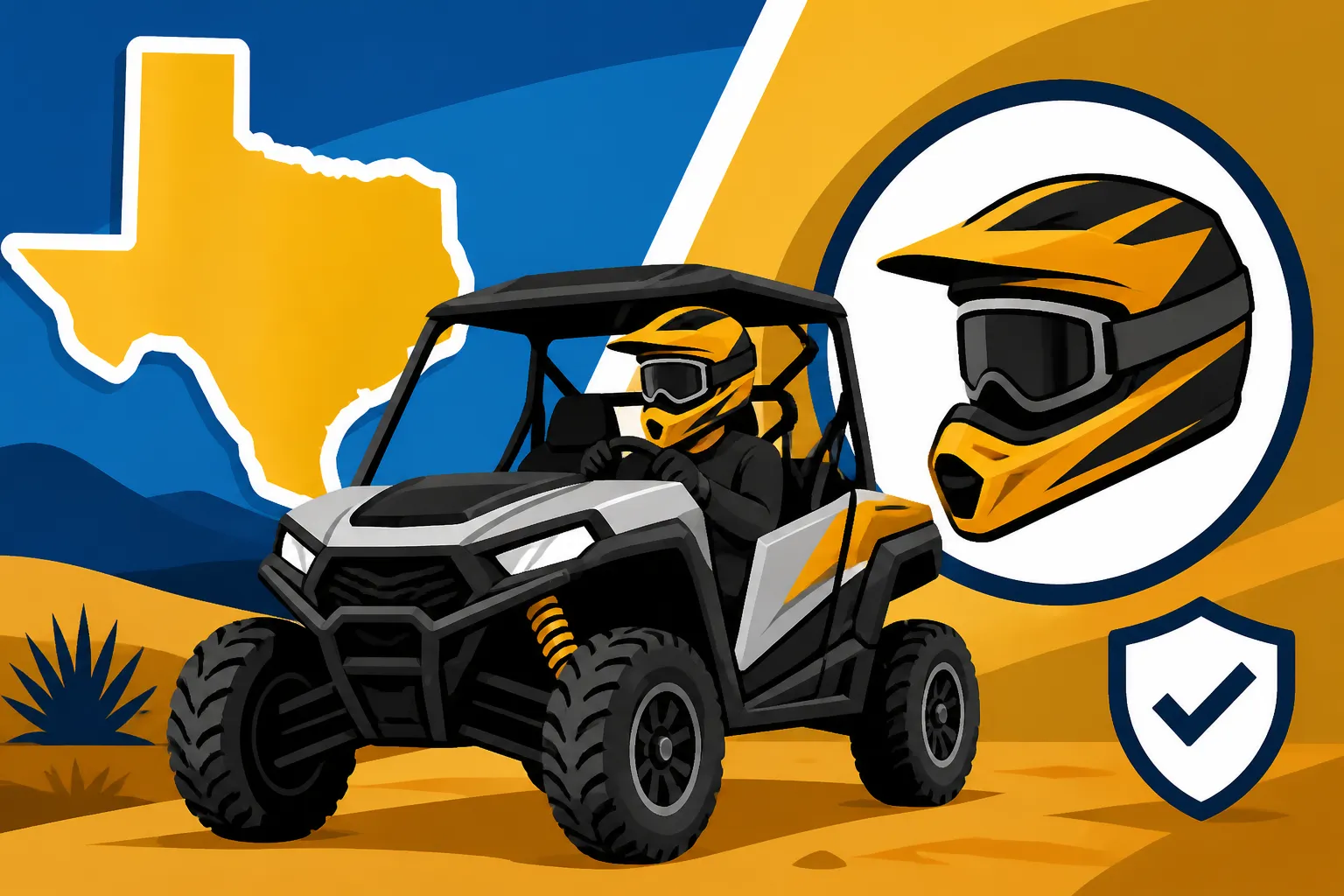
Ultimately, the law provides a baseline, but your personal safety and well-being should always be your top priority. While your UTV's roll cage offers significant protection, it's not foolproof, and a helmet protects the most vital part of your body. Choosing to wear one, even when not legally required, is always a smart decision.
Disclaimer
This article is for general informational purposes only and does not constitute professional advice. Laws, prices and regulations vary by location and change over time. Consult a qualified professional for guidance on your specific situation.