Texas Helmet Law for ATV Riders
Many Texas ATV riders wrestle with the often-confusing helmet laws, wondering exactly when they need to strap on head protection and when they might be legally exempt. It’s a common frustration, especially when you’re just trying to enjoy a ride, cross a county road, or tend to tasks on the ranch. This comprehensive guide aims to untangle the complexities of the Texas helmet law for ATV riders, providing clear, actionable information so you can ride confidently and safely within the bounds of the law.
Understanding the General Texas Helmet Law for ATV Riders
Let's cut right to the chase: for most ATV riders on public land in Texas, wearing a helmet is generally required. The state of Texas takes rider safety seriously, especially given the dynamic and sometimes unpredictable nature of off-highway vehicle (OHV) riding. The law is designed to protect riders from severe head injuries in the event of an accident, which, unfortunately, can happen even to the most experienced among us. It's not just about avoiding a ticket; it's about minimizing risk.
This requirement typically applies when you're operating an ATV on publicly accessible areas, such as designated trails within state parks, national forests, or other public riding areas. The intent is to ensure that riders in environments where the state has jurisdiction are afforded a basic level of protection. Ignoring this can lead to fines, which are really just the least of your worries compared to the potential for serious injury. It's a fundamental part of [Texas Safety Apparel Rules for ATV Riders].
The law defines an ATV fairly broadly, covering many of the machines you might consider a quad, dirt bike, or even some smaller utility vehicles. The overarching principle is that if you're exposed to the elements and potential impacts without the structural protection of a traditional enclosed vehicle, head protection is deemed necessary. This foundation helps explain why Texas views OHVs differently from regular passenger cars when it comes to safety equipment.
Who Must Wear a Helmet Under Texas Law
Generally speaking, anyone operating or riding as a passenger on an ATV on public land in Texas is subject to the helmet law. This isn't just for the driver; if you have a passenger (and your ATV is designed to carry one safely), they need to wear a helmet too. There's often confusion, especially with younger riders, about who needs to wear what.
For instance, if you're out with your family at a place like Barnwell Mountain Recreation Area or Hidden Falls Adventure Park, every single person on an ATV must have a DOT-approved helmet securely fastened. It's not just a park rule; it's the law. Many of these parks even require helmets on private trails, enforcing a higher standard of safety. The law makes no distinction based on age for this general requirement, meaning children and adults alike must comply. This is critical for parents to understand when planning family rides, as securing proper-fitting helmets for everyone is essential before even leaving home.
While some states have specific age cutoffs for helmet use, Texas's general rule for ATVs on public land is more encompassing, focusing on the vehicle type and location rather than the rider's age. This simplifies compliance but places the full responsibility on the operator to ensure everyone is properly equipped. It's always a good idea to refresh yourself on [Texas Minimum Age to Ride on Public Land] and other relevant rules when planning your excursions.
What Kind of Helmet is Required?
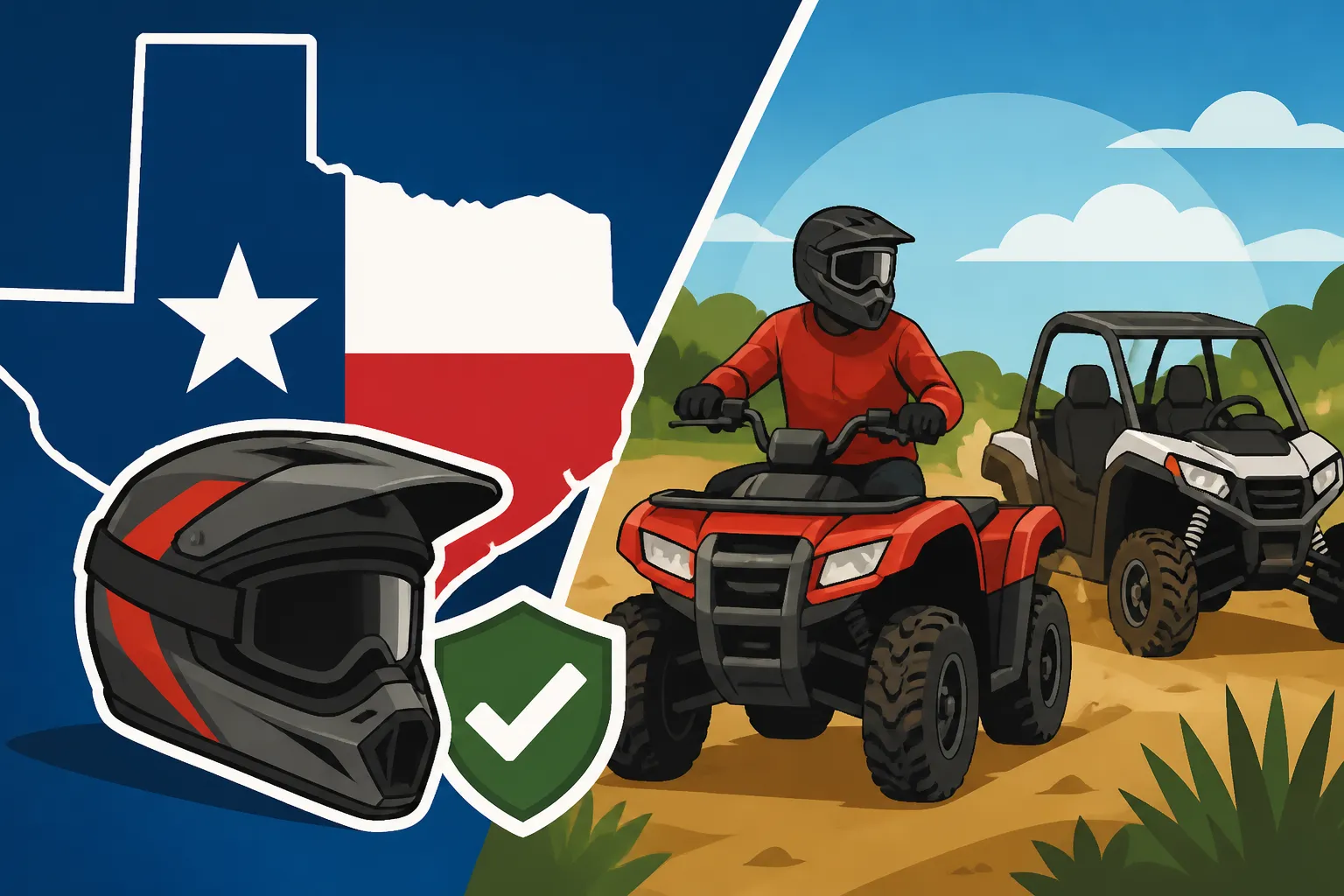
When the law says "helmet," it's not talking about just any old hat or a bicycle helmet. Texas law specifically requires a helmet that complies with standards established by the United States Department of Transportation (DOT). You'll typically find a "DOT" sticker on the back of any compliant helmet. This certification means the helmet has met rigorous testing standards for impact absorption and penetration resistance.
Choosing a DOT-approved helmet means you're investing in protection that has been scientifically proven to mitigate head injuries in various impact scenarios. There are different styles of DOT-approved helmets, from full-face designs that offer comprehensive protection, including eye and chin guards, to open-face helmets that provide good airflow but leave the face more exposed. Many riders find that a full-face off-road specific helmet provides the best balance of protection, ventilation, and visibility for ATV riding. Companies like SuperATV, while known for vehicle accessories, often stock or recommend specific types of protective gear that meet these standards.
It's also crucial that the helmet fits properly. A helmet that's too loose can shift during a crash, reducing its effectiveness, while one that's too tight can be uncomfortable and distracting. Always follow the manufacturer's sizing guide and ensure a snug, comfortable fit that doesn't obstruct your vision. Don't forget that [Texas Eye Protection Requirement for Riders] might also apply, especially if your helmet doesn't have a built-in visor.
Navigating Specific Riding Scenarios and Helmet Exemptions
The general rule is a great starting point, but like many laws, there are specific situations and exemptions that can make things a bit more nuanced. It’s these exceptions that often cause the most confusion among riders. Understanding these can help you avoid unnecessary tickets or, more importantly, ensure you're protected when you need to be.
One of the biggest areas of confusion involves private land versus public land. If you're riding entirely on private property that you own or have explicit permission to use, the state helmet law typically doesn't apply. This is where many ranchers, farmers, and private leaseholders find themselves. However, even on private land, common sense and safety consciousness should always prevail. Accidents don't discriminate between public and private property.
Another common scenario involves crossing public roads. While [Are ATVs Street Legal in Texas?] generally has a "no" answer, there are limited exceptions for crossing or briefly traveling on certain public roads. During these brief transitions, the helmet law does generally apply, as you are operating on a public roadway. It's a quick but important moment of compliance.
The Agricultural and Master Planned Community Exemptions
Texas law offers some specific carve-outs, particularly for agricultural use and within certain master planned communities. If you're using an ATV for legitimate agricultural purposes, such as hauling feed on a ranch, checking fences, or transporting equipment on farm roads, you may be exempt from the helmet requirement, even on public roads within the scope of your operation. This ties into broader provisions like [Texas Agricultural Exemption for ATVs on Roads]. However, this exemption is strictly for bona fide agricultural use, not for joyriding or recreational activities.
Similarly, some master planned communities in Texas have specific rules that might allow for limited ATV or UTV use on their internal roads, often with speed limits of 35 mph or less. In these highly controlled environments, the community's specific covenants and local ordinances might create exceptions to the state's general helmet rule. This is a very localized situation, and you'd need to thoroughly check the rules of that specific community and any local city ordinances. Always consult with the community association or local law enforcement to be absolutely sure. For more details, you might want to look into [Texas Rules for Riding in a Master Planned Community].
It's important to stress that these are narrow exceptions, and they don't give you a free pass to ride without a helmet everywhere. When in doubt, wear your helmet. It's better to be safe than sorry, and certainly better than facing a fine or, worse, an injury.
Road Crossings and Volunteer Firefighter Rules
Briefly crossing a public road is a specific situation where many riders get confused. Even if your ultimate destination is private land, the moment your wheels touch a public road, you are subject to the rules governing that road. This means that if you're merely crossing a county road at a 90-degree angle to get from one section of your property to another, the helmet law typically applies during that brief transit. Details on how to execute such crossings legally can be found in [Texas Rules for Getting Across a Road].
There's also a special provision for volunteer firefighters and emergency services personnel. If you are operating an ATV or UTV in the course of your duties as a volunteer firefighter, for example, responding to an emergency or managing a controlled burn, you may be exempt from certain helmet requirements. This exception acknowledges the critical and often urgent nature of their work. However, this is strictly for official duties and not for personal recreational use.
Here's a quick comparison of common riding situations and helmet requirements:
| Riding Situation | Helmet Required? | Notes |
|---|---|---|
| Designated OHV Trails (Public Land) | Yes | Applies to driver and passenger. Must be DOT-approved. |
| Private Property (Owner/Permission) | No (Legally) | Recommended for safety. Owner's rules may apply. |
| Crossing a Public Road | Yes | During the short transit on the road. |
| Agricultural Use (Farm/Ranch Roads) | No (Exempt) | Must be for legitimate agricultural purposes. |
| Master Planned Community Roads | Varies | Check specific community and local ordinances. |
| Volunteer Firefighter Duties | No (Exempt) | Must be in the course of official duties. |
| Beaches (Where Allowed) | Yes | Public beaches are considered public land. |
The Role of Roll Cages and Seat Belts in Helmet Exemptions
Now, this is where things get really interesting, especially for UTV (Utility Terrain Vehicle) and certain Side-by-Side riders. Texas law provides a significant exemption from the helmet requirement if the OHV is designed by the manufacturer to be equipped with a roll cage or similar enclosed occupant compartment and the rider (and any passengers) are wearing seat belts. This is a crucial distinction that often separates UTVs from traditional ATVs in terms of helmet requirements.
Most modern UTVs, like those designed for recreation or utility, come standard with factory-installed roll cages and seat belts. If you're driving one of these machines and everyone inside is buckled up, you are generally not required to wear a helmet under Texas law. This is because the roll cage and seat belts are considered an alternative safety system, providing protection in the event of a rollover or collision. This particular exemption is a major reason why many people opt for UTVs, finding them a comfortable and legally less restrictive option for certain types of riding.
It's vital to understand the "manufacturer-designed" aspect. Simply adding an aftermarket roll cage to a traditional ATV that wasn't originally designed for one won't automatically grant you this exemption. The vehicle needs to have been manufactured with that safety structure in mind. Companies like SuperATV offer fantastic aftermarket roll cages and safety enhancements for many UTVs, which can add extra layers of protection and customization, but always check if your specific setup still adheres to the spirit of the law regarding manufacturer-designed systems for exemption purposes.
Roll Cage Exemption Details
The key here is that the vehicle must be designed to have a roll cage, and you must use the seat belts provided. If your UTV has a roll cage but you or your passengers aren't wearing the seat belts, then the helmet exemption doesn't apply, and you could be cited for not wearing a helmet. It's an all-or-nothing proposition for this particular exemption.
Think about it this way: the law sees the roll cage and seat belt system as a primary restraint and protection system, similar to how airbags and seat belts work in a car. If one part of that system (the seat belt) isn't engaged, the overall protection isn't complete, and therefore the helmet becomes the necessary fallback. This distinction is particularly relevant for families or groups riding together, as every occupant must comply for the exemption to be valid.
For those riding traditional ATVs that don't come with roll cages or seat belts, this exemption doesn't apply at all. Even if you modify your ATV with a custom cage, it likely won't meet the "manufacturer-designed" criteria for the legal helmet exemption. In those cases, the general helmet rule for ATVs on public land will always be in effect. This is why [Texas Helmet Law for UTV Drivers] often differs from ATV specific guidelines.
The Importance of Seat Belt Use
It cannot be stressed enough: if your machine has seat belts and a roll cage, and you're relying on the helmet exemption, everyone inside must be wearing their seat belt. It’s not just a technicality; it’s a critical safety measure. In a rollover event, even with a strong roll cage, unbelted occupants can be ejected from the vehicle or tossed around inside the cab, leading to serious injury or death.
This applies equally to children riding as passengers in UTVs. Ensure that children are in appropriate seating (if designed for passengers) and properly secured with the available seat belts. Always check the manufacturer's guidelines for passenger capacity and age recommendations. Some UTVs might even offer child seats or harnesses as accessories, further enhancing safety. Always prioritize proper restraint over everything else when operating these powerful machines.
Beyond the Law: Prioritizing Your Safety
While understanding the letter of the law is crucial for legal compliance, it's equally important to consider your personal safety, regardless of what the law dictates for a specific situation. Helmets, even when not legally required, are an incredibly effective piece of safety equipment that can mean the difference between a minor bump and a life-altering injury.
Think of it this way: just because you're allowed to ride without a helmet on private land or under a specific exemption doesn't mean it's the safest choice. The forces involved in an ATV or UTV accident can be immense, and your head is one of the most vulnerable parts of your body. Investing in a high-quality, comfortable helmet and wearing it consistently is a proactive step toward protecting yourself and your loved ones.
Many experienced riders, even those on their own ranch property, choose to wear helmets as a standard practice. They understand that unforeseen circumstances – a hidden rock, a sudden loss of traction, an unexpected animal – can turn a routine ride into an emergency in an instant. This mindset prioritizes safety above mere compliance.
Choosing the Right Helmet and Gear
When it comes to helmets, don't just grab the cheapest one you can find. Look for helmets that meet DOT standards, and if you can, consider Snell or ECE certifications, which often signify even more stringent testing. These certifications ensure the helmet provides maximum protection.
Beyond the helmet, think about other protective gear. Goggles or a full-face visor are essential for eye protection, shielding you from dust, debris, and insects. Long sleeves and pants, gloves, and sturdy boots are also highly recommended to protect your skin and extremities from scrapes, burns, and impacts. Companies like SuperATV offer a range of accessories that can improve both the safety and comfort of your ride, from aftermarket doors to full windshields, all contributing to a safer experience.
Remember, the goal isn't just to avoid a ticket; it's to enjoy your passion for Texas ATV and UTV riding for many years to come, safely. A small investment in quality gear and a consistent commitment to wearing it can make all the difference. [Texas Rules for Riding With a Firearm] or [Texas Rules for Riding During Deer Season] are critical topics for many Texans, but equally important is ensuring you're protected while getting to your spot.
The Human Cost of Accidents
Ultimately, the laws regarding helmets are there because accidents happen. Even at low speeds, a fall from an ATV or UTV can result in severe head trauma. Brain injuries can have long-lasting, devastating effects on a person's life and the lives of their family. Paramedics and doctors will tell you that a helmet is the single most effective piece of equipment to prevent or reduce the severity of head injuries in OHV accidents.
So, while understanding the exemptions is useful, let that knowledge inform when you must wear a helmet, not if you should. Many seasoned riders view their helmet as an extension of their machine, an essential piece of kit that's always donned before the engine starts. It's a habit that could save your life or prevent a serious injury, allowing you to continue enjoying the vast and beautiful landscapes that Texas has to offer.
Disclaimer
This article is for general informational purposes only and does not constitute professional advice. Laws, prices and regulations vary by location and change over time. Consult a qualified professional for guidance on your specific situation.