Texas Rules for Riding a Utility Right of Way
It's incredibly tempting to look at a utility right-of-way – those long, clear paths cutting across the landscape, often stretching for miles – and think, "What a perfect trail for my ATV or UTV!" Many Texas riders face this dilemma, seeing these seemingly unused corridors as open invitations. But the reality is far more complex than it appears, and riding on a utility right-of-way without explicit permission can lead to serious legal trouble and dangerous situations. This guide will unravel the intricacies of utility rights-of-way in Texas, explain the legal boundaries, and help you understand when, if ever, you might be able to ride your off-highway vehicle (OHV) on them safely and legally.
Understanding What a Utility Right of Way Actually Is in Texas
Before you ever consider putting tires on a utility right-of-way, it's crucial to understand what you're actually looking at. It’s not simply open land; it’s a legal arrangement that grants specific rights to a utility company over someone else's property. This fundamental concept is often misunderstood, leading many riders astray.
What's an Easement, Really?
In Texas, a utility right-of-way typically operates under an easement. Think of an easement as a legal agreement that allows one party to use another party's land for a specific purpose, without actually owning that land. So, when you see those power lines, pipelines, or communication cables snaking across the countryside, the utility company doesn't own the strip of land they occupy. Instead, they have an easement that grants them the right to access, construct, maintain, and repair their infrastructure on that land.
This distinction is vital for OHV riders. Because the utility company doesn't own the land, they don't have the authority to grant recreational access to just anyone. Their rights are limited to the purpose of the utility. The actual landowner retains ownership of the property, subject to the utility company's easement. This means that if you're riding on a utility right-of-way, you're essentially on private property, even if it looks like a wide-open path. This is a common source of frustration for riders who see undeveloped land and assume it's fair game.
Who Owns the Land Underneath?
This is where it gets really interesting, and often confusing. The land beneath a utility right-of-way is almost always privately owned. It could be part of a vast ranch, a smaller farm, or even a residential backyard, depending on where the right-of-way runs. The utility company only has the right to use that specific strip of land for their designated purpose. They can clear trees, drive their maintenance vehicles, and install equipment, but they don't have the right to grant general public access for recreational activities like ATV or UTV riding.
Imagine a situation where a pipeline runs through a cattle ranch. The rancher still owns that land, pays taxes on it, and likely uses it for grazing. The pipeline company has an easement to maintain their pipeline, but they can't invite recreational riders onto the ranch without the rancher's permission. If you were to ride your UTV down that pipeline right-of-way, you would be trespassing on the rancher's property, not the utility company's. This is why just seeing a utility line doesn't mean you have carte blanche to ride there.
Common Types of Utility Rights of Way
Utility rights-of-way come in several forms, each with its own characteristics, but all share the common thread of private land with limited access.
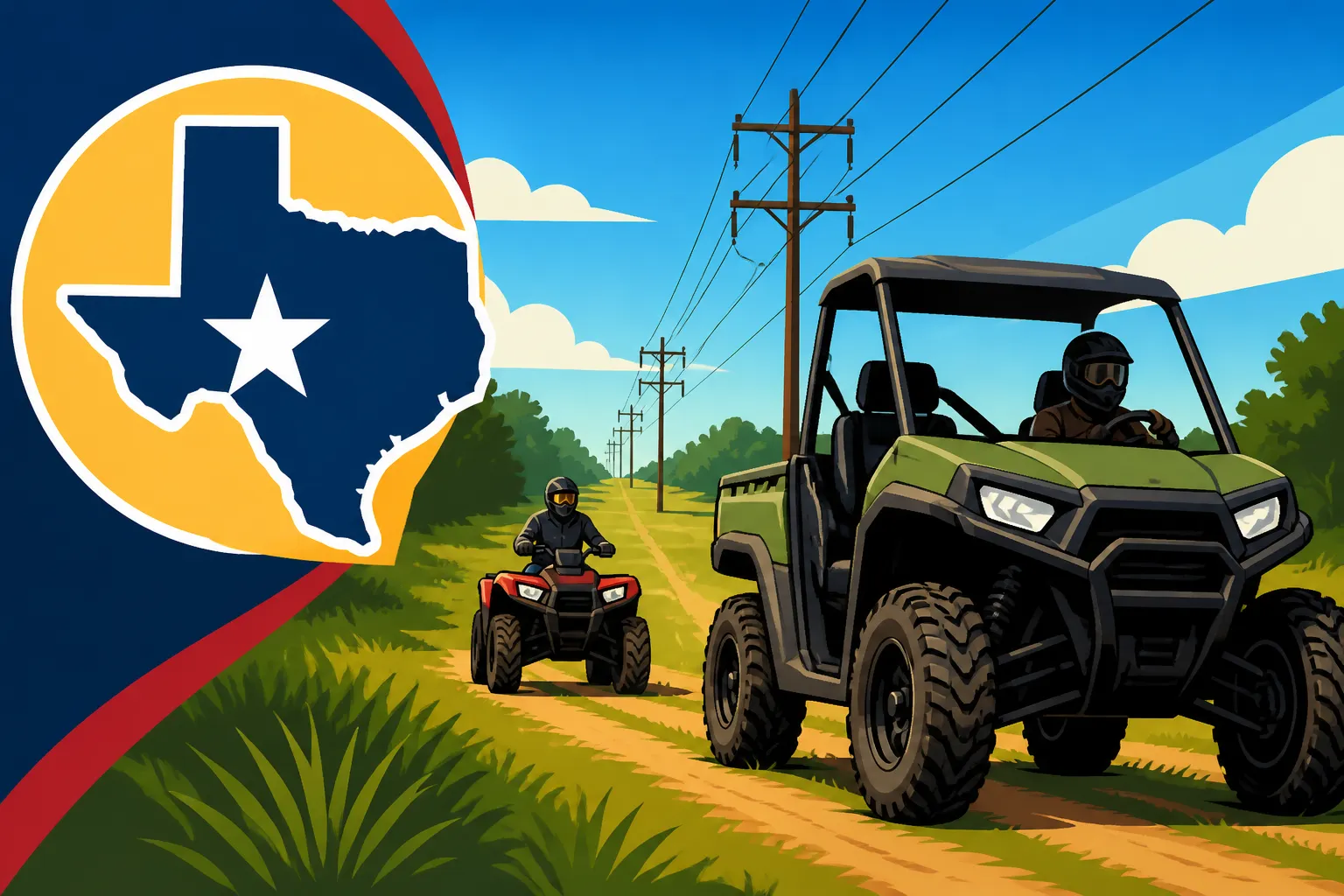
- Electric Transmission Lines: These are often the most visible, with towering metal structures or large wooden poles carrying high-voltage lines. The rights-of-way for these can be quite wide, sometimes hundreds of feet, to ensure safety clearances. They're typically kept clear of tall vegetation.
- Pipelines: Texas is crisscrossed by a vast network of oil, natural gas, and water pipelines. Their rights-of-way are usually narrower than electric lines, often marked by warning signs and buried markers. You might see a cleared path or simply a mowed strip.
- Communication Lines: Fiber optic cables, telephone lines, and other communication infrastructure also have rights-of-way, though these might be less obvious, sometimes running alongside roads or within existing utility corridors.
- Water and Sewer Lines: In more developed areas, municipal water and sewer lines can have easements that might even cut through residential areas or undeveloped plots on the outskirts of towns.
While the type of utility may vary, the core legal principle remains: these are not public trails. Regardless of whether it's an electric line, a pipeline, or a fiber optic cable, the land beneath belongs to a private landowner, and recreational riding requires their explicit consent. Understanding this is the first step in avoiding legal headaches and respecting property rights. You can find more general information about what machines are considered OHVs in our guide, [What Texas Counts as an Off-Highway Vehicle].
The Legal Labyrinth: OHV Access on Texas Utility Rights of Way
Now that we understand what a utility right-of-way fundamentally is, let's dive into the legal implications for off-highway vehicle riders in Texas. This is where many eager riders get into trouble, assuming that a cleared path equals public access.
Public Access vs. Utility Access
This is the biggest misconception to clear up: utility access is not public access. Utility companies have a legal right to access and maintain their equipment. This right, established through an easement, does not extend to allowing the general public, including OHV riders, to use that land for recreation. The utility company doesn't own the land, so they cannot grant permission for activities unrelated to their operations.
Imagine you own a piece of land and grant your neighbor an easement to cross your driveway to get to their garage. That easement doesn't give your neighbor the right to invite all their friends to have a party in your driveway, nor does it allow them to open a public parking lot. Similarly, a utility easement grants specific, limited rights to the utility company, not a broad invitation to the public. Attempting to ride your ATV or UTV on these paths without permission is no different than riding across someone's backyard. It's often trespassing, plain and simple.
Trespass Laws and Their Consequences for Riders
Texas has very clear and strict trespass laws. Riding your OHV on a utility right-of-way without the explicit permission of the underlying landowner is typically considered trespassing. This isn't just a minor inconvenience; it can lead to significant legal consequences.
A first offense for trespassing in Texas is usually a Class B misdemeanor, which can carry fines and even jail time. Repeated offenses can escalate to higher misdemeanor or even felony charges, especially if there's any damage to property. Beyond criminal charges, you could also face civil lawsuits from the landowner for damages, such as rutting up their pasture, disturbing livestock, or damaging crops. And let's not forget the cost of impounding your machine if authorities are involved. Many riders have learned this the hard way, thinking they were on public land, only to find themselves facing legal action and having their expensive machines hauled away. For a deeper dive into this, check out [Texas Trespass Rules for Riders].
The landowner doesn't necessarily need to post "No Trespassing" signs for it to be considered trespassing, though visible signage certainly makes the intent clear. If the land is fenced, cultivated, or enclosed, it's generally understood to be private. Even if it looks like wild, untamed land, if it's not explicitly designated as public access, assume it's private. This is a critical point that many OHV riders overlook.
When Might You Have Permission?
While the default stance is "no access," there are very specific and limited circumstances where you might have legal permission to ride a utility right-of-way in Texas.
- Explicit Landowner Permission: This is the most straightforward way. If you personally know the landowner whose property the right-of-way crosses, and they give you explicit, written permission to ride your OHV on their portion of the right-of-way, then you are legally permitted. This usually happens when the right-of-way is part of a larger ranch or farm where you already have permission to ride. Always get this in writing – a simple verbal "sure, go ahead" can be easily misunderstood or forgotten, and it offers no protection if a different person (or a new landowner) later objects.
- Organized Events with Permission: Rarely, an organized charity ride or a land conservation group might secure permission from both the utility company (for limited access related to their infrastructure) and all affected landowners along a specific segment of a right-of-way for a one-time event. These are highly unusual and require extensive coordination.
- Through a Land Lease or Membership: If you lease land for hunting or recreation, and a utility right-of-way crosses that leased property, your lease agreement might include rights to ride your OHV on that specific portion. Similarly, some private OHV parks or clubs might encompass areas that have utility easements, and your membership allows riding within their boundaries, which may include the right-of-way if the park has permission from both the landowner and utility.
Crucially, the utility company itself cannot grant you permission to ride for recreational purposes. Their easement is for utility operations, not public recreation. If a utility worker tells you it's fine, understand that they are likely speaking outside their authority, and their statement won't hold up in court if the landowner presses charges. This isn't to say utility workers are malicious, but they are not the arbiters of private land access for recreation. It's the landowner's permission you need.
The Practical Realities and Risks for Texas Riders
Even if you somehow manage to secure permission to ride on a utility right-of-way, there are significant practical realities and risks that riders in Texas need to be aware of. These aren't your typical groomed trails, and they come with their own unique set of challenges.
Unseen Hazards and Maintenance Concerns
Utility rights-of-way are maintained for utility access and operations, not for recreational riding. This means they often contain hazards that aren't present on dedicated OHV trails.
- Unmarked Obstacles: You might encounter old equipment, broken insulators, discarded pipes, or rebar sticking out of the ground, especially on pipeline rights-of-way. These aren't always visible, particularly if overgrown or obscured by shadows, and can cause serious damage to your machine or severe injury.
- Uneven Terrain: While cleared, the ground itself can be highly uneven, with deep ruts from utility vehicles, washouts from rain, hidden holes, or unexpected mounds of earth. Riding at speed on such terrain is a recipe for disaster.
- Changing Conditions: Utility companies might be doing work at any time. You could suddenly encounter heavy equipment, trenches, open pits, or freshly disturbed ground that wasn't there last week. These areas are dangerous and can pose a significant risk to an unsuspecting rider.
- Electrocution Risk: For power line rights-of-way, there's always the inherent danger of high voltage. Downed lines, even if they appear inert, are extremely dangerous. Contact with a live line, or even the ground near one, can be fatal. It's a risk that simply doesn't exist on purpose-built trails.
You might be the type of rider who equips their machine with robust aftermarket parts, perhaps from a brand like SuperATV, to handle rugged terrain. While such upgrades certainly improve capability, they don't negate the inherent dangers of riding on paths not designed for recreational use. Even with the best suspension and tires, you're still at the mercy of unpredictable, unmanaged obstacles.
Environmental Impact and Rider Responsibility
Riding off-road carries an environmental responsibility, and this is magnified on utility rights-of-way. These areas often traverse diverse ecosystems, from sensitive wetlands to agricultural lands.
- Soil Erosion: Repeated OHV traffic, especially on steep grades or during wet conditions, can lead to severe soil erosion. This isn't just an aesthetic issue; it can impact water quality in nearby streams and rivers, and damage the land for the underlying landowner.
- Habitat Disturbance: Wildlife relies on these corridors too. Riding through them can disturb nesting birds, small mammals, and other creatures, particularly during breeding seasons.
- Vegetation Damage: While utility companies clear vegetation, riding off the established track can damage sensitive plants or young growth that is important for the local ecosystem.
- Introduction of Invasive Species: Your tires can inadvertently carry seeds of invasive plants from one area to another, potentially harming native Texas flora.
Even with permission, riding responsibly is paramount. This means staying on designated paths (if any), avoiding sensitive areas, and being mindful of your impact. Showing respect for the land and its owner is crucial, as unauthorized riding can lead to widespread bans and negative perceptions of the entire OHV community.
Equipment Considerations for Such Terrain
If you do have legal access to a utility right-of-way, preparing your machine appropriately is vital. These aren't casual cruising routes.
- Tires: You'll likely encounter a mix of surfaces: mud, gravel, loose dirt, and potentially rocky sections. All-terrain tires with good traction are essential.
- Suspension: A robust suspension system is crucial to absorb the shocks from uneven terrain and ruts. Many riders consider aftermarket shock absorbers or lift kits, often available from manufacturers like SuperATV, to improve ground clearance and ride quality over rough paths.
- Skid Plates: Protecting the underside of your OHV from rocks, stumps, and other debris is critical. Stock skid plates are often insufficient for truly rugged terrain.
- Winch: Getting stuck in mud or having to pull debris out of the way is a real possibility. A reliable winch can be a lifesaver, especially if you're riding alone or far from help.
- Communication: Cell service can be spotty in remote areas. Consider carrying a satellite communicator or a two-way radio for emergencies.
It's also a good idea to carry a comprehensive tool kit, spare fluids, and a first-aid kit. Remember, help might be a long way off on a remote utility right-of-way. Being prepared is not just smart; it's essential for your safety and the longevity of your machine.
Seeking Legal Access: How to Approach Utility Right of Ways in Texas
Given all the complexities and risks, the best approach to riding on utility rights-of-way in Texas is to assume they are off-limits unless you have explicit, documented permission. But for those determined to explore these corridors, here’s how to do it the right way.
The Importance of Explicit Permission
Let's reiterate: you need permission from the actual landowner, not the utility company, to ride recreationally on a utility right-of-way. The utility company only has an easement for their specific purpose. They cannot grant you permission to ride for fun. Thinking otherwise is a common trap many riders fall into.
Getting explicit, preferably written, permission from the landowner protects you from trespassing charges and potential civil liabilities. Without it, you're always at risk. A simple handshake might feel neighborly, but it's legally flimsy. If the property changes hands, or if there's a disagreement, written documentation is your only real defense. It should specify what you're allowed to do (e.g., ride your ATV), where (e.g., along the power line easement), and any conditions (e.g., stay on the path, no riding during hunting season).
Contacting Utility Companies and Landowners
This process can be time-consuming and often fruitless, but it's the only legitimate way to inquire about access.
- Identify the Landowner: This is usually the hardest part. Utility companies are often reluctant to give out landowner information due to privacy concerns. You might have to do some detective work. County appraisal district websites are an excellent resource for identifying property owners by location or parcel number. You can often find GIS maps online that show property lines and ownership details.
- Contact the Landowner Directly: Once you identify the landowner, approach them respectfully. Explain your interest in riding your OHV on the portion of the right-of-way that crosses their property. Be prepared for a "no." Many landowners are wary of granting access due to liability concerns, potential damage, or simply not wanting extra traffic on their land. Emphasize your commitment to responsible riding and offer to sign a liability waiver.
- Contact the Utility Company (for information, not permission): You can contact the utility company (e.g., the power company, pipeline operator) to understand the nature of their easement, but do not ask them for permission to ride recreationally. They can't give it. Instead, ask them about safety regulations, any planned maintenance in the area, or if they have any internal policies regarding recreational use that you should be aware of. They might be able to confirm who holds the underlying property, but again, don't expect them to volunteer that information.
Be prepared for this to be a long shot. Most landowners and utility companies will err on the side of caution and decline recreational access due to the liability risks involved. This is why you'll often hear that [Why Texas Riding Is Mostly Pay-to-Ride] holds true, even for seemingly open corridors.
Alternatives for Texas OHV Enthusiasts
Since legal access to utility rights-of-way is so challenging, most Texas OHV enthusiasts turn to established and legal alternatives:
- Private OHV Parks: Texas has numerous fantastic private OHV parks like Barnwell Mountain Recreation Area or Hidden Falls Adventure Park. These parks offer miles of diverse trails, varying difficulty levels, and dedicated facilities. They're designed for recreational riding, are often well-maintained, and eliminate all the legal headaches of landowner permission. You pay a fee, but you get guaranteed, legal access.
- Leased Land: Many hunting leases or recreational leases in Texas include provisions for ATV or UTV use. If you're part of a lease, clarify the rules for OHV riding on that property. This often provides extensive private land to explore.
- Texas National Forest Trails: The Sam Houston National Forest offers the only designated OHV trail system on public land in Texas. While it has specific rules regarding machine width ([Texas's 50-Inch National Forest Width Limit]) and requires a Texas OHV Decal and sometimes a day-use fee, it's a legal and beautiful place to ride.
- Ranch Roads and Private Property: If you own rural property or have friends/family with land, this is often the easiest and most common way to enjoy your OHV legally. Always make sure you understand the boundaries and have explicit permission. For example, riding on a ranch road might seem fine, but even those have specific rules as covered in [Texas Rules for Riding a Ranch Road].
By focusing on these legitimate avenues, you can enjoy your ATV or UTV safely, legally, and without the constant worry of trespassing or encountering unforeseen hazards. It's about finding the right place to ride, rather than risking it on a right-of-way that was never intended for recreational use.
| Aspect | Utility Right of Way (without permission) | Utility Right of Way (with permission) | Dedicated OHV Park / Leased Land |
|---|---|---|---|
| Legality | Illegal (Trespassing) | Legal (with explicit landowner consent) | Legal |
| Primary Authority to Grant Access | None (landowner holds key) | Landowner (not utility company) | Park owner / Leaseholder |
| Safety Hazards | High (unmarked obstacles, active work) | Medium-High (still unmaintained) | Low-Medium (managed trails) |
| Environmental Impact | High risk of unmanaged damage | Managed with responsible riding | Managed by park / landowner |
| Cost | Potential fines, legal fees, machine impound | Potentially free, but high effort to secure | Day fees, membership, lease costs |
| Ease of Access | Very difficult and high risk | Very difficult to secure | Easy (once fees are paid) |
| Typical Experience | Stressful, risky, short-lived | Adventurous, but still unmanaged | Enjoyable, safe, diverse terrain |
Disclaimer
This article is for general informational purposes only and does not constitute professional advice. Laws, prices and regulations vary by location and change over time. Consult a qualified professional for guidance on your specific situation.