Texas Safety Apparel Rules for ATV Riders
Riding an ATV or UTV in Texas can be an absolute blast, a true taste of freedom across diverse landscapes, from the piney woods to the dusty plains. But that exhilaration comes with a serious need for safety, and let's be honest, figuring out exactly what gear you need to wear can feel like a tangled mess of rules, exceptions, and common sense. This guide is here to untangle all that, walking you through the mandatory Texas safety apparel rules for ATV and UTV riders, alongside the essential gear that can literally save your skin, and sometimes, your life.
The Core Texas Safety Apparel Rules
When you hit the dirt, sand, or trail in Texas, there's a baseline expectation for your safety gear. These aren't just suggestions; they're legal requirements designed to protect you in an environment where accidents, unfortunately, can and do happen. Understanding these fundamental rules is the first step toward a safe and compliant ride.
The Helmet Law and Its Specifics
Let's start with the big one: helmets. Texas law is pretty clear on this for most ATV riders. Generally speaking, if you're operating an ATV (which typically means a quad with straddle seating) on public land or on certain public roads where permitted, you're going to need a helmet. This isn't just about avoiding a ticket; it's about protecting your most vital asset. A good helmet, specifically designed for off-road use, can absorb impacts, prevent abrasions, and reduce the severity of head injuries in a crash. We're talking about DOT-approved helmets here, not just any old bicycle helmet you found in the garage.
The law applies broadly to riders under 15 years of age on any public land, and to all riders, regardless of age, when operating an ATV on certain public roads. It's easy to get confused because the rules vary depending on the machine and the specific circumstances of the ride. However, for the most common ATV riding scenarios on public trails, a helmet is your constant companion. Many experienced riders will tell you that even when the law technically allows for an exception, wearing a helmet is simply non-negotiable for their personal safety. Always wear one if you value your brain. You can dive deeper into the specifics with our guide on [Texas Helmet Law for ATV Riders].
Eye Protection: More Than Just Comfort
Beyond the helmet, Texas law also has something to say about your eyes. You absolutely need to wear eye protection when riding an ATV or UTV. Think about it: flying debris, dust, insects, branches, and even just the wind can seriously impair your vision or cause injury. Imagine hitting a bump, getting a speck of dirt in your eye, and losing control for just a second. That's all it takes for a fun day to turn into a nightmare. Goggles, a face shield on a full-face helmet, or safety glasses are all acceptable forms of eye protection. They should be impact-resistant and offer a clear field of vision.
The type of eye protection you choose might depend on the weather and terrain. For dusty conditions, well-sealed goggles are often superior, keeping fine particles out. In muddy areas, a tear-off system or roll-off film on your goggles can be a lifesaver. Even if you're just cruising on a relatively calm day, a sudden gust of wind or an unexpected bug can still cause problems. Don't skimp on this. It's a small piece of gear that makes a massive difference in your safety and riding experience. Find out more about this crucial requirement in [Texas Eye Protection Requirement for Riders].
Seat Belts and Occupant Restraints in Side-by-Sides
Now, let's talk UTVs, or side-by-sides. These machines are designed differently, often with bench or bucket seats and a roll cage, making them feel more like a small car. And just like a car, Texas law generally requires occupants of a UTV to wear seat belts when operating on public roads where allowed. These aren't optional accessories; they're integral to the safety design of the vehicle. If your UTV comes with seat belts from the manufacturer, you and your passengers are expected to use them.
The seat belt requirement is about keeping you securely in your seat, especially during rollovers or sudden stops. While UTVs offer a different kind of protection with their roll cages, being tossed around inside that cage can still lead to serious injury. Always ensure that everyone in the UTV is properly buckled in before you start moving. This is a non-negotiable rule, and it's enforced because it works to prevent injuries. For detailed information, check out [Texas Seat Belt Rules in a Side-by-Side]. Many riders also opt for aftermarket harnesses from companies like SuperATV, which can offer even greater security than standard belts, especially for more aggressive off-roading.
Exceptions and Special Circumstances for Apparel
Texas law, like most laws, isn't always a one-size-fits-all situation. There are specific scenarios and types of vehicles where the standard apparel rules might bend a little. However, it's crucial to understand these exceptions fully, as misinterpreting them can lead to tickets or, worse, serious injury. Remember, an exception to a rule isn't an excuse to be unsafe.
The Roll Cage Exemption From a Texas Helmet
Here's where UTVs often differ from traditional ATVs in terms of helmet requirements. For operators and passengers of an off-highway vehicle (which includes most UTVs and ROVs) that is "equipped with a roll cage or similar enclosure and a seat belt for each occupant," the helmet requirement may be waived. This is a significant point of confusion for many. The idea is that the roll cage, combined with seat belts, provides a level of occupant protection that mitigates some of the head injury risks that a helmet addresses in an open-cockpit ATV.
However, this isn't a blanket pass to skip the helmet on all UTV rides. You still need to ensure your UTV meets the definition of having a proper roll cage and that everyone is buckled up. Moreover, while the law might allow it, many seasoned UTV riders still choose to wear helmets, particularly when tackling challenging terrain or at higher speeds. They know that while a roll cage offers protection, a helmet provides an additional layer against impacts with the cage itself or other objects during a dynamic event. Always exercise caution and prioritize your safety above simply meeting the minimum legal requirement. [The Roll Cage Exemption From a Texas Helmet] provides a deeper look into these rules.
Agricultural Use and Helmet Waivers
Texas, with its vast ranching and farming heritage, often makes special allowances for agricultural operations. This extends to the use of ATVs and UTVs on public roads for agricultural purposes. If you are operating an ATV or UTV on a public road for the "transportation of persons or property in connection with an agricultural operation," you might be exempt from the helmet requirement. This is designed to facilitate the practical work of farmers and ranchers who often use these machines as utility vehicles for chores.
But this isn't an invitation for joyriding on public roads without a helmet. The exemption is very specific: it must be in connection with an agricultural operation. This means hauling feed, checking fences, moving equipment between fields, or other direct farm-related tasks. If you're simply riding your ATV from your house to a friend's house down a public road, even if you live on a farm, this exemption likely doesn't apply. Always be prepared to prove the agricultural nature of your trip if questioned by law enforcement. Ignorance of the specifics can lead to a Class C Misdemeanor. Our article on [Texas Agricultural Exemption for ATVs on Roads] details these rules.
Private Land: Your Rules, Mostly
The good news for riders on private property is that many of the state's specific safety apparel laws do not apply. If you're on your own land, or land where you have explicit permission to ride, the state isn't generally going to dictate whether you wear a helmet, goggles, or seat belt. This freedom is one of the reasons so many Texans enjoy their machines on their ranches or lease properties. The primary concern shifts from legal compliance to personal responsibility.
However, "your rules" shouldn't translate to "no rules." Even on private land, common sense and a strong commitment to safety should prevail. A helmet, eye protection, and appropriate clothing are just as effective at preventing injury on private trails as they are on public ones. Many private OHV parks and organized riding events, even on private land, will still enforce their own strict safety gear requirements, including mandatory helmets, for all riders regardless of state law. They do this because they understand the inherent risks and want to protect their patrons. Always check the rules of any private park or event you plan to attend, and always, always prioritize your well-being. [Texas Rules for Riding a Private Land With Permission] gives more insight.
Beyond the Law: Recommended Gear for Every Ride
While Texas law sets a minimum standard for safety apparel, smart riders know that meeting the bare minimum isn't always enough to protect you from the unpredictable nature of off-road riding. There's a whole world of gear designed to enhance your safety, comfort, and overall enjoyment on the trails. Investing in these items isn't just about being prepared; it's about making a commitment to coming home safe and sound after every adventure.
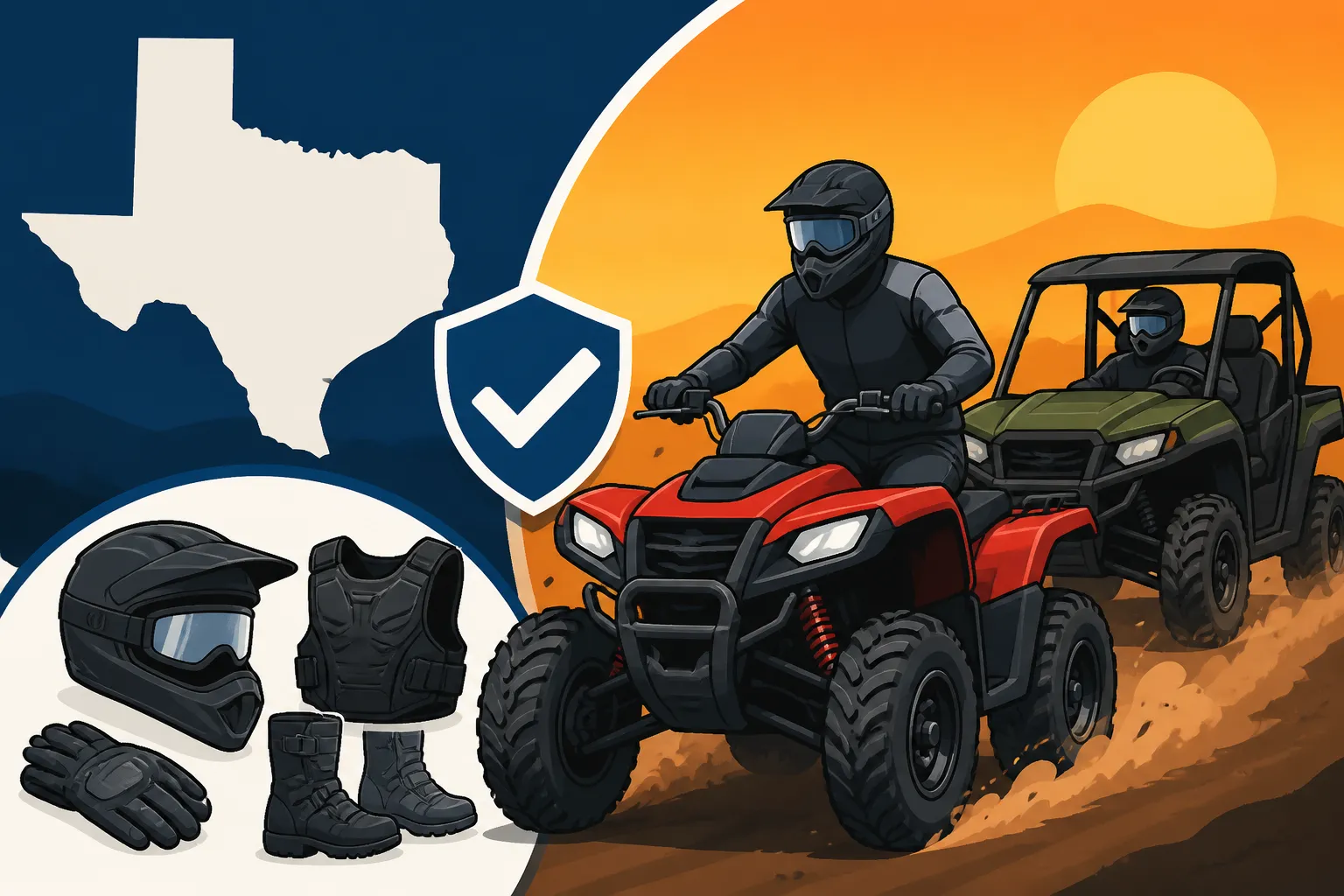
Long Sleeves, Pants, and Durable Footwear
This might seem obvious, but it's worth emphasizing: ditch the shorts and t-shirt for anything more than a slow cruise around the backyard. For serious riding, long sleeves and durable pants are your first line of defense against scrapes, cuts, sun exposure, and flying debris. Imagine a low-hanging branch catching your arm, or a rock being kicked up by a tire. Denim or purpose-built riding pants, often reinforced in key areas, offer far more protection than casual wear. Companies like SuperATV offer a range of riding apparel designed specifically for durability and protection.
Footwear is equally critical. You need sturdy boots that protect your ankles and feet, offer good grip on the footpegs, and can withstand the rigors of the trail. Open-toed shoes, sneakers, or flimsy boots are an absolute no-go. A broken ankle or a foot crushed by a falling machine is not how you want to end your weekend. Look for boots that come up over the ankle, have good sole stiffness for standing on pegs, and are made from robust materials like leather or specialized synthetics. They should be comfortable enough for a full day of riding but tough enough to take a beating.
Gloves for Grip and Protection
Your hands are constantly at work when riding, controlling the throttle, brakes, and steering. Gloves do so much more than just keep your hands warm. They provide crucial grip, especially in wet or muddy conditions, preventing your hands from slipping off the controls. Beyond grip, they protect your hands from blisters, abrasions, and impacts. Think about a minor fall where your instinct is to brace yourself with your hands – good gloves can prevent a world of pain from scrapes and gravel rash.
There are many different types of riding gloves, from lightweight vented options for hot Texas summers to more heavily padded versions for cooler weather or aggressive trail riding. Some offer knuckle protection, while others prioritize flexibility. Choose a pair that fits snugly without restricting movement, allows for good dexterity, and is appropriate for the conditions you typically ride in. Even a cheap pair of gloves is better than none, but a quality pair can significantly enhance your control and comfort.
Body Armor and Chest Protectors
For those who push their limits on the trails, ride aggressively, or simply want maximum protection, body armor and chest protectors are highly recommended. While not legally required in Texas, these pieces of gear can make the difference between a minor bruise and a serious injury in a significant impact. A chest protector safeguards your sternum, ribs, and back from impacts with handlebars, trees, or the ground. For riders traversing rocky terrain, or those prone to higher speeds, this can be an invaluable investment.
Full body armor, often integrated with a base layer, extends protection to the shoulders, elbows, and sometimes even the forearms. This type of gear is particularly popular with motocross riders or those who tackle extreme off-road challenges. It's about recognizing the inherent risks of certain riding styles and proactively addressing them. While it might feel bulky at first, the peace of mind and the physical protection offered by body armor are well worth the adjustment. Don't wait until you've had a serious fall to realize you needed it.
Understanding Texas Road Use and Apparel Implications
The vast majority of ATV and UTV riding in Texas happens off-road, whether on private land or designated public trails. However, there are limited circumstances where these machines might legally find themselves on public roads. When they do, the rules for safety apparel, and machine-specific equipment, become particularly strict and are usually enforced with little tolerance for exceptions. This is because mixing off-highway vehicles with road traffic introduces a completely different set of risks.
When ATVs and UTVs Can Be on Public Roads
It's a common misconception that ATVs and UTVs are simply "street legal" with a few modifications. This is generally not true in Texas. The state has very specific, and quite limited, exceptions for off-highway vehicle road use. These typically include [Texas Rules for Riding a Farm Road], for agricultural purposes (as discussed), crossing a public road at a 90-degree angle, or operating on certain roads within master-planned communities or counties that have opted in under specific conditions (usually low-speed roads). You can find more details in [Why Texas Will Not Register an ATV for the Road] and [Texas Rules for Getting Across a Road].
When operating an OHV on a public road under one of these narrow exceptions, all applicable safety apparel rules snap into place. For instance, if you're riding an ATV for agricultural purposes on a public road and don't qualify for the helmet waiver, that helmet becomes mandatory. If you're in a UTV on a low-speed road within a master-planned community, those seat belts must be fastened. The mere act of being on a public thoroughfare, even for a short distance, elevates the legal requirement for safety gear.
Equipment Beyond Personal Apparel for Road Use
Beyond your personal safety apparel, venturing onto public roads with an OHV often triggers requirements for machine-specific equipment. While not "apparel" in the sense of what you wear, these items are crucial for the safety of both the OHV operator and other road users. This can include items like headlights, taillights, brake lights, reflectors, and in some cases, a slow-moving vehicle emblem or even a safety flag. These are designed to make your OHV visible and predictable to others sharing the road.
For example, when operating on a farm road under the agricultural exemption, even if the helmet rule is waived, the machine itself might need to display an orange safety flag mounted at least 6 feet high, and possibly have headlights and taillights on, even in broad daylight, depending on the specific rule being invoked. These requirements ensure that your OHV, which is not typically designed for road use, can be seen and understood by drivers of conventional vehicles. It's a dual approach to safety: protect the rider, and make the vehicle safe for the road environment. Get more information on these requirements in [Texas Equipment Rules for an ATV on a Road].
The Consequences of Non-Compliance
Ignoring Texas's safety apparel rules for ATVs and UTVs isn't just a matter of tempting fate with your health; it also carries tangible legal and financial repercussions. Law enforcement takes these regulations seriously, and for good reason. Understanding the penalties involved might just be the push you need to always gear up properly.
Fines and Legal Repercussions
Getting caught without the legally required safety apparel in Texas can result in a ticket and associated fines. Generally, many violations of OHV laws fall under the category of a Class C Misdemeanor. While not as severe as higher-level misdemeanors, a Class C Misdemeanor can still come with fines and court costs that quickly add up, easily costing you a few hundred dollars. This isn't just a slap on the wrist; it's a significant chunk of change that could have been spent on better gear, more fuel for riding, or even a weekend trip to an OHV park.
Beyond the immediate financial hit, there's the inconvenience of dealing with a citation. This means potential court appearances, time off work, and the general hassle that comes with legal proceedings. It's a headache that's entirely avoidable simply by wearing the proper helmet, eye protection, or fastening your seat belt. Remember, these laws are in place for your protection. The penalties are there to encourage compliance and ultimately, to reduce the number of serious injuries and fatalities related to OHV use. You can find specifics about potential penalties in [Texas Fines for Illegal ATV Road Use] and [Class C Misdemeanors Under Texas OHV Law].
The Real Cost: Injury and Liability
While fines are certainly unpleasant, they pale in comparison to the "real cost" of not wearing proper safety apparel: the risk of severe injury, permanent disability, or even death. A helmet can literally be the difference between a concussion and a traumatic brain injury. Eye protection can prevent blindness from a rogue branch. Seat belts keep you inside the protective cage of your UTV during a rollover. These aren't hypothetical scenarios; they are daily realities on trails across Texas.
Beyond personal injury, there's the aspect of liability. If you're involved in an accident and weren't wearing the legally required safety gear, you could face significant civil liability. This means you might be held more responsible for your own injuries, which could impact insurance claims for medical bills and property damage. Furthermore, if others are involved and you were found to be non-compliant with safety laws, your legal position could be severely compromised. In essence, neglecting safety apparel can hurt your body, your wallet, and your future. It's a stark reminder that preparing for every ride isn't just about following the rules; it's about safeguarding your entire well-being.
Texas Safety Apparel Comparison Table
To help you keep track of the key apparel requirements and common recommendations, here's a quick overview. Remember, laws can have nuances, and personal safety should always be your top priority.
| Apparel Item | ATV (Straddle Seat) | UTV (Side-by-Side) | General Recommendation for ALL OHVs |
|---|---|---|---|
| Helmet | REQUIRED on public land/roads (all ages < 15, all ages if on road). | Often waived if equipped with roll cage AND seat belts. | ALWAYS HIGHLY RECOMMENDED, even when not legally required. |
| Eye Protection | REQUIRED on public land/roads. | REQUIRED on public land/roads. | ALWAYS HIGHLY RECOMMENDED to prevent debris/wind injury. |
| Seat Belts | N/A (not standard equipment) | REQUIRED if equipped, especially on public roads. | ALWAYS USE if present; consider harnesses from SuperATV for extra security. |
| Long Sleeves | Not legally required. | Not legally required. | HIGHLY RECOMMENDED for abrasion, sun, and branch protection. |
| Pants | Not legally required. | Not legally required. | HIGHLY RECOMMENDED (durable, like denim or riding pants). |
| Gloves | Not legally required. | Not legally required. | HIGHLY RECOMMENDED for grip, blister, and abrasion protection. |
| Boots | Not legally required. | Not legally required. | HIGHLY RECOMMENDED (over ankle, sturdy sole) for foot/ankle protection. |
| Body Armor | Not legally required. | Not legally required. | RECOMMENDED for aggressive riding or challenging terrain. |
Disclaimer
This article is for general informational purposes only and does not constitute professional advice. Laws, prices and regulations vary by location and change over time. Consult a qualified professional for guidance on your specific situation.