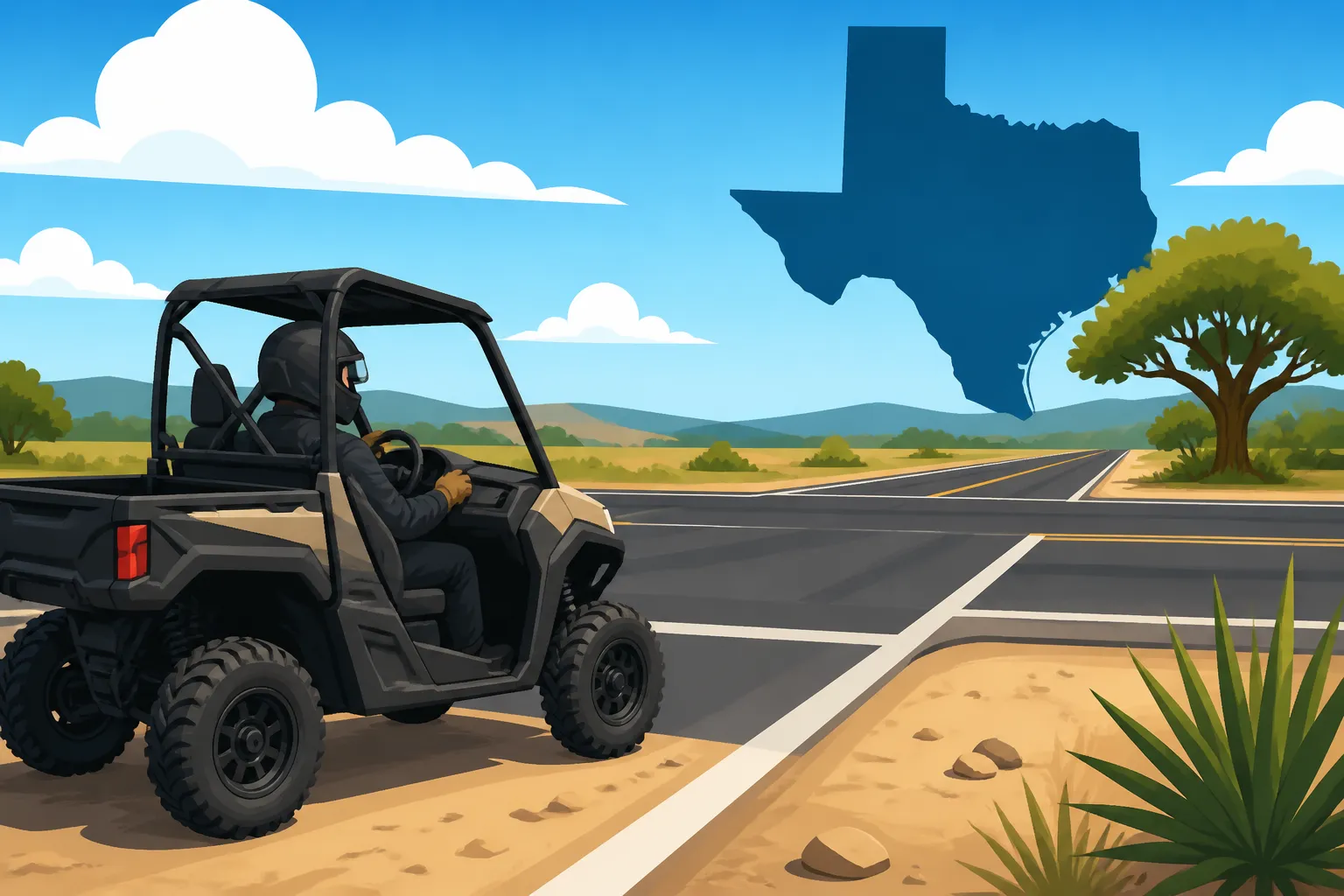
Crossing a Texas Road at an Intersection
Navigating Texas with an ATV or UTV can often feel like walking a tightrope, especially when you encounter a public road. Many riders find themselves in a bind, needing to get from one section of private land to another, or access a different trail system, and a public road stands squarely in their path. This guide is here to untangle the complexities of Texas law, specifically focusing on how you can legally and safely cross a public road at an intersection with your off-highway vehicle, ensuring you stay on the right side of the law.
The Fundamental Rule: Why OHVs are Generally Banned on Texas Roads
It's a common frustration for ATV and UTV owners across Texas: you've got a perfectly good machine, but the law feels like it's designed to keep you off public roads entirely. And for the most part, that's true. Texas has a very clear stance on where off-highway vehicles (OHVs) belong, and generally, it's not on the pavement with regular traffic. This isn't just about safety; it's rooted in how the state classifies and regulates these machines.
Texas's Stance on Street Legal ATVs
Let's cut right to it: Texas does not consider ATVs or UTVs to be "street legal" in the same way you might plate a car or truck. There's no pathway to modify your quad with turn signals, a horn, and a license plate that allows you to cruise down Main Street for leisure. The law is designed to keep these machines off public thoroughfares because they lack many of the safety features and design elements deemed necessary for road-going vehicles. This fundamental distinction often catches new riders or those from other states off guard, leading to confusion and, unfortunately, sometimes tickets. It's a critical point to understand before you even think about putting a tire on a paved surface.
For many riders, this hardline stance can be incredibly limiting. You might own a sprawling ranch where you need to traverse county roads to move between pastures, or perhaps your favorite riding park has sections separated by a public street. The desire to simply get from point A to point B without loading up a trailer every time is a common one, but Texas law creates significant hurdles. This is why understanding the limited exceptions, like the one for intersection crossings, becomes so vital. Without a clear grasp of these rules, you risk not only legal trouble but also your safety and that of others on the road.
The state defines an off-highway vehicle by its design: it's built for off-road use, not for public highways. This includes a wide range of machines from your typical four-wheel ATV to powerful side-by-sides. Because they aren't meant for sustained highway travel, they typically aren't subjected to the same rigorous federal motor vehicle safety standards as cars and trucks. This difference in design and intended use is at the heart of why Texas maintains such strict prohibitions against their operation on most public roads.
The "Off-Highway Use Only" Mark
When you get a title for an ATV or UTV in Texas, you'll likely notice a rather prominent stamp or remark that says "Off-Highway Use Only." This isn't just a suggestion; it's a legal declaration of the machine's intended purpose and limitations. This mark serves as a constant reminder that your vehicle is not licensed or equipped for general road use. It's Texas's way of clearly segmenting the world of recreational and utility vehicles from highway-legal transportation. [The Off-Highway Use Only Remark on a Texas Title] isn't a minor detail; it's a foundational element of how these machines are regulated within the state.
This designation also directly influences what you can and cannot do with your OHV regarding public infrastructure. It's why efforts to outfit an ATV with conventional street-legal accessories typically fall short in Texas. No matter how many mirrors, turn signals, or even windshields you add, that "Off-Highway Use Only" label on the title means the state still views it as a machine primarily for dirt, trails, and private land. This can be particularly frustrating for those who invest in aftermarket parts, thinking they can circumvent the rules, only to find themselves still subject to the same restrictions.
The intent behind this marking is clear: public safety. Roadways are designed for vehicles operating at certain speeds, with specific visibility and handling characteristics. OHVs, by their very nature, often don't meet these criteria. They might be slower, have different braking distances, or be less visible to larger vehicles. The "Off-Highway Use Only" stamp solidifies the legal boundary, helping to prevent potentially dangerous situations by clearly defining the scope of an OHV's permissible operation. It’s part of the broader framework that explains [Why Texas Will Not Register an OHV for the Road].
Why Registration Is Not Available in Texas
Another point of confusion for many OHV owners in Texas is the concept of "registration." Unlike cars and trucks that require annual registration and a license plate to operate on public roads, ATVs and UTVs in Texas are not registered in the same way. While you do get a title, and you can purchase an off-highway license plate (often referred to as an OHV plate), this plate does not confer general road-going privileges. It's important to understand this distinction, as it's a frequent source of misunderstanding. [Why Texas Titles But Never Registers an OHV] is a key concept that impacts everything else you need to know about road use.
The Texas OHV plate is specific to off-highway use and is primarily for identification when using designated public lands or crossing roads under specific, limited circumstances. It's not a green light to drive your quad to the grocery store. This system reflects the state's philosophy that OHVs are not intended for regular highway travel, and therefore, they don't undergo the same registration process as road-legal vehicles. This means there's no yearly renewal fee or inspection requirement that typically comes with vehicle registration, but it also means no expanded road privileges.
For folks accustomed to other states where OHVs might be registered for limited road use, this can be a significant adjustment. The absence of traditional registration for road use underscores the highly restricted nature of OHV operation on Texas public roads. You won't find a Texas Department of Motor Vehicles office offering a "street legal ATV registration" option, because it simply doesn't exist. This lack of full registration reinforces the need to be acutely aware of the narrow exceptions, like crossing at an intersection, where momentary road access is permitted.
The Intersection Exception: What the Law Allows
While Texas is stringent about keeping ATVs and UTVs off public roads, there are very specific, limited exceptions carved out in the law. One of the most critical for many riders is the ability to cross a public road at an intersection. This isn't a free pass to drive down the road, even for a short distance; it's a precise allowance for getting from one side to the other. Understanding the exact conditions under which this is permitted is crucial to avoid running afoul of the law.
Stopping and Crossing at a Right Angle
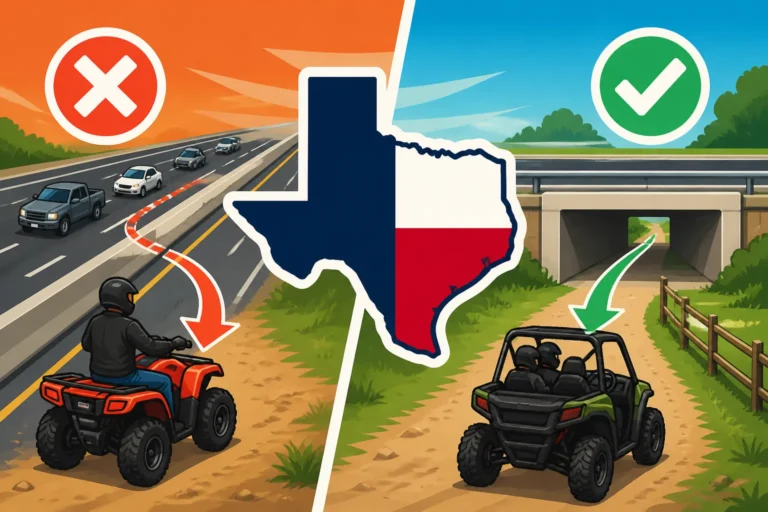
If you find yourself needing to cross a public road, the law dictates a very specific procedure. First and foremost, you must stop completely before entering the roadway. This isn't like merging traffic; it's a full, deliberate stop, as if you were at a stop sign or a red light. You need to ensure the way is clear and it's safe to proceed. Then, when it's safe, you must cross the road at a right angle to the roadway. This means going straight across, perpendicular to the flow of traffic, not diagonally or at a shallow angle. [Crossing a Texas Road at an Intersection] legally demands precision.
The reasoning behind stopping and crossing at a right angle is all about minimizing your time in the traffic lane and maximizing your visibility. By stopping, you're giving yourself the best chance to assess traffic conditions and ensure no vehicles are approaching. Crossing at a right angle ensures you traverse the road in the shortest possible distance and time. It reduces the chance of confusion for other drivers who might otherwise try to anticipate your movements if you were attempting a more complex maneuver like a turn or diagonal crossing. This is not a moment for casual driving; it's a focused, deliberate act of transitioning from one off-road area to another.
Think of it as executing a highly controlled, very brief passage. You should enter the roadway only when you have a clear path to exit on the other side. This means not only checking for oncoming traffic but also ensuring the shoulder or entry point to your destination is accessible. Hesitation or a sudden change of direction once you've entered the roadway can be incredibly dangerous. The law specifies this precise movement to make your presence on the road as predictable and brief as possible for everyone else using the highway. It's a momentary allowance, not an invitation to linger or adjust your route mid-crossing.
Required Equipment for Road Crossings
Even for a brief crossing, Texas law requires your OHV to be equipped with certain safety features. You can't just roll onto the highway from the trail as is. Specifically, your ATV or UTV must be equipped with both headlights and taillights. While many modern machines come with these standard, ensure they are in proper working order. It's easy to overlook a burnt-out bulb or a frayed wire when you're mostly riding during daylight hours off-road, but on a public road, these become non-negotiable safety items. [Texas Equipment Rules for an ATV on a Road] cover these critical components.
These lighting requirements are in place for the obvious reason of visibility. Even during daylight hours, an ATV or UTV can be less conspicuous than a full-sized vehicle. Functional headlights and taillights make your machine more visible to other drivers, whether they are approaching from the front or the rear. This is particularly important at intersections where vehicles are often preparing to turn or accelerating. For riders who often use their machines in low-light conditions on the ranch or trail, ensuring these lights are always operational is likely a habit, but it's a legal necessity for road crossings.
Beyond lighting, while not specifically required for all road crossings, it's always prudent to consider additional measures to enhance visibility. Some riders choose to install brighter aftermarket lights or use reflective tape on their machines. Products from brands like SuperATV often include robust lighting options and accessories designed to improve visibility in various conditions, which can certainly contribute to safer road crossings. While the law mandates a minimum, taking extra steps for your own safety is always a wise decision. Always make sure your equipment is fully functional before you even consider approaching a public road.
When the Exception Does Not Apply
It's just as important to understand when this intersection crossing exception doesn't apply. The state's allowance is narrow, and deviating from it can quickly land you in trouble. For instance, this exception does not permit you to drive down the road to find an intersection. You must approach an existing intersection directly from an off-road area. If your destination is just a quarter-mile down the road, and the next intersection is half a mile away, you cannot legally drive that quarter-mile on the road to reach your turn-off point, even if you intend to cross at the further intersection. That would be illegal road use.
Furthermore, this exception is strictly for crossing at an intersection. It does not extend to driving on the main lanes of a highway, even for a short stretch, unless other very specific, limited exceptions (like agricultural use or utility work, which have their own stringent rules) apply. You cannot use this rule to bypass a trail obstacle by briefly riding on the pavement, nor can you use it to connect two segments of a trail system that are not directly across from each other at an intersection. The intent is to facilitate a direct, perpendicular crossing, nothing more.
Finally, it's crucial to remember that this rule applies to state and county roads, but local ordinances can sometimes add further restrictions or prohibitions, particularly within city limits. While state law provides the framework, always be mindful of signage or local rules that might prohibit OHV use on specific roads or within certain areas, even for crossing. Ignorance of local laws is not an excuse, so if you're riding in an unfamiliar area, a quick check of local regulations can save you a lot of headache.
Safety First: Essential Practices for Crossing
Legal compliance is one thing, but personal safety is another, and when it comes to briefly sharing the road with cars and trucks, safety should always be your top priority. Even when following all the rules for crossing at an intersection, the dynamics of an ATV or UTV on pavement, alongside faster-moving traffic, demand extra caution.
Visibility and Awareness
When preparing to cross a road, your mantra should be "see and be seen." Before you even approach the edge of the pavement, make sure you have a clear line of sight in both directions. Blind corners, hills, or dense vegetation can obscure oncoming traffic, making a crossing incredibly dangerous. If your view is obstructed, find a safer vantage point or proceed with extreme caution, inching forward until you can clearly assess the traffic flow. [Texas Rules for Getting Across a Road] are minimal; your safety habits must be maximal.
Once you've made the decision to cross, execute the maneuver quickly and decisively, but without recklessness. Be hyper-aware of your surroundings. Don't assume other drivers see you, even if your lights are on. Many drivers aren't accustomed to seeing OHVs on public roads and might not register your presence until it's too late. Make eye contact with drivers if possible, and always be prepared for unexpected actions from other vehicles. This might mean waiting for a longer gap in traffic than you typically would for a car, simply because of your machine's unique characteristics and your relative vulnerability.
This is also where personal gear plays a role. Brightly colored helmets or riding jackets can significantly increase your visibility. While Texas helmet laws for ATVs have specific conditions, when you're crossing a public road, wearing a helmet is simply a smart decision, regardless of the legal requirement for that specific moment. Every little bit helps to make you more noticeable to others, reducing the risk of an accident during your brief exposure to highway traffic.
Rider and Passenger Safety Gear
Your personal protective equipment (PPE) isn't just for dusty trails and challenging terrain; it's absolutely critical for any interaction with public roads, no matter how brief. A properly fitted helmet is paramount. While [Texas Helmet Law for ATV Riders] outlines specific scenarios, wearing one when crossing a road provides essential protection in the event of an unforeseen incident. Even a low-speed impact with a vehicle can have devastating consequences if your head is unprotected. Don't skimp on this vital piece of gear.
Beyond a helmet, eye protection is also non-negotiable. Whether it's goggles or a helmet with a face shield, keeping dust, debris, or even insects out of your eyes ensures your vision remains unobstructed, which is crucial when you need to quickly scan for traffic. For UTV riders, while a windshield offers some protection, additional eye protection is still a good idea, especially if your UTV lacks full enclosure or if you prefer to ride with windows open. Similarly, durable riding gloves protect your hands and offer a better grip, while long sleeves and pants can prevent scrapes and road rash in a fall.
If you have passengers, especially children, ensure they are also wearing appropriate safety gear. A passenger on an ATV should only be carried if the machine is specifically designed for two riders with a dedicated passenger seat. [Texas Passenger Rules on an ATV] are clear on this. For UTVs, ensure all passengers are securely belted into factory-designed seats. Before you even think about putting a wheel on pavement, do a quick check: helmets on, eye protection in place, and everyone buckled in or holding on securely. These simple steps can make all the difference in a hazardous situation.
Pre-Crossing Machine Check
Before you even get close to a public road, a quick, essential check of your machine can prevent unexpected failures at the worst possible moment. This isn't about a full maintenance inspection, but rather a swift verification of critical components. First, check your tires. Are they properly inflated and in good condition? A flat or low tire could cause handling issues on pavement, which you absolutely do not want when navigating traffic.
Next, verify your brakes. Give the brake levers or pedal a quick squeeze. Do they feel firm and responsive? Any sponginess or weakness in the brakes is a red flag. You need reliable stopping power if an unexpected situation arises on the road. Also, ensure your lights are working. As mentioned before, headlights and taillights are legally required for crossing, but also confirm turn signals (if equipped) are functional. A burnt-out bulb could compromise your visibility or ability to signal an intent if a situation requires it.
Finally, just listen to your machine. Is it running smoothly? Are there any unusual noises from the engine or drivetrain? While not typically a requirement for crossing, having a machine that's mechanically sound gives you one less thing to worry about during a high-stress maneuver. A quick glance at the fuel gauge is also wise; running out of gas mid-crossing would be a dangerous predicament. This quick pre-crossing checklist might seem like overkill for a short dash, but it’s a tiny investment of time that pays huge dividends in safety and peace of mind.
What Happens If You Don't Follow the Rules
The allure of taking a shortcut or just 'quickly' driving down the road can be strong, but the consequences of not adhering to Texas's strict OHV road rules, especially when it comes to crossings, can be significant. It's not just about getting a slap on the wrist; there are real legal and financial penalties, not to mention the increased risk of accidents.
Understanding Class C Misdemeanors
In Texas, operating an OHV unlawfully on a public road, including failing to properly execute a legal crossing, typically falls under the category of a Class C Misdemeanor. This isn't a minor infraction that gets ignored; it's a criminal offense. While Class C misdemeanors are the lowest class of criminal offense in Texas, they still carry weight. They are punishable by a fine and can appear on your record, potentially impacting things like insurance rates or even certain employment opportunities. [Class C Misdemeanors Under Texas OHV Law] is a good read to understand the specifics.
The frustrating part for many riders is that the intent often isn't malicious; it's often a lack of awareness or a moment of impatience. However, law enforcement officers are not typically lenient when it comes to OHVs on public roads due to the inherent safety risks. They are trained to enforce these regulations to protect both the rider and other motorists. So, if you're caught driving on a road when you shouldn't be, or attempting an illegal crossing, expect to be cited for a Class C Misdemeanor.
It's also important to realize that a Class C Misdemeanor is still a criminal charge, not just a traffic ticket. While it typically doesn't involve jail time, it does mean a court appearance or payment of a fine, and it goes on your permanent record. This can be a rude awakening for someone who just wanted to get their side-by-side a quarter-mile down the road to access another part of their property. Understanding this gravity should serve as a strong deterrent against any casual disregard for the rules.
Fines and Other Consequences
The immediate consequence of a Class C Misdemeanor is a fine. While specific amounts can vary by county and judge, these fines can range significantly, easily running into the hundreds of dollars. This financial hit alone can be a powerful motivator to follow the rules. Beyond the base fine, you might also face court costs and administrative fees, further increasing the financial burden. This can quickly turn a quick, illegal jaunt down the road into a very expensive mistake.
However, the consequences can extend beyond just monetary penalties. Repeated offenses could potentially lead to more severe penalties, though this is less common for a first-time Class C misdemeanor. More concerning is the potential impact on your driving record. While OHV offenses might not directly add points to a traditional driver's license in the same way a speeding ticket in a car would, they can still be noted and potentially affect your insurance premiums for other vehicles you own. Insurers often look at your overall record of legal compliance and risk.
Perhaps the most significant consequence, and one that is often overlooked until it happens, is the liability in case of an accident. If you are operating an OHV illegally on a public road and are involved in a collision, even if you are not at fault for the collision itself, your illegal presence on the road can complicate insurance claims and legal proceedings. Your insurer might deny coverage for damages to your OHV or even for injuries if you were engaged in an illegal activity at the time of the accident. This could leave you personally responsible for substantial medical bills, property damage, and legal fees, turning a minor infraction into a life-altering event.
The Importance of Knowing the Law
Ultimately, the best defense against negative consequences is a thorough understanding of the law. Ignorance is rarely accepted as a valid excuse in court, and the onus is on the OHV owner to know and abide by the regulations governing their machine. This means not just reading general advice, but truly internalizing the specifics, such as [Texas Rules for Getting Across a Road] and [Crossing a Texas Road Away From an Intersection], and distinguishing them from broader road use.
Many riders rely on word-of-mouth or anecdotal information, which can often be outdated or simply incorrect. The laws regarding OHVs in Texas are quite specific and sometimes nuanced. Taking the time to read the official statutes, consult reputable resources, or even speak with local law enforcement if you have specific questions about a particular area, can save you immense trouble down the line. It's an investment in your peace of mind and your wallet.
Being a responsible OHV owner and rider means more than just safe operation on the trails; it extends to understanding your legal boundaries. The roads are a shared space, and every driver has an expectation that others will follow the rules. By understanding and respecting the precise conditions under which you can operate your ATV or UTV on or across public roads, you not only protect yourself from legal and financial headaches but also contribute to the safety of everyone on Texas roadways. Don't take chances; know the law and ride within its bounds.
Here's a quick reference table summarizing the key points for crossing a Texas road at an intersection:
| Action / Requirement | Legal Status | Description |
|---|---|---|
| General Road Use | Generally Prohibited | ATVs/UTVs are "Off-Highway Use Only" and cannot be registered for general public road use in Texas. Exceptions are very narrow (e.g., specific agricultural use, utility work, very limited local ordinances). |
| Stopping Before Crossing | Required | You must come to a complete stop before entering the roadway at an intersection. Assess traffic carefully. |
| Crossing at Right Angle | Required | Once clear, you must cross directly perpendicular to the flow of traffic, minimizing time on the road. Do not cross diagonally or turn onto the road. |
| Headlights & Taillights | Required & Functional | Your OHV must have working headlights and taillights visible to other drivers, even during daylight. This is a critical safety and legal requirement. |
| Driving on Road to Intersection | Prohibited | You cannot drive along the road to reach an intersection for crossing. You must approach the intersection directly from an off-road area. |
| Personal Protective Gear | Highly Recommended (Helmet, Eye Protection) | While specific helmet laws vary, wearing a helmet and eye protection is crucial for safety during a road crossing, enhancing visibility and protecting against injury. |
| Consequence of Violation | Class C Misdemeanor (Fines, Liability) | Unlawful operation of an OHV on a public road can result in fines, court costs, and potential legal liability in case of an accident. It's a criminal offense, not just a traffic ticket. |
Disclaimer
This article is for general informational purposes only and does not constitute professional advice. Laws, prices and regulations vary by location and change over time. Consult a qualified professional for guidance on your specific situation.