25 Miles Origin to Destination
It can be incredibly frustrating for Texas ATV and UTV owners who just want to get from point A to point B on a public road, only to be met with a confusing maze of rules and exceptions. You might have heard whispers about being able to ride "25 miles origin to destination," but what does that really mean for your quad or side-by-side? This guide is here to untangle that specific rule, explaining exactly what you can and can't do, so you can ride with a little more peace of mind and a lot less guesswork.
Understanding Texas's General Stance on OHVs and Roads
Texas has a unique relationship with off-highway vehicles (OHVs) and public roads, often leaving owners scratching their heads. While the freedom of the open range is deeply ingrained in the state's culture, that freedom doesn't always extend to bringing your ATV or UTV onto city streets or county roads without strict limitations.
Why Street Legality is a Big Hurdle in Texas
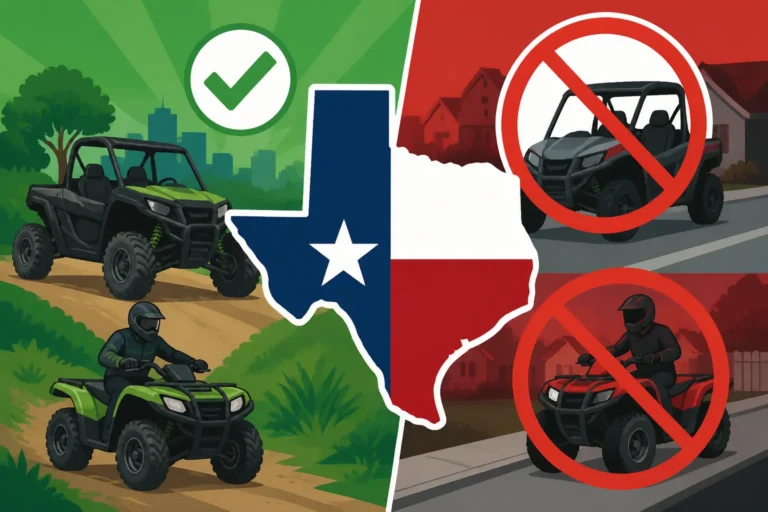
Let's be real: most of us buy an ATV or UTV for the thrill of the trail, the utility on the ranch, or the sheer joy of tearing through the backcountry. However, the minute you need to cross a paved road, run a quick errand to a nearby store, or link up two sections of your property, you hit a wall. Texas law generally views ATVs and UTVs as off-highway vehicles, period. This means they are not designed, manufactured, or intended for use on public highways. The state doesn't have a robust system for making them "street legal" in the same way you might register a car or motorcycle. This can be a huge bummer if your riding area is bisected by a public road, or if your favorite gas station is just a mile down a paved lane. It's a fundamental difference from how other states might approach OHV registration, and it’s why many riders often wonder, [Are ATVs Street Legal in Texas?] or [Why Texas Will Not Register an OHV for the Road]. This basic legal definition is the root of most of our frustrations and the reason we have to rely on specific, often narrow, exceptions.
The Exceptions That Allow Limited Road Use
Despite the general prohibition, Texas isn't entirely without options. The state does recognize that there are legitimate, practical reasons why an OHV might need to briefly access a public road. These aren't loopholes to make your quad a daily commuter, but rather carefully carved-out allowances for specific situations. Understanding these exceptions is crucial, as they come with their own set of rules regarding speed limits, equipment, and purpose of travel. The "25 miles origin to destination" rule is one of the most prominent of these, offering a glimmer of possibility for connecting the dots on your riding journey. Beyond this, there are also considerations for agricultural use, emergency services, and even some very specific local ordinances that might allow for broader access in certain areas. It's not about making every road accessible, but about providing pathways for necessary travel when off-road isn't an option.
Decoding the "25 Miles Origin to Destination" Rule
This particular rule is a lifeline for many Texas OHV owners, allowing a limited, purposeful use of public roads. However, it's frequently misunderstood, leading to confusion or even unintended legal trouble. Let's break down what it truly entails.
What the Rule Actually Means for Your Ride
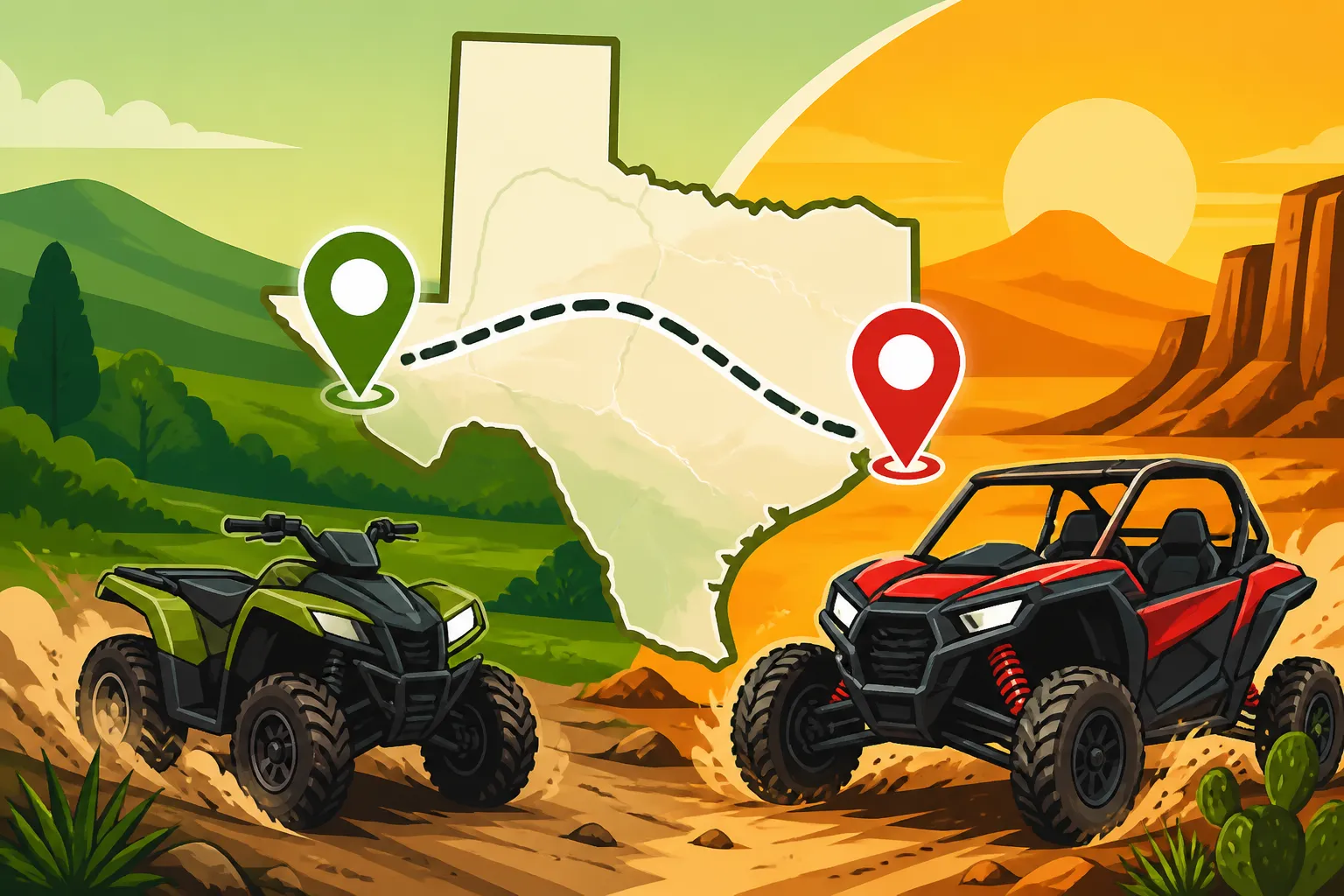
At its core, the "25 miles origin to destination" rule means that an OHV can be operated on a public road if the purpose of the travel is to get from one point to another, and the total distance traveled on public roads does not exceed 25 miles from the origin point to the destination point. This isn't a license for joyriding or taking the scenic route; it's explicitly for practical transit. Think of it as a direct connector. The key elements here are the purpose (transportation, not recreation) and the distance limit. The roads typically allowed under this rule are those with a posted speed limit of 35 miles per hour or less. This immediately rules out most major highways, interstates, and faster arterial roads. The intent is to allow brief crossings or short segments of travel on less-trafficked roads, primarily for utility or direct access. It means you might be able to take your UTV down a county road to check fence lines or pop over to a neighbor's property, but not cruise into the next town over for lunch if it means exceeding those parameters.
Practical Scenarios Where This Rule Applies
Let's look at some real-world examples where this rule can genuinely help. Imagine you have a large ranch, and part of your property is on one side of a county road, while another section is on the other. Instead of trailering your side-by-side a short distance, you might be able to legally drive it across or along that public road, as long as the travel is for ranch business (like moving cattle, checking irrigation, or reaching a distant pasture) and stays within the 25-mile limit on roads posted 35 mph or less. Another common scenario might involve needing to access a general store or a feed supplier that's just a few miles down a low-speed road from your land. If that store is your "destination" and you meet all the other criteria, this rule could apply. It's also frequently used by land managers or even hunters who need to move their machines from a camping area to a specific hunting blind access point that requires a short stretch on a public road. The emphasis is always on the necessity of the travel for a specific, often utility-oriented, purpose. This rule works in tandem with specific local allowances and the [Texas Rules for Riding a Farm Road].
The Importance of Origin and Destination
This isn't a "free 25 miles" to burn however you wish. The "origin to destination" aspect is crucial. It means you must have a clear starting point and a clear end point for your travel. You can't just drive in circles for 25 miles. The law envisions a direct path connecting two specific locations. For instance, if your origin is your property gate, and your destination is a specific field on the other side of a county road, or a specific trailhead entrance a few miles away, that's a valid "origin to destination." This concept prevents recreational cruising where the destination is merely "out and back" without a specific, practical purpose. Law enforcement officers, if they stop you, will often ask about your origin, your destination, and the purpose of your travel to ensure you're legitimately utilizing this exception. Understanding this distinction is vital to avoid a misunderstanding that could lead to a citation.
Key Conditions and Equipment for Limited Road Use
Just because you can use an OHV on certain roads for up to 25 miles doesn't mean you can just hop on and go. Texas law is very particular about what your machine needs and what you, as the operator, must do to comply. Skipping these details could turn a legal commute into a costly ticket.
Required Equipment for Road Travel
When you take your OHV onto a public road under any of these exceptions, it needs to be equipped in a way that makes it visible and safe for other road users. This generally means your ATV or UTV must have:
- Headlights: Functioning headlights are essential, especially if operating near dawn, dusk, or in low-visibility conditions, even if the rule implies daylight use.
- Taillights and Brake Lights: These are non-negotiable for signaling your presence and intentions to traffic behind you.
- Reflectors: Often, red reflectors on the rear and amber reflectors on the sides are required to increase visibility.
- Rearview Mirror: At least one functioning rearview mirror is crucial for monitoring traffic.
- Slow-Moving Vehicle (SMV) Emblem: If your OHV cannot maintain speeds comparable to the surrounding traffic, a triangular, orange-red SMV emblem must be displayed on the rear. This is a common requirement for farm equipment and often applies to OHVs on lower-speed roads.
- Spark Arrester: While more for environmental protection and fire prevention, a U.S. Forest Service-qualified spark arrester is often a general requirement for OHVs, particularly when operating where fire risk is a concern.
Many riders turn to aftermarket suppliers like SuperATV to ensure their machines meet these requirements. Whether it's adding a horn kit, turn signals, or a more robust mirror setup, SuperATV offers a wide range of accessories that can help you comply with these equipment demands. Ensuring your machine has these items is not just about avoiding a fine; it's about your safety and the safety of others on the road. For more details on what your machine needs, you can look up [Texas Equipment Rules for an ATV on a Road].
Driver and Passenger Requirements
Beyond the machine itself, there are rules for who can operate it and who can ride along. Generally, the minimum age for operating an ATV on public roads where allowed is 14 years old. This is consistent with Texas's general OHV safety certificate requirements for public land. Riders under this age typically need to be supervised by an adult or have completed a safety course.
When it comes to helmets, Texas has specific laws. While a helmet isn't always mandatory for adults operating certain OHVs on private land, if you're on a public road under an exception, the rules tighten. For riders of ATVs (the traditional quad-style), a helmet is generally required for anyone under 18. However, it's always safest to wear a helmet, regardless of age, when operating any OHV, especially on a public road. For side-by-sides (UTVs) with roll cages and seatbelts, the helmet requirement might be different, sometimes allowing an exemption if the machine provides adequate occupant protection. For passengers, they must be seated in a manufacturer-designed and designated seating area. No doubling up on a single-seat ATV, and children in UTVs must be properly restrained. To avoid any doubt, always check [Texas Helmet Law for ATV Riders].
Speed Limits and Road Types
The 25-mile origin-to-destination rule typically restricts OHV use to public roads with a posted speed limit of 35 miles per hour or less. This is a critical distinction. You cannot take your ATV or UTV onto a state highway with a 60 mph limit, even if your destination is only a mile away. These lower speed limits are generally found on county roads, farm-to-market roads, or specific city streets. It's essential to pay attention to road signs and ensure you're only using roads that fit this criterion. Even on these lower-speed roads, you must operate your OHV safely and not impede the flow of traffic more than necessary. While OHVs are not typically designed for high speeds on pavement, you are still expected to maintain a reasonable speed that is safe for the conditions and does not unduly slow down other vehicles. Riding on roads with speed limits higher than 35 mph can lead to serious fines and is generally considered a violation. [Texas Rules for Riding on a 35 mph Road] clarifies this important point.
When the 25-Mile Rule Doesn't Apply (and Other Exceptions)
While the 25-mile rule provides a valuable pathway for limited road use, it's not a blanket permission slip for all situations. There are clear boundaries to its application, and it's essential to understand these limitations. Moreover, Texas offers a few other distinct exceptions for road use that operate under different criteria.
Scenarios Where You Cannot Use the 25-Mile Rule
The "25 miles origin to destination" rule is specifically for transportation from one defined point to another, often for a utilitarian purpose. It explicitly does not cover:
- Recreational Cruising: You cannot simply take your ATV out for a leisurely ride down a public road, even if you stay within the mileage and speed limits, if your primary purpose is recreation. The spirit of the law is not to create a new form of street-legal vehicle.
- Commuting: Using your OHV as a regular means of transportation to and from work, school, or other daily activities is generally not permitted under this exception.
- Travel Beyond 25 Miles: Even if your destination is only a little further, once you exceed that 25-mile mark on public roads, you are no longer covered by this specific rule. This means planning your routes carefully and knowing your mileage.
- Roads Posted Over 35 MPH: As discussed, this is a non-starter. Trying to cross a busy highway even for a very short distance where the speed limit is 45 mph or 55 mph would be a violation.
- Roads Not Publicly Maintained: While perhaps not a common issue, the rule applies to "public roads," which means roads maintained by the state, county, or a municipality. Private roads or unmaintained tracks are different.
Misusing this rule can lead to significant penalties, including fines and potentially having your machine impounded. It's really about being direct and purposeful.
Agricultural and Timber Exemptions
Texas law recognizes the vital role OHVs play in the agricultural and timber industries. Because of this, there are separate, often broader, exceptions for machines used exclusively for farm or timber operations. These exceptions typically allow:
- Travel on Public Roads Adjacent to or Connecting Agricultural Land: This can include crossing roads or traveling along them to access different parts of a farm or ranch, or to move equipment.
- Broader Distance: The 25-mile limit often does not apply in the same strict way to agricultural use, as long as the travel is directly related to the operation. For instance, a farmer might need to drive their UTV several miles down a county road to get to a distant pasture or a cooperative.
- Specific Equipment Needs: While still needing to be visible and safe, some of the stricter road-legal equipment requirements might be slightly more relaxed for dedicated agricultural machinery, though basic lighting and SMV emblems are typically still required.
To qualify for these exemptions, the OHV must be clearly identifiable as being used for agriculture or timber, and the operator should be engaged in related activities. This is often an "agricultural use" as defined by tax code or other state statutes. For those working the land, [Texas Agricultural Exemption for ATVs on Roads] is a critical piece of information.
Other Local Road Options (Cities/Counties)
Beyond the statewide rules, some Texas cities and counties have the authority to create their own ordinances that might allow OHV use on specific public roads within their jurisdiction. These are typically very localized and vary greatly.
- Designated OHV Routes: Some smaller towns or rural counties, particularly those that cater to tourism or have large recreational areas, might designate specific streets or roads where OHVs are permitted. These are usually clearly marked and come with their own set of local rules.
- Golf Cart Ordinances: While not strictly OHVs, some cities have specific ordinances for golf carts that allow them on certain low-speed streets, often tied to master-planned communities or areas near golf courses. It's not uncommon for UTVs, especially electric ones, to sometimes be mistakenly grouped with golf carts, but it's important to verify the exact wording of any local ordinance. [Texas Rules for an Electric UTV on a Road] might touch on some related aspects.
- Permit Systems: In rare cases, a local jurisdiction might implement a permit system for OHV road use.
The critical takeaway here is that you cannot assume that if one town allows it, another will. You must always check with the specific city or county government where you plan to ride. What's legal in Galveston might be illegal in Fredericksburg. Always verify local regulations before riding on any public road not covered by the statewide 25-mile or agricultural exceptions.
Navigating the Legalities and Avoiding Penalties
Riding an OHV on public roads in Texas, even under specific exceptions like the 25-mile rule, requires a diligent understanding of the law. Ignoring the fine print can quickly turn a quick trip into a costly encounter with law enforcement.
Understanding the "Off-Highway Use Only" Remark on Your Title
Every Texas title issued for an ATV or UTV will prominently feature the phrase "OFF-HIGHWAY USE ONLY." This isn't just a suggestion; it's a legal classification that underpins all the rules we've discussed. This remark clearly states the vehicle is not intended for street use and, therefore, cannot be registered or licensed like a car or truck for general highway travel. It's a constant reminder that any road use is strictly limited to the narrow exceptions provided by law. This remark is why you won't get a standard license plate for your UTV to drive it down I-35. It exists to prevent confusion and underscore the primary purpose of the vehicle. For a deeper dive into this, check out [The Off-Highway Use Only Remark on a Texas Title]. It helps define the boundaries of your machine's legal operation, especially when it comes to any public road.
Potential Fines and Consequences for Violations
Ignoring the rules governing OHV road use in Texas can lead to a range of penalties, none of which are pleasant.
- Class C Misdemeanors: Most violations related to illegal OHV road use, such as operating on a prohibited road or without required equipment, are classified as Class C misdemeanors. These typically carry fines ranging from $25 to $500, plus court costs. While they don't usually involve jail time, they can still be a significant financial hit.
- Impoundment: In some cases, especially for repeat offenses or egregious violations, law enforcement has the authority to impound your ATV or UTV. Getting a machine out of impound can be very expensive, involving towing fees, daily storage fees, and the original fines. This can easily run into hundreds or even thousands of dollars.
- Personal Liability: Beyond legal penalties, operating an OHV illegally on a public road can expose you to significant personal liability if you're involved in an accident. Since OHVs are not typically insured for road use, your personal insurance might not cover damages or injuries, leaving you financially responsible for everything.
- Increased Scrutiny: Once you've been cited for an OHV violation, you might find yourself under increased scrutiny from law enforcement in the future.
The consequences far outweigh the convenience of cutting corners. It's always better to take the time to understand the rules and comply, rather than risk these penalties. You can find more information about potential penalties in [Texas Fines for Illegal ATV Road Use].
Resources for Staying Informed
Texas laws regarding OHVs, particularly those concerning road use, can be nuanced and occasionally updated. Staying informed is your best defense against accidental violations.
- Texas Department of Motor Vehicles (TxDMV): While they don't register OHVs for the road, the TxDMV website often has information regarding titling and definitions that can impact road use.
- Texas Parks and Wildlife Department (TPWD): TPWD is responsible for general OHV regulations and safety, including public land use, and often publishes helpful guides.
- County and City Websites: For local ordinances, you must check the official websites of the specific county or city where you plan to ride. A quick search for "OHV ordinance [City Name] Texas" or "ATV rules [County Name] Texas" can often yield results.
- Professional Legal Advice: If you have complex questions about specific situations or commercial operations involving OHVs on roads, consulting with a Texas attorney specializing in vehicle or property law can provide definitive guidance.
Being proactive and checking official sources means you're not relying on hearsay from the riding community, which can sometimes be outdated or misinformed. When in doubt, always err on the side of caution and consult an official source. This due diligence ensures you're riding legally and safely, protecting both yourself and your investment. Knowing [Texas Rules for Getting Across a Road] in specific situations can be particularly helpful.
| Rule Category | Details for 25 Miles Origin to Destination | Other Road Use Exceptions |
|---|---|---|
| Purpose of Travel | Direct transport between two points | Agricultural/timber operations, specific local needs |
| Distance Limit | Maximum 25 miles on public roads | Varies, often broader for Ag/Timber |
| Road Speed Limit | Posted 35 mph or less | Varies by local ordinance; usually low-speed |
| Required Equipment | Headlights, taillights/brake lights, reflectors, rearview mirror, SMV emblem | Similar to 25-mile rule; possibly more specific per local/Ag |
| Operator Age | Generally 14+ (with safety cert if under 18) | Varies, often 14+ |
| Passenger Seating | Manufacturer-designed seating only | Manufacturer-designed seating only |
| Helmet Requirement | Generally 18- and under | Varies by age/machine type, often similar |
| "Off-Highway Use Only" | Title remark still applies, reinforcing limited use | Title remark still applies, reinforcing limited use |
Disclaimer
This article is for general informational purposes only and does not constitute professional advice. Laws, prices and regulations vary by location and change over time. Consult a qualified professional for guidance on your specific situation.