Texas’s Golf Course Exception
Navigating the rules for riding your ATV or UTV on public roads in Texas can feel like trying to solve a Rubik's Cube blindfolded. For many off-highway vehicle (OHV) enthusiasts, the dream of a quick ride to the store or a short hop down the street to a friend's house is often met with the harsh reality of Texas law. This guide specifically tackles one of the few limited exceptions to this rule: the elusive Texas golf course exception, explaining precisely when and how you might legally take your OHV from your driveway to the green.
The Frustration of Texas Road Rules for OHVs
It's a common scenario across Texas: you've got a perfectly capable ATV or UTV in your garage, maybe a shiny new side-by-side that feels more like a small truck than a traditional quad, and you just want to drive it a mile down the road to get gas or visit a neighbor. Yet, the vast majority of the time, doing so is illegal. This creates a significant hurdle for many owners who see their machines as utility vehicles beyond just recreational trail riding.
Why Most ATVs and UTVs Aren't Street Legal
The fundamental issue boils down to how Texas law classifies ATVs and UTVs. For the most part, these machines are considered "off-highway vehicles," designed and intended for off-road use only. They simply don't meet the stringent safety and equipment standards required for vehicles to be deemed "street legal." Think about it: no turn signals, often no proper headlights or taillights for road use, usually no rearview mirrors as standard, and definitely no crumple zones or airbags. These aren't just minor omissions; they're core differences in design and purpose.
The state's legal framework for what constitutes a "motor vehicle" eligible for street registration is very specific, and OHVs typically fall outside that definition. It's not just about adding a few lights; it's about the fundamental certification and build. This distinction is often frustrating because a UTV, for instance, might feel quite substantial and safe, but from a legal standpoint, it's still an OHV not built for the asphalt. Many owners invest heavily in aftermarket parts, perhaps from a reputable company like SuperATV, adding features like windshields, roofs, and upgraded lighting, all of which enhance safety and comfort off-road. However, these modifications, while excellent for the trails, rarely transform an OHV into a street-legal vehicle in the eyes of Texas law. You can read more about this in [Why Texas Will Not Register an OHV for the Road].
The Core Reason Texas Law Keeps OHVs Off Roads
The primary driver behind these strict rules is safety. Public roads are shared spaces with larger, faster, and much heavier vehicles. An ATV or UTV, even a large side-by-side, offers minimal protection in a collision with a passenger car or truck. Furthermore, their handling characteristics, suspension, and braking systems are optimized for uneven terrain, not smooth, high-speed pavement. Taking them onto roads where they're not designed to operate safely puts both the OHV operator and other motorists at undue risk.
Beyond the safety aspect, there's also the matter of infrastructure and regulation. When a vehicle is "street legal," it's subject to a whole host of regulations, including inspections, insurance requirements, and taxation, all designed to ensure public safety and maintain road networks. Since OHVs are generally exempt from many of these requirements due to their off-road nature, allowing them widespread access to public roads would create a regulatory headache and potentially compromise safety standards that have been established for traditional motor vehicles over decades. This deep-seated legal and safety philosophy is why the exceptions, like the golf course rule, are so narrowly defined. [Street Legal ATVs in Texas: The Short Answer] offers a broader perspective on this challenge.
Understanding the Golf Course Exception
Amidst the general prohibition on OHV road use, Texas law carves out a handful of very specific, highly conditioned exceptions. One of the most frequently misunderstood, and sometimes misapplied, is the golf course exception. This isn't a blanket permission to drive your ATV or UTV to any golf course in Texas; rather, it's a precise allowance tied to specific conditions, times, and distances.
What the Law Specifically Says About Golf Courses
Texas Transportation Code allows for the operation of an OHV on a public street or highway if "the vehicle is operated on a public street or highway during daylight hours and the vehicle is traveling not more than two miles from the location where the vehicle is usually parked for the purpose of accessing a golf course." This is a mouthful, but every single phrase in that sentence is critical. It's not about going to the course to watch a tournament, nor is it about taking a scenic drive with your clubs in the back. The purpose must be to access the golf course itself, usually for a round of golf or related activities at the facility.
This exception acknowledges a practical need: many golf communities and courses are designed with the expectation that residents or players might use utility vehicles, often modified golf carts, to get around. However, the law extends this to OHVs under strict limits. It's crucial to understand that "accessing a golf course" implies you are going to or coming from the course, not simply using a road that happens to be near one as a convenient detour. The intent of your journey matters significantly.
Defining "Daylight Hours" and "2 Miles"
The terms "daylight hours" and "2 miles" are not open to interpretation; they are strict boundaries. "Daylight hours" means exactly what it implies: from sunrise to sunset. You cannot use this exception to drive your UTV to an evening tee time or a twilight round that extends into darkness. If you get caught driving your OHV under this exception after dark, you're out of compliance and could face a citation. [Daylight Only Under the Texas Golf Course Rule] provides more detail on this specific time constraint.
The "not more than two miles from the location where the vehicle is usually parked" part is perhaps the most critical and often overlooked. This isn't two miles from anywhere you park it, nor is it two miles from the golf course entrance. It's two miles from where your OHV is regularly kept. So, if your home is three miles from the golf course, this exception does not apply to you. It's a very short leash, designed to accommodate those living immediately adjacent to or within a golf course community. This distance is measured as the shortest practical driving route, not as the crow flies, and you can delve deeper into this restriction with [Riding 2 Miles From Where You Park].
The Machine Requirements for This Exception
While the law doesn't explicitly list a suite of required equipment for an OHV operating under the golf course exception, it's vital to remember that other general safety laws still apply if you're on a public road. Common sense, and the spirit of responsible road use, dictate that your OHV should have functioning headlights and taillights, even if you are only driving during the day. While the exception states "daylight hours," visibility is always key.
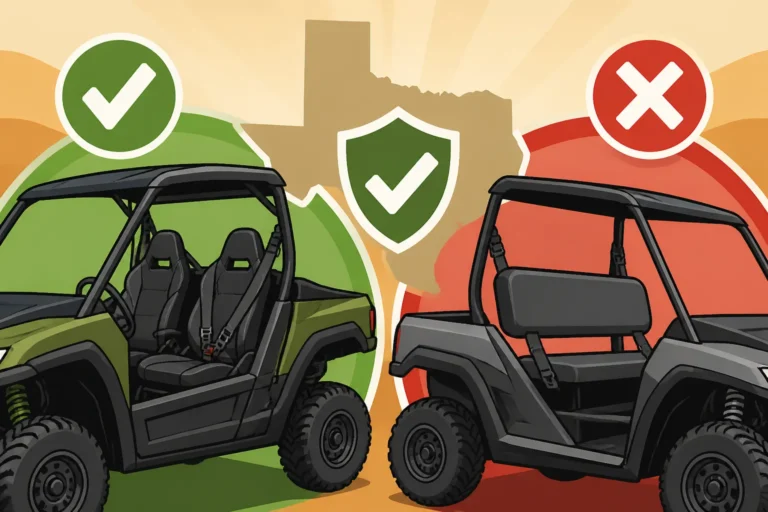
Many OHV owners who plan to utilize this or any other limited road exception often install aftermarket safety enhancements. This might include adding turn signals, brake lights, a horn, and mirrors. While these additions won't magically make your machine street legal for general use, they significantly improve your visibility and ability to communicate with other drivers when operating in these narrow exception windows. For example, aftermarket accessory providers like SuperATV offer a range of products, from side mirrors to full street-legal kits (though these kits alone don't confer street-legal status in Texas for general road use, they certainly enhance safety for limited exceptions). [Texas Equipment Rules for an ATV on a Road] offers guidance on general equipment needs.
Practical Application of the Golf Course Rule
Understanding the letter of the law is one thing; putting it into practice without running afoul of the authorities is another. The golf course exception, while seemingly straightforward, still requires careful consideration of your route, timing, and the ultimate purpose of your journey. It's not a free pass to cruise the neighborhood.
Riding to the Clubhouse for a Tee Time
The most direct and intended use of this exception is indeed for riding your OHV from your home, or another designated parking spot, directly to the golf course clubhouse or a specific tee. Imagine living in a planned community where the golf course weaves through residential areas. You park your UTV in your garage, and the first tee is just a mile and a half down the neighborhood street. In this scenario, traveling during daylight hours specifically to play a round of golf, or perhaps to the pro shop for supplies, would generally fall within the parameters of the exception.
However, keep in mind the "not more than two miles" rule. If you live a street away, great. If you live on the other side of a small town, even if it's technically still "accessing a golf course," you'll likely exceed the distance limit, making your journey unlawful. The spirit here is local, immediate access, not a longer commute. Always plan your route and measure the distance to ensure you stay within that strict two-mile radius from your usual parking spot.
Navigating Residential Streets Near the Course
When using the golf course exception, you're permitted to traverse public streets or highways. This typically means the residential streets and smaller county roads that lead directly to the golf course entrance. You're not meant to be taking major highways or busy thoroughfares, even if they technically fall within the two-mile radius. The assumption is that you'll be on roads with lower speed limits and less traffic, similar to those you might find within a golf cart-friendly community.
It’s important to drive defensively and be acutely aware of your surroundings. Other drivers on these residential streets might not expect an OHV, even if you are operating legally under the exception. Signal your turns if your machine has them, maintain a safe speed (generally slow, given the nature of the vehicle and the local roads), and be prepared to yield to all other traffic. Your OHV is still an unusual sight on the road, so exercise extra caution and courtesy.
Limitations Beyond the Golf Course Itself
This exception is laser-focused on accessing a golf course. It does not extend to other errands or recreational drives, even if they are within two miles of your home and happen to be in the same direction as the golf course. For example, you cannot use this exception to drive your UTV two miles to the grocery store, even if the grocery store is right next to the golf course. The purpose of the trip must be to get to the golf course.
Likewise, once you're at the golf course, the exception's utility effectively ends for public road use. You can drive your OHV on the golf course property itself, as permitted by the course management, but if you decide after your round to swing by a friend's house a mile down the road not to access the course, you're no longer covered by this specific rule. Adhering strictly to the "accessing a golf course" purpose is crucial to avoid a potential Class C misdemeanor for unlawful operation of an OHV on a public road.
Distinguishing the Golf Course Rule from Other Exceptions
Texas law has several, albeit limited, exceptions for OHVs on public roads. It's easy to conflate them or assume they offer similar freedoms, but each has its own distinct requirements and limitations. Understanding these differences is key to avoiding unintentional legal trouble.
The Master Planned Community Exception vs. Golf Course
Many golf courses are situated within "master planned communities," leading some OHV owners to believe the rules are interchangeable. However, the [Texas Rules for Riding in a Master Planned Community] are distinct from the golf course exception. The master planned community exception applies to OHVs operated on public streets within such a community if the community has filed a specific plat with the county and has uniform restrictive covenants allowing such use. This is a much broader allowance for internal community travel, often not restricted to "accessing a golf course" but for general transportation within the community.
The key difference lies in the authority that permits the use and the scope of that use. The golf course exception is a state-level allowance tied to a specific activity (golf). The master planned community exception relies on local community planning and county approval, and it can permit more general travel within its boundaries. An OHV might be permitted in a master planned community and also qualify for the golf course exception if it's within two miles of the course, but these are separate legal justifications, each with its own specific triggers and limitations. It’s imperative to confirm if your community has the necessary plat and covenants in place before assuming road access.
Agricultural Use vs. Golf Course Use
Another common exception for OHV use on public roads is for agricultural purposes. Farmers and ranchers frequently use ATVs and UTVs for work, and Texas law recognizes the need for them to cross or travel short distances on public roads for agricultural operations. [Texas Agricultural Exemption for ATVs on Roads] details these provisions. This exception allows an OHV to be operated on a public highway for specific agricultural or timber operations, often involving transporting tools, livestock, or checking fences.
The crucial distinction here is the purpose of the travel. The golf course exception is for recreation and accessing a specific facility. The agricultural exception is for legitimate work purposes related to farming, ranching, or timber. An OHV used to haul golf clubs to the clubhouse is clearly not agricultural use, and an OHV hauling feed across a county road is not accessing a golf course. While both involve limited road use for an OHV, their legal basis and permitted activities are entirely separate. Misapplying the agricultural exemption to justify recreational use will result in a citation.
Low-Speed Vehicles and Golf Carts Are Different
It’s easy to look at a UTV and think it’s just a beefed-up golf cart, or that a fully equipped UTV might fall into the "low-speed vehicle" (LSV) category. However, Texas law defines these vehicle types very distinctly, and their rules for road use are different from OHVs. [Texas Golf Cart Titling Rules] explains how golf carts themselves have specific regulations, often involving local city ordinances that permit them on certain streets.
A Low-Speed Vehicle (LSV) is a street-legal vehicle, typically with a top speed between 20 and 25 mph, that meets federal safety standards for LSVs. These vehicles are titled and registered for road use and are subject to all motor vehicle laws, including insurance and inspections. While an LSV might look similar to some UTVs, it's manufactured to different standards and is legally distinct. You cannot simply modify an OHV into an LSV or golf cart through aftermarket parts and expect it to gain their road-use privileges. The legal classification is determined at the time of manufacture and initial titling, not by subsequent owner modifications, even if they make the machine safer.
Equipping Your OHV for the Golf Course Exception
Even when operating under a legitimate exception like the golf course rule, it's paramount to prioritize safety and ensure your vehicle is as visible and controllable as possible. While the law might not explicitly demand every single piece of street-legal equipment, practical considerations and responsible driving dictate that you prepare your OHV for its brief stint on public asphalt.
Essential Lights and Reflectors
Since the golf course exception only permits daytime operation, full street-legal lighting might seem unnecessary. However, good visibility is always critical when sharing roads with other vehicles, especially in Texas where weather conditions can change quickly, impacting visibility. Ensure your OHV has fully functional headlights and taillights. Even during the day, these can make you much more noticeable to drivers emerging from driveways or turning corners.
Consider adding auxiliary lighting or reflective tape, especially if your OHV's factory lighting is minimal. Rear-facing reflective tape can greatly enhance your visibility to vehicles approaching from behind. If you have turn signals, use them! If not, clear hand signals become even more important when turning or changing lanes. While companies like SuperATV offer a wide range of lighting solutions, including LED light bars and full turn signal kits, always ensure any additions are properly installed and don't create glare for other drivers. The goal is to be seen, not to blind.
Safety Gear and Why It Still Matters
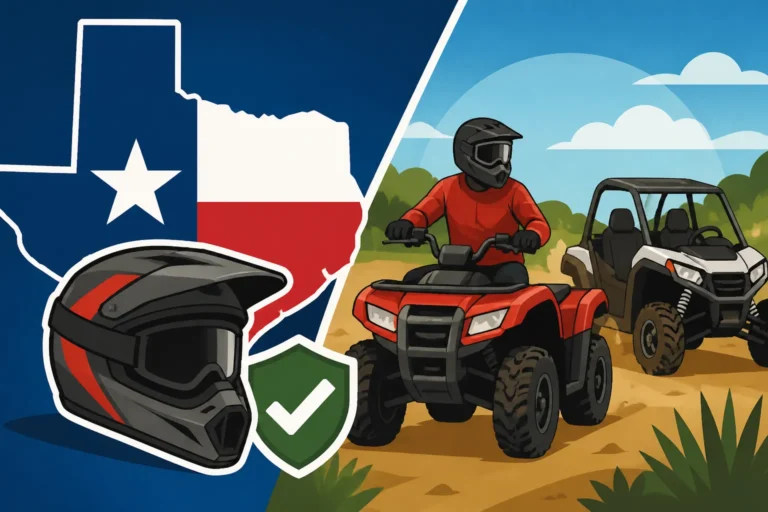
Operating an OHV on a public road, even for a short distance at low speeds, carries inherent risks. Texas law generally requires ATV and UTV operators and passengers to wear a helmet, especially on public lands or when crossing public roads. While the golf course exception is for road use, the spirit of [Texas Helmet Law for ATV Riders] still applies. It's always a good idea to wear a DOT-approved helmet, eye protection, long sleeves, long pants, gloves, and sturdy boots, regardless of how short your trip to the golf course might be.
This gear provides crucial protection in the event of an unexpected encounter with another vehicle, a sudden stop, or even hitting a pothole. It's about personal safety and demonstrating responsible behavior. Being prepared for the worst, even on a short, seemingly innocuous trip, can literally be a lifesaver. Never assume that because you're traveling a short distance or at low speeds that you are immune to accidents.
What About Modified Machines?
Many OHV owners love to customize their machines, adding lift kits, larger tires, modified exhausts, and a host of other accessories. While these modifications might enhance off-road performance or aesthetics, they can also impact how your OHV handles on pavement. For instance, knobby off-road tires, while excellent for mud and rocks, can be less stable and provide less grip on smooth asphalt, especially when braking or turning quickly. Lift kits can raise the center of gravity, making the vehicle less stable.
When operating under the golf course exception, it's wise to consider how your modifications affect road performance. Maintain a sensible speed, be extra cautious with braking and turning, and be aware that your modified machine might behave differently on pavement than it does off-road. While certain modifications might make your UTV appear more "street-ready" – such as adding a full windshield or side mirrors from a brand like SuperATV – they do not change its legal classification as an OHV, nor do they confer general street-legal status beyond the very narrow scope of the golf course exception.
Common Misconceptions and Legal Pitfalls
The allure of convenience often leads to misinterpretations of the law, turning a seemingly innocent decision into a costly mistake. The golf course exception is particularly prone to these pitfalls due to its specificity and the general desire of OHV owners to use their machines more broadly.
The "Just Around the Corner" Trap
One of the biggest traps is the assumption that "just around the corner" or "it's only a quarter-mile" means you're automatically covered. The "not more than two miles" rule is an absolute limit. If your home is 2.1 miles by road from the golf course, this exception does not apply to you. Period. There's no wiggle room for "close enough." Law enforcement officers are trained to measure distances, and they won't hesitate to do so if they suspect you're exceeding the limit.
Furthermore, the "from the location where the vehicle is usually parked" part is often forgotten. It's not 2 miles from anywhere you start; it's 2 miles from its primary storage location. So, if you trailer your OHV to a friend's house a block from the course, technically the two-mile rule applies from your friend's house, not your own, for that specific trip. Always verify your exact distance, not just guesstimate.
Thinking Lights Make It Street Legal
Many OHV owners, out of a genuine desire for safety, install extensive lighting kits, turn signals, and horns on their ATVs and UTVs. While these are excellent safety enhancements, especially for limited road use, they do not magically transform an OHV into a street-legal vehicle for general purposes. This is a massive and dangerous misconception. As we've discussed, Texas law is very clear: OHVs are generally not designed for public roads.
Adding a full suite of lights might make your machine look more like a car or truck, but it doesn't change its classification or grant it the privileges of a registered motor vehicle. The golf course exception allows specific use under certain conditions, but the fundamental nature of the vehicle remains "off-highway." Relying on aftermarket lighting to justify broader road use will almost certainly lead to a traffic stop and a citation for illegal operation. [Why an Altered Quad Still Cannot Be Plated] highlights this issue.
Penalties for Misinterpreting the Rules
Operating an OHV on a public street or highway in Texas where it is prohibited, or outside the strict parameters of an exception, can result in a Class C misdemeanor. While a Class C misdemeanor is the lowest level of criminal offense in Texas, it still carries significant consequences. This can include fines, which can range from minor to substantial depending on the jurisdiction and specific circumstances. Beyond the financial penalty, you could also face court costs and potentially higher insurance rates for future vehicle coverage if the incident is reported to your driving record.
More importantly, there's the risk of civil liability. If you're involved in an accident while illegally operating your OHV on a public road, your personal liability could be enormous. Your OHV insurance (if you even have it, as it's not mandated for off-road use in Texas) might not cover incidents that occur while operating unlawfully on public roads. This could leave you personally responsible for damages, injuries, and legal fees. Understanding [Texas Fines for Illegal ATV Road Use] is crucial to avoid these serious repercussions.
Alternatives for Road Use (Beyond Golf Course)
Given the extreme limitations of the golf course exception and the general prohibition on OHV road use, many Texans wonder if there are any other legitimate ways to use their machines on public thoroughfares. Thankfully, Texas law does offer a few other narrow windows, though each comes with its own set of strict conditions.
Limited County Road Access
Certain counties in Texas, particularly those with smaller populations (under 37,000 people), have the option to allow OHVs on designated county roads. This is not a universal right and requires specific action by the county commissioners court. Even then, the roads are usually limited to those with speed limits of 35 mph or less, and the OHV must display a specific triangular "slow-moving vehicle" emblem, and be operated during daylight hours.
You absolutely cannot assume your county has adopted such an ordinance. It is entirely up to local authorities, and most counties simply do not exercise this option. Before even considering this, you must contact your local county clerk or sheriff's office to confirm if such an ordinance exists, which specific roads are designated, and what additional equipment or operational rules apply. Operating on a county road without proper authorization, even if the county could allow it, is still illegal. [Counties Under Thirty-Seven Thousand People] further elaborates on this potential exception.
Farm-to-Market Road Exemptions
Similar to county road access, there's a very specific exception for OHVs to be operated on farm-to-market roads or other public roads for a maximum distance of 25 miles from the origin to destination if the operation is for agricultural purposes. This falls under the broader agricultural exemption discussed earlier. This is not for recreational riding; it's strictly for conducting agricultural business, like moving equipment or livestock between fields, or transporting supplies directly related to farm or ranch operations.
The OHV must also display a 6-foot orange flag (often called a whip flag), have headlights and taillights on (even during the day), and be operated during daylight hours. [Texas Agricultural Exemption for ATVs on Roads] delves into the specific requirements for this critical exception. Again, the purpose is paramount. Hauling hay for your cattle? Likely covered. Riding your UTV to a fishing spot on a farm-to-market road? Absolutely not covered.
Considering a Low-Speed Vehicle (LSV)
If your primary desire is to have a street-legal, open-air vehicle for short-distance neighborhood travel, golf course access, or simply cruising around, an LSV might be a more appropriate choice than an OHV. As mentioned, LSVs are designed and manufactured to meet federal safety standards for low-speed street use and are titled and registered as motor vehicles. This means they can be legally driven on most public roads with speed limits of 35 mph or less (local ordinances permitting).
While an LSV might cost more upfront than a basic UTV, and it won't have the same off-road capabilities, it offers the freedom of legitimate street use without the legal ambiguity and strict limitations that come with trying to squeeze an OHV onto public roads. Many companies now offer LSV models that look very similar to UTVs, but with the necessary DOT-approved lighting, seatbelts, VIN, and other features that make them truly street legal. If road-based utility is a frequent need, an LSV could be a much safer and legally sound investment.
Staying Informed and Riding Responsibly
The landscape of OHV laws in Texas, especially concerning public road use, is complex and ever-changing. It demands vigilance and a commitment to responsible riding from every enthusiast.
The Importance of Local Ordinances
While state law sets the baseline for OHV operation, local city and county ordinances can add further restrictions or, in rare cases, specific allowances. For example, some cities have unique rules regarding golf carts or OHV-like vehicles on certain designated streets within their municipal limits. These local rules can vary wildly from one town to the next, even within the same county.
Before assuming any road use is permissible, always check with the local city hall or county clerk's office for the specific jurisdiction you plan to ride in. A quick phone call or visit can save you a world of trouble. What's legal in one small town might be strictly prohibited just across the city limits. This is particularly relevant if you're riding in areas like [Texas's Golf Course Exception] where local communities might have a say in how these vehicles operate.
Resources for Further Clarification
When in doubt, don't guess. The Texas Department of Motor Vehicles (TxDMV) and the Texas Parks and Wildlife Department (TPWD) are primary sources for state-level OHV regulations. While neither agency is typically tasked with directly enforcing all road rules, they can provide authoritative interpretations of the law. Your local county tax assessor-collector's office, where you would go to title an OHV, can also be a valuable resource for questions related to vehicle classification and titling.
For the most accurate and personalized advice, especially concerning any specific legal situation or if you're considering a significant investment in a machine for a particular use case, consulting with an attorney who specializes in Texas vehicle and property law is always the best course of action. While our aim is to provide comprehensive information, legal advice should always come from a qualified professional.
Being a Good Neighbor on the Roads
Ultimately, responsible OHV use, whether off-road or in the very limited instances of legal road access, comes down to being a good neighbor and a considerate member of the community. When you do have legal access to a public road, even if it's just for that two-mile dash to the golf course, drive courteously, cautiously, and follow all traffic laws. Keep your speed low, yield to other vehicles, and be mindful of noise levels.
The more responsibly OHV owners conduct themselves in these limited road situations, the less likely there will be public outcry or further restrictions placed on off-highway vehicles. Every time an OHV is operated unsafely or unlawfully on a public road, it reinforces negative stereotypes and can lead to stricter enforcement or even new prohibitive laws. By being a model of responsible riding, you contribute positively to the entire OHV community in Texas.
Disclaimer
This article is for general informational purposes only and does not constitute professional advice. Laws, prices and regulations vary by location and change over time. Consult a qualified professional for guidance on your specific situation.