Texas Use Tax on a Machine Bought in Louisiana
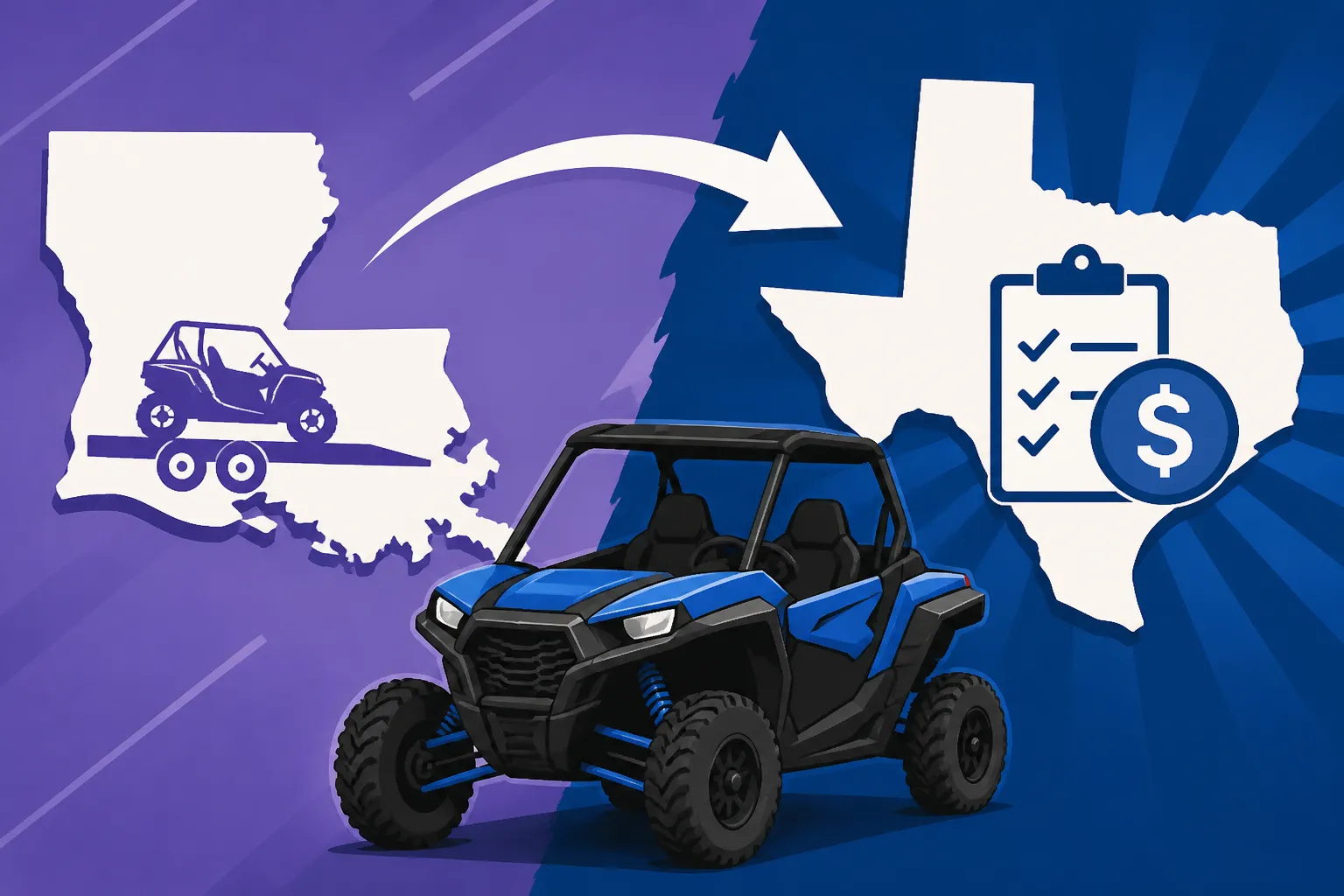
Bringing home a shiny new (or new-to-you!) ATV or UTV from another state can feel like a win, especially if you found a fantastic deal in a place like Louisiana. But hold on a second before you think you've dodged all the financial bullets. Many folks get caught off guard when they realize Texas has a "use tax" that often applies to these out-of-state purchases, and it's something you must address if you want to properly title your machine here. This guide is going to walk you through exactly what the Texas use tax means for your Louisiana-bought off-highway vehicle, how to calculate it, and what steps you need to take to satisfy the Lone Star State's requirements.
Understanding Texas Use Tax for Out-of-State Purchases
It’s completely understandable why someone might scratch their head over the concept of a "use tax." You might think, "I already bought it, isn't that it?" But Texas, like many states, has a system in place to ensure fair taxation, whether you buy your off-highway vehicle (OHV) within its borders or bring it in from somewhere else. The goal isn't to punish you for finding a great deal across state lines; it's about making sure that the state receives its due revenue, much like it would from an in-state sale.
Why Texas Levies Use Tax on OHVs
Imagine a scenario: you find an incredible deal on a used side-by-side from a private seller just across the border in Shreveport, Louisiana. You pay cash, load it up, and drive it straight back to your ranch near Nacogdoches. If Texas didn't have a use tax, everyone would simply pop over to a neighboring state, buy their machines there, and avoid paying any sales tax back home. This would create a huge loophole, significantly impacting the funds that Texas uses for things like road maintenance, schools, and other public services. The use tax is essentially the state's way of leveling the playing field. It ensures that whether you buy from a dealer in Houston or a private party in Baton Rouge, if you're going to use that machine in Texas, you'll contribute your share to the state's coffers. It prevents a scenario where folks intentionally shop out-of-state solely to escape taxation, which would put Texas businesses at a disadvantage and reduce essential state revenue.
The Difference Between Sales Tax and Use Tax
This is where a lot of confusion comes in. Most of us are very familiar with sales tax; you walk into a store, buy something, and the cashier adds sales tax to your total bill. The store then collects that tax and remits it to the state. Simple, right? Use tax is a bit different because it's your responsibility as the buyer to report and pay it directly to the state, typically when the seller didn't collect sales tax for Texas, or collected it at a lower rate than what Texas requires. Think of it this way: if a Louisiana dealer is registered to collect Texas sales tax (which some border-area dealers might be, though it's less common for smaller OHV shops), they would collect it from you at the point of sale. However, if they don't, or if you bought from a private individual, then you, the buyer, are obligated to pay the equivalent amount as a use tax to Texas. It’s a tax on the “use, storage, or consumption” of taxable items within Texas, where sales tax wasn’t properly applied at the time of purchase.
When the Louisiana Purchase Triggers Texas Use Tax
So, when exactly does that Louisiana purchase mean you're on the hook for Texas use tax? The general rule is this: if you purchase an OHV in Louisiana (or any other state) and bring it into Texas for use, storage, or consumption, and you either paid no sales tax in Louisiana or paid sales tax at a rate lower than Texas's standard rate, then Texas use tax will likely be due. This is particularly common in two main scenarios. First, buying from a private seller in Louisiana almost always triggers Texas use tax, because private sellers typically don't collect sales tax. You might draft a solid [A Texas Bill of Sale for an ATV] with the seller, but that document alone won't get you out of paying the use tax in Texas. Second, purchasing from a Louisiana dealer who isn't registered to collect Texas sales tax will also require you to pay use tax directly to Texas. Even if you pay Louisiana sales tax, you'll still owe the difference if Louisiana's rate was lower than what Texas would have charged.
Calculating and Paying Texas Use Tax on Your Louisiana ATV/UTV
Navigating the tax implications can feel like a maze, especially when you're dealing with two different states. But once you understand the core principles, calculating and paying your Texas use tax for that Louisiana-bought OHV becomes much more straightforward. It largely revolves around documenting your purchase accurately and understanding the Texas tax rate.
How Texas Calculates the Use Tax Amount
Texas uses a specific rate for its sales and use tax, which currently sits at a statewide rate of 6.25%. On top of that, local jurisdictions (cities, counties, transit authorities, special purpose districts) can add up to an additional 2%, bringing the total combined rate to a maximum of 8.25% in some areas. However, for vehicles like ATVs and UTVs, the state portion is often the primary focus, especially when talking about use tax remitted directly to the Comptroller or county. When you purchase an OHV out of state, the use tax is generally calculated on the purchase price you paid for the machine. For instance, if you paid $10,000 for your UTV in Louisiana, the base use tax owed to Texas would be $625 (6.25% of $10,000). It's not based on the vehicle's market value unless the purchase price is deemed unusually low, or if the sale was not "at arm's length" (like a gift or a heavily discounted family transfer), in which case the state might refer to a standardized value. You can visit your local [Titling at a Texas County Tax Office] to get the precise local rates, if any, that would apply to your specific situation and location.
Documenting Your Louisiana Purchase for Texas Tax Purposes
Having meticulous records is absolutely critical when you're dealing with out-of-state purchases and Texas use tax. The Texas Comptroller's office and your local county tax assessor-collector will want to see clear proof of your purchase and the price you paid. The single most important document you'll need is a comprehensive bill of sale or purchase invoice. This document should clearly state the buyer's name (that's you!), the seller's name, a detailed description of the OHV (including make, model, year, and crucially, the Vehicle Identification Number or VIN), the date of sale, and the exact purchase price. If you used a generic form, ensure all these fields are filled out. You might find templates online, like those offered by LawDepot, that can help you create a professional and legally sound [Texas ATV Bill of Sale Template Requirements]. Additionally, if you paid any sales tax in Louisiana, you'll need the receipt or invoice showing that amount paid, as this can affect your Texas tax liability. Any proof of payment, such as a cancelled check or bank statement, can also be helpful to back up the stated purchase price.
The Process of Remitting Use Tax to Texas
Once you have your documentation in order, the next step is to actually remit the use tax to Texas. This is typically done when you go to [Titling at a Texas County Tax Office] to apply for your Texas title. You’ll need to fill out Texas Comptroller of Public Accounts Form 130-U, also known as the "Application for Texas Title and/or Registration." On this form, there's a specific section where you declare the purchase price of your OHV and indicate whether sales tax was paid in another state. If you are reporting use tax, you will list the purchase price, and the county clerk will calculate the Texas use tax amount based on the applicable rate. You will pay this amount directly to the county office at the time of titling. It's important to remember that you cannot get your Texas title until this use tax is paid. The county office acts as an agent for the Comptroller, collecting these taxes on their behalf. Make sure you have all your documents, including your Louisiana bill of sale and any proof of tax paid there, when you head to the county office. [Filing at the Tax Assessor-Collector] is a standard procedure for this, and they'll be able to guide you through the specifics.
Common Pitfalls and Important Considerations
Even with a clear understanding of the process, there are still a few areas where folks often get tripped up. Knowing these ahead of time can save you a headache, extra trips to the county office, and potentially even some money. It's not just about paying the tax; it's about paying the right amount and understanding how it all fits into the larger picture of your OHV ownership.
Credit for Sales Tax Paid in Louisiana
This is a frequently asked question, and for good reason! Many people assume that if they paid sales tax in Louisiana, they shouldn't have to pay it again in Texas. Thankfully, Texas does offer a credit for sales tax legally imposed and paid to another state, but there's a catch: the credit is only up to the amount of tax that Texas would have levied. So, if Louisiana's sales tax rate was, for example, 4% and Texas's combined rate for your area is 6.25%, you would get a credit for that 4% paid in Louisiana, but you would still owe the difference of 2.25% to Texas as use tax. This prevents double taxation while still ensuring Texas receives its full share. If Louisiana's rate was higher than Texas's, you generally wouldn't owe anything additional to Texas, but Texas won't issue a refund for the difference. You'll need to provide clear documentation, such as the original sales invoice or receipt from Louisiana, that explicitly shows the amount of sales tax you paid there. Without this proof, Texas will assume no tax was paid in Louisiana and assess the full Texas use tax.
The March 2020 Use Tax Rule and Its Impact
The landscape for collecting use tax on out-of-state purchases, especially for vehicles, saw a significant change starting in March 2020. Prior to this, for certain types of vehicles, if you bought out of state, you often had to proactively submit a separate form (Form 01-147, "Use Tax for Motor Vehicle Brought into Texas") and pay the tax directly to the Texas Comptroller of Public Accounts before you could even apply for your title at the county office. This created an extra step and a potential delay. The [The March 2020 Use Tax Rule] essentially streamlined this process for OHVs and other non-motor vehicle items (like trailers, boats, etc.) by allowing the county tax assessor-collector to collect the use tax directly when you apply for your Texas title using Form 130-U. This means you no longer have to make two separate payments to two different agencies for the tax and the title. While simplifying the process, it underscores the fact that [Proof of Use Tax Before a Texas Title] is still an absolute requirement; it's just collected more efficiently now.
What Happens if You Don't Pay the Use Tax
Ignoring the use tax isn't an option if you plan to legally operate and own your OHV in Texas. The biggest immediate consequence is that you simply won't be able to get a Texas title for your machine. Without a title, you can't prove ownership in the eyes of the state, making it impossible to legally sell it down the road, and creating a huge headache if it's ever stolen or involved in an incident. The county tax assessor-collector's office is mandated to collect the use tax before processing your title application. If you try to skirt the system, you'll be turned away. Furthermore, if the Texas Comptroller's office discovers you've brought a taxable item into Texas and haven't paid the use tax, they can assess the tax, along with penalties and interest, which can quickly add up. It's always best to be upfront and handle the tax obligation correctly from the start.
Titling Your Louisiana-Bought ATV/UTV in Texas
Once you’ve successfully navigated the use tax requirements, you’re on the home stretch to getting that shiny new Texas title for your OHV. This part of the process is crucial because the title is your ultimate proof of ownership and is necessary for any future transactions involving your machine.
Why Proof of Use Tax Payment is Required for Titling
It’s pretty simple: the state wants its money. The Texas Department of Motor Vehicles (TxDMV) and its agents, the county tax assessor-collectors, are tasked with ensuring that all relevant taxes are paid before a title is issued. For out-of-state purchases, this means the use tax. When you fill out Form 130-U, the information you provide about your purchase price and any sales tax paid in Louisiana directly informs the calculation of Texas use tax. The county clerk will verify this information and will not process your title application until all applicable taxes, including the use tax, are paid in full. This is a non-negotiable step. Without a clear path to collecting this revenue, the state's budget would suffer, so they’ve made the titling process contingent upon this payment. It's part of the comprehensive system Texas uses to regulate vehicle ownership and ensure tax compliance.
The Titling Process After Paying Use Tax
Once you've paid the use tax (either through the county clerk directly or, in specific historical cases, to the Comptroller), the titling process for your Louisiana-bought OHV proceeds much like any other out-of-state title transfer. You'll continue with the [How to Title an ATV in Texas] steps at your local county tax office. The clerk will take your completed Form 130-U, your Louisiana title or certificate of origin (if applicable), your bill of sale, and any other required supporting documents. They will review everything, process your payment for the use tax, title fees, and potentially the optional OHV license plate fee. After successful processing, the county will forward your application to the TxDMV, which will then issue your Texas title. This title will typically be mailed to you within a few weeks. It's a relieving feeling to finally have that official Texas document in hand, confirming your legal ownership.
Essential Documents for Titling
To ensure a smooth titling process for your Louisiana-bought OHV, you’ll want to have a very specific set of documents prepared before you head to the county tax office. This will help avoid frustrating delays or multiple trips. Here’s a quick checklist of the critical items you’ll need:
- Completed Texas Comptroller Form 130-U: This is your "Application for Texas Title and/or Registration." Make sure all sections are filled out accurately, especially the buyer and seller information, vehicle details, and the purchase price.
- Original Manufacturer’s Certificate of Origin (MCO) or Previous State Title: If the OHV is new, you'll need the MCO. If it's used, you'll need the original Louisiana title, properly signed over to you by the seller.
- Bill of Sale: A detailed bill of sale showing the purchase price, date of sale, full description of the OHV (including VIN), and the names and signatures of both buyer and seller. As mentioned earlier, resources like LawDepot can help you generate one if you bought from a private party.
- Proof of Sales Tax Paid in Louisiana (if applicable): If you paid sales tax in Louisiana, bring the invoice or receipt clearly showing the amount. This is crucial for claiming any tax credit.
- Valid Photo ID: For yourself, as the buyer.
- Proof of Texas Residency: While not always explicitly asked for, it’s good to have this on hand.
- Payment for Fees: Be prepared to pay the Texas use tax, title fees, and any other applicable charges (like the optional [The Texas Off-Highway Vehicle License Plate]).
Having a comprehensive [Texas ATV Title Paperwork Checklist] like this will significantly expedite your visit and ensure you leave with peace of mind.
Here's a quick summary of the key differences in tax scenarios for your Louisiana OHV purchase:
| Scenario | Texas Use Tax Due? | Required Documents for Tax Credit (if any) |
|---|---|---|
| Private Sale in Louisiana | Yes, full Texas use tax (6.25% + local, if any) | Detailed Bill of Sale |
| Dealer Sale in Louisiana (no TX tax paid) | Yes, full Texas use tax (6.25% + local, if any) | Dealer Invoice/Bill of Sale |
| Dealer Sale in Louisiana (TX tax paid < LA) | Yes, difference between TX rate and LA rate | Dealer Invoice showing LA tax paid |
| Dealer Sale in Louisiana (TX tax paid >= LA) | No, no additional tax due | Dealer Invoice showing LA tax paid |
Disclaimer
This article is for general informational purposes only and does not constitute professional advice. Laws, prices and regulations vary by location and change over time. Consult a qualified professional for guidance on your specific situation.