Texas Use Tax on a Machine Bought in Oklahoma
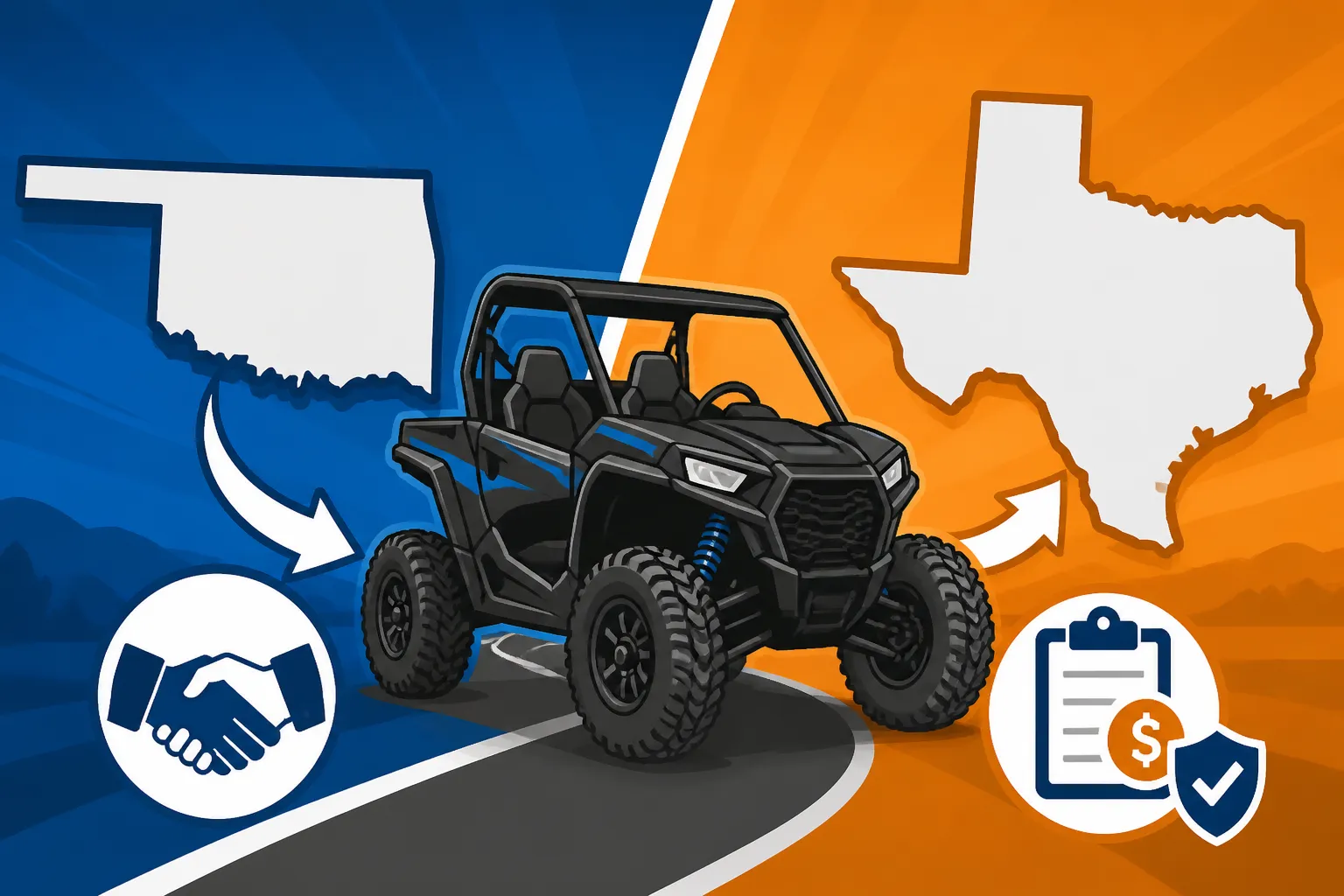
It's a familiar story across Texas: you've found the perfect ATV or UTV in a neighboring state, maybe just across the Red River in Oklahoma. The price was right, the machine is sweet, and you hauled it back to the Lone Star State with a grin. You're ready to hit the trails, but first, you need to get that Texas title in your hand. That's when you hit a snag. The friendly folks at your local county tax office mention "use tax," and suddenly, your great deal feels a little less sweet. This guide is here to unravel the mystery of Texas Use Tax on an out-of-state OHV purchase, specifically when you've bought your machine in Oklahoma, so you can navigate the process smoothly and get your title without any unexpected delays or frustrations.
Understanding Texas Use Tax When You Buy Out-of-State
Buying an off-highway vehicle (OHV) like an ATV or UTV can be an exciting experience, and often, the best deals aren't always right in your backyard. Many Texans venture into states like Oklahoma, lured by different inventory, prices, or perhaps just a specific model they've been searching for. However, bringing that purchase across state lines into Texas triggers a specific tax obligation that often catches buyers off guard: the Texas Use Tax. It's a critical piece of the puzzle you need to understand before you can successfully title your new-to-you machine.
Sales Tax vs. Use Tax: What's the Difference for Texans?
Let's clear up a common misconception right away: Texas Use Tax isn't about double-dipping. It's not the state trying to tax you again on something you've already paid sales tax on in Oklahoma. Think of it this way: Sales tax is collected by the seller at the point of purchase when a transaction happens within a state. If you buy an ATV from a dealership in Dallas, you pay Texas sales tax to that dealer, who then remits it to the state. Simple.
Use tax, on the other hand, comes into play when you purchase goods outside of Texas and bring them into the state for "use" here, and you haven't paid at least the equivalent amount of Texas sales tax in the state where you bought it. The purpose of the use tax is to level the playing field. It ensures that Texas residents pay their fair share of tax on goods consumed or used within the state, regardless of whether they bought it from a local dealer or journeyed to Oklahoma for a better deal. Without it, everyone would just buy out-of-state to avoid Texas sales tax, which wouldn't be very fair to our local businesses or the state's coffers. So, while you likely paid sales tax in Oklahoma, if that rate was lower than Texas's, or if it was a private sale where no sales tax was collected, Texas expects you to make up the difference with use tax.
Why Texas Cares About Your Oklahoma Purchase
Texas is a large state with a lot of public services that need funding – from roads to schools, and yes, even parts of our beautiful state parks where you might want to ride your new OHV. These services are partially funded by sales and use taxes. When you buy an ATV or UTV, even if it's strictly for off-highway use, it's considered a tangible personal property, just like furniture, electronics, or other merchandise. The state legislature determined that such items, when brought into Texas for use by a Texas resident, should contribute to the state's revenue.
This isn't an arbitrary rule; it's a fundamental aspect of sales and use tax law across many states. Your shiny new (or new-to-you) OHV will be used in Texas, even if it never touches a public road. It will wear out Texas dirt, perhaps utilize Texas-funded trails, and certainly be owned by a Texas resident. The state has a vested interest in ensuring its tax laws are applied consistently to all goods enjoyed within its borders, regardless of where the purchase transaction occurred. This is why when you approach the county tax office to get your [Titling an ATV in Texas], they will look closely at where and how you acquired it.
The Role of the Texas Comptroller of Public Accounts
While you'll ultimately pay your use tax at your local county tax assessor-collector's office when you apply for your title, the Texas Comptroller of Public Accounts is the state agency responsible for overseeing and enforcing tax laws, including sales and use tax. They set the rules, provide the guidelines, and ensure that all taxes collected are properly accounted for and distributed. Your county tax office acts as an agent of the Comptroller in collecting these fees for OHV titling.
The Comptroller's office frequently issues guidance and updates regarding tax obligations. For instance, there was a significant shift with [The March 2020 Use Tax Rule], which clarified procedures for collecting use tax on out-of-state purchases, making it even more important for buyers to understand their obligations before heading to the county office. They want to ensure that if you buy an ATV from a dealer in Ardmore, Oklahoma, or a private seller near Oklahoma City, and bring it home to Texas, the appropriate use tax is paid to Texas. This system ensures tax equity and helps fund state services, maintaining a consistent revenue stream for Texas.
How to Calculate the Texas Use Tax on Your Oklahoma Machine
Calculating the use tax on your out-of-state ATV or UTV doesn't have to be a math headache. The process is fairly straightforward once you understand the base rate and how the state determines the value of your machine. It’s all about applying the correct percentage to the purchase price, but knowing which price can sometimes be the trickiest part, especially with used machines or private sales.
The 6.25 Percent State Rate: Your Base Calculation
For most purchases of tangible personal property, including ATVs and UTVs, the core Texas state sales and use tax rate is 6.25 percent. This is the rate you'll generally apply to the purchase price of your machine when calculating the use tax due. So, if you bought a shiny new quad for $10,000 in Oklahoma, your base Texas use tax would be $625 (10,000 x 0.0625). It's a simple percentage, but it's crucial to ensure you're applying it to the correct "sales price" as determined by Texas law.
It’s important to note that this 6.25 percent is the state portion. Unlike some other purchases where local city or county sales taxes might be added on top, for use tax on vehicles like OHVs when you're applying for a title, it's typically just the state's 6.25 percent. The county tax assessor-collector's office will handle this calculation for you, but knowing the rate gives you a good estimate and helps you budget for the cost before you even walk through their doors.
Understanding Local Sales Tax: When It Applies (and When It Doesn't)
While most consumer goods purchased in Texas are subject to both the 6.25% state sales tax and an additional local sales tax (which can add up to 2% more, for a maximum of 8.25%), this typically does not apply to the use tax collected on OHVs when you bring them in from out-of-state for titling. The use tax collected by the county tax assessor-collector for vehicle titles, including OHVs, is generally limited to the state's 6.25% rate.
This is a key distinction that can save you a bit of money compared to buying a machine from a Texas dealer in a city with a high local sales tax rate. The state has specific rules about how different taxes apply to different types of property. For your Oklahoma-bought ATV or UTV, you're looking at that solid 6.25% of the purchase price, and you generally won't have to worry about an additional city or county sales tax component on top of that specific use tax calculation for your title. This means you won't be paying the maximum [The 8.25 Percent Ceiling in Texas] that you might for other taxable goods.
Determining the Value: New, Used, and Private Sales
This is often where the calculation can get tricky. What is the "purchase price" or "sales price" that the 6.25% is applied to?
- New Machines from an Oklahoma Dealer: If you bought a brand-new ATV or UTV from a licensed dealer in Oklahoma, the purchase price is usually clear: it's the amount stated on your dealer's invoice. This should reflect the agreed-upon price before any trade-in credit (if you had one, though trade-in credits work differently for out-of-state use tax – more on that later).
- Used Machines from an Oklahoma Dealer: Similar to new machines, the dealer's invoice will typically spell out the purchase price. The county tax office will use this figure.
- Used Machines from a Private Seller in Oklahoma: This is where things can get a little ambiguous. When you buy from an individual, a formal invoice might not exist, and sometimes, buyers and sellers might be tempted to list a lower price on a handwritten bill of sale to reduce tax. However, Texas has rules to prevent this. For vehicles bought from private sellers, the tax assessor-collector uses either the stated sales price or the "standard presumptive value" (SPV) if the stated sales price is significantly lower. The SPV is a value determined by the state based on similar vehicles. For OHVs, there's a specific rule: if the actual sales price of a used machine from a private seller is less than $2,500, Texas law sets a minimum taxable value of $225 for tax purposes. This is known as [The $225 Presumption on a Texas Private Sale] and ensures that even very low-cost transactions contribute a minimum amount of tax. If your Oklahoma private sale for a used machine states a price significantly below market value, the county office may use a fair market value assessment to determine the taxable amount, not just what's written on a casual receipt. This is why having a clear, detailed [A Texas Bill of Sale for an ATV] is so important, showing the actual amount you paid.
It’s always best to be honest and upfront about the purchase price to avoid delays or audits later. The county office personnel are experienced in spotting discrepancies, and their goal is simply to collect the correct amount of tax as mandated by the state.
The Steps to Paying Your Use Tax and Titling in Texas
You've got your ATV or UTV, you understand the use tax, and now it's time to get that Texas title! The process isn't overly complicated, but it does require attention to detail and having all your ducks in a row. The county tax assessor-collector's office is your destination, and they'll guide you through the final steps.
Gathering Your Key Documents
Before you even think about heading to the county office, make sure you have all the necessary paperwork neatly organized. This is where most people run into delays, so being prepared can save you a world of frustration.
Here's a checklist of what you'll typically need:
- Original Proof of Ownership:
- From an Oklahoma Dealer: You'll need the manufacturer's statement of origin (MSO) if it's new, or the previous title (if used) and the original invoice or bill of sale from the Oklahoma dealership. The invoice should clearly state the purchase price, date of sale, and the vehicle identification number (VIN).
- From a Private Seller in Oklahoma: A detailed bill of sale is absolutely critical. It needs to include: the full names and addresses of both buyer and seller, the date of sale, a complete description of the ATV/UTV (make, model, year, and especially the VIN), and the agreed-upon purchase price. Without a clear bill of sale, the county office may have difficulty verifying the transaction details, potentially leading to delays or requiring you to get an affidavit of fact. Tools like LawDepot can help you generate a professional and legally sound bill of sale to ensure you have all the necessary information covered.
- Texas Title Application (Form 130-U): This is the cornerstone document for getting your Texas title. You can usually download it from the Texas Department of Motor Vehicles (TxDMV) website or pick one up at your county tax office. You'll fill out all sections relevant to your purchase, including the buyer and seller information, vehicle details, and the tax information. This form is essential, and understanding [The Texas Title Application Every OHV Buyer Files] is key to a smooth process.
- Proof of Identity: Your valid Texas driver's license or state-issued ID card.
- Payment: Be ready to pay the calculated use tax (6.25% of the purchase price or assessed value) and the standard Texas title fee. The actual [Texas ATV Title Cost] will depend on the machine's value and any other fees. Check with your specific county office for accepted payment methods (cash, check, credit/debit card, etc.).
The Process at Your Local County Tax Office
Once you have your documents in order, your next stop is your county tax assessor-collector's office. This is the only place you can apply for your OHV title and pay the required use tax. It’s important to note that you must apply for your Texas title within 30 calendar days of bringing the machine into Texas or the date of purchase, whichever is later, to avoid potential penalties.
Here's generally what to expect when you get there:
- Present Your Documents: Hand over your MSO/title from Oklahoma, your bill of sale/invoice, and your completed Form 130-U.
- Tax Calculation: The clerk will review your documents to verify the purchase price and calculate the Texas Use Tax due based on the 6.25% rate. If it's a private sale with a low stated price, they might refer to the [The $225 Presumption on a Texas Private Sale] rules or other valuation methods.
- Payment: You'll pay the calculated use tax, the title application fee, and any other applicable fees, such as the option to get the [The Texas Off-Highway Vehicle License Plate].
- Application Processing: The clerk will process your [The Texas Title Application Every OHV Buyer Files], verifying all information. They will issue you a receipt and usually a temporary document confirming your application.
- Title Issuance: Your official Texas title will typically be mailed to you within a few weeks. The state processes titles centrally, so it won't be issued on the spot.
Going to [Filing at the Tax Assessor-Collector] is a standard procedure, but it's always best to call ahead or check their website for their specific hours, any required appointments, or additional local requirements.
What the March 2020 Rule Changed for Out-of-State Buyers
The Texas Comptroller of Public Accounts implemented new rules regarding the collection of sales and use tax on certain purchases made out-of-state, effective March 1, 2020. This rule specifically impacts how the use tax is handled for vehicles like ATVs and UTVs purchased from out-of-state dealers who do not hold a Texas sales tax permit.
Prior to this rule, if an out-of-state dealer collected sales tax at their state's rate, Texas residents often received a credit for that sales tax against their Texas use tax liability. If the Oklahoma sales tax rate was higher than Texas's 6.25%, you might not have owed any additional use tax to Texas.
However, [The March 2020 Use Tax Rule] clarified that if an out-of-state seller is not registered to collect Texas sales tax, the Texas buyer is responsible for directly remitting the 6.25% use tax to the Texas Comptroller or, more commonly for OHVs, paying it at the county tax office when applying for a Texas title. Even if you paid Oklahoma sales tax, you might still owe the full 6.25% Texas use tax if the Oklahoma dealer isn't a Texas-registered seller. This means that [Proof of Use Tax Before a Texas Title] became an even more critical step to demonstrate compliance. Essentially, Texas wants its full 6.25% unless the out-of-state seller specifically collected Texas sales tax on Texas's behalf, which is rare for most Oklahoma ATV dealers. Always assume you will owe the 6.25% Texas use tax, regardless of what you paid in Oklahoma, unless you have explicit documentation from the Oklahoma seller showing they collected Texas sales tax for your purchase.
Proactive Tips to Avoid Frustration and Delays
Nobody wants to hit roadblocks when they're excited about a new ride. A little proactive planning and attention to detail can save you a lot of grief when it comes to bringing an Oklahoma-bought ATV or UTV home to Texas. Being prepared means you can focus on riding, not on paperwork hassles.
Why a Detailed Bill of Sale is Your Best Friend
For private party purchases, the bill of sale isn't just a formality; it's your primary legal document proving ownership and the terms of the sale. A vague or incomplete bill of sale is one of the quickest ways to get your title application rejected at the county office. They need clear, verifiable information to process your title and assess the correct use tax.
Here's what a stellar bill of sale should always include:
- Full Legal Names and Addresses: For both the buyer and the seller.
- Date of Sale: Crucial for determining your 30-day titling window.
- Vehicle Description: Make, model, year, color, and most importantly, the full Vehicle Identification Number (VIN).
- Purchase Price: Clearly stated in numbers and words to prevent ambiguity.
- Condition of Sale: "As-is" is common for private sales.
- Signatures: Both buyer and seller must sign, and it's a good idea to have it notarized, especially for higher-value machines, though not always required by Texas for titling.
If you're buying from a private seller, especially across state lines, consider using a template from a reputable source like LawDepot. They offer customizable bill of sale forms that ensure all critical legal and informational fields are covered, minimizing the chances of rejection when you get to [Titling at a Texas County Tax Office]. A well-drafted bill of sale from a tool like LawDepot acts as solid proof of your transaction, making the use tax calculation and titling process much smoother.
Verifying Your Machine's History Before You Buy
Before you even hand over a single dollar for that tempting ATV or UTV in Oklahoma, do your due diligence. This is perhaps the most critical proactive step you can take. While it doesn't directly relate to use tax calculation, it's about protecting your investment and ensuring you can title it in Texas without unforeseen issues.
- Check the VIN: Always, always, always verify the VIN. Make sure it matches the title or bill of sale and is clearly visible on the machine itself. A mismatched or altered VIN is a huge red flag and could indicate a stolen vehicle or a major problem. Use resources like VIN check services to get a vehicle history report. This report can reveal if the vehicle has been reported stolen, salvaged, or has any outstanding liens.
- Look for Liens: If there's a lien on the vehicle, it means someone else still legally owns a part of it. The seller must provide a lien release from their lender before they can legally transfer full ownership to you. Trying to title a machine with an active lien can lead to immediate rejection by the county clerk, as it suggests the seller didn't have full authority to sell. For more on this, you might find information on [Buying a Quad With a Lien Still On It] helpful, even if it's for an in-state purchase.
- Confirm Seller Identity: Match the seller's ID to the name on the title (if applicable) to ensure you're buying from the legal owner.
Taking these steps to thoroughly inspect the machine and its paperwork can prevent you from buying a lemon or, worse, a stolen vehicle that you'll never be able to title in Texas. [Checking a VIN Before a Texas Purchase] is paramount for any out-of-state transaction.
What to Expect if Your Paperwork Isn't Perfect
Despite your best efforts, sometimes things aren't perfect. Maybe the seller didn't fill out a section of their title correctly, or your bill of sale is missing a detail. Don't panic, but be prepared for potential delays. The county tax office clerks are there to enforce state rules, and they can't make exceptions.
Common reasons for rejection or requests for more information include:
- Incomplete or Illegible Forms: Any blank spaces or hard-to-read writing on your Form 130-U or other documents can cause a holdup.
- Mismatched Information: If the VIN on your bill of sale doesn't exactly match the VIN on the machine, or if names don't align, expect questions.
- Missing Signatures: Every required signature must be present.
- Discrepancies in Purchase Price: If the price on your bill of sale seems unusually low compared to the machine's market value, the clerk might question it and possibly refer to the state's valuation methods, as mentioned earlier.
- No Proof of Prior Title or MSO: If you're getting a first title for a machine that was never titled before, or if the seller lost their title, you'll have additional hurdles to jump through, possibly requiring a bond or further affidavits.
The best approach is to be patient and polite. Ask the clerk exactly what needs to be corrected or what additional documentation is required. They often deal with these issues daily and can guide you on the specific steps to resolve the problem. While it's frustrating, remember they're just following protocol, and addressing their concerns directly is the fastest way to eventually get your Texas title. Knowing [What a County Clerk Rejects on a Title Application] in advance can help you avoid these snags entirely.
| Document / Item | Description & Requirement | Key Action for Buyer |
|---|---|---|
| Oklahoma Proof of Ownership | Dealer: Manufacturer's Statement of Origin (MSO) or previous title + original invoice. Private: Detailed Bill of Sale, signed by seller, containing all vehicle and transaction details. Must include VIN, purchase price, date, buyer/seller info. |
Obtain original, complete documents. For private sales, use a comprehensive template (e.g., from LawDepot). |
| Texas Form 130-U | Official Texas Application for Title. Must be filled out completely and accurately, including vehicle description, buyer/seller information, and the section for sales/use tax calculation. | Download from TxDMV, fill out entirely, do not leave blanks. |
| Valid ID | Current, unexpired driver's license or state-issued identification card. | Have your ID ready. |
| Payment for Use Tax | 6.25% of the purchase price (or assessed value) of the ATV/UTV. This is the state use tax. Local taxes typically do not apply for out-of-state OHV use tax. | Budget for 6.25% of your purchase price. Verify accepted payment methods with your county tax office. |
| Payment for Title Fees | Standard Texas title application fee. | Budget for the standard fee. Check current fees with your county office. |
| VIN Verification | While not always a separate step for standard OHVs, the county clerk will verify the VIN on your documents matches the machine's actual VIN. For some unusual cases, a physical inspection might be requested (though rare). | Double-check VIN on all documents against machine's frame. |
| Proof of Tax Paid (Oklahoma) | While the March 2020 rule changed how credits are applied, it's still good practice to have your Oklahoma sales tax receipt. If your Oklahoma dealer collected Texas sales tax, you'll need proof. | Keep all purchase receipts. Assume full 6.25% Texas use tax is due unless specific Texas sales tax collection proof exists. |
Disclaimer
This article is for general informational purposes only and does not constitute professional advice. Laws, prices and regulations vary by location and change over time. Consult a qualified professional for guidance on your specific situation.