Texas Fines for No OHV Decal
A missing Texas OHV decal can mean more than being turned away at a trailhead: riding where a decal is required can lead to a citation and a fine. The challenge is knowing which land requires the sticker and whether your machine qualifies for an exception. Here’s how to check before you ride and what to do if you receive a citation.
What the Texas OHV decal fine can be
Texas law makes operating an off-highway vehicle on covered public land without the required decal an offense. The fine can range from $25 to $500. The amount you may face depends on the circumstances and how the matter is handled; don’t assume that a first citation will carry only the minimum.
A citation is different from being refused entry by a park. A land manager or operator may check for the decal at a gate and deny access if you don’t have it. A law enforcement officer may also cite a rider who is operating without the required decal. Being turned away avoids riding without the sticker that day, but it doesn’t resolve the underlying requirement if you plan to ride elsewhere.
The decal is tied to the machine, not the person riding it. If a group brings several eligible OHVs, each machine generally needs its own decal where the requirement applies. One sticker on the family’s lead vehicle does not cover the rest of the group. The Texas OHV Decal Explained explains the sticker’s purpose and how it differs from other Texas OHV paperwork.
A decal is also not a substitute for a title, an OHV plate, a park permit, or a safety certificate. Those requirements serve different purposes and may apply in different places. For instance, a Texas title records ownership, while an OHV decal is associated with riding on certain lands. A title or plate alone does not prove that you have the required decal. See Why Texas Titles But Never Registers an OHV for the distinction between titling and registration.
| Situation | What to check |
|---|---|
| Riding on public land | Confirm whether the land requires the Texas OHV decal |
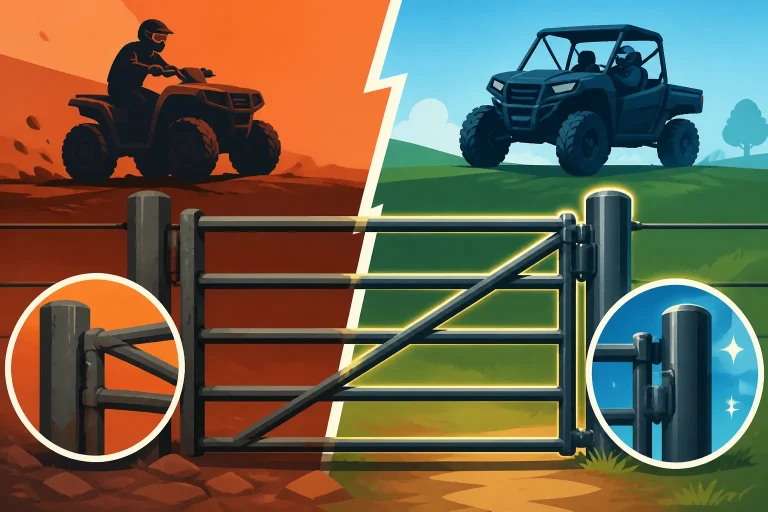
| Riding on private property | A state OHV decal generally is not required solely for riding there, but get the landowner’s permission |
| Using a street-legal machine | Check whether the machine qualifies for an exemption and follow the land manager’s rules |
| Visiting a trail or park | Check both the decal requirement and any separate entry permit or fee |
| Bringing multiple machines | Confirm that each machine that needs a decal has one |
The decal requirement is about where and how the OHV is being used, not simply where it is owned or stored. A machine kept at home without being ridden on land that requires the sticker may not need one for that activity. The same machine may need a decal when it is taken to a qualifying public riding area.
Where the decal is required
The key question is whether the land you plan to ride on is subject to Texas’s OHV decal requirement. Texas’s program is connected to public OHV recreation areas, including land supported through the state’s OHV grant program. However, “public land” is not a complete answer by itself: access rules and decal requirements can depend on the specific property and how it is managed.
Check the land manager’s current rules before loading your machine. A park’s website, official notice, reservation system, or gate staff can help confirm whether the decal is required, whether an additional permit applies, and what proof you need to carry. If the rules are unclear, ask the operator directly rather than relying on a decal rule from a different park.
Some state and federal riding areas have more than one requirement. For example, a rider may need the Texas OHV decal and also need to pay a separate day-use fee or show another permit. Having one does not automatically satisfy the other. The article Texas National Forest Permits explains why forest access paperwork and the state decal should be treated as separate checks.
Private land is different. Riding on private property does not generally require the Texas OHV decal just because the vehicle is an ATV or UTV. But permission matters: a decal does not grant a right to cross someone else’s land, and the absence of a decal requirement does not make unauthorized riding lawful. For public and private riding rules, see Texas Rules for Riding Public Land and Texas Rules for Riding Private Land With Permission.
A street-legal machine may be treated differently from an OHV that is used only off road, but don’t assume that lights, mirrors, or a license plate settle every question. The vehicle’s legal status and the specific land’s conditions both matter. Confirm the current rule with the land manager before your trip, particularly if you are relying on an exemption.
Check each property before the trip
Before you leave, verify these points with the official land manager or operator:
- Is the riding area covered by the Texas OHV decal requirement? Don’t infer the rule from the park’s name or from another property nearby.
- Does each machine in your group need a decal? Ask whether the requirement applies to the specific types of machines you are bringing.
- Is there a separate permit or access fee? A decal may not cover day use, camping, or other park charges.
- Are there exceptions for your machine or use? Confirm an exception with the responsible land manager rather than relying on a seller’s assurance.
- What proof should you carry? Check whether the decal must be displayed on the machine and whether you should also carry purchase or permit confirmation.
This quick check is especially useful when riding at a new park, a public trail system, or a place that combines public and privately managed areas. Rules can differ even between nearby properties.
What does not count as a decal
Several documents and stickers can look like they might meet the requirement, but they are not interchangeable.
A title or OHV plate is not the decal. Texas titling does not mean an OHV is registered for general road use, and an off-highway plate does not automatically satisfy land-access requirements. The Texas Off-Highway Vehicle License Plate covers a different process. If you have recently bought a used machine, make sure you understand which paperwork transfers and which does not; Texas OHV Plate After Buying Used addresses the plate issue.
A decal on another machine does not cover yours. The sticker is associated with the individual vehicle. Borrowing an OHV does not mean you can rely on the owner’s decal from a different machine. Before riding someone else’s ATV or UTV, check that the machine itself has the required decal for the property.
A park payment is not necessarily the state decal. Some operators sell or collect money for access, and some may offer a decal at the gate. A receipt for entry or a local permit may not replace the Texas OHV decal unless the operator confirms that it is the appropriate item. Likewise, having the state decal does not automatically pay a park’s separate admission charge.
A safety certificate is separate. Texas safety-training rules can apply to riders in certain circumstances, but a certificate does not replace the decal. The decal is about the machine and access requirements; a safety certificate concerns the rider. Review [Texas OHV Safety Certificate Requirements] if you are unsure whether a rider in your group needs one.
A sticker from another state may not answer the Texas question. Reciprocity rules for safety certificates and decals are not necessarily the same. If you are visiting from outside Texas, confirm whether the land requires the Texas decal and whether an out-of-state item is accepted. The fact that a rider has been allowed onto a trail elsewhere does not establish that Texas requirements are met.
How to avoid a citation and handle a notice
The most reliable way to avoid a no-decal problem is to check before riding, not after arriving at the trail. If the area requires the decal, obtain it through an authorized seller or official channel and follow the instructions for displaying it. The Where to Buy a Texas OHV Decal article covers purchase options; check the responsible agency or park for current availability and requirements.
Pay attention to the decal period as well. A sticker that was valid during a previous riding season may not satisfy the current requirement. Confirm the period printed on the decal and the rules for the land you are visiting. Don’t rely on an old receipt or assume that a decal continues indefinitely. See When a Texas OHV Decal Expires for the timing question.
If you receive a citation, read the notice carefully and keep the documents related to your ride. Note the date, location, machine, and the rule identified by the officer or land manager. Preserve any proof of purchase, permit, or information showing why you believed an exception applied. If you disagree with the citation, use the response instructions and deadlines on the notice, and consider getting legal advice about your options. Do not ignore the citation or assume that buying a decal afterward automatically resolves it.
When the issue is a disputed exception, ask the relevant land manager or agency for clarification and keep the response. A decal requirement may depend on details that are not obvious from the trailhead sign alone. A clear answer before the next ride is more useful than relying on a guess after a citation.
A practical pre-ride routine is simple:
- Identify the exact property or trail system.
- Check its current decal and access rules.
- Confirm requirements for every machine in your group.
- Separate the state decal from any park fee, permit, title, plate, or rider certificate.
- Carry the proof the operator asks for and follow display instructions.
- Recheck rules before returning later in the season.
The important point is not to treat the decal as a general registration sticker. It is a specific requirement for riding in places where it applies. Confirming the rule for the exact land, and making sure every covered machine is properly stickered, is the practical way to avoid both a wasted trip and a no-decal citation.
Disclaimer
This article is for general informational purposes only and does not constitute professional advice. Laws, prices and regulations vary by location and change over time. Consult a qualified professional for guidance on your specific situation.