What a Texas OHV Title Looks Like
Buying or selling an off-highway vehicle in Texas can feel like navigating a maze of paperwork, and one of the most common sources of confusion is understanding what a legitimate Texas OHV title actually looks like. Many folks find themselves scratching their heads, wondering if the document they're holding is the real deal, especially when dealing with private sellers or machines brought in from out of state. This guide is here to clear up that confusion, walking you through the physical appearance and critical details of a Texas OHV title so you can transact with confidence and peace of mind.
Understanding the Texas OHV Title Document
When you're dealing with an off-highway vehicle (OHV) in Texas – think ATVs, UTVs, or even sand rails – the title is your ultimate proof of ownership. Unlike passenger cars or trucks, these machines aren't registered for road use in Texas, but the title remains a cornerstone document. It's not just a piece of paper; it's a legal declaration of who owns the machine, often carrying important details about its history and characteristics.
The Purpose and Issuance of an OHV Title
The primary purpose of a Texas OHV title is to establish legal ownership. Without it, proving you own your quad or side-by-side can be incredibly difficult, opening the door to disputes, theft issues, and major headaches when trying to sell it later. It's the official record that the Texas Department of Motor Vehicles (TxDMV) holds, though it's typically issued through your local county tax assessor-collector's office. Think of it as the birth certificate for your machine, tracing its lineage from manufacturer to you.
When you buy a brand-new OHV from a dealer, they'll usually handle the initial title application for you. However, if you're buying used from a private party, the responsibility falls squarely on your shoulders to make sure the title is properly transferred. This involves submitting the correct paperwork and fees to your county tax office. You can find more details about this process in our guide on [Titling an ATV in Texas]. It's a system designed to keep tabs on ownership, even if the machine itself isn't meant for public roads.
Distinguishing OHV Titles from Standard Vehicle Titles
While both standard motor vehicle titles and OHV titles originate from the same state agency, there are key differences in their appearance and the information they convey. A standard vehicle title usually has sections for odometer readings, lienholder information, and sometimes even emission inspection details, reflecting its use on public roads. An OHV title, by contrast, is specifically tailored to its off-highway nature.
The most glaring difference you'll often see is a prominent stamp or notation, usually in red, stating "OFF-HIGHWAY USE ONLY" or something similar. This is a critical indicator that the machine is not legal for street use. You can read more about this specific remark in [The Off-Highway Use Only Remark on a Texas Title]. Furthermore, an OHV title won't have fields for annual registration or license plate numbers tied to street legality because, well, Texas doesn't register OHVs for the road. The whole framework is different, reflecting the distinct legal status of these vehicles.
Physical Characteristics of a Texas OHV Title
When you hold a Texas OHV title in your hand, you'll notice it has a distinct look and feel. It's not just any piece of paper; it's a secure document with specific features designed to prevent counterfeiting and ensure authenticity. Knowing what these physical attributes are can help you spot a fake or verify a legitimate title during a transaction.
The Security Features and Paper Stock
Texas titles, whether for cars or OHVs, are printed on specialized security paper. This isn't your average printer paper; it has embedded features that make it difficult to replicate. You might notice watermarks when held up to the light, or microscopic printing that is hard to read without magnification. The paper itself often has a slightly heavier feel than standard paper, and sometimes a subtle tint or pattern that isn't present on ordinary documents. These features are constantly updated to stay ahead of counterfeiters, so while the exact look might evolve over time, the presence of security measures is consistent.
Think of it like a dollar bill; you wouldn't expect it to feel like cheap copy paper. The same goes for a Texas title. It's a valuable legal document, and the state invests in making it robust against fraud. If a title you're presented with feels flimsy, looks like it was printed on a home printer, or lacks any discernible security features, it should immediately raise a red flag. Always be suspicious of anything that doesn't feel quite right in your hands.
The Layout and Design Elements
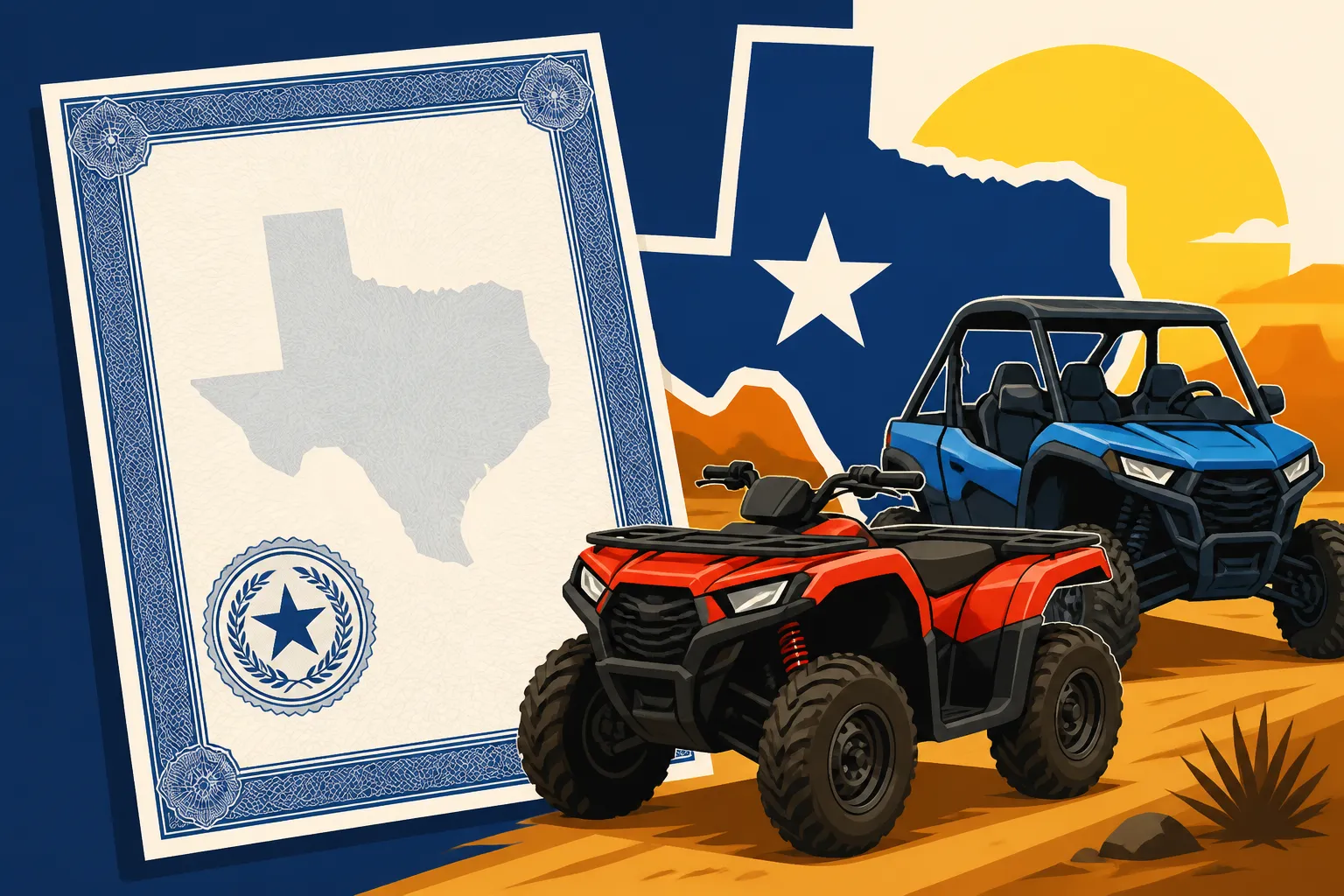
Texas OHV titles typically feature a standardized layout, with specific fields for information organized in a clear, consistent manner. The top of the document will usually display "TEXAS CERTIFICATE OF TITLE" or a similar official heading, often accompanied by the state seal. There will be specific blocks or sections dedicated to the vehicle's description, owner information, and any lienholder details. The font is usually uniform, and there won't be any strange gaps or misalignments in the text.
You'll also typically find a unique title number, often printed in a prominent location, which is crucial for tracking the document. The overall design is official and uniform, reflecting the administrative process of the TxDMV. Variations from this standard layout, such as haphazardly placed text, different fonts within the same section, or an unprofessional overall appearance, are strong indicators of a potentially fraudulent document. This consistent design allows county clerks to quickly process applications and ensures everyone is working with the same type of information.
Key Information Sections on an OHV Title
A Texas OHV title is packed with crucial information, each section serving a specific purpose. Understanding what each field represents is vital, especially when you're buying a used machine. This information helps verify the vehicle's identity, ownership, and any financial obligations tied to it.
Vehicle Identification Number VIN
The Vehicle Identification Number (VIN) is arguably the most important piece of information on any title, and it's certainly true for an OHV title. This 17-character alphanumeric code is unique to your specific ATV or UTV, acting like its fingerprint. On the title, the VIN will be clearly printed in a designated field, usually near the top of the vehicle description section. This VIN absolutely must match the VIN physically stamped on the frame of the machine itself.
Before you ever hand over any cash, you should always perform a [Checking a VIN Before a Texas Purchase]. A mismatch between the VIN on the title and the VIN on the machine is a huge red flag that could indicate theft, fraud, or a title washing scheme. The VIN also helps you track the vehicle's history, as many online services allow you to run a VIN check to look for past accident reports, liens, or other issues. Don't underestimate the power of this single number; it's your primary defense against a bad purchase.
Owner Information and Signatures
This section details the legal owner(s) of the OHV. You'll typically find the name and address of the individual or entity that legally owns the machine. If there are multiple owners, both names should be listed here. When transferring ownership, this is where the seller will sign off on the title. The Texas title usually has specific spaces on the back for the seller to sign and print their name, and for the buyer to sign as well.
It's critical that the seller's signature on the title matches the name(s) listed as the owner(s). If the title is in one person's name, but another person is trying to sell it, you've got a problem. For example, if the title shows "John Smith" but "Jane Doe" is trying to sell you the ATV, you need to understand why. Perhaps they're married, but John needs to be present and sign, or Jane needs to have power of attorney. This is where a formal document like a bill of sale can complement the title, outlining the transaction details and ensuring all parties are properly identified. Resources like LawDepot can provide templates for these types of legal forms, helping you ensure all necessary information is captured for your records alongside the official title. Make sure you understand the nuances of [Selling an OHV and Signing a Texas Title] before completing any private sale.
Lienholder Information
If the OHV was purchased with a loan, the lending institution (like a bank or credit union) will be listed as a "lienholder" on the title. This means the lender has a legal interest in the vehicle until the loan is paid off. The title will show the name and address of the lienholder. When the loan is satisfied, the lienholder is supposed to release the lien, either by signing off on the physical title or by sending a separate lien release document to the TxDMV.
It's absolutely crucial to check for a lien before purchasing a used OHV. If you buy a machine with an active lien on it, the lender still has a claim to that vehicle, even if you've paid the seller in full. You could potentially lose your machine if the original borrower defaults on their loan. Always ask the seller for proof of lien release if a lienholder is listed. If they don't have it, be very wary. If you are ever faced with [Titling a Machine With a Lien in Texas], you'll understand why this part of the title is so important.
Off-Highway Use Only Remark
As mentioned earlier, a defining characteristic of a Texas OHV title is the "OFF-HIGHWAY USE ONLY" notation. This remark, often stamped or printed in a contrasting color (like red) or a bold font, is a legal declaration that the vehicle is not intended or equipped for operation on public roads. It's not just a suggestion; it's a critical legal distinction that prevents owners from attempting to register these vehicles for street use.
This stamp is a constant reminder of the machine's intended purpose and legal limitations. It’s Texas's way of clearly stating that this quad or side-by-side should be kept off highways and city streets, except for very specific, narrow exceptions like agricultural use or crossing a road. For a deeper dive into what this remark means for your riding, check out [What the Counter Charges for the Plate].
Special Notations and Title Variations
Texas OHV titles can sometimes have additional remarks or appear slightly different due to specific circumstances. It's important to recognize these variations so you aren't caught off guard and can understand their implications.
Salvage, Rebuilt, or Other Status Notations
Just like car titles, an OHV title can carry branding that indicates its history. If an OHV has been declared a total loss by an insurance company due to significant damage (e.g., from an accident, flood, or fire), its title might be branded "SALVAGE." This means the vehicle was deemed too costly to repair relative to its value. If it's subsequently repaired and inspected, the title might be branded "REBUILT."
These notations are not just administrative details; they directly impact the machine's value, insurability, and sometimes even its safety. A salvage or rebuilt title should prompt extensive inspection and caution. It indicates the machine has a past that required significant repair, and you'll want to ensure those repairs were done correctly and safely. Always ask for detailed repair records if you see such a notation on a title. For example, when buying a used ATV, this could be a major factor in your decision.
Duplicate Titles and Their Appearance
If an original title is lost, stolen, or damaged, the owner can apply for a duplicate title. A duplicate title will typically look very similar to an original but will often have a prominent "DUPLICATE" stamp or watermark across it. This doesn't make it any less valid, but it does indicate that it's a reprint of the original.
When you're buying a machine from someone who has a duplicate title, it's not necessarily a red flag, but it's worth asking why the original was replaced. Was it simply lost? Or was there another reason? This is part of doing your due diligence as a buyer. Remember, even with a duplicate, all the critical information like the VIN, owner name, and lien status should be present and accurate. You can learn more about this process in [Replacing a Lost Texas OHV Title].
Out-of-State Titles When Bringing an OHV to Texas
If you're bringing an OHV into Texas from another state, you'll naturally have an out-of-state title. These titles will look completely different, bearing the specific designs and security features of their issuing state. When you apply for a Texas OHV title, you'll submit this out-of-state title to your local county tax office. They will then process it and issue you a new Texas OHV title.
The key here is that the out-of-state title must be legitimate and properly assigned to you. Texas will not issue a new title without a clear chain of ownership from the previous state. The process might involve an inspection, especially if there are any discrepancies or if the vehicle's origins are unclear. The TxDMV aims to ensure that all OHVs titled in Texas have clear, verifiable ownership, regardless of where they originated. Our guide on [Texas Use Tax on an Out-of-State OHV] can provide further context on the costs involved in this process.
Verifying the Authenticity of an OHV Title
The importance of verifying a title's authenticity cannot be overstated. A fraudulent title means you don't legally own the machine, regardless of how much you paid for it. Taking a few proactive steps can save you from a lot of heartache and financial loss.
Red Flags to Watch For
When examining a Texas OHV title, there are several red flags that should immediately raise your suspicion:
- Poor Print Quality: Blurry text, faded colors, or misaligned graphics can indicate a title that has been copied or forged. Official titles are printed with high precision.
- Tampering Signs: Look for erasures, white-out, or alterations to any of the information, especially the VIN, owner names, or dates. Any sign of manual alteration is a huge warning.
- Incorrect Information: Does the seller's name match the name on the title? Is the VIN on the title identical to the one on the machine's frame? Are there any obvious spelling errors or inaccuracies?
- No Security Features: As discussed, real titles have watermarks, special paper, or other embedded security elements. If these are absent, be very suspicious.
- Unusual Behavior from Seller: If the seller is rushing the transaction, refuses to let you examine the title closely, or can't answer basic questions about the vehicle's history, these are all reasons to be cautious.
Always trust your gut. If something feels off, it probably is. It's better to walk away from a deal than to get stuck with a legally compromised machine.
How to Confirm a Title's Legitimacy with Texas Authorities
While you can't always get real-time verification from the TxDMV during a weekend private sale, there are steps you can take to increase your confidence. The most direct method is to contact your local county tax assessor-collector's office. They are the ones who handle [Filing at the Tax Assessor-Collector] applications and have access to the state's title records.
You can often call them with the title number and VIN to inquire about its status. Some counties might be able to confirm if a title number is valid and if there are any active liens. Be prepared that they might not be able to share detailed personal information due to privacy laws, but they can often verify the legitimacy of the document itself. For larger purchases, some buyers even arrange to complete the transaction directly at the county tax office, where a clerk can immediately verify the title and process the transfer. This is the safest way to ensure everything is above board.
Using a Bill of Sale to Supplement the Title
Even with a legitimate title, it's always a good idea to create a detailed bill of sale for any private OHV transaction. While the title transfers legal ownership, a bill of sale can document additional terms, conditions, and disclosures of the sale. It can include specific details like the purchase price, "as-is" clauses, any agreed-upon repairs, and contact information for both buyer and seller.
A robust bill of sale can act as a crucial backup document, especially if any disputes arise later. It creates a clear record of the transaction separate from the state-issued title. You can find reliable templates for bills of sale through services like LawDepot, ensuring you cover all essential legal points. This form, combined with a properly signed and verified title, provides the most comprehensive protection for both parties involved in the sale. Remember, the [Texas Bill of Sale for an ATV] is an important piece of your ownership puzzle.
The Process of Titling and Transferring Ownership
Understanding what a Texas OHV title looks like is only half the battle; you also need to know the proper steps to get one into your name or transfer one to a new owner. This administrative process ensures legal continuity and protects everyone involved.
Applying for a First-Time Texas OHV Title
If you've just bought a new OHV from a dealer, they'll usually handle the initial title application for you, submitting all the necessary paperwork to the county tax office. However, if you're titling a machine that has never had a Texas title before – perhaps it's an older model that slipped through the cracks, or an out-of-state purchase where the previous state didn't require titles for OHVs – you'll need to file the [The Texas Title Application Every OHV Buyer Files] yourself.
This typically involves completing a Form 130-U, providing proof of ownership (like a manufacturer's certificate of origin or a properly assigned out-of-state title), and paying any applicable sales or use taxes. You'll submit these documents to your local county tax assessor-collector's office. They will then review your application, verify the information, and if everything is in order, issue you a Texas OHV title. It's a straightforward process, but it requires attention to detail.
Transferring an Existing Texas OHV Title
When buying a used OHV from a private seller in Texas, the responsibility for transferring the title falls on you, the buyer. The seller is responsible for properly assigning the title to you. This means they will sign and print their name in the designated "seller" section on the back of the title. They should also provide you with a completed bill of sale.
As the buyer, you will take the properly assigned title, a completed Form 130-U, and proof of any required use tax payment to your county tax office. You'll then pay the title transfer fee. It's crucial to complete this transfer promptly. Texas law generally requires you to apply for a title transfer within a certain number of days of purchase, though this can sometimes be more relaxed for OHVs than for road-registered vehicles. However, it's always best practice to do it as quickly as possible to establish your legal ownership. You can find more details in our article on [Texas ATV Title Transfer After a Sale].
When the County Clerk Rejects an Application
Unfortunately, title applications can sometimes be rejected by the county clerk, leading to delays and frustration. Common reasons for rejection include:
- Incomplete or Incorrect Forms: Missing signatures, unchecked boxes, or incorrect information on Form 130-U are frequent culprits.
- Missing Documentation: Forgetting to bring the original title, manufacturer's certificate of origin, or a lien release document will halt the process.
- Discrepancies: If the VIN on the title doesn't match the form, or the seller's name doesn't match the title, the clerk won't proceed.
- Unpaid Taxes: If sales or use tax hasn't been properly calculated or paid, the title transfer won't go through.
- Illegible Information: If any part of the title or form is unreadable, it will likely be rejected.
Understanding [What a County Clerk Rejects on a Title Application] can help you prepare thoroughly and avoid these common pitfalls. It's always a good idea to call your county tax office ahead of time to confirm exactly which documents you'll need and to ensure everything is filled out correctly before you make the trip. Being prepared means a smoother, faster title transfer, getting you out on the trails sooner.
Disclaimer
This article is for general informational purposes only and does not constitute professional advice. Laws, prices and regulations vary by location and change over time. Consult a qualified professional for guidance on your specific situation.