Tracing a VIN on a Frame Rail
When you're looking to buy a used ATV or UTV here in Texas, one of the biggest headaches and sources of anxiety can be making sure you're getting a legitimate machine. It's easy to get caught up in the excitement, but overlooking a crucial detail like the Vehicle Identification Number (VIN) can lead to serious legal and financial woes down the road. This guide is here to walk you through the process of tracing and verifying a VIN on a frame rail, ensuring you have peace of mind with your next off-highway vehicle (OHV) purchase.
Why Tracing a VIN is Your First Line of Defense When Buying a Used OHV in Texas
Buying a used ATV or UTV can be a fantastic way to get out and enjoy our beautiful Texas lands without breaking the bank. However, unlike buying a new machine from a dealership, private sales come with a lot more responsibility on your shoulders. You're the detective, the inspector, and the legal eagle all rolled into one. And frankly, the VIN is your most important clue. It's not just a string of numbers and letters; it's the unique DNA of that specific machine, telling its story from manufacture to its current state. Ignoring it or giving it a cursory glance is like buying a house without checking the foundation – you’re setting yourself up for potential disaster.
The Hidden Risks of an Unverified VIN
Imagine you find a killer deal on a UTV. The seller seems great, the price is right, and you shake hands. You bring it home, excited for your first ride at Barnwell Mountain, only to find out later that the VIN is either completely different from the title provided or, even worse, tampered with. Suddenly, that great deal turns into a nightmare. You might find yourself with a stolen machine, unable to title it, and possibly even facing legal questions yourself. This isn't just a theoretical scare tactic; it's a very real scenario that unfolds for buyers who skip this crucial step. An unverified VIN can mean you're purchasing an OHV that's been reported stolen, was involved in an insurance claim it shouldn't have been, or has hidden liens attached to it that you, the unsuspecting new owner, could become responsible for. The repercussions can range from losing your investment entirely to getting tangled in police investigations. Nobody wants that kind of stress, especially when all you wanted was some fun on the trails.
Protecting Yourself from Stolen or Problematic Machines
The state of Texas requires an OHV to be titled, even if it's never going to see a paved road. This means there should almost always be a paper trail. By meticulously [Checking a VIN Before a Texas Purchase], you're creating a solid defense against unwittingly buying a stolen or otherwise problematic machine. This isn't about distrusting every seller; it's about smart buying practices. Think of it as due diligence. Just as you'd kick the tires and check the engine, verifying the VIN is a non-negotiable part of the inspection. It gives you concrete information that can be cross-referenced with official records. If a seller is hesitant about letting you check the VIN, or if they offer excuses about why it's obscured or doesn't match the paperwork, those are massive red flags that should immediately make you reconsider the purchase. A legitimate seller with nothing to hide will welcome your thoroughness. This vigilance protects your wallet, your time, and your peace of mind, allowing you to enjoy your new-to-you OHV without a dark cloud hanging over your head.
Locating and Documenting the VIN on Your Texas ATV or UTV
Finding the VIN on an off-highway vehicle isn't always as straightforward as checking the dashboard of a car, but it's rarely hidden away in some secret compartment. Manufacturers place VINs in specific, usually visible, locations designed to be easily accessed for identification and inspection. Knowing where to look is half the battle, and taking the time to thoroughly inspect it is the other half. Don't rush this part; a clear and legible VIN is paramount.
Common VIN Locations on Different OHV Types
The VIN, a 17-character alpha-numeric code, is typically stamped directly onto the frame of the machine. For most ATVs, you'll want to check the left-hand side of the frame, usually near the front suspension or the footpeg area. Sometimes it's right under the handlebars, on the steering neck, or even near the engine mount points. For UTVs and side-by-sides, it can often be found on the driver's side frame rail, sometimes under the seat, in the wheel wells, or even stamped on a plate visible from the passenger compartment. It's less common, but some manufacturers might also put a VIN sticker on the machine, though the stamped VIN on the frame is the one you absolutely need to verify, as stickers can be easily removed or replaced.
Here’s a quick guide to common spots:
| Vehicle Type | Common VIN Location | Notes |
|---|---|---|
| ATV | Left front frame rail, near steering neck or front suspension. | Can also be near footpegs or engine mounts. |
| UTV/Side-by-Side | Driver's side frame rail, often in the wheel well, under the seat, or in the cab. | Check around the front suspension arms as well. |
| Youth Quad | Smaller frames, often on the steering neck or a main frame tube. | May be harder to spot due to smaller size. |
| Electric OHV | Similar locations to gas models, usually on the main frame. | Power source doesn't change VIN placement. |
Always remember, the goal is to find the stamped VIN, not just a sticker. Stickers are secondary; the indelible mark on the frame is the primary source of truth. Take a moment to jot down or photograph the VIN once you find it. This record will be invaluable for the next steps. [What Texas Counts as an Off-Highway Vehicle] will help clarify if your machine needs one at all, though most do.
What to Do If the VIN is Difficult to Read or Obscured
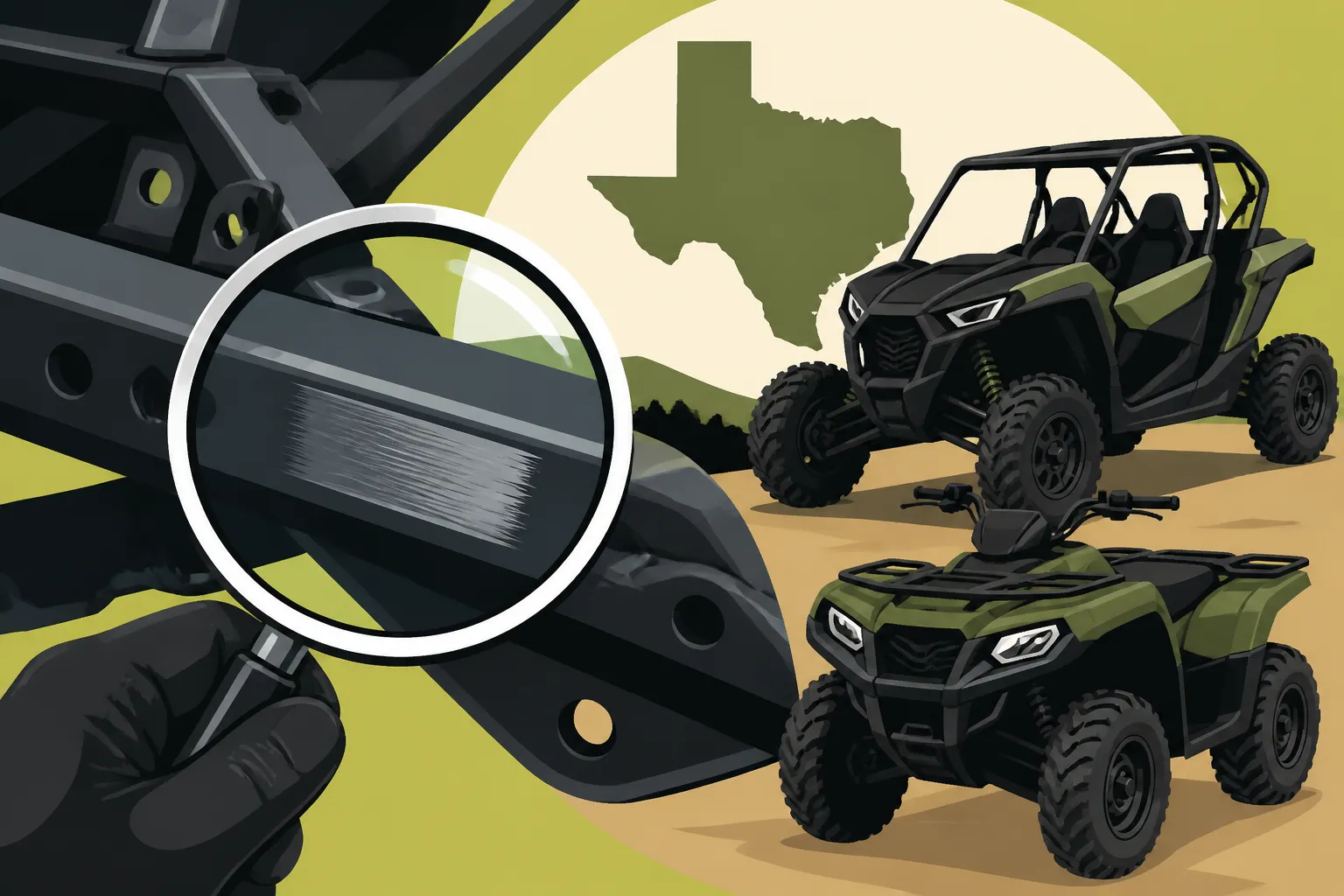
Sometimes, due to age, rust, mud, or even intentional tampering, the VIN can be challenging to read. If you encounter a VIN that's obscured by heavy rust or mud, try gently cleaning the area with a wire brush or a sturdy cloth and some penetrating oil. A flashlight can also help illuminate the numbers and letters clearly. However, if the VIN appears to be intentionally altered, ground off, or re-stamped, that's a massive warning sign. This is not just a minor inconvenience; it's a huge red flag that suggests the machine might be stolen or have a murky past. In such a scenario, walk away immediately. It's simply not worth the risk.
If it's just hard to read due to wear and tear, take a clear photo of it, and then compare it character by character with the VIN listed on the title or any bill of sale the seller provides. A discrepancy, even just one character, can lead to serious headaches when you try to get your own [Titling an ATV in Texas]. A county tax assessor-collector's office will absolutely scrutinize the VIN, and any issues there can stop your title application dead in its tracks. It’s far better to catch these problems before money changes hands.
The Step-by-Step Process of Verifying a Texas OHV VIN
Once you've located and documented the VIN from the machine itself, the real verification process begins. This is where you connect the physical evidence with the paper trail. It's crucial to be methodical here, as inconsistencies can reveal a lot about the machine's history and legitimacy. Don't let a seller rush you through this part; it's your investment on the line.
Matching the VIN to the Title and Bill of Sale
The very first step after finding the VIN on the machine is to compare it, character by character, to the VIN listed on the seller's title document. Texas issues titles for OHVs, so a seller should have one. This is perhaps the most critical match you’ll make. Every single number and letter must align perfectly. Even a single digit difference is a deal-breaker. If the seller doesn't have a title, that's a huge red flag right there. While it's sometimes possible to get [Texas ATV Title Without a Bill of Sale] or even [Texas ATV Title With No Previous Title], these scenarios are far more complicated and fraught with risk, especially for a first-time buyer.
Next, if the seller provides a bill of sale – which they absolutely should, and if they don't, you should insist on one – compare the VIN on that document as well. Ideally, the VIN on the machine, the title, and the bill of sale should all be identical. If you're creating a bill of sale yourself, perhaps using a template from a service like LawDepot, make absolutely certain the VIN you transcribe onto it matches the frame and the title. A well-crafted bill of sale, like those you can find on LawDepot, protects both buyer and seller, but its accuracy is paramount. A discrepancy here can invalidate your proof of purchase or create serious legal questions about ownership down the road.
Utilizing Online Resources for a VIN Check
Beyond the physical documents, there are a number of online resources that can provide valuable information when verifying an OHV VIN. While specific services or databases might charge a small fee, it's often a worthwhile investment for the peace of mind it offers. Many of these services can check for:
- Stolen vehicle reports: This is incredibly important. If the VIN comes back as reported stolen, you know immediately to walk away and potentially even report the seller to the authorities.
- Insurance claim history: This can reveal if the OHV has been involved in major accidents, declared a total loss, or has other significant damage claims. While some damage is expected on an off-road vehicle, extensive history might indicate underlying issues.
- Lien status: Sometimes, an OHV might have a lien against it from a previous loan. If a lien is active, the seller doesn't fully own the machine, and you could unknowingly inherit the debt. [Titling a Machine With a Lien in Texas] is a complex process best avoided if possible.
- Previous title information: Some reports can even provide details about previous owners, where the machine was titled, and other historical data, giving you a clearer picture of its journey.
Using a reputable VIN check service adds another layer of security. It’s like getting a second opinion from an unbiased expert. If the online report conflicts with what the seller tells you or what's on the title, you know you have some serious questions to ask, or perhaps, it's time to politely decline the sale. Remember, you're the one taking on the risk when [Buying From a Private Seller in Texas], so empower yourself with as much information as possible.
What to Do When the VIN Doesn't Add Up
This is perhaps the most critical section because it deals with the sticky situations. It's easy when everything matches up perfectly, but what happens when it doesn't? Knowing how to react to discrepancies, red flags, or outright fraudulent activity is essential to protect yourself from a bad deal or, worse, legal trouble. Your due diligence really shines here.
Red Flags: Altered, Missing, or Mismatched VINs
When you're tracing a VIN on a frame rail, any of the following should immediately trigger alarm bells:
- Altered VIN: If the VIN on the frame looks like it's been scratched, ground down, restamped, or has suspicious welds around it, this is a major red flag for potential theft or fraudulent activity. This is not just cosmetic damage; it's a deliberate attempt to obscure the machine's true identity.
- Missing VIN: If you can't find a VIN at all in the typical locations, it's highly suspicious. While extremely rare, some very old or custom-built machines might have unique circumstances, but for most modern ATVs and UTVs, a missing VIN suggests it was deliberately removed.
- Mismatched VIN: This is when the VIN on the frame doesn't match the one on the title, the bill of sale, or the information from your online VIN check. As we discussed in [When the VIN Does Not Match the Title], even one character off is a problem. It could be a simple clerical error (unlikely across multiple documents) or indicate that the title belongs to a different machine entirely.
Any of these scenarios should make you extremely wary. These aren't minor issues that can be easily fixed; they point to significant underlying problems that could make the OHV impossible to legally title, register, or insure in Texas. It means you might be buying someone else's headache, or even worse, stolen property.
Steps to Take When You Encounter Discrepancies
If you encounter any of these red flags, your immediate course of action should be to stop the transaction. Do not proceed with the purchase. Here are some concrete steps:
- Question the Seller: Politely ask the seller to explain the discrepancy. Listen carefully to their explanation. If it sounds vague, inconsistent, or immediately defensive, that’s another sign to back away. A truly honest seller might have a verifiable reason for a minor issue (e.g., a replacement title with a typo, though still problematic for you), but most significant discrepancies don't have innocent explanations.
- Consult Authorities (If Suspicion is High): If you strongly suspect the machine is stolen or heavily tampered with, consider contacting local law enforcement. You can provide them with the VIN you found and the details of the situation. This protects you from potentially being implicated in a crime.
- Walk Away: This is often the best and safest advice. There are plenty of legitimate ATVs and UTVs for sale in Texas. Don't let the allure of a cheap price blind you to the potential legal and financial quagmires of a problematic VIN. Losing a few hundred dollars on a deposit is far better than losing thousands on a machine you can't legally own or use.
- Consider a Proper Bill of Sale with LawDepot: If, and only if, the discrepancies are minor and the seller provides a compelling and verifiable explanation (e.g., a lost title and they are assisting you in getting a new one), ensure you have an extremely robust bill of sale. Using a service like LawDepot can help you generate a comprehensive document that includes all pertinent details, explicit declarations from the seller about ownership, and indemnification clauses. However, even the best bill of sale from LawDepot cannot overcome an un-titleable VIN. It's a layer of protection, not a magic bullet for a bad machine.
Remember, your safety and legal standing are paramount. A thorough [Texas ATV Title Paperwork Checklist] will always include a clear, verifiable VIN. Don't compromise on this vital detail. Enjoying the Texas trails is a blast, but only when you know your machine is legitimately yours.
Disclaimer
This article is for general informational purposes only and does not constitute professional advice. Laws, prices and regulations vary by location and change over time. Consult a qualified professional for guidance on your specific situation.