Texas OHV Parks With Mud
Mud riding in Texas can mean anything from a short bog obstacle to miles of wet, rutted trails—and the difference matters when you’re choosing a park, machine, and gear. This guide explains where to look for mud-focused riding, how Texas weather changes trail conditions, and what to check before you haul your ATV or UTV across the state.
Texas OHV parks known for mud riding
Mud Buddies near Hallettsville
Mud Buddies near Hallettsville is one of the clearest places to start if mud is the main reason for your trip. Its name and riding focus make it a natural fit for riders looking for mud-oriented obstacles and a day built around getting dirty. For details on what the park offers, see [Riding Mud Buddies at Hallettsville].
A mud park can still have very different conditions from one visit to the next. A route that was firm and manageable last weekend may become deep, slick, or temporarily unsuitable after a storm. Before leaving home, ask the park which areas are open, whether recent rain has affected access, and whether there are restrictions for the size or type of machine you plan to bring.
Also clarify what “mud riding” means at that particular park. Some riders want dedicated mud holes and bogs; others prefer muddy trail sections with a mix of firm ground. Asking about the terrain helps prevent the familiar disappointment of arriving with a big side-by-side when the available riding is better suited to smaller machines—or expecting trails when the park is mainly set up for obstacles.
River Run ATV Park and other East Texas options
East Texas is a sensible region to investigate when you’re looking for wooded routes and conditions that may stay wet after rainfall. River Run ATV Park near Jacksonville is another name riders may encounter while researching muddy outings. As with any park, confirm the current trail layout and open areas directly before making the drive; a park’s reputation does not guarantee that every muddy route will be available on your chosen day.
A regional directory can help you compare possible destinations and travel distances. Start with [Texas OHV Parks by Region], then check each park’s own information for the details that matter to your group: permitted vehicle types, current closures, camping arrangements, sound or safety rules, and whether reservations or advance contact are recommended.
It’s useful to treat park descriptions as a starting point, not a promise about the day’s conditions. Mud depth, standing water, and trail access can change quickly with local rainfall. If you use onX Offroad to plan the drive and save nearby route information, remember that a mapped route does not replace park guidance or permission to ride on a particular trail.
Choosing a park that matches your machine
Not every park that has mud is a good match for every ATV or UTV. A narrow quad can fit through tighter wooded routes, while a wider side-by-side may need broader trails and designated areas. Check the park’s rules for vehicle dimensions, passenger capacity, and whether full-size rigs are allowed before you load up. [Texas OHV Parks That Allow Full-Size Rigs] can help you narrow the search.
| What you want from the ride | What to confirm before you go |
|---|---|
| Deep mud holes or bogs | Whether the obstacles are open and suitable for your machine |
| Muddy wooded trails | Trail condition, closures, and whether routes fit your vehicle width |
| A side-by-side outing | UTV access, width limits, passenger rules, and recovery expectations |
| A mixed-terrain day | Whether the park has dry routes or easier alternatives if mud is too deep |
| A weekend trip | Camping availability, check-in details, and any booking requirements |
When you contact a park, give them your machine’s make or general type and approximate width if you know it. “We have a UTV” may not be enough; a compact two-seat machine and a wide four-seat rig can face different access limits. Ask whether there are places to turn around or bypass an obstacle, too. That small detail can make a big difference for a group with mixed experience.
Planning around Texas rain and trail conditions
Rain can improve the ride—or close it down
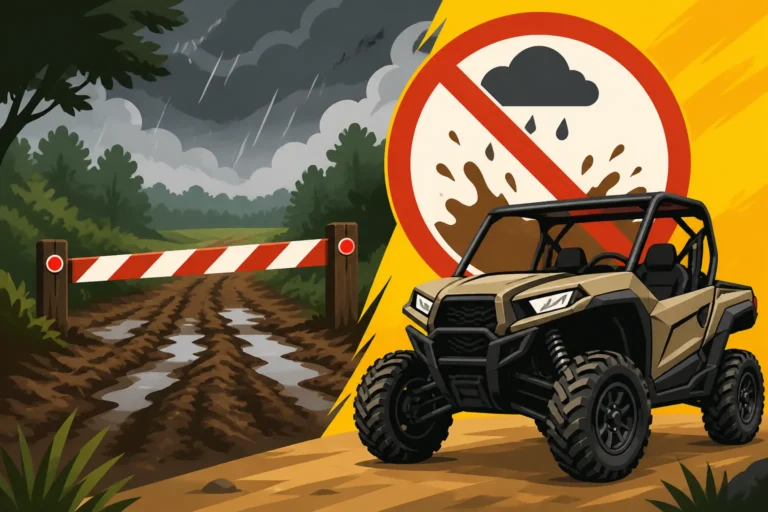
A little rain may create the slick, messy conditions you came for. Too much can make a trail unsafe, damage the surface, or lead a park to close certain areas. Deep ruts can also hide rocks, roots, and holes, making a route harder to read than it looks from the parking area. For more on timing a trip around wet conditions, see [Texas Trails After Heavy Rain].
Don’t assume that a forecast for one nearby town describes the park. Rainfall can vary across a relatively short drive, and a storm may affect access roads differently from the riding area itself. Call or check the park’s official updates close to departure, especially if your trip depends on getting through a muddy obstacle or reaching a particular trail section.
If a park says trails are closed or conditions are too wet, take that seriously. Riding a closed route can damage the trail and create a recovery problem for you and other visitors. A flexible plan helps: choose a different open route, postpone the trip, or make the day about a less muddy area if the park says that option is available.
Make a backup plan for heat, storms, and changing ground
Texas riding plans need to account for more than mud. Heat can turn a long day into a tiring one, and storms may bring lightning or sudden changes in trail conditions. Bring drinking water, plan breaks, and avoid assuming that a muddy ride will keep everyone cool. The guide to [Texas Riding Seasons and Heat] offers more seasonal planning context.
Consider carrying a basic recovery kit suitable for your machine and experience. Depending on the vehicle and park rules, that might include recovery straps, gloves, a first-aid kit, a tire repair option, and tools you know how to use. A winch can be useful, but it is not a substitute for understanding safe recovery practices or asking park staff about local hazards.
For navigation, save the park address and your route before you leave areas with reliable service. onX Offroad can be useful for organizing route notes and keeping a planned drive easy to find, but always follow the park’s marked trails and instructions. Do not treat a map line as permission to ride outside an authorized area.
What to check before loading up
Confirm rules, access, and what is actually open
A quick call or check of the park’s official channels can save hours of frustration. Confirm the riding area is open, ask how recent weather has affected the trails, and make sure your machine is allowed. Also ask about check-in procedures, required safety equipment, age rules, fees, and whether the park has separate rules for mud pits or competition-style obstacles.
If the group includes riders with different skill levels, ask whether there are easier routes or bypasses. A challenging bog may be fun for an experienced rider with suitable equipment and a recovery plan, but it can be a stressful first outing for someone on a new machine. You can compare terrain and experience considerations in [Texas Trail Difficulty by Park] and [Texas OHV Parks for Beginners].
Camping can make a muddy weekend much easier, particularly when the drive is long or you want time to let equipment dry. But facilities vary, and “camping available” does not tell you whether the park offers the type of site your group needs. Check for current availability, vehicle access, hookups, and any rules about arriving after hours. See [Texas OHV Parks With Camping] when comparing overnight options.
Pack for mud without forgetting the ride home
Mud has a way of getting into places you didn’t expect: boots, seat seams, wheel wells, tie-down straps, and the trailer floor. Bring a change of clothes and footwear, towels, gloves, and bags or bins for dirty gear. A tarp can help keep the truck or trailer cleaner, while a small brush and rinse supplies can make basic cleanup less miserable after the ride.
Before loading the machine, inspect tires, brakes, lights, and recovery points. Mud can conceal damage, so check again when you stop riding. If the vehicle has been working hard in wet conditions, follow its owner’s manual for cleaning and maintenance. Pay particular attention to areas where mud can collect and interfere with cooling or moving parts.
Plan for the tow vehicle and trailer, too. A muddy parking area or access road may be harder to navigate than the trail itself. Ask the park about road conditions and parking surfaces, and avoid driving onto soft ground unless staff say it is safe. If your machine or trailer is not suited to the conditions, choosing a different day is often the cheaper, less stressful call.
Ride muddy trails responsibly
Stay on authorized routes and respect closures
Mud can make a route look newly passable, but that does not mean it is open for riding. Stick to marked trails and designated obstacles, and follow posted signs and staff directions. Riding around a closure can widen the trail, damage wet ground, or put you into terrain the park has intentionally blocked off.
Keep a comfortable distance from the rider ahead, especially in low visibility or around standing water. Give other riders room to recover, and don’t enter an obstacle until the route ahead is clear. If you’re unsure whether a section is appropriate for your machine, stop somewhere safe and ask staff rather than testing it blindly.
The same care applies to public land. A muddy track on a map or satellite image is not automatically a legal OHV trail. Check access rules and use permitted riding areas; [Where to Ride an ATV in Texas] provides broader context for finding places to ride.
Leave the park in good shape
Mud riding is demanding on equipment, but the park and surrounding community deserve consideration as well. Use designated washing areas if the property provides them, keep waste out of waterways and drainage areas, and avoid washing mud into places where it can cause erosion or pollute nearby water. Follow posted cleanup and parking instructions.
Before you leave, check that your load is secured and that mud has not obscured lights, reflectors, or the trailer plate. Secure loose gear so it cannot fall onto the road. If you used a recovery strap or other equipment, inspect it for damage before packing it away.
A good mud trip is not simply the one where everyone gets the dirtiest. It’s the one where the park is open, the route suits the machines, the group gets home safely, and the trails remain available for the next ride.
Disclaimer
This article is for general informational purposes only and does not constitute professional advice. Laws, prices and regulations vary by location and change over time. Consult a qualified professional for guidance on your specific situation.