Texas Beach Driving License Requirement
Heading to the Texas coast with your ATV or UTV for some sandy fun? It sounds like an absolute blast, the kind of adventure that creates lifelong memories of sun, surf, and engine hum. But before you load up your rig and point it toward the waves, many riders find themselves scratching their heads over what exactly they need to legally operate their off-highway vehicle (OHV) on the beach, especially when it comes to licensing. The rules aren't always crystal clear, and the last thing you want is a hefty fine or a ruined trip because you missed a crucial detail. This guide is here to untangle the Texas beach driving license requirement, giving you a clear picture of what you need to know and do to enjoy those sandy shores responsibly and legally.
Understanding Texas Beach Driving Regulations for OHVs
The thought of cruising along the Texas coastline, the salty air whipping past, and the roar of your engine as you tackle the dunes is incredibly appealing. However, the open stretches of sand that feel so wild and free are often treated much like public roads in the eyes of Texas law, especially when it comes to operating a motor vehicle. This can be a real surprise for some, as they might assume "off-highway" means "off-rules," but that's simply not the case on public beaches.
The General Rule: Driver's License for Vehicles on Beaches
When a Texas beach is designated as an "open beach" and allows vehicle traffic, it's generally considered a public roadway or area where the same basic rules of the road apply. This means that anyone operating a motor vehicle, and yes, that includes your ATV or UTV, must possess a valid driver's license. It's not about whether your OHV is "street legal" in the traditional sense – it's about operating a motorized vehicle in a public access area. Imagine the chaos if anyone, regardless of driving experience or licensing, could just hop into a vehicle and zoom down a crowded beach! The rule is there for public safety, ensuring that drivers have at least a baseline understanding of operating a vehicle and are accountable.
This requirement can definitely be a frustration point for folks who meticulously plan their beach trips, only to realize that a simple driver's license is a non-negotiable part of the equation. You might feel like you're being over-regulated when all you want to do is enjoy the natural beauty of the coast, but the authorities are aiming to keep everyone safe, from sunbathers to other vehicle operators. So, before you even think about airing down your tires, make sure your wallet holds that current, unexpired driver's license.
What Qualifies as an "Open Beach" in Texas
Now, here's another critical layer of understanding: not all Texas beaches are created equal when it comes to vehicle access. While some stretches of our gorgeous coast welcome vehicles with open arms (and often a small fee!), many others are strictly pedestrian-only or have highly restricted access. It's a common misconception that all Texas beaches are fair game for driving, and this can lead to some unpleasant surprises if you haven't done your homework.
The designation of an "open beach" often comes down to local ordinances enacted by cities or counties. For example, popular spots like certain parts of Padre Island National Seashore or segments near Port Aransas are well-known for vehicle access, but even within those areas, specific zones might be off-limits. Other places, like parts of Galveston Island, have very limited or no vehicle access directly on the sand. You might encounter clear signage indicating whether vehicles are permitted, or you may need to consult local government websites or visitor centers for up-to-date information. It’s always best to check before you go; don't just assume. Knowing [Which Gulf Beaches Stay Open to Vehicles] is vital for planning your trip.
It's truly a patchwork, and it can be confusing. One stretch of sand might be perfectly fine for your side-by-side, while just a few miles down the coast, you're looking at a hefty fine for merely driving onto the sand. The best practice is to identify your specific destination, whether it's Crystal Beach on Bolivar Peninsula or a remote stretch near Corpus Christi, and then diligently research the local rules.
When a License Might Not Be Necessary Very Specific Scenarios
While the general rule is clear – if you're driving on an open Texas beach, you need a driver's license – there are a few highly specific and limited scenarios where this might not strictly apply. However, it's incredibly important to understand that these are exceptions, not the rule, and they rarely apply to recreational riders simply wanting to hit the sand. We're talking about situations that usually involve private property or highly controlled events.
For instance, if you are operating an OHV entirely on private land directly adjacent to the beach, and you have the landowner's permission, the public road rules (including the driver's license requirement) typically wouldn't apply as long as you do not enter public beach areas. Similarly, certain organized events or commercial operations might have special permits that allow for specific vehicle operations under controlled conditions. But for the vast majority of us who are just looking for a fun day out on a public beach, these exceptions are essentially irrelevant.
It's easy to get caught up in the idea that because your machine is an "off-road" vehicle, it somehow exists in a legal vacuum where normal rules don't apply. This simply isn't true for public spaces, including beaches. Don't fall into the trap of assuming that because you're away from a paved road, you're exempt from basic driving regulations. Always assume a driver's license is required on public access beaches unless you have absolute, documented proof to the contrary for a very specific, limited situation. This is not the place to test assumptions, as the penalties can quickly overshadow any fun you might have.
Specific Requirements Beyond the Driver's License
Okay, so you've got your valid driver's license firmly in your wallet – excellent first step! But holding a license is just one piece of the puzzle when it comes to successfully and legally navigating Texas beaches with your OHV. Many coastal communities have layered on additional requirements, from special permits to specific equipment rules, all designed to manage traffic, ensure safety, and protect the fragile beach environment. Ignoring these can lead to just as much trouble as forgetting your license.
Local Permits and Fees for Beach Access
Beyond the state-mandated driver's license, many cities and counties along the Texas coast require a separate beach access permit or fee for vehicles. Think of it like a toll or a park entrance fee, specifically for the privilege of driving on their designated sandy stretches. These permits are crucial for funding beach maintenance, cleanup efforts, and law enforcement patrols that keep everyone safe.
You'll typically find these permits available for purchase at local county tax offices, designated kiosks near beach entrances, some local convenience stores, or even online through the relevant city or county website. They usually come in the form of a sticker that you apply to your vehicle, making it easy for beach patrols to see that you've paid your dues. The fees can vary widely, from a few dollars for a day pass to a more substantial sum for an annual permit, depending on the location. For instance, you might see signs for "Galveston Beach Passes" or "Padre Island Beach Tags." Always check the local municipality's specific requirements, as a permit from one county won't necessarily cover you in another. For example, you might need to carry [A Texas Beach Driving License] to avoid issues.
It's easy to overlook this step, especially if you're not from a coastal area and aren't used to such regulations. But skipping the permit is a surefire way to get pulled over and issued a ticket, turning your relaxing beach day into a costly headache. A quick call to the local sheriff's department or a visit to the city's tourism website before you leave home can save you a lot of hassle.
Required OHV Equipment for Beach Riding
While Texas generally doesn't require ATVs or UTVs to be street legal for off-highway use, when you take them onto a public beach that allows vehicles, there are often implied or explicit equipment expectations that mirror those for other motor vehicles. This is all about safety and visibility, especially in an environment shared by pedestrians, sunbathers, and other vehicles.
First and foremost, your OHV should have working headlights and taillights. While you might only plan to ride during the day, unexpected weather, changes in light, or emergency situations can arise quickly, and proper lighting ensures you can see and be seen. A functional horn can also be a critical safety device for alerting others. Beyond basic lighting, many riders find that investing in aftermarket accessories, such as enhanced LED light bars or durable flags from brands like SuperATV, can significantly improve visibility and safety on open stretches of sand, especially if you're riding with a group.
Another less explicit but highly recommended piece of "equipment" is the right set of tires. While not a legal requirement, tires designed for sand riding can make a world of difference in traction and preventing you from getting stuck. Standard knobby tires can dig in quickly, leading to frustration. A good set of paddle tires or general-purpose all-terrain tires with low air pressure can transform your beach experience. Remember, sand riding can be tough on machines, so ensuring your OHV is in good mechanical order before hitting the beach is also a smart move. Checking [Texas Lighting Requirements for OHVs] can provide more detailed insights for different riding scenarios.
Age Restrictions and Supervision for Young Riders
Beyond the driver's license for the operator, there's another layer of consideration when it comes to young riders, especially if they're operating their own smaller machines or are passengers in an ATV or UTV. Texas law has specific guidelines regarding the age at which individuals can operate OHVs and whether they need to hold an ATV safety certificate or be supervised. While these aren't directly part of the "beach driving license" requirement, they become incredibly relevant when you bring your family to the coast.
Generally, for public lands (which open beaches often fall under), riders under a certain age (often 14 or 15, depending on the specific rule) are required to have completed an approved ATV safety course and carry a safety certificate. Even if they have the certificate, young riders may still need to be under the direct supervision of an adult who also holds a valid driver's license or safety certificate. This applies even if they are on a youth-sized quad. For UTVs, the driver must typically be of legal driving age and possess a driver's license, and passengers must be able to reach footrests and handholds, often meaning very young children are not permitted.
Consider a scenario where your 12-year-old wants to ride their youth ATV alongside you on an open beach. Even if you, the supervising adult, have your driver's license and the necessary beach permit, your child might need their [Texas ATV Safety Certificate Requirements] and constant supervision. It’s a crucial detail that many parents overlook, assuming that because it's a "beach" or "off-road," the rules are more relaxed. Always check the specific age and supervision rules for OHV operation in Texas, and layer those with the beach-specific driving regulations to ensure a safe and legal outing for your entire family.
Navigating the Nuances and Avoiding Penalties
Texas is a big state, and with its vast coastline, it's perhaps not surprising that regulations can feel like a labyrinth. What's perfectly fine in one beach community might earn you a stern talking-to, or worse, a costly citation, just a few miles down the road. This isn't necessarily because of malice, but because different local governments have different priorities, resources, and local conditions to consider. Understanding these nuances is key to a hassle-free beach adventure.
Why Local Ordinances Override General State Law
Here's where things get really tricky for many riders: the balance between state law and local ordinances. While the state of Texas sets a baseline for vehicle operation and beach access, it also grants significant authority to counties and cities to enact their own, often stricter, rules. This means that while state law might generally allow OHVs on certain public lands, a local city council can vote to completely ban them from their specific beach areas.
Think of it like this: the state says, "You need a driver's license to operate a motor vehicle on public roads." A county then adds, "And if you want to drive on our beach, you also need to buy this $12 permit sticker." Another city, however, might say, "No OHVs whatsoever on our city beaches, permit or no permit." This creates a patchwork of regulations that can be incredibly frustrating for riders who just want consistent rules. You might be perfectly legal driving on the beach in Matagorda County, but cross into the city limits of Port Aransas, and suddenly you're in violation. It truly validates the frustration of wanting to explore without constantly worrying about invisible boundaries.
The critical takeaway here is that you must prioritize local ordinances. Always assume the most restrictive rule applies. Before you even pack your cooler, check the specific regulations for the precise stretch of beach you intend to visit. Look for official city or county websites, local tourism guides, or even call the local law enforcement non-emergency line. It’s better to spend 15 minutes researching than to spend hours dealing with a ticket and the possible impoundment of your machine. Checking [Texas Cities That Ban ATVs on the Beach] can be a great starting point for your research.
Consequences of Riding Without a License or Permit
So, what happens if you decide to roll the dice and head out onto a Texas beach without the proper license, permit, or adherence to local rules? Unfortunately, the consequences can quickly turn your fun day into a significant financial and logistical headache. Beach patrols, local police, and even state park rangers are often highly vigilant about enforcing these regulations, especially during peak seasons when beaches are crowded.
The most immediate consequence is typically a fine. Operating a motor vehicle without a valid driver's license is a serious offense, often classified as a Class C Misdemeanor in Texas. While the exact fine amount can vary by jurisdiction and judge, it can easily run into hundreds of dollars. Add to that potential additional fines for not having a required beach access permit, or for riding in an unauthorized area, and your informal beach ride suddenly becomes a very expensive outing. And it doesn't stop there. In some cases, authorities might impound your ATV or UTV, meaning you'll face towing fees, storage fees, and the significant inconvenience of trying to retrieve your machine, which could be miles away.
The impact isn't just financial. A citation can go on your driving record, potentially affecting insurance rates or even leading to license suspension if you have other violations. It's a stark reminder that even though the beach feels like a playground, it's still a regulated public space. Don't risk it. Ensure you're fully compliant with all state and local requirements, including carrying your license on you. You can find more information about potential penalties by looking into [Texas Fines for Illegal ATV Road Use].
Best Practices for a Smooth Beach Riding Experience
After all this talk about rules and regulations, it's easy to feel a bit overwhelmed. But don't let it deter you from enjoying the incredible experience of riding on a Texas beach! By following a few best practices, you can ensure your trip is smooth, safe, and completely legal, leaving you free to focus on the fun.
1. Research, Research, Research: This is your number one tool. Before you even load your OHV, pinpoint your exact beach destination and thoroughly investigate its specific local ordinances regarding vehicle access, permits, and any other unique rules. Websites for county parks departments, city governments, and state park services are your best friends.
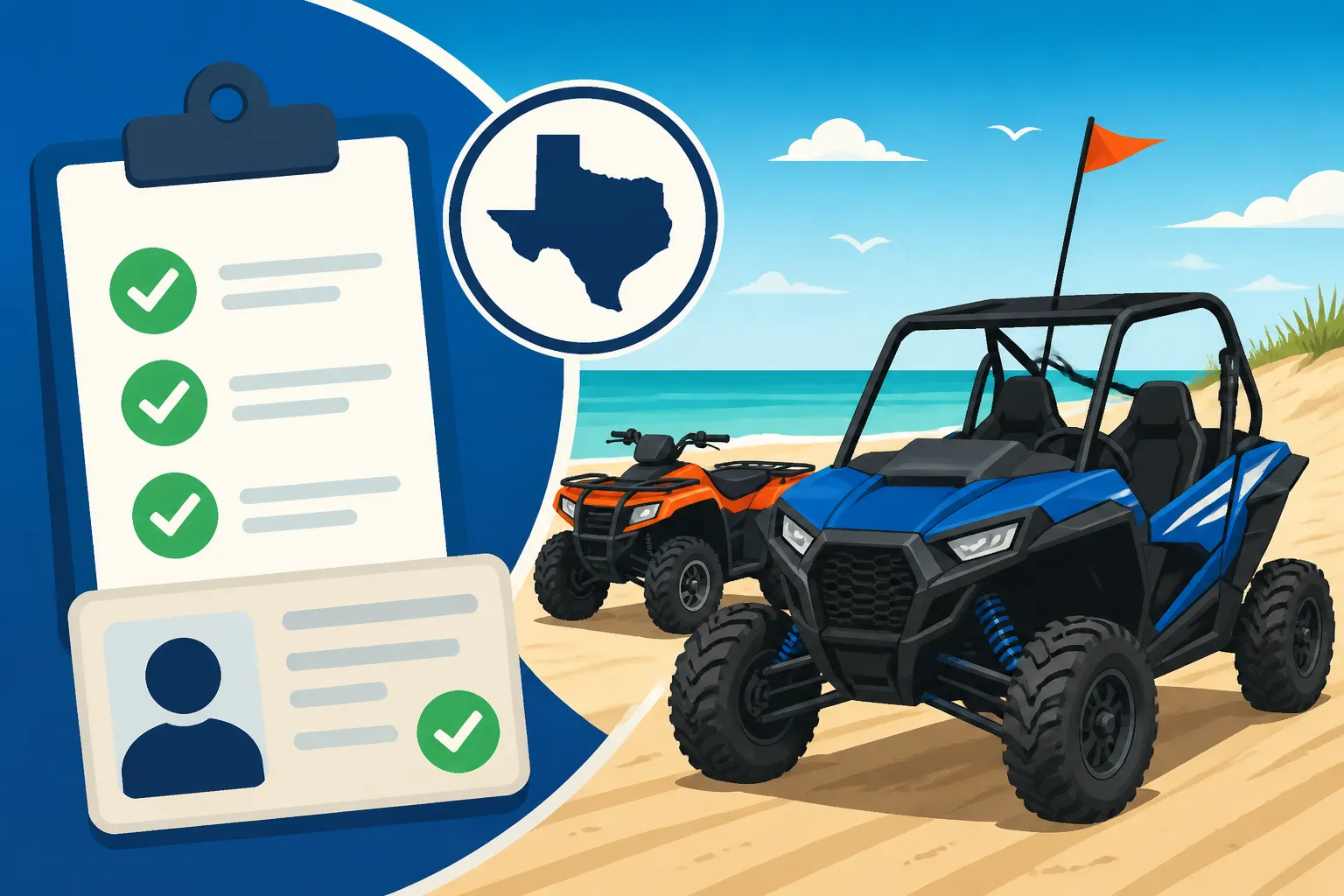
2. Gather Your Documents: Always have your valid driver's license, any required beach access permits (properly displayed), and proof of ownership for your OHV readily available. Some riders even carry a copy of their OHV title, like [What a Texas OHV Title Looks Like], or a bill of sale, just in case.
3. Equip for Safety and Visibility: Ensure your OHV has working headlights, taillights, and a horn. Consider adding a whip flag for increased visibility, especially if you're riding over dunes or in areas with other vehicles and pedestrians. Products from SuperATV can help you upgrade your lighting or add safety features like mirrors, which are always a good idea in shared spaces.
4. Ride Responsibly: Even when legal, beach riding requires extra caution. Keep your speed down, stay aware of your surroundings (pedestrians, children, wildlife, other vehicles), and respect the natural environment. Stick to designated driving areas and avoid sensitive dunes or wildlife habitats. This also means understanding [Texas Beach Riding Rules for ATVs] and adhering to them.
5. Stay Hydrated and Prepared: The Texas sun is no joke, even with a cool breeze off the Gulf. Carry plenty of water, wear appropriate sun protection, and have basic recovery gear (like a tow strap or shovel) in case you get stuck in the sand.
By taking these proactive steps, you'll be well-prepared for a fantastic and worry-free beach riding adventure. It's all about being informed and respectful, ensuring that everyone can enjoy the beauty of the Texas coast.
| Requirement/Action | Why It's Important | Where to Check/Obtain |
|---|---|---|
| Valid Driver's License | Legal requirement for operating a motor vehicle on public access areas. | Your state's Department of Motor Vehicles. |
| Local Beach Access Permit | Funds beach maintenance, required by many coastal jurisdictions. | Local county tax office, city hall, beach kiosks, online. |
| OHV Equipment (Lights, Horn) | Ensures visibility and safety for you and others on shared beaches. | Check your OHV's functionality; consider aftermarket upgrades from SuperATV. |
| Local Beach Ordinances | Rules vary significantly by city/county; avoid fines and impoundment. | City/county official websites, local visitor centers, sheriff's office. |
| Age & Supervision Rules (for minors) | Ensures young riders operate legally and safely on public land. | Texas Department of Licensing and Regulation, local park rules. |
| Proof of Ownership | Essential for identifying your machine and resolving any issues. | Carry your [What a Texas OHV Title Looks Like] or bill of sale. |
Disclaimer
This article is for general informational purposes only and does not constitute professional advice. Laws, prices and regulations vary by location and change over time. Consult a qualified professional for guidance on your specific situation.