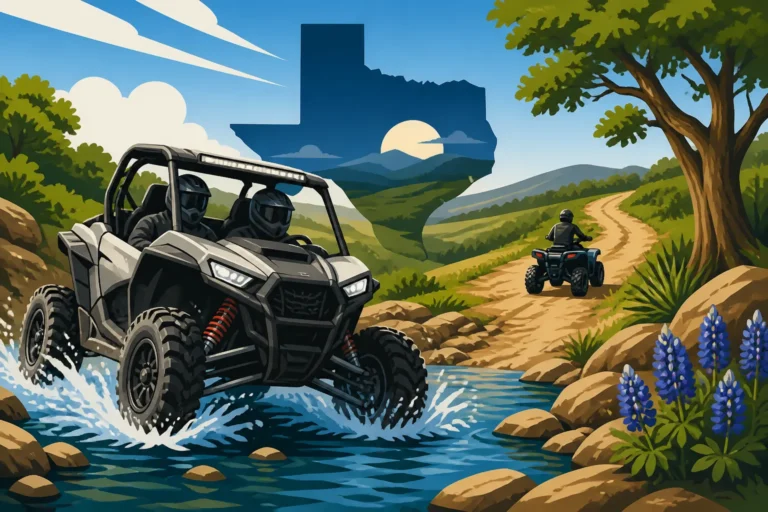
Riding Lake Buffalo at Iowa Park
Lake Buffalo near Iowa Park can look like an easy North Texas riding destination, but the details that make or break a trip are often the least obvious: whether motorized access is open, where you’re allowed to ride, and what rules apply to your machine. This guide helps you plan ahead, check the essentials, and avoid arriving with the wrong expectations or equipment.
Plan your Lake Buffalo ride before leaving home
Confirm access and the rules for the riding area
Before loading the ATV or UTV, confirm that the Lake Buffalo area you intend to visit is currently open to motorized riding. Access, permitted uses, and trail conditions can change, and being near a lake does not automatically mean every road, shoreline, or open patch is available to off-highway vehicles. Check with the land manager or local authority responsible for the specific riding area, and follow posted signs when you arrive.
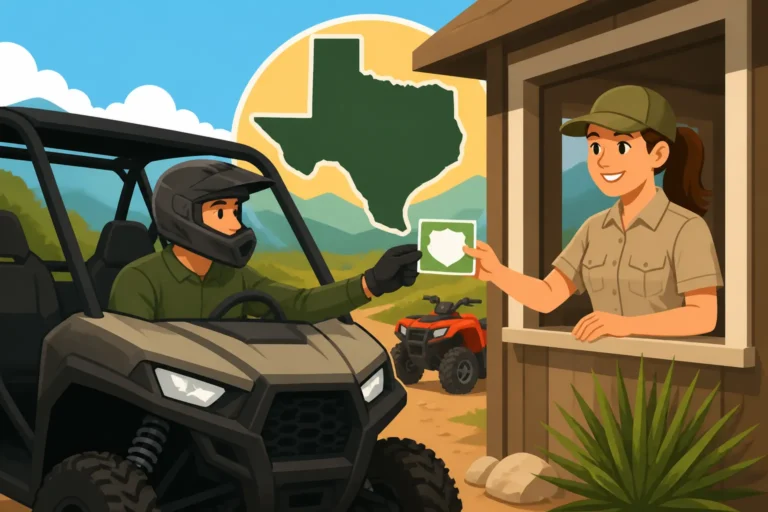
Ask a few practical questions before setting out: Is the riding area open to ATVs and side-by-sides? Are there designated trails or boundaries? Is a day-use fee, permit, or decal required? Are there restrictions on machine width, passengers, hours, or camping? Getting clear answers is much easier at home than after you’ve driven to Iowa Park with a trailer and a group ready to ride.
Don’t rely on an old social media post or a map pin as proof that a route is open. A track shown online may cross private property, a closed area, or a route that is not intended for motorized use. For more context on how riding areas differ across the state, see Where to Ride an ATV in Texas and Texas OHV Parks by Region.
Get oriented around Iowa Park and Wichita Falls
Lake Buffalo is associated with Iowa Park in Wichita County, in the North Texas area near Wichita Falls. Build in a little extra time for the final approach, especially if you’re towing. A navigation app may choose a route that is convenient for a car but awkward for a long trailer, or send you toward a gate or access point that isn’t intended for riding-area visitors.
Use a dependable map to plan the drive, then confirm the entrance and parking instructions with the site operator. If you use onX Offroad to review tracks or offline map layers, treat it as a planning aid—not permission to ride. Check boundaries and closures with the land manager, and compare what you see on-screen with signs on the ground. Cell service can vary, so save useful directions and contact details before you lose reception.
It also helps to settle the meeting point before the group leaves town. If riders are coming from Wichita Falls, Iowa Park, or farther away, choose a clear place to regroup and make sure everyone has the same entrance instructions. A group can lose a surprising amount of ride time when one truck turns toward the wrong access road.
Prepare your ATV or UTV for local conditions
Match your machine and setup to the route
Don’t assume that every Lake Buffalo route will suit every machine. A youth quad, a wide side-by-side, and a full-size utility vehicle can have very different clearance, turning, and width needs. Confirm any machine-size limits before the trip, and check your owner’s manual for the vehicle’s width and passenger capacity. A trail that feels roomy on a quad can be a tight squeeze for a side-by-side.
Do a basic pre-ride inspection before loading. Check tire pressure and condition, brakes, throttle response, steering, lights, battery connections, and visible fluid leaks. On a UTV, make sure seat belts and doors or nets are working properly. Secure loose gear so it can’t fall into a wheel well or trail. If your machine has a winch, test it before you need it rather than discovering a dead battery or tangled line in the middle of a difficult section.
Bring the items that solve common trail-day problems: water, a small first-aid kit, basic tools, tire-repair supplies, a tow strap, and a charged phone. Carry fuel only in approved containers and secure it properly during transport. For wider machines, check Texas Rules for Riding a Machine Over 50 Inches before choosing a route or destination; access rules for one riding area should not be assumed to apply to another.
Pack for weather, dust, and changing trail conditions
North Texas weather can make the same ride feel completely different from one visit to the next. Dry ground may be dusty, while recent rain can make low spots slick or leave ruts that are difficult to see. Don’t treat wet conditions as a challenge to push through. Check with the site operator about closures, and respect barriers and signs even if a track appears passable.
Rain can also change the condition of access roads and parking areas, which matters when you’re towing. A truck and trailer may have a harder time turning around or getting out of a muddy entrance than the ATV has crossing a muddy patch. If there has been heavy rain, ask specifically about both the riding area and the route in. The advice in Texas Riding After a Storm is useful statewide, but local closures and directions should guide the decision for this trip.
Heat deserves the same attention. Start with plenty of water, plan breaks, and watch for signs that you or another rider is overheating. A machine working slowly through rough ground can also run hot, especially if its radiator or cooling surfaces collect dust or debris. For more preparation ideas, see Texas Riding in Summer Heat. If the forecast calls for severe heat or storms, changing the ride date is a sensible plan—not a failure to make the most of the day.
| Trip detail | What to check before you go | Why it matters |
|---|---|---|
| Access | Open status, entrance, hours, and any closure notices | Prevents a wasted drive or an unauthorized entry |
| Vehicle | Allowed types, width limits, and passenger rules | Helps match your machine to the permitted routes |
| Fees and permits | Whether payment, a pass, or an OHV decal is required | Requirements depend on the land and riding area |
| Conditions | Recent rain, dust, heat, and trail restrictions | Helps you avoid unsafe or damaging conditions |
| Group plan | Meeting point, communication, and ride leader | Keeps the group together and reduces delays |
| Emergency plan | Phone coverage, nearest help, and return time | Makes it easier to respond if something goes wrong |
Ride responsibly and stay within the rules
Follow posted boundaries and riding requirements
At the riding area, treat signs, gates, barriers, and marked routes as the clearest guide to where you may go. Avoid cutting across vegetation, entering closed ground, or following an unmarked track simply because it appears on a map. A shortcut can cross private property or a restricted section, and even a brief detour can create trouble for the riding area and future visitors.
Texas OHV requirements can depend on where you ride and how the site is managed. Don’t assume that a decal, permit, or safety requirement is either needed or unnecessary just because another park handles it differently. Confirm the rules for Lake Buffalo with the relevant land manager, and review Texas OHV Decal Explained and [Texas Rules for Riding Public Land] for broader background. If riding on public land, also check any applicable rider age and safety-certificate requirements before bringing children.
Keep noise under control, give other visitors room, and avoid spinning tires or creating avoidable ruts. If a section looks too difficult for your machine or skill level, turn around where it’s safe rather than pushing into a problem. Ride at a pace that lets you react to other vehicles, pedestrians, and changing ground. A calm, predictable ride is especially important when visibility is limited by dust or vegetation.
Ride with a group plan and sensible safety habits
Before the first vehicle moves, agree on who is leading, who is bringing up the rear, and where the group will stop. Riders should know the planned route and what to do if they become separated. Keep enough distance to avoid dust clouds and sudden stops, but stay close enough that the group can communicate. If your machines use whip flags on routes where they are required or recommended, check the site’s instructions and relevant guidance such as [Texas Rules for Riding With a Whip Flag].
Make sure everyone has the right protective gear for their machine and the riding area. Wear a properly fitted helmet where required, along with eye protection, gloves, long sleeves, and sturdy footwear suited to off-road riding. UTV occupants should use the vehicle’s seat belts and stay inside the protective structure. Keep children on machines appropriate to their size and ability, and supervise them closely rather than assuming that a familiar backyard ride prepares them for a public trail.
Set a turnaround time and tell someone who is not riding when you expect to return. If the group has riders with different experience levels, agree on a route and pace that work for the least experienced person. If you’re organizing a larger outing, review [Texas Rules for a Group Ride] and confirm whether the site has additional requirements for organized gatherings.
Make the day easier from arrival to the drive home
Arrive with a simple setup routine
When you reach the area, take a moment to orient yourself before unloading. Check the entrance signs, confirm where vehicles and trailers may park, and locate any marked routes, restrooms, or visitor information. If anything differs from what you were told before the trip, ask the operator or follow the posted direction rather than guessing.
Unload in a safe spot where your trailer is not blocking traffic or access. Do a quick check of each machine before riding: confirm straps are removed, fuel caps are secure, and loose gear is stowed. Give children a clear reminder about where they may ride, who they should stay with, and where the group will regroup. Taking a few quiet minutes at the start helps avoid the rushed mistakes that tend to happen when everyone is eager to get going.
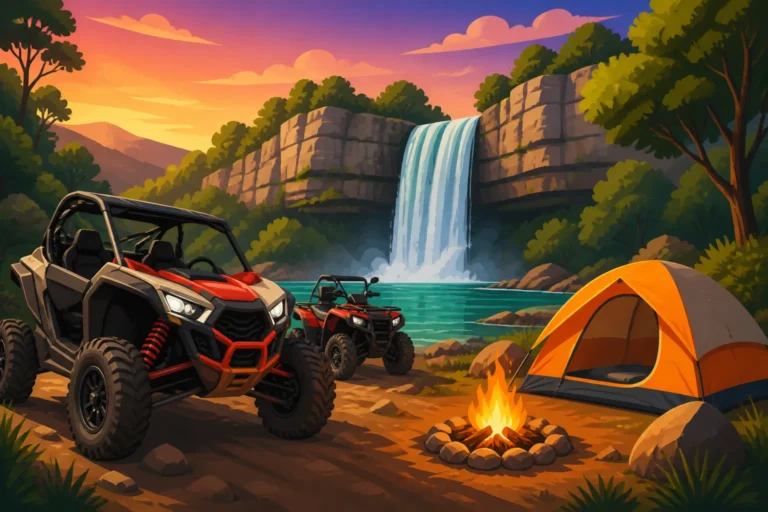
If camping is part of your plan, confirm that overnight stays are permitted at the particular site and whether reservations, designated campsites, or separate facilities are involved. Do not assume that a place allowing day riding also allows camping. For broader planning, Texas OHV Parks With Camping can help you compare the kinds of overnight options offered at riding destinations around the state.
Leave the area in good condition
Before loading up, check the machine and trailer for damage, loose parts, and debris. Let the engine cool before handling hot components, and secure the vehicle carefully for the drive home. If mud or vegetation is packed into the machine, clean it where permitted so it doesn’t spread onto roads or into areas where it could cause problems.
Pack out everything you brought in, including food wrappers, broken zip ties, and small pieces of gear. Don’t leave trash beside a trailhead or assume someone else will pick it up. If you notice a damaged sign, blocked route, or unsafe condition, report it to the site contact rather than trying to fix or bypass it yourself.
A good Lake Buffalo trip starts with confirming access, matching the vehicle to the permitted routes, and respecting conditions once you arrive. Those steps may feel less exciting than loading the machines, but they help protect your group, the riding area, and the chance to come back for another day on the trail.
Disclaimer
This article is for general informational purposes only and does not constitute professional advice. Laws, prices and regulations vary by location and change over time. Consult a qualified professional for guidance on your specific situation.