Eisenhower State Park’s Trails in Texas
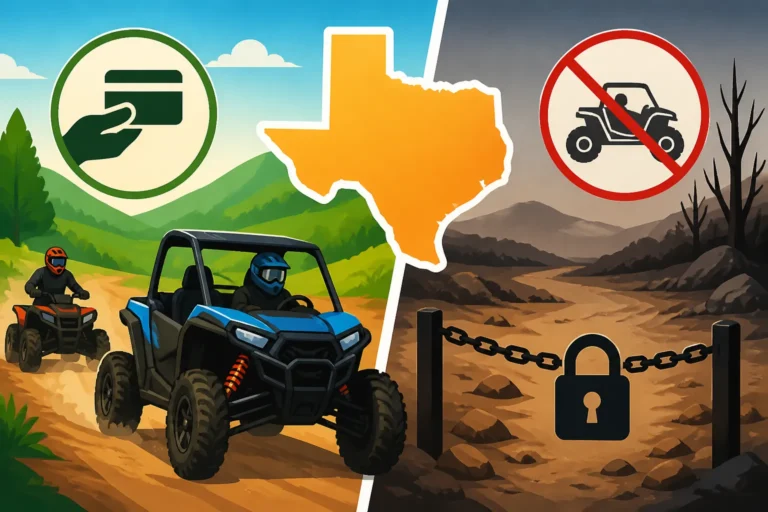
Eisenhower State Park is easy to mistake for a big off-road trail destination, but its riding opportunity is a designated OHV area rather than an expansive trail network. That distinction matters when you’re choosing a machine, planning a family day, or towing from elsewhere in North Texas. This guide explains what to expect, what to check before leaving home, and how to ride responsibly near Lake Texoma.
What to Expect From Eisenhower State Park’s OHV Area
A designated riding area, not miles of connected trails
Eisenhower State Park sits on the Texas side of Lake Texoma, near Denison in Grayson County. It offers outdoor activities beyond OHV riding, including lake access and opportunities for hiking, camping, and fishing. Riders should think of the park’s off-road area as a specific place to ride—not as an extensive, interconnected trail system that will fill a full day with miles of route options.
That difference can shape your plans. If your group expects a long trail ride with changing terrain and lots of distance, the park may feel smaller than anticipated. If you’re looking for a convenient place to ride in the Lake Texoma area, or want to combine a short off-road outing with other park activities, it may fit better.
Before you travel, check the park’s current information for OHV area access, operating rules, and closures. Designated riding areas can have specific boundaries or conditions, and access can change with weather, maintenance, or other park needs. Don’t assume that a road, open space, or track visible on a map is an authorized route.
Match your expectations to your machine and group
A compact ATV and a full-size side-by-side don’t take up the same space or handle terrain in the same way. Before heading out, confirm that your particular machine type is permitted in the area and that it fits the park’s rules. Don’t rely on the fact that another rider brought a similar vehicle on a previous visit; conditions and rules can change, and one rider’s experience doesn’t necessarily establish permission.
It’s also worth being realistic about the experience you want. A small designated area can be a manageable outing for a newer rider who wants to practise at a controlled pace. It may be less satisfying for someone accustomed to longer rides at a large OHV park. If your group includes children or first-time riders, plan for breaks, supervision, and a conservative pace rather than trying to turn a short ride into an all-day challenge.
For a wider look at where Texas allows ATV riding, see [Texas State Parks That Allow ATVs]. It’s a helpful starting point when comparing a state park visit with other riding options, but always confirm the details for the specific destination you’re considering.
| Before you go | Why it matters | What to confirm |
|---|---|---|
| Riding-area access | A designated area may have separate access conditions or closures | Whether the OHV area is open on your intended visit |
| Machine type | Rules may distinguish among ATVs, UTVs, and other vehicles | Whether your exact machine is allowed |
| Required decal or documents | Public-land riding can involve requirements beyond having a machine | Which decal, certificate, or proof the park expects |
| Weather and surface conditions | Rain can affect safety and access | Whether recent conditions have caused a closure |
| Group experience | A small riding area may suit some riders better than others | Whether the terrain and space fit your least-experienced rider |
Plan the Visit Before You Load the Trailer
Check park information close to your travel day
A common frustration is driving a long way only to find that the riding area is unavailable or that a rule changes the plan. Check the park’s official information before you load up, and check again close to departure if the forecast is unsettled. Confirm entry procedures, the OHV area’s status, and any restrictions that apply to your machine or riding group.
Be precise when you ask questions. Rather than asking only, “Can we ride there?”, confirm that the area is open on your chosen day, that your vehicle type is permitted, and what riders need to bring. Ask about any age-related supervision or safety requirements as well. These questions can uncover details that a general park listing may not explain clearly.
If you’re comparing options around the state, [Texas OHV Parks by Region] can help you think through location and trip planning. For a broader view of local riding choices, [Where to Ride an ATV in Texas] is also useful. Neither replaces checking the destination’s own rules before setting off.
Prepare for the drive and the lake-area visit
Eisenhower State Park is near Denison and Lake Texoma, so it can work as part of a broader weekend rather than a ride-only trip. Even so, remember that a destination near a popular lake can involve busy access roads, limited parking, or crowded facilities, especially during high-demand periods. Allow extra time for check-in and unloading instead of planning to arrive at the last minute.
Before leaving home, inspect your trailer, tie-downs, tires, lights, and hitch. Make sure the machine is secured and that loose gear cannot shift during the drive. Pack basic tools, water, food, protective equipment, and any documents the park requires. If you’re transporting a side-by-side, check the trailer’s capacity and the machine’s width before you start; discovering a mismatch in the driveway is much easier than discovering it at the park entrance.
A mapping app such as onX Offroad can help with general trip planning and keeping track of where you are. Use it as a navigation aid, not as permission to ride. A mapped line, trail, or open-looking area does not override park boundaries or posted restrictions. Treat official park directions and signs as the final word for where you can travel.
Texas Requirements and Park Rules
Don’t confuse an OHV decal with road registration
Texas rules can be confusing because people often use “registration,” “plate,” and “decal” as if they mean the same thing. They do not. A Texas OHV decal is associated with off-highway use on applicable public land; it does not turn an ATV or UTV into a street-legal vehicle or authorize riding on roads between parts of the park.
Check the requirements that apply to your machine and where you plan to ride. The park may expect riders to have the appropriate decal, and other rules may apply depending on the vehicle and rider. For background on the decal requirement, read [Where a Texas OHV Decal Is Required] and [The Texas OHV Decal Explained]. If you’re unsure whether a requirement applies to your particular vehicle, confirm it with the park before travelling.
A common mistake is to assume that because a machine has a title or a plate, every public-land requirement has been met. Those documents serve different purposes. If you’re sorting out what a title does and does not establish, [Does a Texas ATV Need Registration?] and [Why a Texas Title Never Registers an OHV] offer useful context.
Build safety checks into the ride
Start with the basics: wear a properly fitted helmet and appropriate protective gear, keep riders within their abilities, and follow posted speed and route rules. Check that brakes, tires, steering, throttle, lights, and any required safety equipment are working before unloading. For a side-by-side, make sure occupants use the vehicle’s installed restraints and sit in manufacturer-designed seats.
Children need special attention. Confirm applicable age and supervision rules, and choose a machine and riding area that are suitable for the youngest or least-experienced person in your group. A child who feels pressured to keep up can make poor decisions; build in time to stop, explain the route, and let riders speak up if they feel uncomfortable.
The OHV area is not permission to ride elsewhere in the park. Stay within designated riding boundaries, obey signs, and don’t use ordinary park roads or trails as shortcuts. For a wider look at public-land rules, see [Texas Rules for Riding State Land]. The park’s own instructions still control the visit, so follow staff directions if they differ from what you expected.
Choosing a Route and Riding Responsibly
Use maps for orientation, not authorization
A map is useful for understanding the drive, nearby communities, and the general shape of a visit. It can also help your group agree on a meeting point and keep a record of where you parked. If you use onX Offroad to plan, remember that a navigation app cannot guarantee that a path is open, legal, or suitable for your vehicle on the day you arrive.
This is particularly important around a lake and a state park, where public areas, private land, roads, recreation sites, and protected spaces can sit close together. A line that looks rideable on a screen may cross a boundary or lead somewhere vehicles are prohibited. Keep the park map available, pay attention to signs, and stay inside the riding area’s permitted limits.
Before starting, make sure everyone knows where the group will stop and what to do if riders become separated. Agree on a pace that keeps the group together, and don’t let the fastest rider dictate the route for everyone else. Short, clear instructions are more useful than trying to explain a complicated plan while engines are running.
Protect the riding area and other park visitors
Riding responsibly means more than avoiding collisions. Stay on the designated route or within the approved area, avoid damaging vegetation, and don’t create new tracks to get around a muddy or difficult section. If a route is blocked or conditions feel unsafe, turn back rather than widening the path or pushing through.
Keep noise and dust in mind, especially when other visitors are nearby. Give pedestrians and other park users space, slow down where visibility is limited, and follow posted directions. If the area is busy, patience matters: rushing to get around another vehicle can create a dangerous situation in a confined space.
Pack out your trash and leave the area as you found it. Secure fuel and equipment, and follow park instructions for where to unload, park, or stage your machine. A considerate group makes it easier for riders and non-riders to share a state park without turning the visit into an avoidable conflict.
Decide Whether Eisenhower State Park Fits Your Trip
When it can be a good choice
Eisenhower State Park can make sense when you want a North Texas destination near Lake Texoma and are comfortable with a more contained riding opportunity. It may suit riders who value a straightforward outing, want to combine OHV use with camping or other park activities, or are exploring destinations within reach of the Denison area.
It can also be a practical option for a group that wants to try a public riding area without assuming that every outing needs a large trail network. A shorter ride can leave room for a picnic, a walk, or time by the lake—provided those activities fit the park’s rules and conditions. That mix can be especially appealing when not everyone in the group wants to spend the whole day on an ATV.
For riders comparing destinations, [Eisenhower State Park's Trails in Texas] is the specific topic to keep in view: the important question is not simply whether the park has riding, but whether the designated area, access conditions, and trip length match your expectations. Check those details before making the drive.
When another riding area may suit you better
If your priority is a long day of connected trails, extensive terrain variety, or a dedicated OHV park experience, compare Eisenhower with other destinations before committing. A compact riding area can be a poor fit for a group that has already driven several hours and expects a full day of continuous trail riding.
The same is true if your machine type, group size, or experience level makes the area unsuitable. Don’t assume that a large UTV will be allowed simply because smaller ATVs are permitted, or that a route is appropriate for a beginner because it looks short on a map. Confirm the park’s rules and be honest about what your group can handle.
Use onX Offroad or another mapping tool to help compare general locations and plan the drive, then verify every important detail with the destination itself. That small extra step can save a wasted trip and helps make sure your ride stays within authorized areas. For more options, browse [Texas OHV Parks Near Dallas] or [Texas OHV Parks Near Austin], depending on where you’re travelling from.
Disclaimer
This article is for general informational purposes only and does not constitute professional advice. Laws, prices and regulations vary by location and change over time. Consult a qualified professional for guidance on your specific situation.