Texas Riding in July Heat
A July ride in Texas can turn uncomfortable fast: the parking lot is already hot, the trail offers little shade, and your machine is throwing heat back at you. This guide covers how to plan around peak temperatures, protect riders and equipment, choose a suitable riding area, and recognize when it is time to cut the day short.
Plan the ride around the heat
Start early and keep the route realistic
In July, a midday start can mean loading, unloading, and gearing up during the hottest part of the day. Begin early instead, when possible, and plan the most demanding riding for the morning. A route that sounds manageable on a cool day may feel much harder when the ground radiates heat and every stop becomes an opportunity to bake in the sun.
Keep the first outing conservative. Choose a loop or trail network where you can turn back without committing to a long ride away from your vehicle. Tell someone where you plan to ride and when you expect to check in. Before setting out, confirm the park or riding area is open and review its rules, trail conditions, and any heat-related notices. A route app such as onX Offroad can help you review routes and mark a planned turnaround point; download any needed maps before leaving reliable service.
Build more time into the plan than you think you need. Riders often underestimate how long it takes to stop, drink, cool down, help a group member, or deal with a small mechanical issue. If your group includes children, new riders, or anyone who is not used to Texas summer conditions, keep the planned ride shorter and make breaks part of the route rather than an afterthought. [Texas Riding in Summer Heat]
Pick a riding area with your group and machine in mind
A shaded trail may feel different from a broad, exposed route, but shade does not make a July ride risk-free. Consider how much time your group will spend in the sun, how quickly you can get back to the staging area, and whether the trails match your riders’ experience and machines. If you are traveling to a park, check its own posted information before you leave; access, conditions, and operating details can change.
For example, Barnwell Mountain Recreation Area near Gilmer is known for wooded East Texas terrain, while Hidden Falls Adventure Park near Marble Falls offers a different Hill Country setting. Neither setting eliminates heat exposure. Tree cover can provide welcome shade, but technical terrain, slow progress, and repeated climbs may still make the ride physically demanding. Compare the kind of terrain your group wants with the ability to take breaks and return promptly. [Barnwell Mountain Recreation Area] [Hidden Falls Adventure Park at Marble Falls]
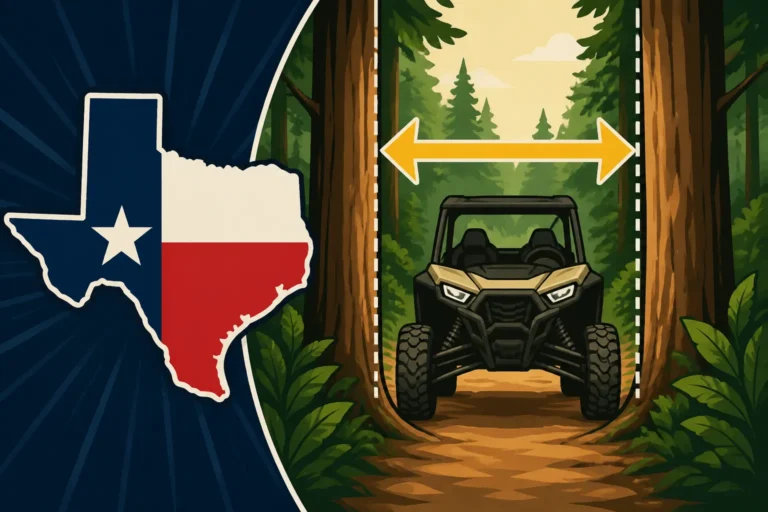
If you are riding a public trail system, also account for access rules and vehicle limits. The Sam Houston National Forest OHV Trail near New Waverly, for instance, has trail requirements worth checking before you go, including width limits. Do not assume that a machine is permitted simply because it can physically fit down a trail. [Texas Rules for Riding a National Forest Trail] [Texas's 50-Inch National Forest Width Limit]
Protect riders from heat illness
Hydrate before you feel thirsty
Do not wait until you feel parched to drink. Start hydrating before the ride, bring more water than you expect to use, and make regular drinking stops. A hydration pack can make it easier to sip while riding, but it does not replace carrying enough water for the whole group or having a backup supply at the vehicle. Keep drinking water accessible rather than buried under tools and spare gear.
Plan breaks in a shaded or otherwise cooler place whenever possible. Use those stops to check on every rider, not just the person who speaks up first. Heat can affect judgment and coordination, and someone who is struggling may minimize how bad they feel because they do not want to slow everyone down. Ask direct questions, pay attention to changes in behavior, and be willing to shorten the ride.
Water is only one part of heat planning. Consider bringing electrolytes or suitable snacks, especially for a longer outing, and avoid treating energy drinks or alcohol as substitutes for water. Pack a first-aid kit, a charged phone, and a way to contact help. Service can be unreliable in remote areas, so tell someone your plan and know how you will get back to the staging area if a rider needs to stop. [Texas Riding Areas With Cell Signal]
Recognize warning signs and respond promptly
Heat exhaustion can involve heavy sweating, weakness, dizziness, nausea, headache, cramps, or feeling faint. If a rider develops concerning symptoms, stop the ride, move them to a cooler place, loosen unnecessary clothing or gear, and begin cooling them with available water and shade. Do not leave them alone while the rest of the group continues.
Confusion, fainting, seizures, or a very high body temperature can indicate a life-threatening emergency. Call emergency services and begin cooling while waiting for help. Do not try to “push through” serious symptoms or assume that a short rest on the trail will fix them. The safest decision may be to end the ride and get the person to medical care.
Make it normal for anyone in the group to call for a break. A rider who feels embarrassed about slowing the group may hide symptoms until they become more serious. Agree before riding that anyone can stop the group without debate. For younger riders, check in frequently and watch for unusual quietness, irritability, stumbling, or trouble following familiar instructions. [Texas Rules for Riding With Small Children]
| Heat-planning choice | Why it helps | Practical approach |
|---|---|---|
| Early start | Reduces time riding during peak heat | Be ready to unload and ride early, not just arrive early |
| Short route with an easy exit | Makes it simpler to return if someone feels unwell | Choose a loop or route with a clear turnaround |
| Frequent water breaks | Helps the group notice problems sooner | Schedule stops and check each rider |
| Shade at the staging area | Gives riders a place to cool off | Set up shade where permitted and keep water nearby |
| Backup communication plan | Helps when cell service is limited | Share your route and return time with someone outside the group |
Prepare your ATV or UTV for hot conditions
Check the machine before and during the ride
Heat puts extra stress on both riders and machines. Before leaving, check the owner’s manual for maintenance guidance and inspect the cooling system, radiator area, coolant level where applicable, tires, brakes, belt condition on a belt-driven machine, and fluid leaks. Clear debris from cooling areas as directed by the manufacturer. A radiator packed with mud or grass cannot shed heat as intended, and even a small issue can become a problem when the machine is working hard in slow terrain.
Do not ignore warning lights, rising temperature readings, unusual smells, loss of power, or steam. Stop in a safe location and let the machine cool according to the manufacturer’s instructions. Opening a hot cooling system can cause serious burns, so do not remove a radiator cap while the system is hot or pressurized. If a machine repeatedly overheats, end the ride and have the underlying issue checked rather than continuing to run it hard.
Give your machine brief pauses during a demanding ride, particularly after slow climbs or heavy work in soft terrain. A UTV carrying passengers or gear may be working harder than a lightly loaded ATV. Keep loads within the manufacturer’s limits and avoid using accessories in ways that block airflow or interfere with safe operation. For seasonal maintenance ideas, see [Texas ATV Cooling Upgrades for Summer] and [Radiators Packed With East Texas Mud].
Expect terrain to affect heat and effort
Different Texas riding surfaces create different demands. In the Hill Country, rocky climbs can mean low-speed work and repeated bursts of effort. In East Texas, mud and soft ground may make a machine labor harder. Open, sandy terrain can leave riders exposed to direct sun, while dusty routes can make airflow and visibility less comfortable. Choose a pace that matches conditions rather than trying to keep up with the fastest rider.
Stop if the trail is more difficult than expected or if the group is becoming tired. A hot, fatigued rider may make poor decisions on a rocky descent or while navigating a narrow trail. Keep space between machines, communicate clearly, and do not pressure riders to tackle obstacles they would normally avoid. If the route becomes unsafe, turn back.
After the ride, clean and inspect the machine before storing it. Remove debris from cooling areas, check for leaks or damage, and follow the maintenance schedule in the owner’s manual. Dust, mud, heat, and long periods of low-speed riding can combine to make a post-ride inspection especially worthwhile. For more on managing seasonal strain, read [Texas ATV Cooling Upgrades for Summer] and [What Heat and Dust Add to Maintenance Costs].
Pack, dress, and make the go-or-no-go decision
Choose protective gear without trapping unnecessary heat
Wear the protective equipment required by the riding area and appropriate for the machine, including a properly fitted helmet. Ventilated riding gear can help with comfort, but it should still protect against scrapes, flying debris, and contact with hot components. Use eye protection suited to the conditions; dust and grit can be particularly irritating when riders are already tired.
Avoid loose clothing that can catch on controls or moving parts. Wear sturdy gloves and boots, and consider sun-protective clothing that covers exposed skin without making movement difficult. Keep a dry shirt or other change of clothing at the vehicle if you expect to get wet or sweaty. For family rides, make sure children’s helmets and protective gear fit correctly rather than relying on oversized hand-me-down equipment.
For trails that require additional equipment, check the rules before you go. Some areas have specific requirements for flags, permits, decals, or safety certificates. Sorting those details out beforehand prevents a frustrating trip to the gate and gives you more time to focus on heat preparation. [Texas Rules for Riding With a Whip Flag] [Where to Buy a Texas OHV Decal]
Know when to postpone
Sometimes the best summer riding plan is not to ride that day. Postpone if someone is already unwell, the machine has a cooling problem, your group lacks enough water, or the route leaves no practical way to return quickly. Do not treat a reservation, long drive, or planned meetup as a reason to ignore a safety concern. A disappointing change of plans is far better than turning a recreational day into an emergency.
Before departure, make a simple go-or-no-go check: Is the group rested and prepared? Is there enough water and a realistic route? Are the machines ready for the terrain? Can you reach help or return to the staging area if needed? If one answer is no, adjust the plan. That may mean a shorter loop, a later date, or choosing a riding area that better suits the group and equipment.
After a ride, watch for symptoms that continue or worsen once you are back at the vehicle. Let everyone cool down, drink, and rest before driving home. If someone has severe symptoms or does not improve, seek emergency medical help. The goal is not to complete every mile on the map; it is to finish the day safely enough to enjoy the next ride.
Disclaimer
This article is for general informational purposes only and does not constitute professional advice. Laws, prices and regulations vary by location and change over time. Consult a qualified professional for guidance on your specific situation.