Trophy Club Park at Grapevine Lake
Trophy Club Park gives Dallas–Fort Worth riders a place to take an ATV or UTV off pavement without planning a long trip across Texas. The tricky part is showing up prepared: access rules, trail conditions, machine fit, and required riding equipment can all shape the day. This guide explains how to plan a safer, smoother visit near Grapevine Lake.
What to Know Before Riding at Trophy Club Park
Where the park fits into a North Texas riding plan
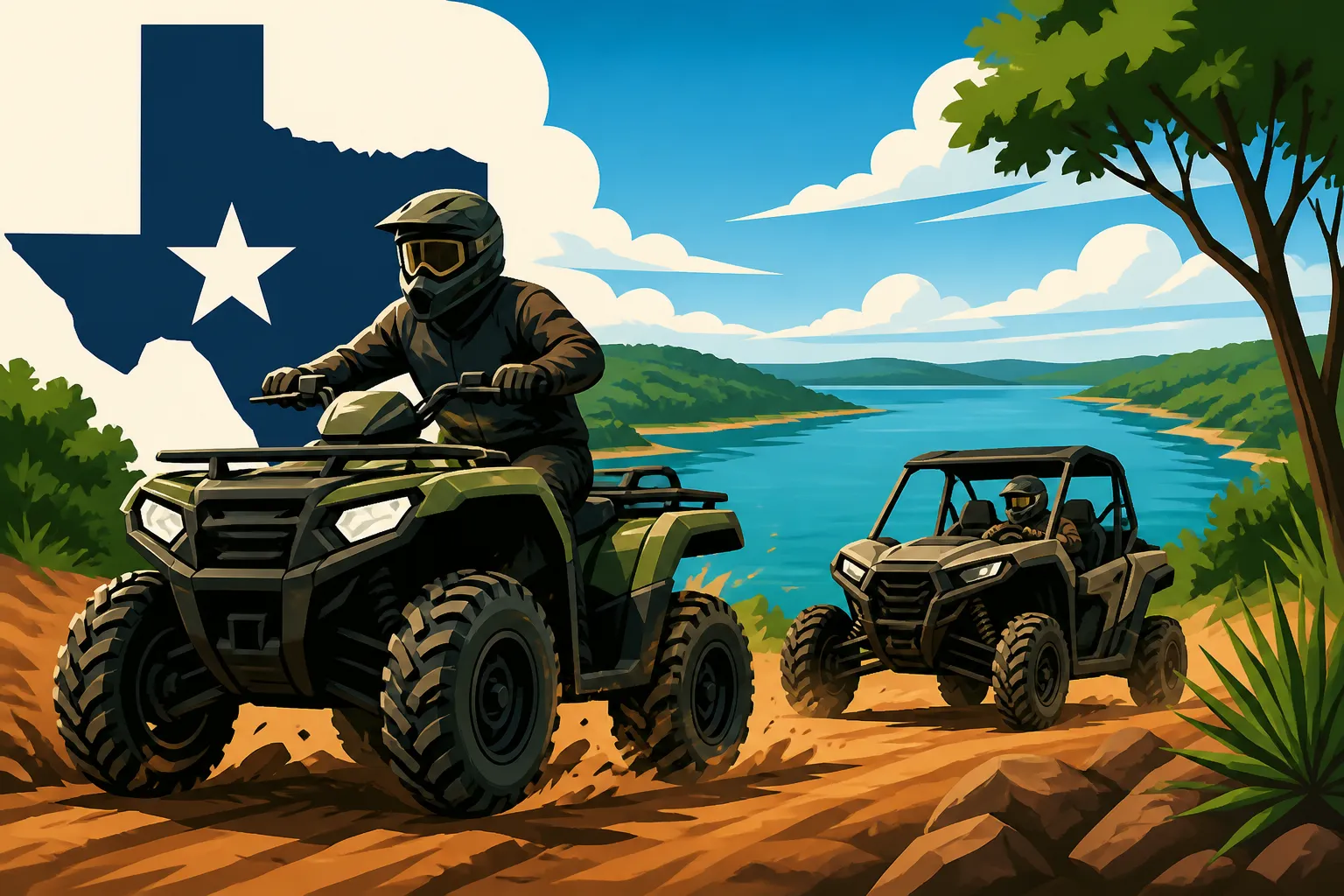
Trophy Club Park is in the town of Trophy Club, near Grapevine Lake and within reach of communities such as Roanoke, Southlake, and the northwestern Dallas–Fort Worth suburbs. That makes it a practical option for riders who want a local off-road outing rather than a full weekend away. It is still worth planning as a destination, not as an informal place to unload and ride wherever looks open: the park’s motorized riding area and other park uses are governed by site rules.
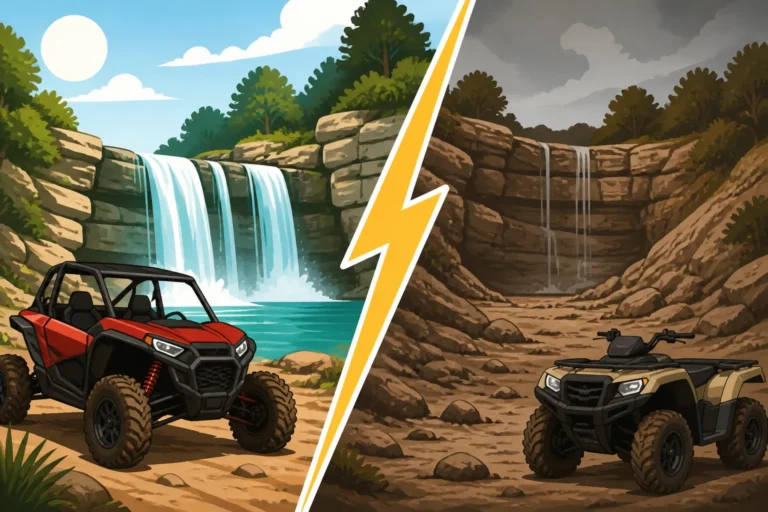
The setting is part of the appeal. North Texas trails can feel very different from the rocky Hill Country or the pine woods of East Texas. Around Grapevine Lake, riders may encounter a mix of dirt, uneven ground, loose material, and changing conditions after rain. A route that feels easy in dry weather can become more challenging when the surface is wet, rutted, or slick. Treat the trail as a changing environment, not a fixed difficulty rating.
If you are comparing local options, [Texas OHV Parks Near Dallas] can help you think about Trophy Club Park alongside other North Texas riding destinations. For a closer look at this specific park, see [Trophy Club Park at Grapevine Lake]. Before loading the trailer, verify the park’s current access details and motorized-use rules through the official park channels. Hours, closures, fees, and operating procedures can change, and an old social media post or a remembered visit may not reflect the arrangements for your trip.
What to check before you leave home
Start by confirming that the riding area will be open to the kind of machine you plan to bring. Do not assume that every park road, trail, or recreation area is open to ATVs and UTVs simply because it is inside the park boundary. Look for current guidance on permitted vehicles, entry procedures, required decals or permits, noise rules, safety equipment, and any temporary closures. A quick check can save a long drive with a trailer only to find that the riding area is unavailable or your machine does not meet the rules.
Next, check the forecast and recent weather, not just the temperature. A dry, sunny morning can follow heavy overnight rain, leaving sections soft or damaged. Some parks restrict riding when trails are wet because tires can deepen ruts and create damage that takes a long time to repair. If conditions are questionable, call or check the park’s official updates before setting off. [Texas Trail Closures to Check First] offers a useful reminder that conditions and access can matter as much as the destination itself.
Finally, plan the arrival as carefully as the ride. Make sure your trailer and tow vehicle can reach the designated parking and unloading area, and confirm where machines may be staged. Keep the vehicle registration, relevant safety documentation, and any required riding credentials accessible rather than buried under helmets and tie-downs. Riders who want a second map view for route planning may find onX Offroad useful for reviewing an area before they travel, but a mapping app does not replace posted park instructions or staff guidance.
Matching Your ATV or UTV to the Ride
ATV and UTV fit, width, and trail confidence
A compact ATV and a full-size side-by-side do not always experience the same route in the same way. Tight turns, narrow passages, uneven edges, and other trail users may be easier to manage on a smaller machine. A wider UTV may offer a comfortable seat and added storage, but its width can limit where it can travel. Do not assume that a route open to one type of off-highway vehicle is automatically appropriate for every machine.
Measure your vehicle before you go, especially if you are bringing a side-by-side with wider tires, added accessories, or a modified stance. A width measurement taken from tire edge to tire edge may not tell the whole story if mirrors, racks, or other parts extend farther out. Then compare the machine with the park’s posted limits and route information. For broader context, [Texas Rules for a Machine Over 50 Inches] explains why width can affect where an OHV is permitted to ride.
It is also helpful to match the route to the least experienced person in your group. Someone who is new to off-road riding may feel comfortable on a predictable path but become stressed by a sudden rut, a steep section, or another rider approaching from the opposite direction. Keep the first lap conservative, leave space between machines, and agree on a place to stop if anyone needs a break. If your group includes children, review the park rules and age-appropriate riding guidance before deciding who will operate a machine.
A practical pre-ride equipment check
A quick mechanical check is less exciting than loading up, but it can prevent a small problem from ending the day. Check tire condition and pressure according to the vehicle manufacturer’s guidance, inspect the brakes, and look for loose fasteners or damaged steering components. On a UTV, check the seat belts and make sure doors or nets latch properly. On an ATV, confirm that the controls work smoothly and that the throttle returns as expected. If a machine has been sitting for a while, do not make the first test of the brakes on a busy trail.
Pack protective gear that fits correctly and is in good condition. A properly fitted helmet is central to off-road safety, and eye protection helps keep dust, grit, and low branches out of your eyes. UTV occupants should use the vehicle’s restraints as designed; an open side-by-side is not a reason to ride with a belt unfastened. Bring gloves, sturdy footwear, and weather-appropriate clothing. Park rules may require specific equipment, so check the current requirements rather than relying on what another park allows.
Before unloading, do a second check of the trailer and vehicle. Secure loose cargo, confirm that fuel is sufficient for the planned ride, and take drinking water where it can be reached. A small tool kit, tire repair supplies suited to your machine, and a charged phone can be useful, but do not treat them as a substitute for sound maintenance. For a more complete overview of visitor preparation, [Texas OHV Parks for Beginners] is a helpful companion topic.
| Before you go | What to confirm | Why it matters |
|---|---|---|
| Park access | Open status, entry procedure, and any temporary closure | Avoids arriving when riding is unavailable |
| Vehicle eligibility | Permitted machine type and any width limits | A route suitable for one vehicle may not suit another |
| Required credentials | Decal, permit, or safety documentation | Helps prevent problems at entry or on the trail |
| Weather and trail condition | Recent rain, wet-ground restrictions, and heat | Conditions can change difficulty and access |
| Equipment | Helmet, eye protection, restraints, and basic maintenance | Supports a safer and more comfortable ride |
| Parking and unloading | Trailer access and designated staging area | Makes arrival smoother and reduces congestion |
Riding Safely Around Grapevine Lake
Trail etiquette and sharing the park
A riding area is more enjoyable when people do not have to guess what others will do. Keep to designated routes, follow signs, and avoid cutting across vegetation or making a shortcut around a muddy section. Riding off the marked path can widen damage and create conflicts with other park users. If a route looks blocked or unclear, stop somewhere safe and check the map or ask park staff rather than pushing ahead.
Manage speed to match visibility and surface conditions. Dust can reduce sight lines, particularly when several machines are moving together. Leave enough room to stop without swerving into another rider’s path, and be especially cautious around blind bends, narrow sections, and trail intersections. If you come upon another group, slow down early and communicate clearly. A courteous pace is not just about avoiding collisions; it also makes the ride more welcoming for families and less experienced visitors.
Keep the group together without crowding. Decide in advance who will lead and who will stay at the back, and agree on a simple procedure for stopping if someone has a mechanical issue. Avoid leaving a rider alone at an unfamiliar intersection while the rest of the group continues. Riders can use onX Offroad during planning to get a clearer sense of the area and organize a route, while still treating park signs and staff instructions as the authority for where riding is allowed. [Texas Rules for Riding Public Land] is also relevant for understanding why access boundaries and posted restrictions deserve close attention.
Heat, rain, and changing trail conditions
North Texas weather can make a short outing more demanding than expected. Heat and direct sun can drain energy, especially for children, passengers, or riders wearing heavy protective gear. Carry water for everyone, not just the driver, and take breaks before anyone feels dizzy, nauseated, unusually tired, or confused. A ride planned for midday may feel very different from an early outing, so choose a schedule that fits the forecast and the group’s experience.
Rain changes both traction and trail impact. A thin layer of damp soil can be deceptively slippery, while deeper mud can trap a machine or cause a rider to lose control. If the park advises against riding after rain, respect that closure. Trying to power through a wet route can damage the trail and make recovery more difficult. If conditions deteriorate while you are already riding, turn back when it is safe rather than treating the remaining route as a challenge to complete.
Dust is another consideration, especially when multiple vehicles are moving in a line. Leave more distance than you might on a paved road, and stop in a safe location if visibility becomes poor. Keep food, drinking water, and essential supplies protected from dust and heat inside the vehicle or a sealed bag. [Texas Riding Seasons and Heat] has additional context for planning around warmer conditions, while [Texas OHV Parks With Camping] can help if you are considering making a ride part of a longer regional trip.
Planning the Visit and Making the Most of Your Day
A simple plan for a first visit
For a first outing, build the day around orientation rather than distance. Check the rules and maps before arrival, unload only in the designated area, and look over posted signs before entering the riding zone. Start with a conservative route and give everyone time to learn how the terrain feels. A confident rider may be tempted to head straight for the more challenging sections, but a new visitor benefits from seeing how the surface, sight lines, and traffic flow work first.
A useful group routine is to agree on a few basics before engines start: where to regroup, what signal means “stop,” who leads, and what to do if a machine has a problem. Keep the first ride short enough that you can return to the staging area before fatigue sets in. If the route is easier than expected, you can extend the outing after a break. If it is more demanding, you have preserved energy and avoided turning a fun visit into a stressful push to get back.
If you are taking more than one vehicle, stagger departures when appropriate and avoid bunching up near entrances or narrow trail points. Make sure every driver understands the route and knows not to leave the designated riding area. A paper or offline map can be helpful if phone coverage is unreliable, but check the device before you leave home and do not assume it will replace trail signs. onX Offroad can support advance route review, while the park’s own directions should guide the actual visit.
Family visits, non-riding time, and local logistics
Not everyone in a group needs to ride every minute. Some visitors may want a break, a picnic, or time to enjoy the broader park setting near Grapevine Lake. Confirm which areas are open for those activities and keep motorized riding separate from places intended for other recreation. Do not let a non-riding family member wander into a trail corridor to watch from an unapproved spot; choose a safe, permitted viewing or waiting area instead.
Families should be particularly clear about supervision. A child who is comfortable riding in a familiar field may feel overwhelmed by dust, noise, or unfamiliar vehicles at a park. Use age-appropriate equipment and a machine that fits the child, and follow all posted rules about age, supervision, and passenger use. For a side-by-side, every passenger should have a manufacturer-designed seat and use the restraint system as intended. Never improvise a passenger position on a cargo area or an unapproved seat.
Think through the drive home, too. Secure machines before leaving the parking area, check that fuel cans and gear are stowed safely, and give riders a chance to cool down and rehydrate before getting behind the wheel of the tow vehicle. If you are coming from another part of the metro area, allow extra time for traffic and trailer handling. The smoothest Trophy Club Park visit is usually the one where the group has checked access, matched its machines to the rules, and left enough room in the schedule to ride at a comfortable pace.
Disclaimer
This article is for general informational purposes only and does not constitute professional advice. Laws, prices and regulations vary by location and change over time. Consult a qualified professional for guidance on your specific situation.