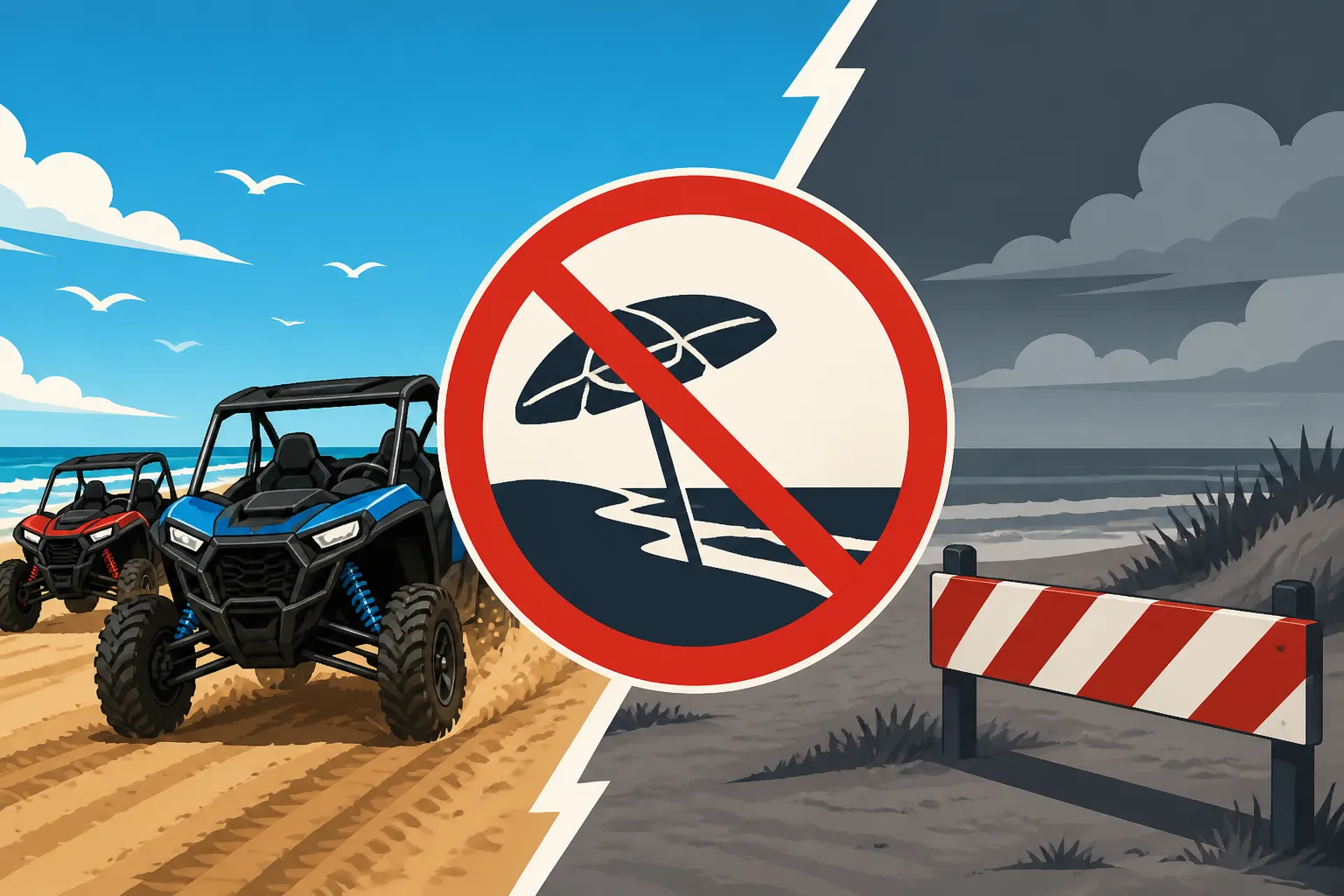
Beaches Closed by a City
There's nothing quite like the feeling of sand beneath your tires, the salty air whipping past, and the wide-open expanse of a Texas beach calling your name. Many of us dream of taking our ATVs or UTVs out to the coast for a day of exhilarating riding. But the reality is, that dream can quickly turn into a headache – or even a hefty fine – if you pull up to a beach only to find it's been closed to off-highway vehicles by the local city. This guide will walk you through why cities close beaches, how to find out if your destination is restricted, and what you can do to avoid an unpleasant surprise, ensuring your beach riding adventures are on the right side of the law.
The Shifting Sands of Beach Access: Why Cities Close Beaches to OHVs
It's a common frustration: you've planned a fantastic weekend, loaded up your quad or side-by-side, maybe even invested in some awesome new gear like a rugged tire setup from SuperATV designed for sandy terrains, only to arrive at your favorite coastal spot and see signs prohibiting all off-highway vehicles. It feels arbitrary, doesn't it? Like local officials are just trying to spoil a good time. But the truth is, cities often have legitimate, multi-faceted reasons for enacting these closures, and understanding them can help you anticipate where restrictions might pop up.
Environmental Concerns and Conservation Efforts
One of the primary drivers behind beach closures to ATVs and UTVs is environmental protection. Our Texas coastlines are incredibly delicate ecosystems, home to vital nesting grounds for sea turtles, various bird species, and unique dune vegetation. The sheer weight and tread of off-highway vehicles can compact sand, destroy fragile plant life, and disturb wildlife habitats. For instance, new turtle hatchlings emerging from nests can become disoriented by vehicle tracks or be run over, and nesting birds are easily frightened away from their eggs.
Cities and environmental groups often work together to identify critical areas that need safeguarding. These aren't just abstract ideas; these are tangible, living ecosystems that contribute to the overall health of our coast and even help protect inland areas from storm surges. When a city implements a closure, it's often a direct response to scientific data or observed damage, trying to preserve these precious natural resources for future generations. It’s a tough pill to swallow when you just want to ride, but the long-term impact of unrestricted access can be severe, leading to irreparable harm.
Public Safety and Congestion Management
Another significant reason cities impose bans on OHVs on their beaches revolves around public safety and managing congestion. Picture a beautiful Saturday afternoon: families are picnicking, children are building sandcastles, sunbathers are lounging, and swimmers are enjoying the surf. Now imagine ATVs and UTVs zipping through this crowded environment. The potential for accidents—pedestrians being hit, collisions between vehicles, or even just dust and noise creating a less-than-peaceful atmosphere—skyrockets.
Many city beaches are popular tourist destinations, drawing large crowds who expect a certain level of safety and serenity. Mixing fast-moving vehicles with slow-moving pedestrians can be a recipe for disaster. Additionally, during peak seasons, beach parking and access points can become overwhelmed. Restricting OHVs helps to reduce the total number of vehicles vying for space, making the beach a safer and more enjoyable experience for everyone. It's about balancing recreational opportunities with the well-being of all beachgoers, and sometimes that means making difficult choices about what activities are permitted.
Erosion Control and Infrastructure Protection
Beyond wildlife and people, cities also worry about the physical integrity of their coastlines and the infrastructure near them. Driving on beaches can contribute to sand erosion, particularly in areas already vulnerable to tidal action or storm events. Dunes, which act as natural barriers against storm surges, can be significantly weakened by repeated vehicle traffic, making the community more susceptible to flooding and damage. This isn't just an aesthetic problem; it can lead to massive costs for beach replenishment and repairs to roads, homes, and businesses situated along the coast.
Local governments are tasked with protecting these assets, and sometimes, that means limiting or prohibiting vehicle access to specific sections of beach that are particularly fragile or critical for shoreline protection. While your side-by-side might be built tough with a heavy-duty suspension, maybe even an aftermarket one from SuperATV, the cumulative impact of many machines can degrade the very environment you want to enjoy. These closures are often a preventative measure, an attempt to maintain the natural defenses of the coast and minimize future expenses and risks for the city and its residents.
Spotting the Signs: How to Know if a Texas Beach is Closed to OHVs
Nothing is worse than showing up excited for a day of riding, only to find you're on the wrong side of the law. The rules for [Texas Beach Riding Rules for ATVs] can be complex, especially when local city ordinances come into play. It's not always obvious which beaches are open and which are closed to off-highway vehicles. Thankfully, there are several ways to arm yourself with information before you even load your machine onto the trailer.
Official City Websites and Parks & Recreation Departments
Your first and most reliable source of information should always be the official website of the city you plan to visit. Most coastal cities in Texas maintain a robust online presence, and their Parks & Recreation or Public Works departments often have dedicated sections detailing beach access rules, permits required, and any specific prohibitions. Look for pages related to "beach access," "vehicle access," "OHV rules," or "city ordinances." These sites will typically list specific areas where vehicles are permitted or forbidden, hours of operation, and any permit requirements.
For example, a city might explicitly state, "Off-highway vehicles, including ATVs and UTVs, are prohibited on all city beaches." Or, conversely, they might outline designated zones where OHVs are allowed with a specific beach driving permit. Don't just skim the headlines; dig into the FAQs or detailed regulations. If you can't find clear information online, don't hesitate to call the city's Parks & Recreation department directly. A quick phone call can save you a world of trouble and help you understand specific nuances, like whether a seasonal ban is in effect or if a particular section of beach is closed for an event.
Posted Signage and Local Enforcement
Once you arrive at the beach, the most immediate indicators of restrictions will be the physical signs posted at access points, parking areas, and along the shoreline itself. These signs are legally binding and often explicitly state what types of vehicles are allowed or prohibited. Look for "No ATVs," "No OHVs," "Vehicles Prohibited," or similar language. These signs might also detail the specific city ordinance being enforced and even list potential fines.
It's crucial to pay attention to these signs, even if you’ve ridden that beach before. Rules can change, sometimes without much public fanfare beyond the new signage. Ignoring a clearly posted sign, even if you weren't aware of the rule beforehand, is not an excuse in the eyes of the law. You'll often see the names of [Texas Cities That Ban ATVs on the Beach] clearly visible on these signs. Also, keep an eye out for any local law enforcement or beach patrol vehicles. Their presence, or their absence in areas you thought might be restricted, can offer clues, though official signage is always the definitive source. If you see others riding, don't assume it's legal; they might be unaware, or you might be missing a critical detail.
Local Information Sources and Community Boards
Beyond official channels, local information sources can provide valuable context and real-time updates. This includes visitor centers, bait and tackle shops, local convenience stores, and even community Facebook groups or forums dedicated to off-roading in the area. These informal networks can be great for learning about recent changes, temporary closures due to events or environmental issues, or even where local residents go to ride legally. While not official, they can complement the information you find through government channels.
However, always cross-reference information from informal sources with official city websites or signage. A "local's tip" might be outdated or incorrect, leading you down the wrong path. For instance, a private landowner might allow riding on their property adjacent to a beach, but that doesn't extend to the publicly owned shoreline. Use these resources for gaining insight, but always prioritize official city communication and visible signage before you unload your machine. Understanding [Texas Rules for Riding a Beach] in general can also help you interpret local rules more effectively.
Navigating the Rules: What to Do When Your Favorite Beach is Off-Limits
Discovering that your planned riding spot is a [Beaches Closed by a City] can certainly be a letdown. You’ve invested time, money, and excitement into the trip, and now it feels like a dead end. But a closed beach doesn't mean your entire weekend is ruined, nor does it mean you should try to sneak past the rules. Ignoring restrictions can lead to serious consequences, including fines and legal trouble. Instead, let's explore responsible ways to handle beach closures and find alternative avenues for your off-road adventures.
Understanding the Consequences of Illegal Riding
First and foremost, it’s critical to understand what happens if you disregard a city's ban on OHVs. Texas takes beach access seriously, and riding where prohibited is often classified as a Class C misdemeanor. While it might sound minor, a Class C misdemeanor can carry fines ranging from $25 to $500. This is not a parking ticket; it's a violation that can impact your record and certainly put a dent in your wallet. Beyond the monetary fine, your vehicle could potentially be impounded, and you might face additional legal costs.
Getting caught [Getting Ticketed Riding on a Gulf Coast Beach] can also tarnish the reputation of the entire off-roading community, potentially leading to even stricter bans in the future. It's a situation where one person's illegal actions can negatively affect everyone else's opportunities. Remember, even if you have awesome protective gear or a robust winching system from SuperATV, none of that will help you avoid a citation if you're riding where you shouldn't be. The best defense is always to know the rules and respect them. This is part of the broader context of [Texas Fines for Illegal ATV Road Use], where off-road vehicles can face penalties for misuse.
Seeking Alternative Legal Riding Areas
So, if your dream beach is a no-go, what now? The good news is that Texas has many other fantastic off-road opportunities, even if they aren't directly on a city beach. Your best bet is to seek out designated OHV parks and trails. Texas boasts several excellent private and public parks that cater specifically to ATVs and UTVs, offering varied terrain from mud to rock crawling and, yes, even sandy tracks that mimic beach conditions without the ocean.
Before you head out, research these parks thoroughly. Many have their own specific rules regarding vehicle size, safety gear, and permits. A quick search for "Texas OHV parks" or "ATV trails in Texas" will yield plenty of options. You might discover a hidden gem that offers an even better riding experience than the restricted beach. While it might require a slight change of plans or a bit more driving, a day spent legally and safely tearing up trails is infinitely better than a stressful encounter with law enforcement on a closed beach.
Advocating for Responsible OHV Access
If you're passionate about beach riding and find continuous closures frustrating, consider becoming an advocate for responsible OHV access. Many off-road clubs and organizations work with local governments and land managers to establish and maintain legal riding areas, often promoting [Driving a Quad on an Open Beach] where appropriate. These groups can educate riders on best practices, environmental stewardship, and safety, demonstrating that OHV enthusiasts can be responsible users of public lands.
Joining such a group or contacting your local city council members can give you a voice. Attend public meetings, write letters, or participate in surveys when discussions about beach access and land use come up. By presenting well-researched arguments and committing to responsible riding, the OHV community can sometimes influence policy decisions and open up new opportunities. However, this is a long-term strategy that requires patience and a commitment to collaboration, not confrontation.
The Wider Picture: Beyond City Ordinances and Other Beach Restrictions
When we talk about beaches being closed to ATVs, it's easy to think of it as a simple "yes" or "no" situation based on a city's decision. But the reality on the Texas coast is far more nuanced. There are layers of jurisdiction, varying types of restrictions, and specific circumstances that can influence whether you can ride your machine on a particular stretch of sand. Understanding this broader context can help you make informed decisions and avoid unexpected issues, ensuring your next adventure, perhaps with new tires or a lift kit from SuperATV, is a legal one.
County vs. City Jurisdiction on Beaches
One crucial aspect to grasp is the difference between county-managed beaches and city-managed beaches. In Texas, a significant portion of the Gulf Coast is overseen by counties, particularly the larger, more open stretches of beach. These county beaches often have different rules regarding vehicle access, permits, and designated driving areas than those managed by specific cities. A common example is sections of beach where you might need a county-issued beach driving permit, rather than dealing with city ordinances. [Texas Beach Driving License Requirement] often applies to these county areas.
For example, a busy city might prohibit all vehicles on its immediate beachfront for safety and congestion reasons, while just a few miles down the coast, in an unincorporated county area, vehicle access might be permitted with a valid sticker. It’s important not to assume that rules from one jurisdiction apply to another. Always verify the specific governing body for the stretch of beach you intend to visit and check their regulations. This dual system can be confusing, but a quick check of a county's official website will usually clarify their specific beach rules.
Temporary Closures and Special Events
Beyond permanent bans, beaches can also experience temporary closures that might catch you off guard. These temporary restrictions can be due to a variety of reasons, from environmental factors to special events. For instance, after a major hurricane or severe storm, beaches might be closed to all vehicles for recovery efforts, cleanup, or due to significant erosion or damage. Wildlife nesting seasons, especially for sea turtles, can also trigger temporary closures or restrictions on certain sections of beach during critical periods.
Special events, such as beach festivals, sporting competitions, or even large public gatherings, are another common cause for temporary vehicle bans. These closures are usually well-advertised by the city or county in advance, often on their websites and through local media. Always check for current advisories or news releases for your intended destination. Even if a beach is generally open to OHVs, a temporary closure for a specific event could lead to a ticket if you're not aware of it. Being informed about these dynamic conditions is just as important as knowing the long-standing rules.
The Evolving Landscape of Texas OHV Law
Finally, it's worth remembering that laws and regulations concerning off-highway vehicles, including those related to beach access, are not static. They can and do change over time. Local ordinances can be updated, state laws can be amended, and new environmental concerns or public safety considerations can lead to new rules. What was legal five years ago might not be legal today, and what's permissible today could change tomorrow. This is why staying current with official sources is paramount.
Legislative bodies and local councils regularly review and revise regulations. For example, specific clauses within [Texas Rules for Riding a Beach] might be altered, or new classifications of vehicles could be introduced, impacting what can and cannot be driven on sand. Being an informed rider means making it a habit to check the latest information from city and county authorities before each trip. Don't rely solely on word-of-mouth or past experiences. The commitment to staying updated is a key part of responsible off-roading in Texas.
| Reason for Beach Closure (City) | Common Impact on Riders | How to Verify |
|---|---|---|
| Environmental Protection | Prohibition on specific zones or entire beach | City Parks Dept., Environmental notices |
| Public Safety / Congestion | Full ban on vehicles during peak times | City ordinances, local signage |
| Erosion Control | Restrictions on fragile areas | City public works, advisory boards |
| Special Events | Temporary ban for festivals/races | City event calendars, news releases |
| Storm Recovery | Temporary full access closure | City emergency alerts, news |
Disclaimer
This article is for general informational purposes only and does not constitute professional advice. Laws, prices and regulations vary by location and change over time. Consult a qualified professional for guidance on your specific situation.