Four Wheels, Belts and a Bench Seat
It's a common frustration for off-highway vehicle (OHV) enthusiasts in Texas: you've got a perfectly capable side-by-side or ATV, but taking it on public roads seems like a legal minefield. Many riders hear snippets about "four wheels, belts, and a bench seat" and wonder if their machine can qualify for street use. This guide will thoroughly break down what these features mean in the context of Texas law, exploring the specific exceptions that might allow certain OHVs on public roadways, and clarifying why these machines are almost never considered truly "street legal."
Understanding Texas's General Stance on OHVs on Roads
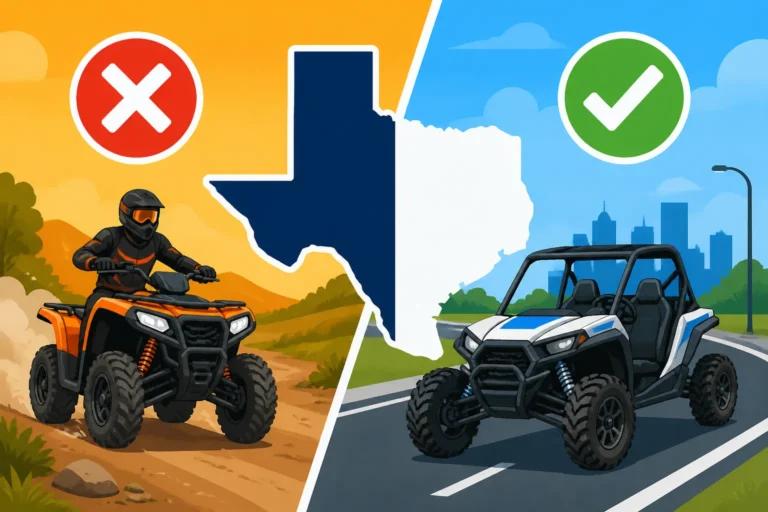
Let's get straight to the point that often causes the most confusion and disappointment: in Texas, most ATVs and UTVs are not generally street legal. This means you can't just slap a license plate on your quad or side-by-side and hit the highway for a leisurely drive. The state has very specific definitions and rules for what constitutes an "off-highway vehicle," and those rules largely keep these machines off paved public thoroughfares. It's a tough pill to swallow for many, especially those who see their neighbors occasionally cruising down a subdivision street or heading to a local store on their UTV. The key is understanding that those instances are almost always operating under a specific, limited exception, not a blanket declaration of street legality.
The Core Challenge: Why Most ATVs Don't Qualify
The primary reason why the vast majority of ATVs and UTVs don't meet street-legal criteria boils down to their fundamental design and purpose. These machines are engineered for rugged, off-road environments – think trails, pastures, and unpaved terrain. They often lack the standard safety features, emissions controls, and structural integrity that road-going vehicles are mandated to have. Cars, trucks, and even motorcycles go through rigorous testing for crashworthiness, have specific lighting requirements, turn signals, DOT-approved tires, and more, all designed for public road safety. Most off-the-assembly-line ATVs simply aren't built to these standards.
For instance, a typical sport ATV has a saddle seat, foot pegs, and handlebars, much like a dirt bike. It's designed for active rider input and balance, not passive seating with multiple restraints. Even utility ATVs, while larger, usually maintain this rider posture. There's no enclosed cabin, no crumple zones, and often only rudimentary lighting. While a rider might try to modify their machine with aftermarket turn signals or a horn, these additions don't magically transform the vehicle's underlying classification or design standards. The state's view is that these are recreational or work-oriented machines for specific environments, and those environments generally do not include public asphalt roads. If you're looking for more details on this, check out [Why Texas Will Not Register an ATV for the Road].
The "Four Wheels, Belts, and a Bench Seat" Nuance
When Texans talk about "four wheels, belts, and a bench seat" in the context of OHVs on roads, they're usually referring to specific characteristics that might allow certain types of off-highway vehicles, predominantly UTVs or side-by-sides, to operate under limited exceptions. It's critical to understand that this isn't a state-wide rule that makes any machine with these features street legal. Instead, it highlights common attributes of vehicles that often fit into categories like "golf carts" or "neighborhood electric vehicles" (NEVs), or that meet the criteria for specific local ordinances in master-planned communities or certain small towns. It's about matching particular physical characteristics to very narrow legal loopholes.
This phrase became particularly relevant as UTVs grew in popularity, blurring the lines between traditional ATVs, golf carts, and small utility vehicles. Owners naturally wanted to understand if their more car-like side-by-sides could access roads that quads could not. The presence of a steering wheel, side-by-side seating, and seat belts makes a UTV feel much closer to a conventional vehicle, leading people to assume it should be treated similarly by law. However, the law distinguishes based on original manufacturing intent and specific classifications, which most OHVs, even UTVs, don't fully meet for general road use.
Decoding "Four Wheels"
The "four wheels" aspect might seem incredibly basic, but it's important for clarifying the vehicle type. Most modern ATVs (quads) and UTVs (side-by-sides) naturally meet this criterion. This simply distinguishes them from other off-road vehicles like dirt bikes (two wheels) or even older three-wheeled ATVs, which are largely obsolete and illegal to sell new in the U.S. anyway. Texas law, under its definition of an off-highway vehicle, generally includes machines with four or more wheels that are manufactured primarily for off-road use.
This four-wheel characteristic also helps differentiate OHVs from other specialized vehicle categories like "miniature vehicles" or "neighborhood electric vehicles," which have their own distinct titling and registration rules. For example, a golf cart typically has four wheels, but it's classified differently than an OHV because its original manufacturing intent is for golf courses, not rugged off-road terrain. For a full breakdown of what Texas considers an OHV, you might find [What Texas Counts as an Off-Highway Vehicle] helpful. The "four wheels" part of the saying, while seemingly obvious, helps narrow the discussion to the common forms of ATVs and UTVs that people are interested in taking on roads.
The Significance of "Belts and a Bench Seat"
This is where the discussion truly shifts from traditional ATVs to UTVs, or side-by-sides, and also ties into the features of golf carts. A "bench seat" implies a continuous seating surface designed for multiple occupants sitting side-by-side, much like the front seat of an older car or a modern pickup truck. Traditional ATVs, even two-up models, almost universally feature saddle-style seating, where the rider straddles the machine. This is a fundamental design difference.
The presence of "belts" almost always refers to seat belts, and crucially, multiple seat belts corresponding to the seating positions on that bench seat. This immediately aligns with the safety expectations of a vehicle carrying passengers on a road, even for limited distances or speeds. Most UTVs are factory-equipped with bucket seats or bench seats and corresponding three-point or four-point seat belts for each occupant. This car-like arrangement provides a level of occupant restraint that a traditional ATV, with its open design and active riding style, simply cannot.
When considering road exceptions, especially in master-planned communities or for golf course access, the local ordinances or state guidelines often look for vehicles that offer enhanced occupant safety features – and seat belts on a bench seat are a clear indicator of this. While aftermarket companies like SuperATV offer a vast array of accessories, including replacement seats and harness systems, the original design and factory-installed safety features often carry more weight in determining if a vehicle truly fits the intent of these exceptions. Adding a bench seat or seat belts to a quad that wasn't designed for them is highly unlikely to meet the legal criteria, as the entire vehicle would need to be re-engineered and re-certified, which simply isn't feasible for individual owners. For more on passenger safety, consider reading [Texas Seat Belt Rules in a Side-by-Side].
Specific Texas Road Exceptions Where "Four Wheels, Belts, and a Bench Seat" Come Into Play
Texas law does provide a few very specific, limited exceptions where certain OHVs might be allowed on public roads. These exceptions are crucial because they are not a pathway to full street legality, but rather narrow allowances for particular situations. The "four wheels, belts, and a bench seat" description often applies to UTVs that fit these exceptions, allowing them to participate in limited road travel where traditional ATVs usually cannot. It’s about fitting a specific vehicle type into a highly constrained operational window, not about a general right to drive on public streets.
Master-Planned Communities
One of the most common places you'll see a UTV, particularly one with a bench seat and belts, on a public road is within a master-planned community. Texas law allows a county or municipality to authorize the operation of OHVs on public streets within a master-planned community if certain conditions are met. These conditions usually include the community having an approved plat (a map dividing land into lots) filed with the county, and the local government passing an ordinance specifically allowing it.
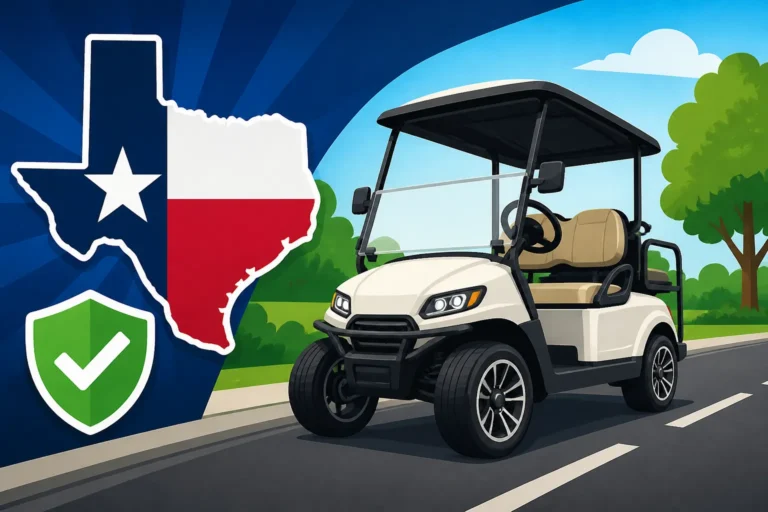
Imagine living in a large, sprawling community like The Woodlands or a similar development outside of Houston or Dallas. Residents might use their side-by-sides to visit neighbors, go to the community pool, or access local amenities like a small grocery store or coffee shop, all without leaving the community's designated roads. These UTVs, with their bench seats and seat belts, closely resemble the type of vehicle (like an NEV or golf cart) that these ordinances are designed to accommodate, offering a safer and more stable option for local travel than a traditional ATV. The key here is that the operation is strictly confined to the roads within that specific community and requires an active local ordinance. For more on this, check out [Texas Rules for Riding in a Master Planned Community].
Golf Course Access
Another notable exception often involving UTVs or golf cart-like vehicles with "four wheels, belts, and a bench seat" is for accessing golf courses. Texas law allows a person to operate an OHV on a public highway for the purpose of traveling to or from a golf course. However, this isn't an open invitation to joyride. The rules are quite strict: the operation must occur during daylight hours, the OHV cannot be operated more than two miles from the location where it is parked, and it must be driven at a speed of not more than 30 miles per hour.
So, if you live near a golf course and want to take your UTV directly from your home to the links, this exception might apply. Your side-by-side, with its bench seat and safety belts, would be perfectly suited for this short, low-speed transit. This provision is designed for convenience, allowing golfers to use their preferred mode of transport for a very specific, limited purpose. It's not for running general errands or cruising around town. It’s also crucial to remember that this is for access to a golf course, not for general recreational riding on public roads near one. You can read more about this in [Texas Rules for Riding a UTV to a Golf Course].
Low-Speed Roadways (35 mph or Less)
Some counties and municipalities in Texas have the authority to allow OHVs on public roads with a posted speed limit of 35 miles per hour or less. This is a discretionary power, meaning it's not a state-wide mandate, and specific local governments must pass an ordinance to enact it. The underlying logic is that slower speed limits inherently present less risk for vehicles that aren't fully road-certified.
If a local government does adopt such an ordinance, a UTV with its typical "four wheels, belts, and a bench seat" would be a prime candidate for permitted use. These machines offer stability and occupant protection more akin to a car, making them a more sensible choice for slower road travel compared to an ATV. However, even if a road is opened, the OHV typically still needs to meet certain equipment requirements, such as headlights, taillights, brake lights, mirrors, and a horn, to ensure basic road safety. This is where owners might look to aftermarket solutions. For example, if a local ordinance permits travel on 35 mph roads, an owner might look to companies like SuperATV for DOT-approved windshields or turn signal kits to meet additional equipment requirements, though these additions do not magically confer general street legality. Always check with your local county or city officials to see if such an ordinance exists where you plan to ride, as these rules are highly localized and can change. For a deeper dive, see [Texas Rules for Riding on a 35 mph Road].
Equipment Beyond Seating and Belts
Even if your OHV happens to have "four wheels, belts, and a bench seat" and you are operating it under one of the specific road exceptions, that's rarely the end of the story. Texas law and basic safety practices still demand that these machines be equipped with additional features to ensure a minimal level of safety when sharing the road with other vehicles. These are not optional upgrades for permitted road use; they are often mandatory by law or common sense.
Essential Safety Gear
For any OHV allowed on a public road, even under an exception, a standard set of safety equipment is usually required. This includes:
- Headlights and Taillights: Your machine must have functional headlights that illuminate the road ahead and taillights that make you visible from behind, especially crucial during twilight or if you are crossing a road during permitted daylight hours.
- Brake Lights: Signaling when you're slowing down or stopping is non-negotiable for road safety.
- Reflectors: Additional reflectors can enhance your visibility, particularly from the sides.
- Mirrors: A rearview mirror is typically required, and often side mirrors as well, allowing the driver to see traffic approaching from behind without having to turn their head excessively. This is a critical component for safe road sharing.
- Horn: A working horn is necessary to alert other drivers or pedestrians to your presence in a potentially dangerous situation.
- Spark Arrester: While often associated with off-road fire prevention, a functional spark arrester in the exhaust system is generally required for all OHVs, regardless of where they are operated, to prevent the ignition of flammable materials.
These items ensure that your OHV can communicate its presence and intentions to other road users, much like a conventional vehicle would. Even for short trips within a master-planned community or to a golf course, neglecting these basic safety enhancements can lead to tickets or dangerous situations. For more context on required equipment, check out [Texas Equipment Rules for an ATV on a Road].
Helmet and Eye Protection
Texas law generally requires a person operating or riding an OHV on public land to wear a helmet, unless the vehicle is equipped with a roll cage and seat belts. This is a significant point for UTVs that have "four wheels, belts, and a bench seat" (or bucket seats with belts). If your side-by-side has a factory-installed roll cage and you and your passengers are properly secured with seat belts, then the helmet requirement is typically waived. This recognizes the inherent, albeit limited, crash protection offered by a UTV's structure.
However, even with a roll cage and seat belts, eye protection is still strongly recommended, and often legally required, to shield your eyes from debris, dust, or insects. Goggles, a face shield on a helmet, or even safety glasses can fulfill this requirement. While a roll cage and seat belts provide a layer of protection, they don't enclose the cabin in the same way a car does, leaving occupants exposed to airborne hazards. For riders whose UTVs already feature roll cages and integrated seat belts, they might explore other SuperATV safety enhancements like grab handles or full doors, but always remember to confirm local and state laws regarding helmets and eye protection, as these can vary slightly based on the specific type of road access. Dive deeper into this topic with [The Roll Cage Exemption From a Texas Helmet].
The Difference Between "Street Legal" and "Road Legal Under Exception"
This is perhaps the most important distinction for any Texas OHV owner. The terms "street legal" and "road legal under exception" are often confused, but they represent fundamentally different legal statuses with vastly different implications for how and where you can operate your vehicle. Misunderstanding this difference can lead to fines, confiscation of your machine, or even serious legal liabilities in the event of an accident.
Clarifying the Terms
Street Legal: A truly "street legal" vehicle in Texas is one that is manufactured, designed, and equipped to comply with all federal and state motor vehicle safety standards, emissions standards, and registration requirements for operation on public highways. This includes passing state inspections, having a permanent vehicle identification number (VIN) registered with the Department of Motor Vehicles, carrying liability insurance, and displaying a license plate. Cars, trucks, motorcycles, and legitimate Low-Speed Vehicles (LSVs) or Neighborhood Electric Vehicles (NEVs) fit this description. They are designed from the ground up for road use and are regulated as such.
Road Legal Under Exception: This term refers to an OHV that, despite not being generally street legal, is permitted to operate on public roads under very specific, limited circumstances defined by law or local ordinance. These are typically short-distance, low-speed operations for particular purposes (e.g., crossing a highway, agricultural use, access within a master-planned community, or golf course access). Such machines do not undergo the same stringent inspections or carry the same type of registration as street-legal vehicles. They are still fundamentally OHVs, with the state recognizing that certain uses, if done cautiously and under strict conditions, can be accommodated. You won't get a standard license plate for these; instead, an OHV plate is available, but that only signifies it's an OHV, not that it's street legal. For more on why full registration is out of reach, see [Why Texas Will Not Register an OHV for the Road].
Why the Distinction Matters for Riders
The distinction matters because it dictates your responsibilities, your liabilities, and the consequences of non-compliance. If you operate an OHV that is only "road legal under exception" as if it were "street legal," you are breaking the law.
- Penalties: Operating an unregistered or non-compliant vehicle on public roads can result in significant fines, impoundment of your vehicle, and potentially criminal charges.
- Insurance: Most standard auto insurance policies do not cover OHVs for road use. If you have an accident while operating an OHV outside its permitted "exception" parameters, your insurance might deny coverage, leaving you personally liable for damages and injuries.
- Legal Standing: In an accident, operating illegally weakens your legal standing, regardless of who was at fault.
- Scope of Use: A "road legal under exception" OHV cannot be used for general transportation, commuting, or long-distance travel on public roads. Its use is extremely restricted to the specific purpose and area defined by the exception.
Therefore, while "four wheels, belts, and a bench seat" might make your UTV suitable for certain exceptions to the general ban on OHVs on roads, it's crucial to understand that these are specific, narrow allowances, not a green light for general street use. Always verify local ordinances and state statutes for the precise rules applicable to your situation before taking your OHV on any public road.
Here's a quick reference table to help understand the typical attributes of different vehicle types in Texas:
| Vehicle Type | Typical Wheel Count | Belts & Bench Seat? | Generally Street Legal? | OHV Plate Available? | Common Road Exceptions |
|---|---|---|---|---|---|
| Traditional ATV | 4 | No | No | Yes | Ag/Timber, Road Crossing |
| UTV / Side-by-Side | 4+ | Yes | No | Yes | Ag/Timber, Road Crossing, Master-Planned Community, Golf Course, 35 mph Local Roads |
| Golf Cart | 4 | Often (bench, lap belts) | No | Yes (Golf Cart Plate) | Golf Course, Master-Planned Community, 35 mph Local Roads |
| Low-Speed Vehicle (LSV) | 4 | Yes | Yes | Yes (Standard Plate) | All roads 35 mph or less |
| Regular Car/Truck | 4+ | Yes | Yes | Yes (Standard Plate) | All public roads |
In Texas, the phrase "four wheels, belts, and a bench seat" isn't a magic formula for making your off-highway vehicle street legal. Instead, it typically describes the characteristics of UTVs or side-by-sides that might qualify them for very specific, limited road use exceptions in the state. These exceptions are never about general street legality, but rather about allowing these more car-like OHVs to serve particular functions, like navigating within master-planned communities, accessing golf courses, or traveling short distances on slow-speed local roads where ordinances permit.
Always remember that even when operating under these narrow exceptions, additional safety equipment like headlights, taillights, mirrors, and a horn are usually required. And most importantly, differentiate between being "street legal" (fully compliant for general road use) and "road legal under exception" (permitted for highly specific, limited purposes). To avoid legal trouble and ensure your safety, thoroughly research and understand the precise regulations in your specific area and for your particular machine before venturing onto any public road.
Disclaimer
This article is for general informational purposes only and does not constitute professional advice. Laws, prices and regulations vary by location and change over time. Consult a qualified professional for guidance on your specific situation.