Farm Errands You Can Run Without a Plate
It's a common Texas dilemma for anyone working a ranch, farm, or timberland: you've got your trusty ATV or UTV, the workhorse that helps you get everything done, but sometimes you need to run it down a public road for just a short stretch. Maybe it's to get to the next pasture, haul a sprayer to another field, or simply move from one section of your property to another. The thought of getting pulled over for driving an off-highway vehicle (OHV) on a public road without a license plate can be a real headache. But here's the good news: Texas law carves out specific exemptions that allow you to use your OHV for legitimate agricultural operations on certain public roads without needing a traditional vehicle license plate. This guide will walk you through exactly what those exemptions entail, what you need to do to comply, and how to stay on the right side of the law while keeping your farm operations running smoothly.
The Foundation: Why Texas Allows Plate-Free Farm Errands
Texas, like many states, generally prohibits the operation of off-highway vehicles on public roads. Our ATVs, UTVs, and other similar machines are designed and manufactured for off-road use, and they don't meet the safety and equipment standards for regular street registration. This is why you'll often see the "Off-Highway Use Only" remark on a Texas Title for these machines. It can feel incredibly restrictive when your property borders a county road, or your fields are separated by a short stretch of blacktop.
However, the lawmakers recognized that for our agricultural community, these machines aren't just for recreation; they are essential tools for livelihood. Imagine having to load your side-by-side onto a trailer just to drive it a quarter-mile down a quiet county road to check on cattle in another pasture. That's not just inconvenient; it's a massive time sink and an unnecessary burden on folks who are already working hard. That's precisely why Chapter 663 of the Texas Transportation Code, which specifically deals with off-highway vehicles, includes provisions for agricultural and timber operations. These exemptions aren't about making your ATV street legal; they are about providing practical, limited exceptions for legitimate work.
The Special Case of Agricultural and Timber Operations
The key to understanding why you can sometimes operate your OHV on a public road without a plate in Texas boils down to its intended use: agriculture or timber. This isn't a blanket permission slip to joyride or commute; it's a narrowly defined exception for specific work-related tasks. The state recognizes that these vehicles are integral to the daily operations of farms, ranches, and timberlands, and sometimes those operations necessitate brief traverses on public roadways. Without this exemption, the efficiency of Texas's agricultural sector would be significantly hampered.
It's important to internalize that this exemption doesn't magically transform your off-highway vehicle into a street-legal one. It simply allows for specific, temporary, and necessary use on certain roads under strict conditions. This means you still won't be able to register it like a truck or a car, and you definitely won't be getting a standard license plate for it. The rules are designed to balance the needs of agricultural workers with public safety on shared roadways. This also helps explain [Why Texas Titles But Never Registers an OHV] for general use.
Distinguishing Permitted Use from General Road Travel
The biggest pitfall many OHV owners face is misunderstanding the difference between allowed agricultural use and general road travel. If you're heading to the local store for groceries, commuting to a friend's house, or simply taking a scenic drive, your OHV is not covered by the agricultural exemption, and it needs to stay off public roads. The exemption is laser-focused on activities that directly support farming, ranching, or timber production.
Think of it this way: if your activity directly contributes to the cultivation of crops, the raising of livestock, or the harvesting of timber, and moving the machine on the road is the most practical way to accomplish that task within reasonable limits, then you're likely within the scope of the exemption. If it's for personal recreation or non-agricultural purposes, even if you live on a ranch, the exemption does not apply. The intent behind your journey is paramount.
Defining "Agricultural Operation": What Qualifies Your ATV or UTV
So, what exactly constitutes an "agricultural operation" in the eyes of Texas law when it comes to OHV road use? This is where many folks get a little confused, and it’s critical to understand the boundaries to avoid trouble. Generally, it refers to activities directly related to farming, ranching, or forestry. This isn't about vague associations; it's about the nitty-gritty work that keeps the agricultural economy moving.
When you're dealing with the tax office for [Ag and Timber Exemptions on Form 130-U] for a purchase, the definitions are often quite clear. The same logic generally applies here. An OHV being used as an agricultural vehicle is one primarily used in the production of food, fiber, or other agricultural products.
Common Tasks That Fall Under the Exemption
Let's get specific. What kind of errands or tasks can you perform with your ATV or UTV on a public road without a plate under this exemption?
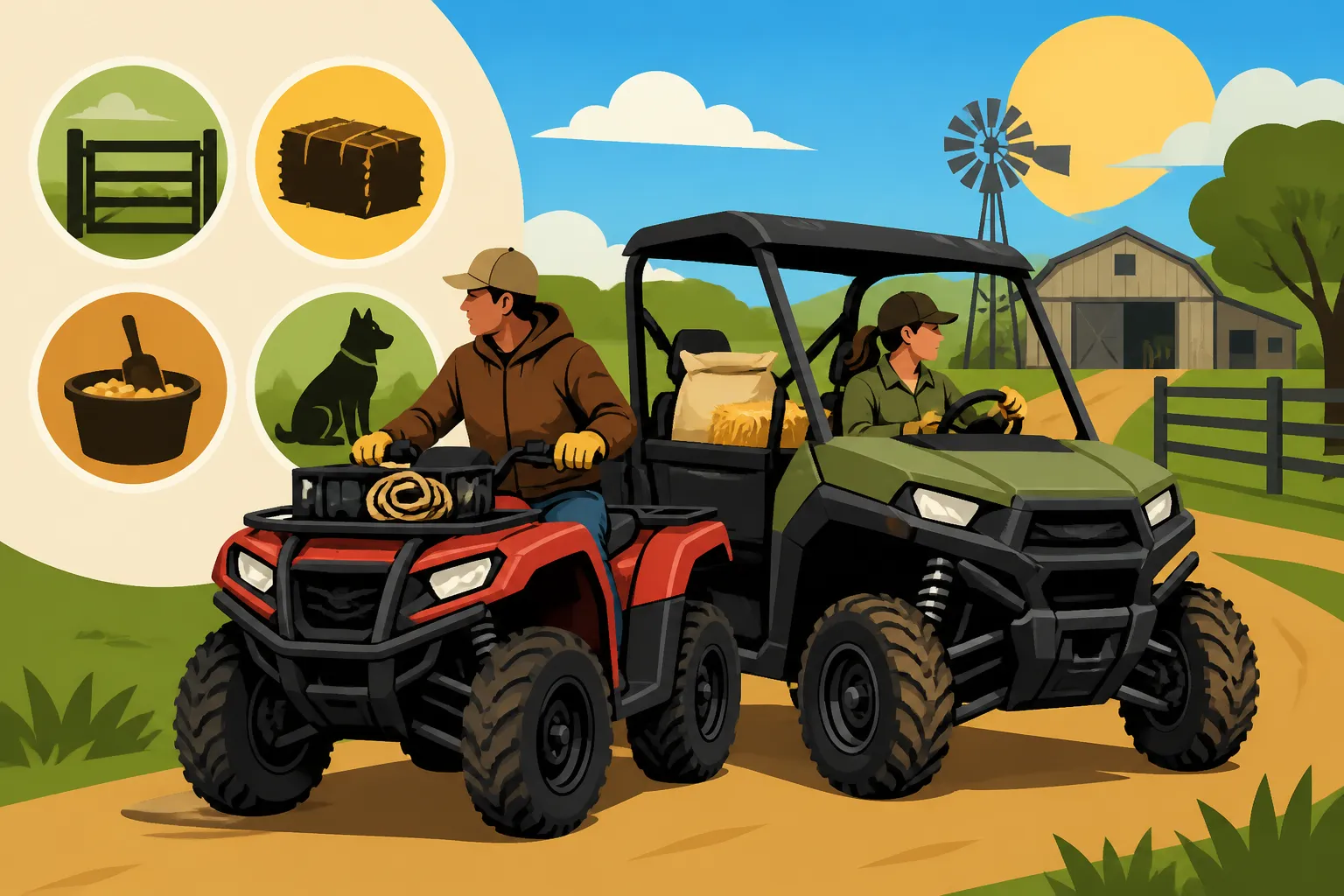
- Moving Between Fields or Pastures: This is probably the most common scenario. If your farm or ranch has parcels of land separated by a county road, you can drive your OHV directly between those parcels. This might involve checking fences, rotating livestock, or scouting crops.
- Hauling Supplies: Need to move a sprayer full of herbicide from one field to another, or take a bale of hay to a remote feedlot across a road? As long as the supplies are directly related to your agricultural operation, this is generally permitted. Many folks use UTVs equipped with beds or trailers for this very purpose. Brands like SuperATV offer heavy-duty cargo boxes and utility beds that are perfect for farm tasks.
- Inspecting Property: Driving along a property line that runs parallel to a public road, or crossing a road to inspect an irrigation system in an adjacent field, falls under this umbrella.
- Timber Operations: For timberland owners, moving equipment, personnel, or harvested timber (on an appropriate trailer, if applicable) on public roads for short distances between logging sites or to processing areas is also covered. This ensures the efficient flow of forestry work.
What Doesn't Qualify: Avoiding Misuse
Just as important as knowing what qualifies is understanding what doesn't. Texas law is pretty clear on this, and enforcement officers are typically well-versed in the distinctions.
- Personal Commuting: Driving your ATV to a coffee shop in town, even if you just came from your farm, is not an agricultural operation.
- Recreational Riding: Taking your OHV out for a spin purely for fun, even if it's on a county road that feels like a trail, is not covered. This is precisely why [Why Texas Will Not Register an ATV for the Road] in general.
- Hunting Lease Access (Typically): While hunting can occur on agricultural land, simply driving your OHV down a public road to get to your deer stand on a hunting lease typically does not fall under "agricultural operation" for the purposes of this specific exemption. The primary purpose must be the production of agricultural products, not recreational hunting. If you're actually managing wildlife as an agricultural product (e.g., a deer breeding operation), that's a different story, but casual hunting lease access usually isn't enough.
- Non-Agricultural Business: Using your OHV to deliver packages for a non-farm-related side business, even if operated from your property, would not qualify. The activity must be intrinsically linked to farming, ranching, or timber.
If you're unsure whether a specific use case qualifies, it's always best to err on the side of caution or consult with your local county law enforcement for clarification. Misinterpreting the law can lead to fines and other legal headaches.
Navigating the Road: Specific Rules for Plate-Exempt Farm Machines
Alright, you've confirmed your activity falls under the agricultural exemption. Great! But simply being exempt from a plate doesn't mean you can just hop on and go. There are specific rules of the road and equipment requirements you absolutely must follow to ensure safety and legality. These rules are in place because even though your machine isn't street legal, it's still sharing public spaces with other vehicles.
The regulations aim to make your OHV as visible and predictable as possible to other drivers. Ignoring these could not only result in a ticket but also pose a significant safety risk.
Equipment Requirements for Agricultural Use on Roads
Even without a license plate, your OHV needs certain equipment to be legally operated on public roads for agricultural purposes:
- Headlights and Taillights: Yes, even in broad daylight, your OHV needs to have its headlights and taillights on when operating on a public road. This dramatically increases your visibility to oncoming traffic and vehicles approaching from behind. Many aftermarket options, including those from SuperATV, can enhance your lighting setup if your factory lights aren't robust enough or if you want extra safety. [Headlights and Taillights in Daylight] are not just a good idea, they're often required in these scenarios.
- Brakes: Your OHV must have fully functional brakes. This might seem obvious, but regular maintenance is key, especially if your machine sees heavy farm use.
- Muffler: A muffler is required to prevent excessive noise. This is standard on most factory machines but something to be aware of if you've modified your exhaust.
- Spark Arrester: If your OHV is used on public land (like some national forests that might border agricultural areas), a U.S. Forest Service-qualified spark arrester is often required. While not always directly tied to agricultural road use, it's good practice for general land management.
- Rear-View Mirror: While not explicitly called out for every single agricultural exemption, a rear-view mirror is a wise addition for safety on any public road. SuperATV offers various mirror kits that can be easily installed on most UTVs and ATVs, providing crucial awareness of traffic behind you.
- Orange Flag: This is a big one. For certain public land uses and often recommended for road use, a visible orange flag mounted at least 6 feet above the ground on your OHV is crucial. This makes your machine much more noticeable, especially over rises or through tall crops. [The 6-Foot Orange Flag Texas Requires] for some contexts, and it's excellent practice for this exemption.
Always make sure all your equipment is in good working order before you even think about hitting a public road. A quick pre-ride check can save you a lot of trouble.
Distance, Speed, and Road Type Limitations
The agricultural exemption isn't a free pass to travel unlimited distances or speeds. There are specific restrictions on where and how far you can travel:
- Distance Limit: For general agricultural operations, the law allows you to operate your OHV on public roads for a distance of up to 25 miles from the point of origin to the destination. This is designed to cover movements between fields, to a local feed store if necessary, or other short, direct routes that are part of your operation. It's not 25 miles total for the day, but 25 miles for a single trip from origin to destination. [25 Miles Origin to Destination] is a key phrase to remember.
- Speed Limit: You are generally expected to operate your OHV at a reasonable and prudent speed, often correlating to the posted speed limit of the road you're on, but also considering the capabilities of your OHV. You should never impede the normal flow of traffic unnecessarily. If your OHV can't safely maintain the speed of other vehicles, you must yield and allow them to pass.
- Road Types: The exemption primarily applies to county roads, farm-to-market roads, and other secondary public roads. It's generally not intended for high-speed highways or interstates. Always use common sense; if a road feels unsafe for your OHV, it probably is.
Crossing Highways and Intersections
Sometimes, your farm task might require you to cross a major highway. This is allowed under strict conditions:
- Crossing at a Right Angle: When crossing a public road or highway, you must do so at approximately a right angle (90 degrees) to the roadway. This minimizes the time you spend exposed in the traffic lanes.
- Full Stop and Yield: Before entering any public road, and especially when crossing a highway, you must come to a complete stop and yield the right-of-way to all other vehicles on the road. Do not proceed until it is absolutely safe to do so and you have clear sightlines in both directions. [Crossing a Highway on an ATV in Texas] is serious business.
- Visibility: Ensure your headlights and taillights are on, and your orange flag is clearly visible. This is where high-quality aftermarket lights from SuperATV can truly shine, giving you maximum visibility during these critical maneuvers.
- No Parallel Travel: You cannot drive parallel to a highway or a high-speed road for any distance simply to get to an intersection to cross. The crossing should be direct and as immediate as possible.
Beyond the Basics: Safety, Maintenance, and Avoiding Pitfalls
While the agricultural exemption provides much-needed flexibility for Texas farmers and ranchers, it's not an excuse to cut corners on safety or maintenance. In fact, when operating your OHV on public roads, even briefly, you actually bear a greater responsibility to ensure your machine is safe and you're operating it responsibly.
Ignoring these aspects can lead to accidents, fines, and even the revocation of your ability to use these exemptions. Safety should always be your top priority, not just for yourself but for everyone else on the road.
Rider and Passenger Safety Considerations
Just because you're on a farm errand doesn't mean safety goes out the window. If anything, the mix of off-road capabilities and public road interaction demands extra vigilance.
- Helmet Use: While Texas has a general helmet law for OHV riders, there's often an exception for those engaged in agricultural operations. However, this doesn't mean helmets are optional for safety. Especially when on a public road, even for a short distance, a helmet can be a lifesaver. Consider it essential gear, regardless of the exemption. [Texas Helmet Law for ATV Riders] is something all riders should be familiar with.
- Eye Protection: Always wear appropriate eye protection. Dust, debris, insects, or even gravel kicked up by other vehicles can severely impair your vision, especially at speed.
- Seat Belts (for UTVs): If your UTV has seat belts, use them every single time you operate the machine, whether on or off-road. Modern UTVs, particularly those from brands like SuperATV, often come with robust safety features, including harnesses and roll cages, which are designed to protect you in an incident.
- Passengers: Ensure any passengers are seated in manufacturer-designed seating positions and are also wearing appropriate safety gear. Do not overload your machine or carry passengers in unsafe ways.
- Awareness: Be hyper-aware of your surroundings. Other drivers may not expect to see an OHV on the road and might not be paying full attention. Drive defensively.
Essential Maintenance for Road Use
Regular maintenance is always crucial for any vehicle, but for an OHV doing double duty on and off-road, it's paramount. A breakdown on a public road is not only inconvenient but potentially dangerous.
- Tires: Inspect your tires regularly for proper inflation, tread wear, and any damage. Road surfaces can wear down off-road tires quickly, and an underinflated tire can be a serious hazard.
- Brakes: Check your brake pads and fluid levels. Ensure your brakes are responsive and effective.
- Lights: Make sure all your headlights, taillights, and any additional warning lights are clean and fully functional before every road excursion.
- Fluids: Keep an eye on oil, coolant, and other fluid levels. Overheating can occur, especially if you're working the machine hard in hot Texas weather.
- Suspension and Steering: Ensure your steering is tight and responsive, and there are no excessive play or worn components in your suspension. Wobbly steering can be extremely dangerous at even moderate speeds on pavement.
- Spark Arrester: If you operate near dry areas, ensure your spark arrester is clean and functional to prevent wildfires.
Consequences of Non-Compliance and Misuse
Operating an OHV on a public road in Texas without a plate, and without meeting the specific agricultural exemption requirements, can lead to serious consequences. These are typically Class C misdemeanors, but they can carry fines and potentially other penalties.
- Fines: Expect a citation and a fine, which can add up quickly.
- Impoundment: In some cases, your OHV could be impounded, leading to additional fees and headaches to retrieve it.
- Accident Liability: If you're involved in an accident while illegally operating your OHV on a public road, your liability could be significantly higher, and your personal insurance may not cover damages or injuries, as [Why Texas Exempts OHVs From Insurance] means many riders go without.
- Loss of Future Privileges: Repeated offenses could potentially impact your ability to use these exemptions in the future, making your farm work much harder.
It's far better to invest a little time in understanding and adhering to the rules than to face the penalties and risks associated with non-compliance. These exemptions are a privilege designed to help agricultural workers, and it's up to us to ensure they are used responsibly and safely.
Disclaimer
This article is for general informational purposes only and does not constitute professional advice. Laws, prices and regulations vary by location and change over time. Consult a qualified professional for guidance on your specific situation.