Texas Rules for Riding After Dark
It’s a common fantasy for many of us who love riding ATVs and UTVs in Texas: heading out under a vast, star-filled sky, the hum of the engine a quiet companion as you navigate familiar trails in a completely new light. The reality, however, often crashes down when you start to wonder about the legality and safety of riding after dark. This guide will shine a light on the specific Texas rules regarding after-dark ATV and UTV operation, helping you understand where and how you can (and cannot) enjoy your machine once the sun dips below the horizon.
The Harsh Reality: Texas's General Ban on After-Dark OHV Riding
Let's cut to the chase: if you're thinking about cruising down a public road or highway on your ATV or UTV after dark, Texas law is pretty clear that it's generally a no-go. This isn't just about being a spoilsport; it's rooted deeply in safety and how off-highway vehicles are classified in our great state. Many riders feel frustrated by these limitations, especially when their property might border a short stretch of road they'd love to cross, but the rules are designed for broader public safety.
Why Night Riding is Generally Not Allowed on Public Roads
The core reason ATVs and UTVs are restricted from public roads, especially after dark, boils down to their design and the legal definition of a "motor vehicle" intended for highway use. Our off-highway vehicles, by their very nature, are not built to meet the same stringent safety and equipment standards as cars and trucks. They typically lack things like proper turn signals, side mirrors, specific headlight and taillight configurations, and even windshields that are standard for street-legal vehicles. Imagine trying to see a quad with minimal lighting emerging from a dark country road — it's a recipe for disaster.
Because of this, Texas explicitly states that ATVs and UTVs are designed for off-highway use only. They don't undergo the same registration process as other vehicles that you would typically see on the road. The state views them as recreational or utility machines, not transportation for public thoroughfares. This means that even if you've added some fantastic lighting to your rig, it still doesn't magically transform it into a street-legal vehicle, particularly when visibility is compromised by darkness. Many folks are disappointed to learn [Why Texas Will Not Register an ATV for the Road], and this extends directly to night riding.
Understanding the "Daylight Only" Clauses in Exceptions
Texas does offer a handful of very specific, highly restricted exceptions where you might be able to operate an ATV or UTV on a public road for short distances or under particular circumstances. However, almost every single one of these exceptions comes with a critical "daylight only" stipulation. This means that even in those rare instances where a brief road stint might be permitted, you absolutely cannot do it once the sun sets.
Consider scenarios like crossing a public road to get from one section of your property to another, or even the very limited allowances for riding in some master-planned communities or designated golf cart friendly zones. These are almost universally restricted to daylight hours. The law is designed to prevent these vehicles, which are already less visible and less predictable than conventional vehicles, from posing an even greater hazard during periods of low light. It's tough, I know, when you've got an errand to run just down the road, but the "daylight only" rule is firm. For instance, if you're in a community that allows golf carts or UTVs, you'll find that [Daylight Only Under the Texas Golf Course Rule] is almost always part of the deal for safety reasons. Always check local ordinances, as they can sometimes be even stricter than state law.
Exceptions to the After-Dark Riding Rule for ATVs and UTVs
While public road riding after dark is largely off-limits, that doesn't mean all night riding is impossible in Texas. There are specific environments where you can absolutely enjoy your ATV or UTV under the stars, provided you take the necessary precautions and adhere to property-specific rules. This is where the real fun of after-dark riding often begins, moving away from public infrastructure and into more controlled or private settings.
Riding on Private Land After Dark
For most Texas ATV and UTV enthusiasts, private land is where all the after-dark magic happens. If you own the land, or you have explicit permission from the landowner, you generally have the freedom to ride your off-highway vehicle whenever you wish—day or night. This is a massive relief for those of us who appreciate the quiet solitude and unique challenges that night riding offers. However, "freedom" doesn't mean "recklessness." Safety should still be your absolute top priority.
When riding on private property after dark, you become solely responsible for your own safety and the safety of anyone with you. This means being intimately familiar with the terrain, avoiding areas with hidden obstacles like ditches or stumps, and taking extra precautions in unfamiliar zones. Many ranchers and hunters find themselves needing to operate their machines after dark, whether it's checking livestock, setting up blinds, or retrieving game. They might be navigating familiar lease roads in the twilight hours, and understanding the nuances of [Riding a Lease Road at First Light] often extends to riding much later into the night. It's your personal responsibility to equip your machine with sufficient lighting and ensure all riders are prepared for the reduced visibility.
Agricultural and Ranch Use: A Special Consideration
Texas is a big agricultural state, and ATVs and UTVs are often indispensable tools for farmers and ranchers. These machines are used for everything from checking fences and feeding livestock to moving equipment across large properties. Many of these tasks don't stop when the sun goes down, especially during calving season or when tending to specific crops. For agricultural operations, the rules around after-dark use become more practical than recreational.
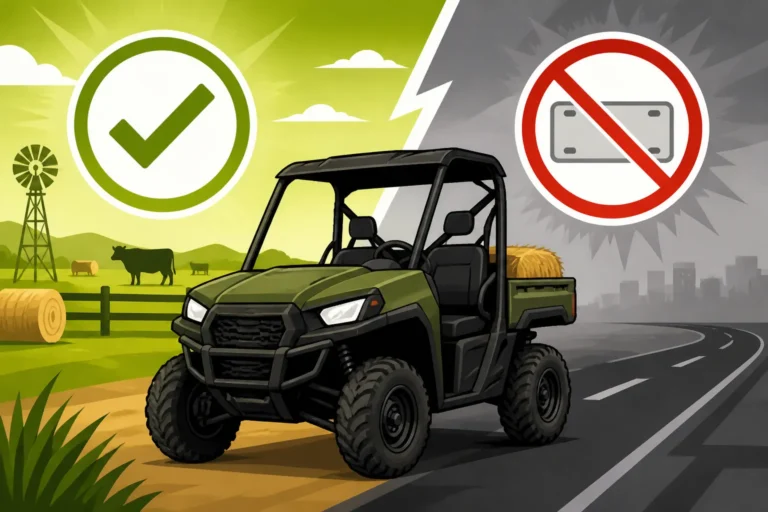
While specific statewide exemptions for recreational night riding on public roads for agricultural purposes are rare, the use of ATVs and UTVs on private ranch land for genuine agricultural work is common and accepted. These are working machines, not joyrides. For instance, a rancher might be using their UTV to haul feed to cattle in a remote pasture long after sunset. In these instances, ensuring the machine is well-lit is crucial, not only for the operator's safety but also for the safety of any workers or animals in the vicinity. While not a blanket exemption for public roads, the functional need for [Riding an ATV for a Texas Agricultural Operation] on private land during nighttime hours is widely understood and practiced, making proper lighting a necessity rather than an accessory.
Designated OHV Parks and Special Events
Another fantastic avenue for legal after-dark riding in Texas is at dedicated off-highway vehicle parks or through organized special events. Many private OHV parks across the state understand the appeal of night riding and will occasionally host specific events or allow it within designated areas and hours. These parks often have established trails, safety protocols, and sometimes even staff on hand to assist if needed.
If you're looking for an organized experience, check out places like Hidden Falls Adventure Park or Barnwell Mountain Recreation Area. They sometimes have specific hours or special events that extend into the evening. However, it's absolutely critical to confirm the park's specific rules and hours before you head out. Don't just assume; call ahead or check their website. Some parks might have additional requirements, like lighted whip flags or certain types of headlamps, for night riding. [Texas Parks With Night Riding] are a fantastic opportunity to safely experience your machine in the dark, often with the added camaraderie of other riders. Always be prepared for varying terrain and remember that even familiar trails can look and feel vastly different under moonlight or artificial light. Equipping your machine with robust lighting solutions, perhaps from a brand like SuperATV, can make all the difference in these environments.
Essential Equipment for Any After-Dark Operation
Whether you're traversing your own back forty, working the ranch, or tearing up a designated OHV park after hours, proper equipment is not just recommended—it's absolutely non-negotiable for after-dark riding. Visibility, both for you and for others, is paramount, and the right gear can turn a potentially dangerous situation into a thrilling and safe adventure.
Lighting Requirements for After-Dark Riding
When the sun goes down, your machine's standard factory lights might simply not cut it. Texas law, even for the few permitted road crossings in daylight, details general lighting needs, and for actual night riding, you'll want to exceed them. At a minimum, any machine operating at night on private land or in a park should have:
- Headlights: Bright white headlights are essential. They need to illuminate the path ahead clearly, showing you obstacles, changes in terrain, and potential hazards. While Texas law has general guidelines for vehicle lighting, for OHVs, it's about practical visibility. Many riders upgrade their stock lights to brighter LED units or add auxiliary lights.
- Taillights/Brake Lights: Red taillights and functional brake lights are crucial so that riders behind you can see you and react when you slow down or stop.
- Auxiliary Lighting: This is where you can truly enhance your night vision. Light bars, floodlights, and spotlights mounted on your roof, bumper, or A-pillars can turn night into day. Brands like SuperATV offer a huge range of high-quality LED light bars that can make a dramatic difference, casting a wide beam across the trail or a focused spot for long-distance viewing. This extra illumination is invaluable for navigating complex trails or working in dark conditions. While [Texas Lighting Requirements for OHVs] exist, they often cater to minimal road crossing; for true night riding, you'll need more.
It's not just about seeing; it's about being seen. The better your lighting setup, the safer your night riding experience will be.
Reflective Gear and Enhanced Visibility
Beyond simply having lights on your machine, your personal gear and other machine enhancements can significantly boost your visibility. Think of it as a multi-layered approach to being seen.
- Rider Apparel: Invest in reflective clothing, especially a reflective vest or jacket. Your helmet is another prime spot for reflective tape, making your head visible from all angles. Even small patches of reflective material can catch light and alert others to your presence.
- Machine Enhancements: Consider adding reflective tape to strategic points on your ATV or UTV – fenders, roll cage, or even the rear of the machine. This passive lighting can be incredibly effective, particularly if your primary lights fail or are momentarily obscured.
- Lighted Whip Flags: Many OHV parks, especially those that host night riding, require a whip flag for daytime visibility. For night riding, a lighted whip flag is an excellent addition. These flags often have LED lights running up the pole, making your machine's highest point visible from a distance. While [The 6-Foot Orange Flag Texas Requires] is typically for daytime, a lighted version serves a similar purpose after dark, dramatically increasing your profile.
Every little bit of extra visibility counts when you're out there after dark. These additions aren't just for others; they can help rescue personnel spot you in an emergency.
Other Safety Considerations for Night Riding
Even with the best lights and reflective gear, night riding presents unique challenges that demand extra caution. Don't let the excitement overshadow basic safety principles.
- Pre-Ride Checks: Before you head out, do a thorough check of your machine. Make sure your fuel tank is full, tires are properly inflated, brakes are responsive, and critically, your battery is fully charged to power all those extra lights. A dead battery in the dark is a nightmare.
- Ride with Others: Never ride alone at night. Having a buddy or a group not only makes the experience more enjoyable but also provides a crucial safety net. If one machine breaks down or a rider gets injured, there's always someone to help or go for assistance.
- Navigational Tools: Familiar trails can look completely alien in the dark. Carry a GPS device with pre-loaded maps, or use a reliable smartphone app. Make sure your device is charged, or carry a power bank.
- First Aid and Emergency Supplies: Always carry a well-stocked first-aid kit, a flashlight (or headlamp) with fresh batteries, a knife, basic tools, and perhaps a small survival kit. Tell someone your riding plan, including your route and estimated return time.
- Reduced Speed: Slow down. Period. Your reaction time and depth perception are diminished in low light, even with powerful auxiliary lights. What might be an easy bump in daylight can become a serious hazard at night. Wildlife is also more active at dawn and dusk, so be extra vigilant.
- Wildlife Awareness: Many animals are nocturnal or most active during crepuscular hours. Deer, hogs, and other critters can dart out unexpectedly, especially in rural areas. Keep your speed in check and be ready to react.
Night riding can be incredibly rewarding, offering a completely different perspective on your favorite trails. But it demands respect and preparation.
Here's a quick comparison of after-dark riding scenarios:
| Scenario | Legality (After Dark) | Key Considerations | Recommended Lighting/Gear |
|---|---|---|---|
| Public Roads (General) | Generally PROHIBITED | Lack of street-legal features, "Daylight Only" clauses | Not applicable (avoid) |
| Master-Planned Communities | Generally PROHIBITED | Strict "Daylight Only" ordinances | Not applicable (avoid) |
| Farm/Ranch Roads (Public) | Generally PROHIBITED | Few exceptions, strict "Daylight Only" clauses | Not applicable (avoid) |
| Private Property (Owned/Leased) | PERMITTED | Landowner permission, familiarity with terrain, safety | Robust headlights, taillights, auxiliary lighting (SuperATV light bars), reflective gear |
| Agricultural Use (Private Land) | PERMITTED | Essential for work, specific task-oriented | Same as Private Property, potentially work lights |
| Designated OHV Parks | CONDITIONAL | Check park rules, specific event hours, safety protocols | Robust lighting, lighted whip flags, reflective gear, helmet lights |
This table clearly illustrates that your best and safest bets for after-dark ATV and UTV riding in Texas are on private land or at specialized parks, never on general public roads. Always prioritize safety, communication, and proper equipment to ensure a memorable (and lawful) night ride.
Disclaimer
This article is for general informational purposes only and does not constitute professional advice. Laws, prices and regulations vary by location and change over time. Consult a qualified professional for guidance on your specific situation.