Bringing a Quad Home From Arkansas
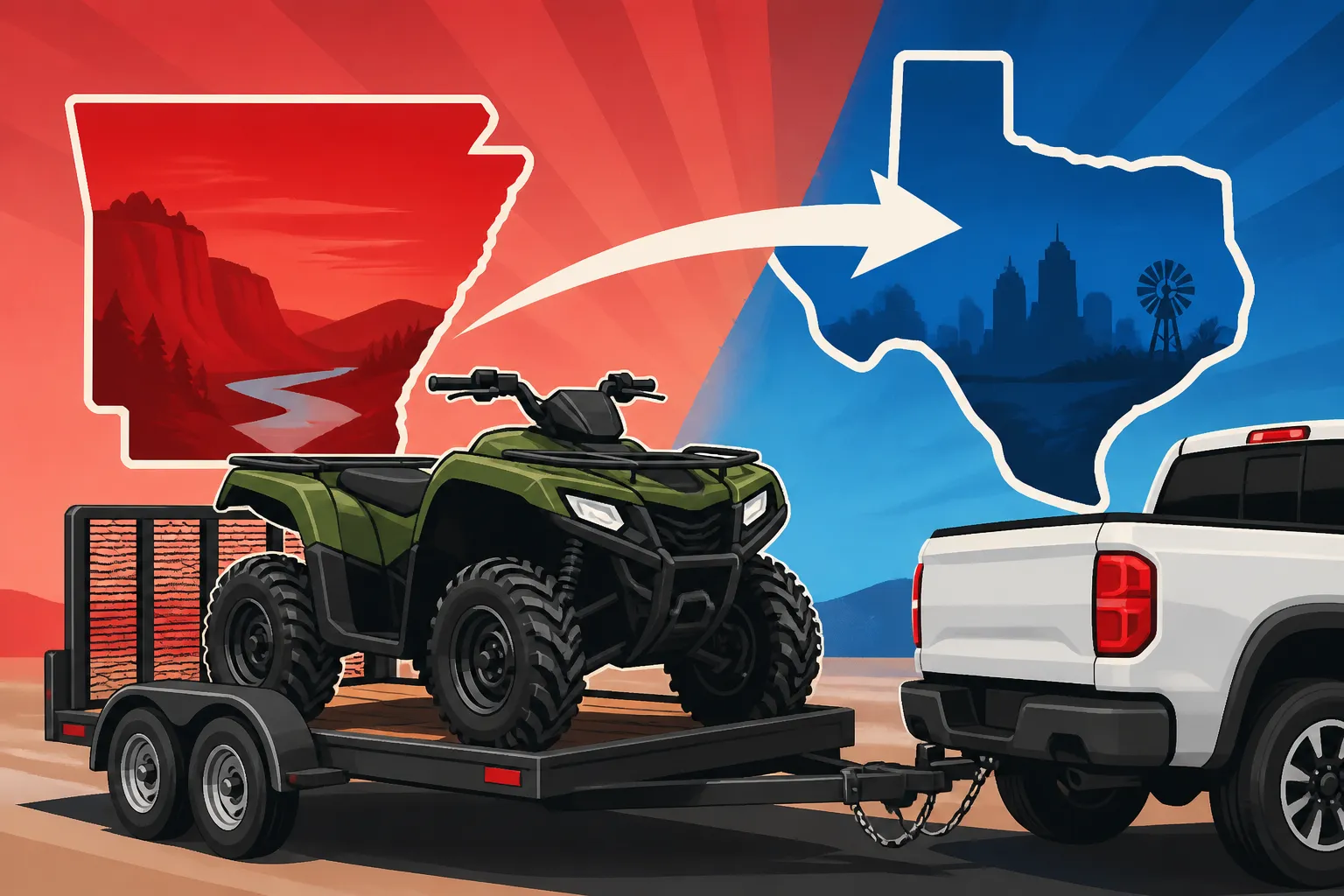
Bringing a quad home from Arkansas might seem like a straightforward trip across state lines, but the reality is that titling an off-highway vehicle (OHV) purchased in a different state, especially one like Arkansas with its own unique OHV laws, can feel like navigating a bureaucratic maze. Many riders get excited about finding a great deal or a specific machine across the border, only to hit a wall of confusion when they try to make it legal in Texas. This guide is here to untangle that process, walking you through everything from understanding Texas's use tax obligations to successfully securing a Texas title for your newly acquired Arkansas machine.
The Unique Challenge of Bringing an Arkansas Quad to Texas
You've found the perfect quad, side-by-side, or other off-highway vehicle in Arkansas. Maybe it was a sweet deal from a private seller, or perhaps a dealer had the exact model you've been searching for. The excitement is real! You load it up, drive it across the state line, and then the questions start bubbling up. Does Texas even care that it came from Arkansas? What paperwork do you need? And why does everyone keep talking about "use tax" when you already paid sales tax (or didn't, if it was a private sale)?
The biggest hurdle many people face with Arkansas OHV purchases is that, unlike Texas, Arkansas doesn't require titles for all off-highway vehicles. While some states title all OHVs, Arkansas only titles certain types, and not all ATVs or UTVs fall under that umbrella depending on their specific definition and use. This creates a situation where you might purchase a quad that has never had an official title issued, making its journey into the Texas titling system a "first title" scenario rather than a simple transfer. This distinction is incredibly important, as Texas needs a clear chain of ownership, and if Arkansas didn't issue a title, you'll need other robust proof.
Why Texas Cares About Out-of-State Purchases
Texas has its own set of rules for how it handles off-highway vehicles, and those rules kick in the moment you intend to keep and operate that machine here. The state wants to ensure that every OHV has a clear, legal owner on record, primarily for consumer protection, law enforcement, and, of course, tax purposes. If you buy a machine out of state, Texas isn't going to let you just bypass its titling system. The system is designed to catch these machines and bring them into compliance, and not knowing the steps can lead to frustrating delays or even fines if you're caught operating an untitled machine on public lands where a title is required. You might assume a bill of sale is enough, but Texas often requires more, especially when there's no previous title to transfer.
The "First Title" Conundrum for Arkansas OHVs
When an OHV from Arkansas comes to Texas, and it's a machine that Arkansas never formally titled, Texas treats this as a "first title" application. This means you aren't just transferring an existing title; you're essentially creating the first official record of ownership in the state. This can be a bit more involved than a simple title transfer, which generally only requires the seller's signature on the back of an existing title. For a first title, the Texas Department of Motor Vehicles (TxDMV), acting through your local county tax assessor-collector's office, needs to establish original ownership and verify the machine's identity. This means a thorough bill of sale and possibly other supporting documents become absolutely critical to prove that you are indeed the rightful owner. Without a clear paper trail, your application for a [Titling an ATV in Texas] could hit a snag, sending you back to gather more evidence of ownership.
Navigating Texas Use Tax After an Arkansas Purchase
One of the most significant and often surprising aspects of bringing an OHV home from Arkansas is the Texas Use Tax. Many people think they've already paid sales tax, or that if they bought it from a private party in Arkansas, no tax applies. Unfortunately, Texas has a keen eye for revenue and ensures that sales tax isn't dodged simply by crossing a state line. This is where the "use tax" comes into play.
Understanding Texas Use Tax: Why It Applies
When you buy an OHV from an out-of-state seller and bring it into Texas for use, storage, or consumption here, Texas levies a "use tax." This tax is essentially the equivalent of the sales tax you would have paid if you had bought the machine from a Texas dealer or seller. The state's reasoning is straightforward: if you're going to use the machine in Texas, you should contribute to the state's coffers just like someone who bought it locally. This prevents people from going to states with lower or no sales tax on OHVs (or states that don't collect sales tax on private sales) just to avoid paying Texas's rate.
The standard state use tax rate is 6.25% of the purchase price. On top of that, some local jurisdictions might add an additional amount, though generally, the total won't exceed 8.25%. So, if you bought a quad in Arkansas for $5,000, you'd owe at least $312.50 in Texas use tax, potentially more depending on your local county. It's a significant sum, and it's something you absolutely cannot ignore if you want to title your machine in Texas. The TxDMV will require proof that this tax has been paid before they will issue you a title. For more detailed information, you can refer to the comprehensive guide on [Texas Use Tax on an Out-of-State OHV].
How to Pay Your Texas Use Tax
Paying the use tax is a critical step, and it's your responsibility as the buyer. If you purchased the OHV from a dealer in Arkansas, it's possible they might have collected Texas sales tax on your behalf, but this is rare for out-of-state buyers. More often than not, especially with private sales, you will need to pay the tax directly to the Texas Comptroller of Public Accounts.
The good news is that this process is manageable. You'll typically use a specific form provided by the Comptroller's office for reporting and paying use tax on motor vehicles and other tangible personal property. You can usually do this online, by mail, or in person at a Comptroller field office. Once you've paid, the Comptroller will provide you with a receipt or confirmation. Hold onto this document like gold, because you'll need to present it to the county tax assessor-collector's office when you go to title your OHV. Without that proof of payment, your title application will be denied. This rule, in its current form, has been in effect since March 2020, making it a crucial part of the process for anyone bringing a machine into Texas from another state.
| Transaction Type | Sales Tax/Use Tax Responsibility | Required Payment Proof for Texas Titling |
|---|---|---|
| Arkansas Dealer Purchase (Tax Collected) | Dealer collects and remits to Texas (rare) | Texas Sales Tax Receipt from dealer (if applicable) |
| Arkansas Dealer Purchase (No Texas Tax Collected) | Buyer pays Texas Use Tax directly | Receipt from Texas Comptroller of Public Accounts |
| Arkansas Private Party Sale | Buyer pays Texas Use Tax directly | Receipt from Texas Comptroller of Public Accounts |
Titling Your Arkansas Quad in the Lone Star State
Once you've wrapped your head around the use tax and are ready to tackle the actual titling, you'll need to gather a specific set of documents. This isn't just a simple visit to the county office; it requires preparation to ensure you don't make multiple trips.
Essential Documents You'll Need
Successfully titling your Arkansas quad in Texas hinges on presenting a complete and accurate set of documents to the county tax assessor-collector's office. Think of it like building a case for ownership and compliance. Here's a breakdown of what you'll typically need:
- Texas Application for Texas Title and/or Registration (Form 130-U): This is the foundational document for almost any OHV titling process in Texas. You'll fill this out detailing your information, the machine's information (VIN, make, model, year), and the purchase details. This form also has sections for indicating use tax payment or exemptions. Ensure every box is filled accurately and completely; omissions or errors are common reasons for rejection. You can find detailed guidance on [Filling Out Texas Form 130-U for an OHV].
- Proof of Ownership from Arkansas: This is where the "first title" challenge often comes into play.
- If Arkansas did title the OHV: You'll need the original Arkansas title, properly signed and dated by the seller, releasing their ownership to you.
- If Arkansas did NOT title the OHV (which is common): You'll need a comprehensive Bill of Sale. This is paramount. The bill of sale should clearly identify the seller and buyer, include the full Vehicle Identification Number (VIN) of the OHV, the purchase date, and the purchase price. It's also a good idea for it to include contact information for the seller. A robust bill of sale leaves no doubt about the transaction. Even if you're just reviewing a bill of sale handed to you by an Arkansas seller, understanding what a complete one looks like – perhaps by checking resources like LawDepot's template examples – can help you spot potential issues before you leave Arkansas. For those moments when the ownership trail isn't perfectly clear, ensuring all agreements and proofs of sale are well-documented, sometimes with the help of structured forms similar to those found on platforms like LawDepot, can make a significant difference in establishing your claim.
- Proof of Texas Use Tax Payment: As discussed, this is the receipt or confirmation you received from the Texas Comptroller of Public Accounts after paying your use tax. No proof, no title.
- Valid Texas ID: You'll need to prove your identity. A current Texas driver's license or state ID card works perfectly.
- Payment for Fees: Be prepared to pay the Texas title fee and any other applicable charges (like the OHV plate fee, if requested). We'll cover these in more detail in the next section.
- Vehicle Identification Number (VIN) Inspection (if requested): While not always required for newer machines from a reputable seller, if there's any question about the VIN's integrity, an older machine, or a custom build, the county office might require a VIN inspection. This usually involves a law enforcement officer verifying the VIN on the machine matches the paperwork. It's less common for a standard purchase but always good to be aware of.
Remember, the goal is to present a clear, undisputed ownership trail that Texas can recognize. The more complete and accurate your documents, the smoother the process will be. If there are any discrepancies or missing information, the county clerk will likely reject your application and send you back to collect more proof.
The Texas OHV Plate: Optional, But Good to Know
When you apply for your title, you'll also have the option to apply for a Texas Off-Highway Vehicle (OHV) license plate. This isn't a traditional street-legal plate, but rather a small, distinct plate marked "OFF-HIGHWAY USE ONLY." It signals that your machine has been legally titled in Texas and is intended for off-road use. It's important to understand that Texas OHVs are generally [Why Texas Will Not Register an ATV for the Road], so this plate doesn't magically make your quad street legal.
The OHV plate is generally capped at a small fee (currently $10, though you should always check with your county for the most current figures). Many riders choose to get this plate because it provides a clear identifier for their titled machine and can be useful for identification purposes at OHV parks or if ever questioned about ownership. It's issued "on request," meaning you have to specifically ask for it during the titling process. This plate does not expire, so once you have it, it's yours forever, or at least for the life of the machine under your ownership. The specific costs and details can vary slightly, so checking with your local county office is always a good idea; you can find general information about [Texas ATV Title Fees Vary by County].
What to Expect at the County Tax Office
After you've meticulously gathered all your documents and are ready to tackle the final step, it's time for a visit to your local county tax assessor-collector's office. This is the government entity that processes all vehicle titles and registrations at the local level in Texas.
Choosing Your County and Preparing for Your Visit
You can visit any county tax assessor-collector's office in Texas, not just the one in your home county, though most people naturally choose their closest office. It's often a good idea to check their website or call ahead to see if they require appointments for titling services, as some busier offices do. Also, confirm their hours of operation and what forms of payment they accept. You'll be paying state fees directly to them, so cash, check, or card (with potential processing fees) are common.
When you arrive, have all your documents organized and ready. This includes:
- Your completed Form 130-U.
- Your Arkansas proof of ownership (title or bill of sale).
- Your Texas Use Tax payment receipt.
- Your Texas ID.
- Payment for the title fee and OHV plate (if requested).
Present these documents to the clerk at the counter. They will review everything, verify your identity, and process the fees. If all your paperwork is in order, they will issue you a receipt and typically mail you the official Texas OHV title within a few weeks. Don't be surprised if the clerk stamps your title with the phrase "[The Off-Highway Use Only Remark on a Texas Title]". This is standard procedure for OHVs and reinforces that the machine is not street legal.
Common Pitfalls and How to Avoid Them
Even with all the preparation, things can sometimes go sideways. Here are a few common reasons why a title application might be rejected and how to prevent them:
- Incomplete or Incorrect Form 130-U: Double-check every field. Ensure all names, addresses, VINs, and dates match your supporting documents exactly. Any blank fields or obvious errors will lead to a rejection.
- Missing Use Tax Proof: This is a big one. Without that receipt from the Comptroller, they simply cannot issue a title. Make sure you have the official proof, not just a bank statement showing you paid something.
- Insufficient Proof of Arkansas Ownership: If Arkansas didn't issue a title, your bill of sale must be incredibly detailed. A handwritten note on a napkin won't cut it. It needs to look professional, include all pertinent information, and ideally be notarized, though notarization isn't always strictly required by Texas for a private sale bill of sale, it adds a layer of authenticity.
- Discrepancies in VINs: The VIN on your bill of sale, Form 130-U, and the actual machine (if a VIN inspection is done) must match perfectly.
- Outstanding Liens: If the Arkansas machine had a lien on it that wasn't properly released, Texas won't issue a clean title. This is why it's crucial to [Checking a VIN Before a Texas Purchase] to ensure there are no surprises.
Dealing with the county tax office can sometimes be a bit of a wait, so go prepared with patience and all your documents. A little preparation goes a long way in ensuring your new Arkansas quad quickly becomes a legally titled Texas OHV, ready for the trails. For more general guidance on the process, check out [Titling at a Texas County Tax Office].
Disclaimer
This article is for general informational purposes only and does not constitute professional advice. Laws, prices and regulations vary by location and change over time. Consult a qualified professional for guidance on your specific situation.