Texas ATV Title With No Previous Title
It's incredibly common in Texas to find yourself with a sweet ATV or UTV that you love, but then you hit a wall when you realize it's never been formally titled. Maybe it's an older machine, a family hand-me-down, or something you bought out of state, and suddenly you're facing a mountain of questions about how to make it officially yours. This guide is here to walk you through the often-confusing process of getting a Texas title for an off-highway vehicle (OHV) that, for whatever reason, has never had one before, helping you gather your paperwork and navigate the local county office.
Understanding Why Some OHVs Lack a Previous Title
Before you dive into the titling process, it’s helpful to understand why your ATV or UTV might not have a previous title. This isn't just a quirky Texas thing; many factors can lead to an OHV having an undocumented past, and recognizing these can help you anticipate what information you'll need to provide. It's not always a red flag, but it does mean a bit more legwork on your end.
Older Machines and Evolving Laws
For many years, some states, including Texas, didn't require titles for off-highway vehicles in the same way they did for cars and trucks. If your ATV or UTV is an older model, especially from before Texas enacted its specific OHV titling requirements, it might simply predate the need for a title. Folks used to buy these machines, keep a bill of sale, and that was that. You might have inherited a classic Honda or Yamaha that’s been passed down through generations, used exclusively on the ranch, and simply never needed formal paperwork beyond a purchase receipt. This isn't a case of lost paperwork; it's a case of the paperwork never existing in the first place, at least not in the modern sense of a certificate of title.
Custom Builds, Homebuilt Buggies, and Kit Vehicles
Another common scenario involves machines that weren't manufactured by a traditional, recognized company. Think about those incredible custom sand rails you see tearing up the dunes, unique off-road buggies pieced together in someone's garage, or even kit vehicles. These fantastic creations often start life as a collection of parts, not a finished product with a factory-issued Manufacturer's Statement of Origin (MSO) or Certificate of Origin (MCO). In these cases, there's no original title document because there was no "original manufacturer" in the typical sense. Instead, the owner created the vehicle, and proving ownership involves documenting the parts, the build process, and a declaration of who built it. This takes a different approach than trying to track down a lost factory title.
Out-of-State Purchases from Non-Titling States
If you bought your ATV or UTV from a private seller or even a small dealer in a state that doesn't require titles for OHVs, you might find yourself in this predicament. Some neighboring states have different rules, and what's perfectly legal and standard there might leave you without the necessary paperwork for Texas. You might have a perfectly legitimate bill of sale, but no title to transfer. This is particularly common if you're buying a machine that has lived its entire life in an agricultural setting in a state with more relaxed OHV regulations. Texas takes its titling seriously for OHVs, so even if it was never titled elsewhere, you'll need to establish its history here.
Gifted, Inherited, or Long-Term Ownership Scenarios
Sometimes, an ATV or UTV enters your life through less traditional means than a direct purchase with a clear title transfer. Maybe a grandparent left you their beloved ranch quad, or a friend gifted you their old UTV when they upgraded. In these situations, the original title might have been lost years ago, or perhaps the machine was one of those older models that never had a title to begin with. Over decades, paperwork gets misplaced, and memories fade. You might have a machine you've legitimately owned and used for ages, but without a clear paper trail, proving it to the state can feel like a detective mission. This is where you might need to lean on alternative proofs of ownership.
Essential Documentation When There's No Prior Title
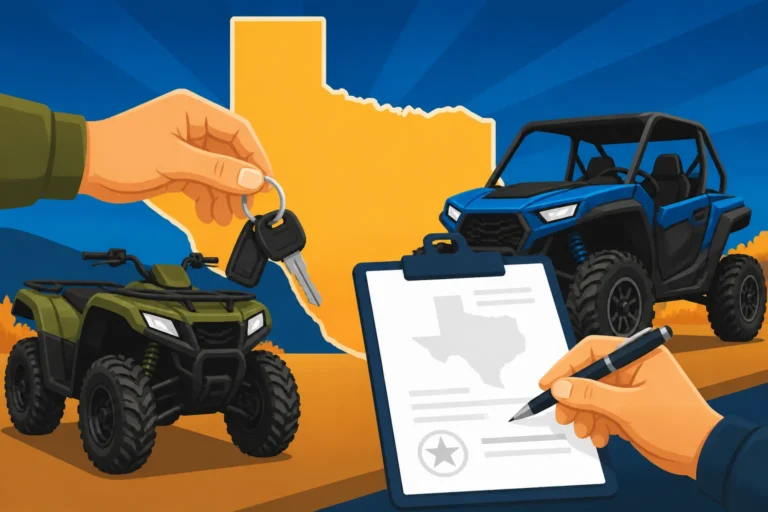
Okay, so you’ve got an ATV or UTV that's never had a Texas title. Don't panic! It's absolutely possible to get one, but it requires a bit more proactive effort in terms of documentation. Your goal is to provide enough credible evidence to the Texas Department of Motor Vehicles (TxDMV) through your county tax office to establish your ownership chain. Think of yourself as building a case for your ownership, even without that one key piece of paper. You'll need to fill out [The Texas Title Application Every OHV Buyer Files].
The Importance of a Bill of Sale
Even without a previous title, a strong bill of sale is your absolute best friend. If you bought the machine, you need a detailed bill of sale from the seller. This document should clearly identify the machine (make, model, year, VIN), the seller's information, your information as the buyer, the purchase date, and the price paid. Even a handwritten bill of sale can work, as long as it contains all this crucial information and is signed by both parties. If you need a template, services like LawDepot offer customizable bill of sale forms that can help ensure you don't miss any critical details. A well-crafted bill of sale shows a clear transaction and helps establish your immediate ownership. [A Texas Bill of Sale for an ATV] can make all the difference.
Proof of Ownership Beyond a Title
Since you don't have a title, you'll need to present other forms of proof to demonstrate your legitimate ownership. The more evidence you can provide, the stronger your case. This could include:
- Old Registrations or Insurance Cards: If the machine was ever registered or insured in another state, or if you have old insurance declarations for it, these can show a history of your (or a previous owner's) legal possession.
- Cancelled Checks or Bank Statements: If you paid for the machine, a copy of a cancelled check or a bank statement showing the transaction can serve as proof of purchase.
- Maintenance Records: Receipts for repairs, parts, or service appointments with the VIN listed can show that you've been the responsible party for the machine's upkeep over time.
- Affidavits of Fact/Ownership: In some cases, especially for inherited or gifted machines, you might need a sworn statement (affidavit) from a previous owner, family member, or even a witness who can attest to the machine's history and your ownership. This is essentially someone vouching for the chain of custody. LawDepot can assist with creating legally sound affidavit forms tailored to your situation.
VIN Verification
Regardless of whether your OHV has a previous title, Texas will require a Vehicle Identification Number (VIN) inspection. This is to ensure the VIN on your paperwork matches the physical VIN stamped on the machine and that it hasn't been tampered with or reported stolen. This verification is typically done by a qualified law enforcement officer or certain authorized individuals. They will physically examine your ATV or UTV and complete a form (often a Texas DPS form or a county-specific form) confirming the VIN. This step is critical because without a matching, verifiable VIN, the state cannot issue a title. [Texas ATV VIN Inspection Requirements] are pretty strict, so make sure your VIN is clean and clear.
The Texas Title Application Process for "Never Titled" Machines
Navigating the titling process when your OHV has no prior title can feel a bit like a scavenger hunt, but it's entirely doable. The key is to be prepared and understand what the county tax office is looking for. This isn't just about filling out a form; it's about presenting a compelling narrative of ownership backed by solid evidence. You'll want to head to [Titling at a Texas County Tax Office] when you're ready.
Completing Texas Form 130-U
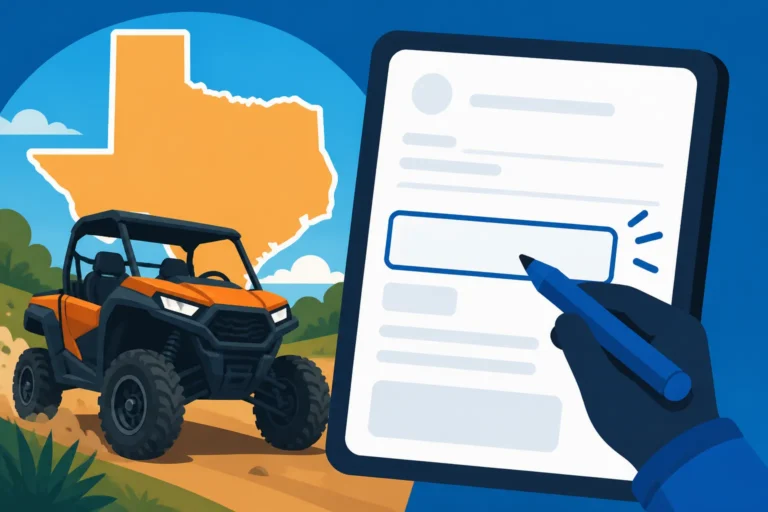
The cornerstone of your application will be the Texas Application for Texas Title and/or Registration, known as Form 130-U. This form is used for nearly all vehicle titling in Texas, including OHVs. When you're dealing with a machine that has no previous title, you'll need to be especially diligent in how you complete this form.
- Owner Information: Fill out your details completely and accurately.
- Vehicle Information: Provide the make, model, year, and crucially, the VIN.
- Prior Title Information: This is where it gets tricky. If there's truly no prior title, you might indicate "none" or "never titled" as appropriate, or follow specific instructions from your county tax office. This is one of the more common reasons why [What a County Clerk Rejects on a Title Application] in these situations.
- Statement of Fact: You may need to attach a separate "Statement of Fact" (Form VTR-271) explaining the history of the vehicle and why a prior title isn't available. This is where you can present your gathered proofs of ownership.
Remember, every detail matters, so take your time and don't hesitate to ask for clarification from your county tax office if you're unsure about a specific field. You can learn more about [Filling Out Texas Form 130-U for an OHV].
Use Tax Considerations
Even if your OHV has never been titled, it's not exempt from Texas motor vehicle sales and use tax. If you purchased the machine, you'll owe use tax on the purchase price. The standard Texas state sales tax rate applies, and some localities might add their own portion, though OHVs are treated differently than regular motor vehicles.
- Fair Market Value: If you acquired the machine as a gift or through inheritance, or if the purchase price was exceptionally low, the state might base the tax on the vehicle's "standard presumptive value" or fair market value.
- Documentation: Be prepared to provide documentation of the purchase price (your bill of sale) to calculate the tax owed.
- Out-of-State Purchases: If you brought the machine into Texas from another state where you didn't pay sales tax, you'll definitely owe Texas use tax. This is a common scenario for machines with no prior title history. You'll have to provide [Proof of Use Tax Before a Texas Title]. You can read up on [Texas Use Tax on an Out-of-State OHV] to be fully prepared.
The county tax assessor-collector’s office will collect this tax when you apply for your title. It's best to have these funds ready to avoid delays.
Role of the County Tax Assessor-Collector's Office
The local County Tax Assessor-Collector's office is where all the magic happens (or at least, all the paperwork). They are the primary contact point for titling your OHV. They will review all your submitted documents, including Form 130-U, your bill of sale, proofs of ownership, and VIN verification.
- Discretion: While there are state guidelines, individual county offices can sometimes have slight variations in how they interpret unique situations, especially for never-titled vehicles. Be polite, patient, and prepared to provide any additional information they might request.
- Fees: Beyond the use tax, you'll also pay a title fee and potentially a small plate fee if you request an optional off-highway vehicle license plate.
- Submission: You typically must submit all documentation in person. It’s always a good idea to call ahead or check their website for specific requirements and appointment availability. You'll be dealing with [Titling an ATV in Texas] through their office.
Potential Hurdles and How to Overcome Them
Getting a title for an OHV with no prior title history can sometimes present unique challenges. It’s not always a straightforward path, and you might encounter some bumps in the road. Being aware of these potential hurdles can help you prepare and avoid frustration.
Missing or Mismatched VIN
The Vehicle Identification Number (VIN) is the unique identifier for your ATV or UTV. If the VIN is missing, unreadable, or appears to have been altered, you've got a serious problem. The state won't issue a title without a clear, verifiable VIN.
- Solutions:
- Thorough Search: Double-check every possible location for the VIN on your machine. Sometimes it’s in an unexpected spot.
- VIN Plate Application: In extremely rare cases, if a legitimate VIN is truly missing (e.g., on a custom build where a frame was created), you might be able to apply for a state-assigned VIN. This is a lengthy process involving inspections and detailed documentation of the build.
- Expert Inspection: If the VIN is difficult to read, an expert VIN inspector (often a law enforcement officer) might be able to decipher it, sometimes with specialized tools or techniques.
- Legal Counsel: If you suspect tampering or fraud, it’s wise to consult with an attorney specializing in vehicle titles. [Checking a VIN Before a Texas Purchase] is always a good idea to avoid this headache.
Questionable Ownership History or Unclear Chain of Custody
If your documentation doesn't clearly establish how the vehicle came into your possession, or if there are gaps in the ownership history, the county tax office might hesitate to issue a title. This is particularly true if you only have a handwritten receipt from someone who themselves had no formal documentation.
- Solutions:
- Affidavits of Fact: As mentioned, these sworn statements from previous owners or knowledgeable individuals can fill in gaps. LawDepot provides affidavit templates that can be customized to explain the chain of ownership. The more specific details (dates, locations, names) the affidavit includes, the more weight it will carry.
- Legal Opinion: In complex cases, a letter or legal opinion from an attorney, based on your evidence, might persuade the county office.
- Bonded Title: As a last resort, if you have possession but a completely broken chain of title, Texas offers a bonded title process. This involves purchasing a surety bond for a period of time, which protects the state and any potential unknown prior owner. It's a more involved and costly process, but it can be a solution when all other avenues are exhausted.
County Office Discretion and Interpretation
While state laws provide the framework, individual county tax assessor-collector offices have a degree of discretion in how they interpret specific situations, especially those outside the norm like a never-titled vehicle. What one clerk might accept, another might question.
- Solutions:
- Be Patient and Prepared: Go in with all your ducks in a row. Have copies of everything, and be ready to explain your situation clearly and concisely.
- Ask for Clarification: If a clerk rejects something, ask for specific reasons and what alternative documentation they would accept. Don't be afraid to politely ask for a supervisor if you feel there's a misunderstanding.
- Document Everything: Keep a detailed log of your interactions, including names, dates, and what was discussed. This can be helpful if you need to revisit the issue.
- Consider a Different County (Carefully): While generally not recommended as it can raise flags, if you truly believe you're facing an arbitrary rejection, and you have legitimate grounds to title in another county (e.g., if you have property or a business there), it might be an option, but proceed with caution and legal advice.
Unknown Liens or Encumbrances
Even if an OHV was never formally titled, a previous owner might have used it as collateral for a loan. If that loan was never paid off, there could be an unrecorded lien that surfaces when you try to establish a title. This is less common with never-titled machines but can happen.
- Solutions:
- VIN Check: A thorough VIN check through resources like the National Insurance Crime Bureau (NICB) or private VIN reporting services can sometimes uncover hidden lien information or stolen vehicle reports, even without a formal title history.
- Seller Guarantees: If you're buying a machine without a title, always try to get the seller to sign an affidavit stating there are no liens. Using a formal document from a service like LawDepot can add more weight to this declaration.
- Title Bond: Again, the bonded title process offers a layer of protection against unknown liens, as the bond would cover any financial claims from a legitimate lienholder that surfaces after you obtain your title.
Overcoming these hurdles requires persistence, thorough preparation, and sometimes a bit of creative problem-solving. But with the right approach, you can successfully title your beloved ATV or UTV in Texas, even if it started its life without official papers.
| Document Type | Purpose | Important Notes |
|---|---|---|
| Form 130-U | Application for Texas Title and/or Registration | Clearly state "never titled" or "none" in prior title sections. Fill out all sections accurately. |
| Bill of Sale | Proof of Purchase and Ownership Transfer | Must include VIN, buyer/seller info, date, price, signatures. Use a template (like LawDepot) for thoroughness. Essential even for gifted/inherited machines if a nominal transaction occurred. |
| Proof of Identity | Required for all title applicants | Valid driver's license, state ID, or other acceptable photo ID. |
| VIN Verification | Confirms VIN matches machine and isn't stolen/tampered | Completed by law enforcement or authorized inspector. Crucial for establishing the machine's identity. |
| Proof of Insurance | Not always required for OHV title, but good to have | May be useful as supporting ownership documentation if available. |
| Proof of Use Tax Paid | Shows you've remitted sales/use tax to Texas Comptroller | Based on purchase price or fair market value. Collected at the county tax office. |
| Affidavit of Fact (VTR-271) | Explains circumstances, chain of ownership, why no prior title exists | Provide a detailed, sworn statement explaining the history of the machine and how you acquired it. Crucial for non-traditional acquisitions. LawDepot offers similar customizable forms. |
| Supporting Ownership Documents | Additional evidence of possession/purchase history | Old registrations, insurance cards, cancelled checks, repair receipts with VIN, sworn statements from witnesses. The more, the better. |
Disclaimer
This article is for general informational purposes only and does not constitute professional advice. Laws, prices and regulations vary by location and change over time. Consult a qualified professional for guidance on your specific situation.