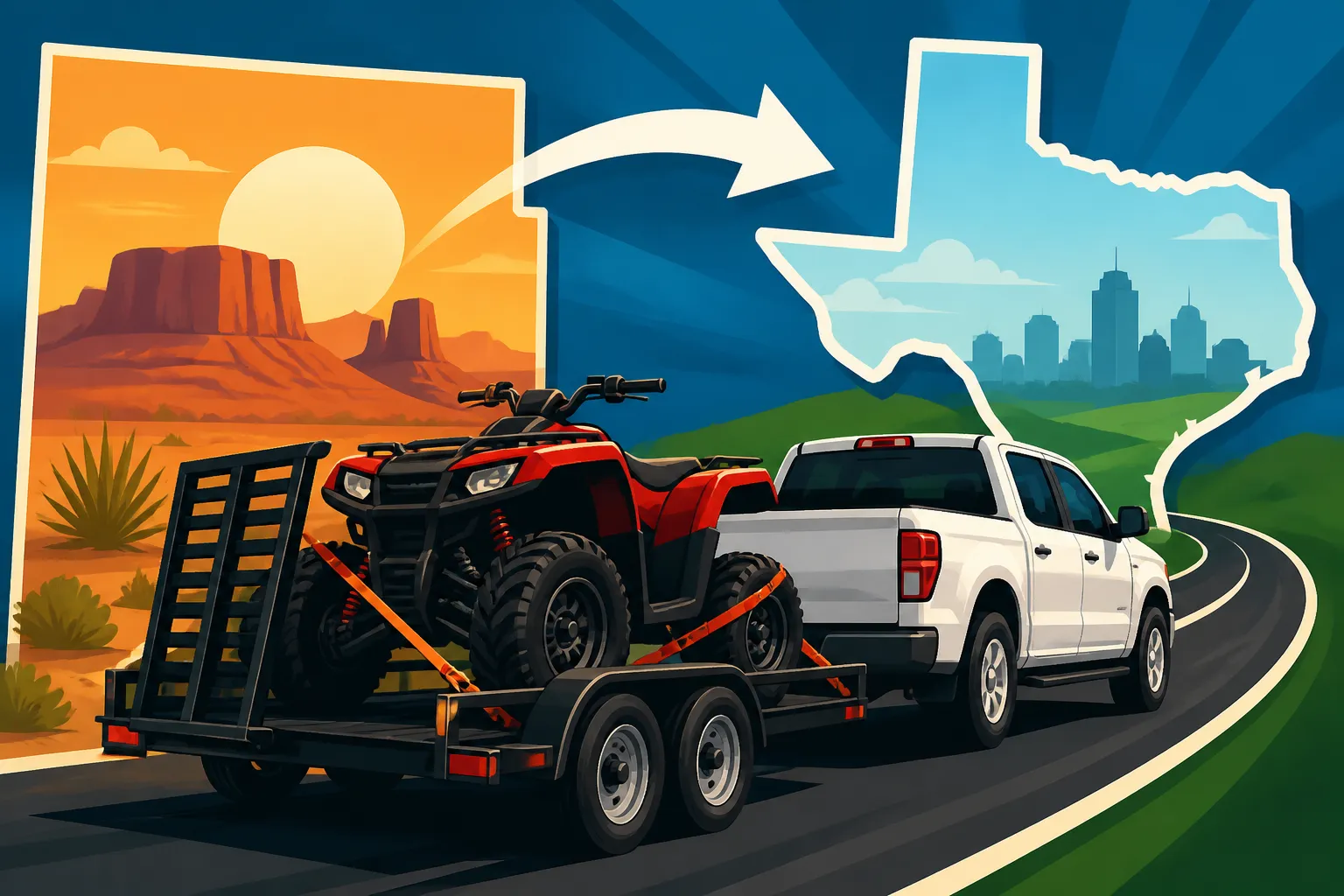
Bringing a Quad Home From New Mexico
Bringing an off-highway vehicle (OHV) like a quad or side-by-side home from a neighboring state, especially New Mexico, often feels like navigating a maze of paperwork and rules. You've just spent time finding the perfect machine, maybe even enjoyed a scenic ride in the Land of Enchantment, and now you're faced with the daunting task of making it officially yours in Texas. This guide is here to untangle that process, walking you through everything you need to know about titling your newly acquired New Mexico quad in the Lone Star State and getting that important Texas OHV plate.
Understanding Texas's Approach to Out-of-State OHV Purchases
It’s easy to assume that if you bought a quad in New Mexico, especially if you got a New Mexico title for it, that everything should just transfer over smoothly to Texas. Unfortunately, state lines often mean entirely different sets of rules, and what flies in Santa Fe might not work the same way in Austin or your local county seat. Texas has specific requirements for vehicles purchased out-of-state, primarily focused on ensuring proper tax collection and a clear chain of ownership before issuing a Texas title.
Texas doesn't just want to know you bought a quad; it wants to know you paid your fair share of taxes on that purchase, even if you paid sales tax in New Mexico. This is where the concept of "use tax" comes into play, and it's a significant difference from how you might title a machine bought right here in Texas. Ignoring these steps can lead to delays, frustration, and extra trips to the county tax office.
The Crucial Role of Texas Use Tax
When you buy an OHV in New Mexico and bring it into Texas for use, Texas considers that a "use" of taxable merchandise within its borders. This triggers what's called a use tax, which is essentially the state's way of collecting sales tax on items purchased outside of Texas but intended for use by a Texas resident. The idea is to prevent residents from buying expensive items in states with lower or no sales tax to avoid paying tax in their home state.
Now, here's where it can get a little tricky: if you paid sales tax in New Mexico, Texas will often give you credit for that. However, if New Mexico's sales tax rate was lower than Texas's, you'll still owe the difference to Texas. If you didn't pay any sales tax in New Mexico for some reason, then you'll owe the full Texas use tax rate. This isn't just a minor detail; you absolutely cannot get a Texas title for your OHV until this use tax is properly addressed. This can be one of the biggest surprises for folks bringing a machine home, adding an unexpected step to the process. For a deeper dive into this, check out [Texas Use Tax on an Out-of-State OHV].
Why Your New Mexico Title Isn't Enough for Texas
While your New Mexico title is a critical piece of documentation proving ownership, it's not simply a matter of swapping it for a Texas one. Texas doesn't just "transfer" out-of-state titles; it issues a new Texas title. This distinction is important because it means Texas will go through its full titling process, which includes verifying ownership, checking for liens, and, crucially, ensuring all applicable taxes have been paid.
Think of it this way: your New Mexico title is like an official introduction letter. It tells Texas who legally owns the machine in New Mexico, but Texas still needs to do its own background check and paperwork to welcome that OHV into its system. This often means you'll need more than just the New Mexico title in hand when you walk into your local county tax office. You'll also need to submit a Texas-specific application form and provide proof of tax payment, among other things. If you're wondering about the overall titling concept, you can learn more about [Titling an ATV in Texas].
Step-by-Step: Titling Your New Mexico Quad in Texas
Titling your New Mexico quad in Texas doesn't have to be a bewildering experience, but it does require attention to detail and patience. The process centers around visiting your local Texas county tax assessor-collector's office. This isn't a DMV branch, but rather a county-level office that handles vehicle titling and registration on behalf of the state. Preparing ahead of time will save you headaches and multiple trips.
Remember, the goal is to prove to Texas that you are the rightful owner, that there are no hidden liens, and that all necessary taxes have been remitted. Each step builds on the last, so taking your time to gather everything accurately is key to a smooth transaction.
Gathering Your Essential Documents
Before you even think about heading to the county office, you need to compile a specific set of documents. Missing even one piece of paper can send you right back home. This list is fairly standard, but it’s always a good idea to call your specific county tax office beforehand to confirm any unique local requirements. They often have checklists they can email you.
Here's what you'll typically need to bring:
- Your New Mexico Certificate of Title: This is paramount. Ensure it's signed over to you by the seller (or sellers, if there were multiple registered owners). Check that all information is legible and accurate.
- A Bill of Sale: Even if the New Mexico title acts as a receipt, a separate bill of sale is highly recommended. It should clearly state the buyer and seller's names, the date of sale, the purchase price, and the vehicle identification number (VIN) of the OHV. It doesn't hurt to use a robust template from a service like LawDepot to ensure all necessary details are captured, protecting both parties.
- Proof of Identity: Your valid Texas driver's license or state ID card.
- Proof of Insurance: While Texas doesn't require liability insurance for OHVs off-road, some counties might ask to see it, especially if you're trying to get a license plate. It's good practice to have it anyway.
- Odometer Disclosure Statement (if applicable): While not always required for OHVs, for some older models or certain weight classes, it might be requested.
- Any Lien Release Documents: If the New Mexico title shows a lien, you'll need the original, signed lien release from the lender.
Having these documents neatly organized will make the process much smoother for both you and the county clerk.
The Texas Title Application Every OHV Buyer Files
Once you have your documents, the next critical piece of paper is the Texas Application for Texas Title and/or Registration, commonly known as Form 130-U. This form is universal for vehicles being titled in Texas, including OHVs, even though Texas doesn't technically "register" OHVs in the same way it does cars. This form is essentially your formal request to the state of Texas to recognize your ownership and issue a title.
You can often download Form 130-U directly from the Texas Department of Motor Vehicles (TxDMV) website and fill out most of it before you arrive at the county office. Pay very close attention to each section. You'll need to enter information about yourself (the buyer), the seller, the OHV itself (including the VIN, make, model, year), and the purchase price. Accuracy is key, as any discrepancies can cause delays. For a detailed walkthrough of this form, check out [Filling Out Texas Form 130-U for an OHV]. Remember that even if your machine isn't considered a "motor vehicle" for road use, it's still merchandise that needs a clear title, and the 130-U is the gateway.
Calculating and Paying the Use Tax
This is where many out-of-state OHV buyers can get tripped up. As discussed, Texas will assess a use tax on your purchase. The standard Texas sales and use tax rate is a percentage of the purchase price, and your local county might add a local tax on top of that. However, you'll get credit for any sales tax you already paid to New Mexico.
Here’s a simplified breakdown of how it works:
| Scenario | Texas Use Tax Calculation |
|---|---|
| Paid NO Sales Tax in New Mexico | You will owe the full Texas use tax (state + local, if applicable) on the purchase price. |
| Paid LESS Sales Tax in New Mexico | You will owe the difference between the Texas rate and the New Mexico rate you paid. For example, if Texas's rate is 6.25% and New Mexico's was 5%, you'd owe an additional 1.25%. |
| Paid EQUAL or MORE Sales Tax in NM | You generally won't owe any additional use tax to Texas, as long as you provide proof of the New Mexico tax paid. The county clerk will verify this. |
You will need to present proof of the sales tax paid in New Mexico, typically through the original bill of sale or purchase invoice from the dealer, clearly showing the tax amount. Without this proof, the county office will assume no tax was paid and charge you the full Texas rate. The county tax assessor-collector’s office is where you will pay this use tax directly. They will then give you a receipt, which serves as your [Proof of Use Tax Before a Texas Title]. This rule became particularly clear for many buyers with [The March 2020 Use Tax Rule] update.
Navigating Common Hurdles When Bringing a Quad from New Mexico
While the process outlined above is fairly straightforward, real-world situations often throw curveballs. Buying a used OHV, especially from a private seller in another state, can sometimes mean encountering issues that require a little extra legwork. Understanding these potential roadblocks beforehand can save you significant stress.
Texas wants to ensure that the OHV you're titling is legitimately yours and isn't subject to any undisclosed claims or legal issues. This means if the paperwork is incomplete or confusing, they're likely to ask for more information or clarification, which is where things can get frustrating if you're not prepared.
What If Your New Mexico Seller Doesn't Have a Title?
This is perhaps one of the most common and challenging hurdles when buying a used OHV, whether in New Mexico or anywhere else. If the New Mexico seller tells you they don't have a title because they lost it, or perhaps New Mexico didn't require titles for OHVs of that age or type, you're in for a more complex process in Texas. Texas generally requires a chain of title to issue a new one.
If the seller simply lost their New Mexico title, they should ideally apply for a duplicate title in New Mexico before selling it to you. This ensures a clean transfer. If that's not possible, or if the OHV truly was never titled in New Mexico (which can happen with very old models or certain types of off-road equipment), you'll need to work closely with the Texas county tax office. You might be asked to provide:
- A comprehensive Bill of Sale: Again, a detailed document is crucial. LawDepot can be a useful resource for creating such a document, ensuring it includes all possible identifiers for the machine and the complete contact information of the seller.
- Affidavits of Fact: You might need to sign an affidavit swearing that you are the rightful owner and explaining the circumstances of the missing title. The seller might also need to provide one.
- Proof of Previous Ownership: Any old registration cards, insurance policies, or even utility bills showing the seller's name and the OHV's VIN can help establish a history.
- VIN Verification: The county might require a law enforcement officer to verify the VIN to ensure it's not stolen.
The process for getting a [Texas ATV Title With No Previous Title] can be lengthy and requires persistence. Be prepared for extra steps and potentially several visits to the county office.
Dealing with Liens from Your New Mexico Purchase
Another significant issue arises if the New Mexico title indicates an active lien (meaning there's a loan outstanding on the OHV). When you buy an OHV with a lien on it, you're essentially buying it subject to the lender's claim until that loan is paid off. Texas will not issue a clean title in your name until that lien is officially released.
If you bought the OHV from a private seller, it's their responsibility to pay off any outstanding loans and get a lien release from their New Mexico lender. This release should then be provided to you. The lien release must be an original document, signed by the lienholder, stating that the debt has been satisfied and the lien is released. Without this, the Texas county office will note the existing New Mexico lien on your Texas title application, and potentially on your new Texas title, which can cause problems if you ever try to sell it. Always ensure you have a clean New Mexico title or a valid lien release before finalizing your purchase in New Mexico, or at least before attempting to title it in Texas. Getting a title with a lien is possible, but releasing it later requires more steps. Check [Titling a Machine With a Lien in Texas] for more specifics.
Getting Your Texas OHV Plate (Optional but Recommended)
Once you've successfully navigated the titling and use tax requirements, you have the option to get a Texas Off-Highway Vehicle (OHV) license plate. It's crucial to understand that this is not a street-legal registration. Texas does not register OHVs for road use; it only titles them. The OHV plate is a separate item that identifies your machine as titled in Texas and is required for riding on most designated public OHV trails and parks in the state. For clarity on this distinction, see [Why Texas Titles But Never Registers an OHV].
The plate itself is typically a small, distinctive sticker or metal plate, often with "OFF-HIGHWAY USE ONLY" printed on it. It’s an inexpensive addition that signifies your compliance with Texas's OHV regulations, particularly for use on public lands or grant-funded trails.
When to Request the Texas Off-Highway Vehicle License Plate
You can typically request the Texas OHV plate at the same time you title your machine at the county tax office. It's often bundled into the paperwork if you ask for it. The plate is issued on request and is not automatically provided with a title. The cost for this plate is minimal, often capped by statute at a very low price. The county counter will be able to tell you the exact [Texas OHV License Plate Cost] at the time of your visit.
It's a one-time purchase, and the plate itself typically stays with the machine for its lifetime in Texas, even if ownership changes. You don't renew it annually like a car's registration sticker. Getting this plate is a good idea if you plan to ride at popular spots like Barnwell Mountain Recreation Area or Hidden Falls Adventure Park, as many parks and public lands require it. For more on when and how to get it, consult [When a Texas Buyer Adds the OHV Plate].
Summary of Documents and Steps:
| Step | Key Action | Documents/Information Needed | Where to Go/Who to Contact |
|---|---|---|---|
| 1. Gather New Mexico Docs | Secure proof of ownership & purchase. | New Mexico Title (signed), Bill of Sale, Lien Release (if applicable). | Seller, New Mexico Lender |
| 2. Prepare Texas Application | Fill out the necessary Texas form. | Texas Form 130-U (Application for Texas Title and/or Registration). | TxDMV Website (for download), Your personal information |
| 3. Calculate Use Tax | Determine the amount of use tax owed to Texas, crediting NM tax paid. | Purchase price, New Mexico sales tax receipt (from bill of sale/invoice). | Yourself, County Tax Assessor-Collector's Office |
| 4. Visit County Tax Office | Submit all paperwork, pay fees, and obtain your Texas Title. | All gathered documents, Form 130-U, proof of identity, payment for taxes and fees. | Your County Tax Assessor-Collector's Office |
| 5. Request OHV Plate (Optional) | Ask for the off-highway vehicle plate. | Your newly issued Texas Title or receipt of title application, payment for plate fee. | Your County Tax Assessor-Collector's Office (same visit) |
Bringing a quad home from New Mexico to Texas involves a few more hoops than buying locally, but it's a manageable process if you're prepared. By understanding the use tax requirements, meticulously gathering your documents, and clearly communicating at your local county tax office, you'll soon have your OHV properly titled in Texas and ready for all the adventures the Lone Star State has to offer. Just remember, patience and preparation are your best friends in this journey!
Disclaimer
This article is for general informational purposes only and does not constitute professional advice. Laws, prices and regulations vary by location and change over time. Consult a qualified professional for guidance on your specific situation.