Do You Ever Renew a Texas OHV Plate?
It’s easy to get tangled up in all the rules and regulations that come with owning an off-highway vehicle in Texas. One of the biggest head-scratchers for many ATV and UTV owners is the Texas OHV plate. Do you need one? Does it expire? This guide is here to untangle that confusion, especially the persistent question of whether that little metal plate ever needs renewing.
Understanding the Texas OHV Plate
Navigating the world of OHV ownership in Texas can feel like a maze, especially when it comes to official documents. Many folks assume that an OHV plate works just like a car's license plate, complete with yearly renewals and stickers. But that's simply not the case in the Lone Star State, and understanding this fundamental difference will save you a lot of headache and confusion.
The "Plate, Not Registration" Distinction
First and foremost, it’s crucial to understand that Texas does not "register" off-highway vehicles in the same way it registers cars and trucks for road use. You won't find an annual registration sticker for your ATV or UTV. Instead, Texas issues a title for your OHV, which proves ownership, and then, if you request it, a unique OHV plate. This system often surprises newcomers or those accustomed to other states' rules, where "registration" might encompass both a title and an annual fee for road access. The state's approach is designed to keep OHVs primarily off public roads, with very limited exceptions. This is why you'll often hear that Texas only titles an OHV and never truly registers it for the road. [Why Texas Titles But Never Registers an OHV]
The distinction is more than just semantics; it shapes how you interact with state agencies. When you visit your local county tax office, you’re primarily dealing with titling matters. The OHV plate is an ancillary item, requested on top of the titling process, rather than a full-blown registration akin to what a passenger vehicle receives. This makes the entire process feel a bit less formal than vehicle registration, but no less important for compliance.
What the OHV Plate Actually Does
So, if it’s not traditional registration, what’s the purpose of that little metal plate? The Texas OHV plate serves a very specific, limited purpose: it allows your off-highway vehicle to operate legally on certain public roads and highways under very strict conditions. These conditions are not to be taken lightly and typically involve agricultural use, crossing roads, or operating in specific, low-speed zones. It does not make your ATV or UTV street-legal in the broad sense. In fact, your title will likely carry a distinct "Off-Highway Use Only" remark, which serves as a constant reminder of its intended purpose. [The Off-Highway Use Only Remark on a Texas Title]
Think of the OHV plate as an exception pass, not a green light for cruising city streets. It’s an acknowledgment that some operations, like moving farm equipment or crossing a county road to access another part of your property, require occasional, limited road presence. The plate provides the necessary identification for these specific scenarios, ensuring that law enforcement can quickly identify the machine and verify its status. Without this plate, even these limited road uses would be illegal, potentially leading to fines or other penalties.
The Initial Purchase of the Plate
Getting your hands on a Texas OHV plate is part of the titling process for your machine. When you buy a new or used OHV and head to your county tax office to file your Texas Title Application, you'll have the option to request an OHV plate at the same time. This is typically done through the same office that handles your vehicle titles and registrations. The fee for this plate is minimal, capped by state statute, making it a relatively inexpensive addition to your OHV documentation. [The Texas Title Application Every OHV Buyer Files]
The process is fairly straightforward: after you've completed all the necessary paperwork for your title, including proving ownership and paying any applicable sales tax, you simply ask for the OHV plate. It's not automatically issued; it's a request you need to make. Once issued, this plate is uniquely assigned to your specific off-highway vehicle, becoming a permanent part of its identity. [Getting a Plate on Request in Texas] The county tax office will process your request, and you’ll walk away with a piece of metal that signifies your machine’s eligibility for those limited road uses.
The Non-Renewable Nature of the Texas OHV Plate
This is where a lot of the confusion gets cleared up. If you've been waiting for a renewal notice in the mail for your Texas OHV plate, you're going to be waiting indefinitely. The fundamental truth about these plates is that they are a one-time issue.
Why "Never Expires" Is Key
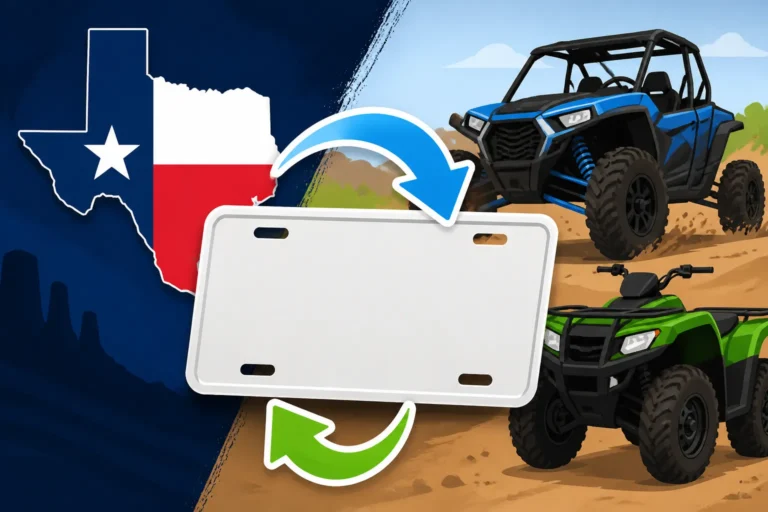
Unlike the annual registration stickers you get for your car, the Texas OHV plate does not expire. Ever. Once you've paid the fee and received your plate, it's permanently assigned to that specific off-highway vehicle for as long as it exists in Texas. There are no annual fees to pay to keep the plate active, no stickers to affix, and no renewal deadlines to remember. This "never expires" rule is a huge relief for many owners, removing a common administrative burden associated with other vehicles. [Why a Texas OHV Plate Never Expires]
This permanent status makes the Texas OHV plate a distinct entity in the world of vehicle identification. It's a testament to the state's intent: to provide a way to identify these machines for limited purposes without creating an ongoing bureaucratic process for owners who largely use their vehicles off-road. You literally get it once, and then you're done with that specific plate for good.
Comparing to Vehicle Registration
The non-expiring nature of the OHV plate is a stark contrast to how Texas handles passenger vehicle registration. For your car, truck, or motorcycle, you receive a new registration sticker every year after paying a renewal fee. This annual process ensures that vehicles on public roads are consistently updated in the state's system and that their owners are contributing to road infrastructure and maintenance. You also typically need to pass an inspection before you can renew your vehicle’s registration.
The Texas OHV plate, however, stands outside this cycle. It's a one-and-done administrative task. This difference can often lead to frustration or misunderstanding, especially for new OHV owners who might be diligently looking for a renewal notice that will never arrive. It highlights that an OHV, despite having a title and a plate, is fundamentally treated differently than a traditional street-legal vehicle in Texas. It's not about being "registered for the road" but rather having an identifier for those rare instances where a brief stint on a public road is unavoidable or permitted.
The Plate Stays With the Machine
Another unique aspect of the Texas OHV plate is its attachment to the machine itself, rather than the owner. When you sell your ATV or UTV in Texas, the OHV plate typically stays affixed to the machine. It transfers directly with the vehicle to the new owner, much like a VIN or a manufacturer's label. The new owner does not apply for a new plate or "renew" the old one; they simply continue to use the existing plate that came with the OHV. [A Texas Plate That Stays With the Machine]
This aspect is critical for both buyers and sellers to understand. As a seller, you generally do not remove the OHV plate, as you would a personal license plate from a car. As a buyer, you should expect the OHV plate to already be on the machine, assuming it was issued for that vehicle previously. This streamlined transfer process eliminates the need for further plate-related paperwork during a change of ownership, simplifying transactions between private parties and even dealerships. When preparing documentation for a sale, perhaps using a template from a service like LawDepot, ensure that all parties understand the plate's permanent attachment to the vehicle.
Common Scenarios and the OHV Plate
Understanding that the Texas OHV plate never expires is one thing, but how does that play out in real-world situations? Life with an off-highway vehicle isn't always smooth trails and open fields; sometimes, you run into bumps in the administrative road.
Buying or Selling an OHV in Texas
When you're involved in buying or selling an OHV in Texas, the non-renewable, machine-specific nature of the plate simplifies things considerably. If you're buying an OHV that already has a Texas OHV plate, you don't need to do anything about that plate. It stays on the machine, and you simply continue to use it for its intended purposes. Your main focus as a buyer will be transferring the title into your name and paying the appropriate use tax.
For sellers, it means one less thing to worry about. You're not responsible for "turning in" the plate or transferring it to your new machine. It goes with the vehicle to its next owner. This makes the transaction smoother, allowing both parties to focus on the essential paperwork, like the bill of sale and the title transfer. Many folks preparing a bill of sale, perhaps using a customizable template from LawDepot, appreciate that the plate isn't another item to manage in the transfer. [Selling an OHV and Signing a Texas Title]
Lost, Stolen, or Damaged Plates
Even though the Texas OHV plate doesn't expire, life happens. Plates can get lost on a rough trail, damaged in an accident, or even stolen. In these instances, you're not "renewing" the plate; you're requesting a replacement. This is an important distinction because the process is different from an annual renewal. You'll typically need to visit your county tax office again, fill out an application for a duplicate plate, and pay a small fee.
The replacement process confirms that the original plate's identifying number is still tied to your machine, but a new physical plate is being issued. It’s not about extending the validity of the plate, as it was already permanent, but about providing a physical stand-in for the missing or damaged one. Think of it like replacing a lost car title; you're not renewing the title itself, just getting a new copy. [Texas OHV Plate Replacement] This ensures that your OHV remains identifiable for any permitted road use, upholding the integrity of the system.
The OHV Decal vs. The OHV Plate
Here's where the biggest source of confusion lies for many Texas OHV owners: the difference between the OHV plate and the OHV decal. People often conflate these two, leading them to believe their plate needs renewing annually. Let’s set the record straight:
- The Texas OHV Plate: This is the metal plate we've been discussing. It’s permanent, one-time issue, never expires, and attaches to the machine itself. [The Texas OHV Plate Explained]
- The Texas OHV Decal: This is a sticker you affix to your OHV (usually near the handlebars or on a visible fender). This decal does expire annually and does need to be renewed. It's typically required for OHVs operating on public lands or trails that receive state funding through the Texas Parks and Wildlife Department.
The decal is essentially a user fee for access to many public riding areas, and its purpose is to help fund the development and maintenance of these trails. So, while your metal plate is good forever, your colorful little decal needs yearly attention. This is likely the "renewal" people are thinking of when they ask about renewing their OHV plate. Many parks will check for this current decal, so make sure yours is up to date. [When a Texas OHV Decal Expires]
Costs Associated with the Texas OHV Plate (and Decal)
Understanding the financial side of OHV ownership in Texas means separating the costs for the non-expiring plate from the annually renewable decal. These are distinct fees that serve different purposes, and knowing the difference will help you budget and stay compliant.
Initial Plate Cost
The cost for the actual Texas OHV plate is notably low, often capped by state law. This is a one-time fee you pay when you first apply for the plate at your county tax office. It's a minimal expense compared to the overall cost of an OHV, reflecting its role as a permanent identifier rather than a revenue-generating annual registration. This cap ensures accessibility for all OHV owners who need the plate for limited road use. [The $10 Cap on a Texas Plate]
This initial fee covers the administrative cost of issuing the plate and integrating it into the state's system. Once paid, you won't encounter any recurring charges for the plate itself. It's part of the upfront investment in ensuring your machine meets Texas's requirements for those specific, limited scenarios where it might touch a public roadway.
Decal Costs and Renewal
While the OHV plate is a one-and-done deal, the Texas OHV decal is an annual commitment. This small sticker comes with an annual fee and is what actually needs to be renewed each year. The decal year typically runs from September 1st to August 31st, regardless of when you purchase it, so it's a good idea to mark your calendar for annual renewal. [Texas OHV Decal Cost]
The cost of the decal is also relatively modest, but it is recurring. You can often purchase or renew your decal online, by phone, or at various authorized dealers and parks. This annual fee plays a vital role in funding OHV-related initiatives across the state, and failing to have a current decal could mean you're turned away from public riding areas or face fines if caught riding on designated public trails without one.
Understanding the Purpose of Each Fee
It helps to think about where your money goes for each of these items.
- OHV Plate Fee: This one-time fee primarily covers the administrative costs of issuing the permanent physical plate and recording its assignment to your specific OHV. It's about establishing official identity for the machine in the state's titling records. The money generally goes towards the county's operational costs for handling these transactions. [Where Texas OHV Title Money Goes]
- OHV Decal Fee: This annual fee is specifically designated to support the Texas Parks and Wildlife Department's OHV program. The funds generated from decal sales are often used for:
- Trail Development and Maintenance: Building new trails and keeping existing ones in good condition.
- Educational Programs: Funding safety courses and promoting responsible riding.
- Grant Programs: Providing financial assistance to public and private entities that manage OHV parks and trails.
So, while the plate is a foundational identification cost, the decal is your recurring contribution to the health and growth of the Texas OHV riding community and its infrastructure. [Where Texas OHV Decal Money Goes] Being aware of these distinctions ensures you’re not just compliant, but also informed about how your fees contribute to the wider OHV landscape in Texas.
In conclusion, the Texas OHV plate does not expire and never needs to be renewed. Once you've obtained it, it's permanently assigned to your machine. However, don't confuse this with the annual Texas OHV decal, which does need to be renewed each year to legally access many public riding areas. By understanding these two distinct identifiers, you can ensure you’re always in compliance and ready to hit the trails responsibly.
Disclaimer
This article is for general informational purposes only and does not constitute professional advice. Laws, prices and regulations vary by location and change over time. Consult a qualified professional for guidance on your specific situation.