Titling at a Texas County Tax Office
Getting your ATV or UTV legally recognized in Texas can sometimes feel like navigating a maze, especially when you're used to the clear-cut rules for cars and trucks. Many folks get confused about where to go, what papers to bring, and what fees they really owe. This guide is here to clear up all that uncertainty, walking you through the straightforward process of titling your off-highway vehicle (OHV) at your local Texas County Tax Office, ensuring you know exactly what to do for a smooth experience.
Understanding the Texas Titling Landscape for OHVs
When you get a new ATV or UTV in Texas, or even a used one, the titling process is a crucial step that many riders misunderstand. It's not quite like registering your pickup truck, and knowing the difference from the start can save you a lot of headaches and wasted trips to the wrong office.
Why Texas Titles, But Never Registers, OHVs
One of the biggest sources of confusion for new and even seasoned OHV owners in Texas is the distinction between titling and registration. For your car, you do both. For an ATV or UTV, it’s a different story. Texas law requires you to obtain a title for your off-highway vehicle, which establishes legal ownership. This title proves that the machine belongs to you, much like a title for a car. However, Texas explicitly does not offer or require registration for ATVs and UTVs for general off-road use. This means you won't get annual registration stickers or tags that permit road use, because these machines are fundamentally designated for off-highway enjoyment. It's a key difference that sets Texas apart from some other states. The state simply wants to make sure there's a clear chain of ownership, especially for tax purposes and in case of theft. This is why you'll often hear us talk about [Why Texas Titles But Never Registers an OHV].
The Role of the County Tax Assessor-Collector
When it comes time to handle the paperwork for your ATV or UTV, your first and usually only stop is the County Tax Assessor-Collector's office. This isn't the Department of Motor Vehicles (DMV), though many people naturally assume it is. The County Tax Assessor-Collector's office, often just referred to as the "tax office," is the local branch of state government responsible for a wide range of tasks, including vehicle titling, property taxes, and sometimes voter registration. For OHV titling, they are your go-to. They handle the processing of your application, collect any necessary fees and taxes, and ultimately issue your Texas OHV title. This decentralized system means that while the core rules are statewide, the specific procedures or wait times can vary slightly from one county to another, so it's always a good idea to check your local county's website for any unique requirements or to see if you need an appointment.
Distinguishing ATVs, UTVs, and Other Off-Highway Vehicles
Texas law has specific definitions for what it considers an "off-highway vehicle," and this is important because it dictates whether a machine even needs a title under these rules. Generally, ATVs (all-terrain vehicles) and UTVs (utility terrain vehicles, often called side-by-sides or ROVs) fall squarely into this category. These are typically designed for off-road use, have specific tire types, and are not intended for public roads. However, the definition can extend to other machines too, like certain sand rails, mini-trucks, or even golf carts in specific scenarios. It's crucial to understand what [What Texas Counts as an Off-Highway Vehicle] is, because if your machine doesn't fit the definition, it might have different titling or registration requirements entirely. For instance, a golf cart might get its own special plate if it's meant for certain low-speed road use, but a true ATV is strictly off-highway. Knowing this distinction helps ensure you're applying for the correct type of title.
Preparing for Your Visit to the County Tax Office
Nobody likes showing up to an office, waiting in line, and then being told they don't have all the right papers. It's incredibly frustrating, and it happens all the time when people aren't fully prepared for titling an ATV or UTV. A little bit of foresight can save you a lot of time and hassle.
Essential Documents You Must Bring
To title your ATV or UTV in Texas, you'll need a handful of key documents. Think of it as building your case for ownership. First and foremost, you'll need the original Manufacturer's Certificate of Origin (MCO) if you bought the machine new from a dealer. This is like the birth certificate for your OHV. If you bought it used, you'll need the previous owner's properly signed-over Texas Title, or an out-of-state title if it's coming from elsewhere. Make sure the seller's signature is on the back where indicated, and that any lien has been released.
You'll also need a completed application for title, known as [Filling Out Texas Form 130-U for an OHV]. This form is critical and must be filled out accurately. It asks for details about you, the buyer, the seller, and the vehicle itself, including the Vehicle Identification Number (VIN). If you're buying from a private seller, a bill of sale is also highly recommended, even if not strictly required in all cases. This offers an extra layer of protection and proof of purchase, documenting the sale price and terms. Websites like LawDepot can provide customizable bill of sale templates if you need one to make sure all important details are covered. Finally, you'll need your valid Texas photo ID, like a driver's license. Don't forget that!
Proof of Sales or Use Tax Payment
This is often where people get tripped up. When you title an OHV in Texas, you generally have to pay sales tax (if bought from a dealer) or use tax (if bought from a private party or out of state). The tax office needs proof that this tax has been paid or that you are exempt. If you bought from a Texas dealer, they usually collect the sales tax from you and remit it to the state, and the Form 130-U will reflect this. If you bought from a private seller or from an out-of-state dealer, you'll be responsible for calculating and paying the use tax directly.
Texas calculates sales and use tax based on the purchase price or the standard presumptive value (SPV) of the vehicle, whichever is higher, to prevent people from declaring a ridiculously low sale price to avoid taxes. The state sales tax rate is 6.25%, and local taxes can add a bit more. You'll often need to fill out a separate tax form or declare the purchase price on the Form 130-U. Make sure you understand [Texas Use Tax on an Out-of-State OHV] if you're bringing a machine in from across state lines, as this is a common scenario. Without proof of tax payment or a valid exemption, the county clerk will not issue your title.
Booking Your Time at the Counter (If Applicable)
In some larger counties, or during particularly busy times, showing up unannounced at the County Tax Assessor-Collector's office can mean a very long wait. Many offices now offer online appointment scheduling systems. It's always a good idea to check your specific county's website before you head out. A quick search for "County Tax Assessor-Collector [Your County Name] Texas" should get you to the right place.
Booking an appointment ensures that someone will be available to help you at a specific time, dramatically reducing your waiting period. If appointments aren't available, try to go during off-peak hours, like mid-morning on a Tuesday or Wednesday. Avoid Mondays, Fridays, and lunchtimes if you can, as these are typically the busiest. A little planning here can save you hours of sitting around, staring at the clock, wondering if you'll ever get to the front of the line.
The Titling Application Process: Step-by-Step
Once you've gathered all your documents and maybe even booked an appointment, it's time to head to the county tax office. Knowing the flow of the process can help you feel more confident and ensure you don't miss any steps.
Filling Out the Texas Title Application (Form 130-U)
The core of your titling adventure is Texas Form 130-U, which is officially titled "Application for Texas Certificate of Title." This isn't just a suggestion; it's mandatory. You can usually download and print this form from the Texas Department of Motor Vehicles (TxDMV) website or pick one up at the county tax office. I recommend filling it out neatly and completely before you go, if possible, to save time at the counter.
The form asks for essential information: the vehicle's year, make, model, and the crucial VIN. It will also ask for your full name, address, and driver's license number as the purchaser, and similar information for the seller. Make sure the VIN on the form exactly matches the VIN on your MCO or previous title, as well as the VIN stamped on the OHV itself. A simple typo can cause a rejection. You'll also declare the purchase price (or gift value) and indicate how the sales/use tax is being handled. For a bill of sale, many people turn to resources like LawDepot to ensure they have all the correct fields and legal language in place for a smooth transfer. Take your time, use black or blue ink, and avoid white-out; if you make a mistake, it's often better to just start with a fresh form. This form is truly the foundation, so getting it right is key.
Presenting Your Documentation and Fees
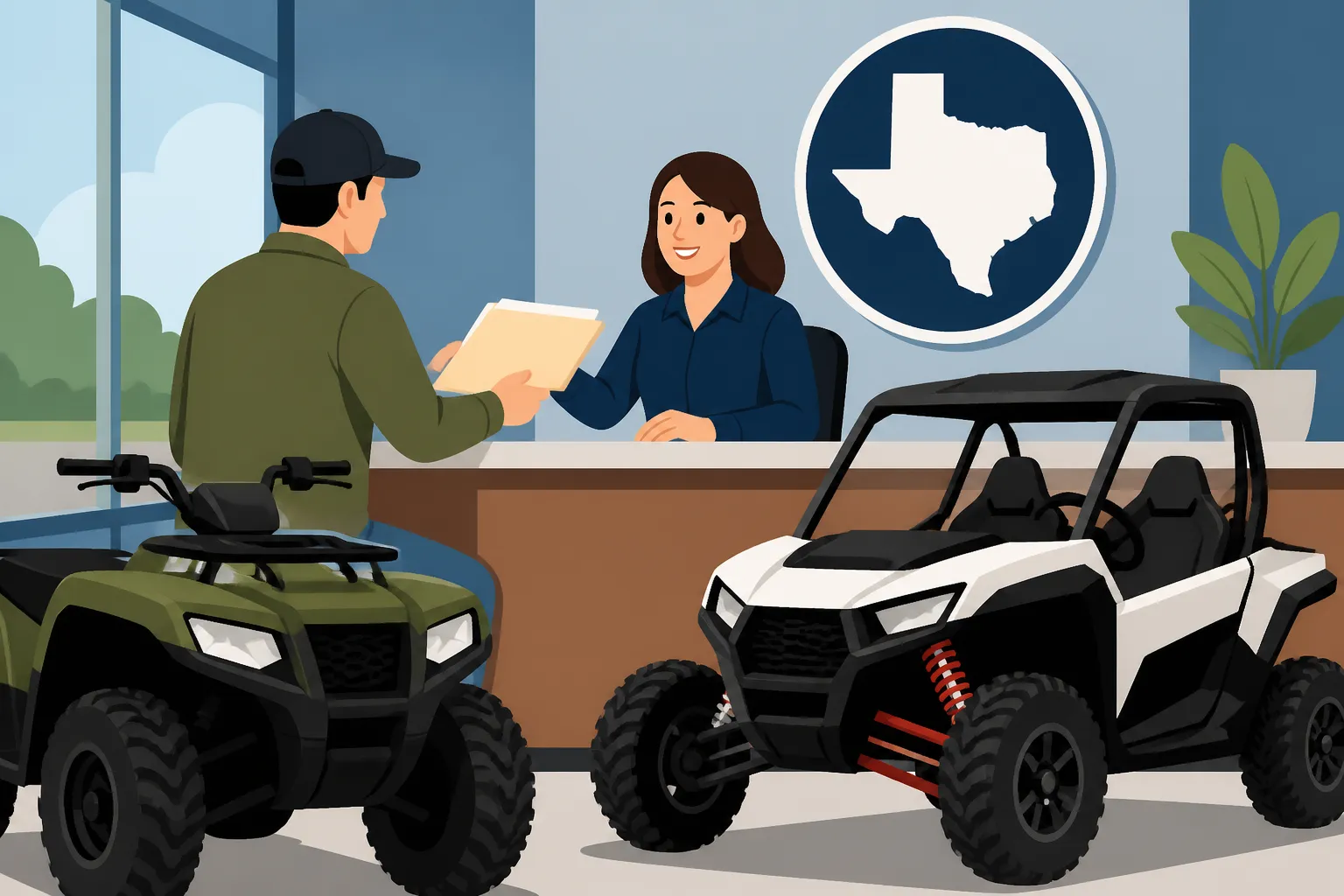
When your number is called or your appointment time arrives, you'll present all your carefully prepared documents to the clerk. This includes your completed Form 130-U, the MCO or previous title, your ID, and proof of sales or use tax payment. The clerk will meticulously review everything to ensure all fields are filled out correctly, signatures are present, and all supporting documents are valid. They'll also verify the VIN from your paperwork against their system.
At this point, you'll be assessed the necessary fees. These typically include the title application fee, which is generally a flat rate, and potentially a local processing fee. The exact costs can vary slightly, so checking [Texas ATV Title Fees Vary by County] for your specific area is a smart move. They will calculate the final amount due. You'll usually pay by cash, check, or sometimes debit/credit card, though payment methods can differ by county office. Be ready to pay the full amount on the spot. If everything checks out and payments are made, the clerk will process your application and give you a receipt.
Requesting Your Texas OHV License Plate
This is where many people have a lightbulb moment. Unlike a street-legal vehicle, your OHV doesn't automatically come with a license plate for identification. In Texas, an OHV license plate is issued only upon request when you're titling your machine. It's a small, distinct plate meant primarily for identification on public lands where a decal might otherwise be required, or simply to show that the machine has a valid Texas title.
When you're at the counter, make sure to explicitly ask for the OHV license plate. Don't assume it will be given to you. There's a minimal fee for this plate, capped by state statute at a very reasonable amount, often just $10 or so. It's a one-time fee, and the plate itself never expires and stays with the machine for its lifetime, even if it changes owners. Many riders find it invaluable for riding at state parks or private OHV parks that might check for a titled machine. For more details on this, check out [The Texas Off-Highway Vehicle License Plate] and [What the Counter Charges for the Plate]. Adding this plate is a simple request that adds a layer of convenience to your off-roading adventures.
Common Pitfalls and How to Avoid Them
Even with all the preparation, things can sometimes go wrong. It's like trying to navigate a tricky trail; a small misstep can lead to a big delay. Understanding the common issues people face at the tax office can help you proactively avoid them.
Incomplete or Incorrect Paperwork
This is perhaps the most frequent reason why people get turned away from the counter. A missing signature, a blank field, a crossed-out number, or a VIN that doesn't perfectly match can instantly halt the process. The clerks are strict about this because they are dealing with legal documents of ownership.
Imagine you're buying a used side-by-side from a private seller. You get a handwritten bill of sale, but it doesn't include the seller's address or the full VIN. When you go to the tax office, the clerk might reject it for lack of complete information, forcing you to track down the seller again to get a proper, more formal bill of sale. Or perhaps you forgot to sign the "Applicant's Signature" line on Form 130-U. These small omissions mean you'll have to correct the paperwork and likely return another day. To avoid this, carefully review every line of your Form 130-U, the MCO, or the previous title before you even leave your house. If you used a template from a service like LawDepot for your bill of sale, double-check that every field is filled out accurately and completely. It's better to spend an extra 10 minutes checking your documents at home than an extra day (or more) dealing with corrections.
Issues with the Bill of Sale or Previous Title
Beyond simply being incomplete, there can be more complex problems with these core documents. If you're buying a used machine, the seller's previous title is paramount. Ensure it's the original physical title, not a copy. Check for any alterations or signs of tampering. Crucially, verify that the seller's name on the title matches their ID and that any existing liens have been officially released. If the title shows a lienholder (like a bank), but there's no official lien release document attached, the tax office won't process the transfer.
Another common issue arises when buying a used machine without a clear title history, or if the seller has lost the original title. While it's possible to title a machine with no previous title or a lost title, it requires additional steps and documentation, and it's generally much more difficult. You might need to provide extra affidavits, a bonded title application, or a more rigorous [Checking a VIN Before a Texas Purchase] to ensure the machine isn't stolen. My advice? Be wary of any private seller who cannot produce a clear, original title. It's often a sign of trouble down the road.
Understanding the "Off-Highway Use Only" Remark
When you receive your shiny new Texas OHV title, you might notice a distinct remark stamped or printed on it: "Off-Highway Use Only." This isn't a mistake; it's a very intentional declaration from the state. This remark serves as a permanent reminder that your ATV or UTV is legally designated for off-highway operation and is generally not permitted on public roads in Texas.
Many new owners see this and wonder what it means for their occasional need to cross a road or ride a short distance. While there are very limited, specific exceptions for road use (like for agricultural purposes or crossing a road at a 90-degree angle), the "Off-Highway Use Only" stamp clarifies the vehicle's primary legal status. It prevents any misunderstanding that this title somehow allows you to register the machine for street use. This remark is tied to [The Off-Highway Use Only Remark on a Texas Title] and is an important part of why Texas OHVs are treated differently from street-legal vehicles. It reinforces the fact that your machine is for the trails, the ranch, or the private land, not the paved highways of Texas.
Special Scenarios at the County Tax Office
Not every titling situation is a straightforward purchase from a local dealer. Life throws curveballs, and sometimes your ATV or UTV comes into your possession through different circumstances. The good news is, the tax office has procedures for these unique situations too.
Titling an Out-of-State Purchase
Bringing an ATV or UTV into Texas from another state is a very common scenario, especially if you found a great deal online or bought it while traveling. The process is largely similar to an in-state purchase, but with a couple of critical differences. First, you'll need the out-of-state title, properly signed over by the seller. Just like an MCO, this proves the chain of ownership. Second, and this is where most people face the biggest hurdle, you'll almost certainly need to pay Texas use tax.
Texas doesn't want to miss out on tax revenue just because you bought your machine elsewhere. So, if you bought an OHV from an out-of-state dealer or a private party, you'll be responsible for calculating and remitting the Texas use tax yourself. This is declared on Form 130-U. The rate is the same as the sales tax (6.25% state, plus local if applicable), and it's based on the purchase price or the average selling price of a similar vehicle, whichever is higher. Be prepared to provide a detailed bill of sale or invoice to substantiate the purchase price. For more on this, check out [Texas Use Tax on an Out-of-State OHV]. Without proof of this use tax payment, your title application will be denied.
Titling an Inherited or Gifted Machine
It's a wonderful thing to receive an ATV or UTV as a gift, or to inherit one from a loved one. However, the titling process differs slightly because there's no "purchase price" in the traditional sense, and therefore, no sales or use tax is typically due.
If you're titling an inherited machine, you'll need the original title, a copy of the death certificate, and often a probate document or an affidavit of heirship, especially if there's no will or if the estate is complex. The goal is to prove you are the legal successor to the deceased owner. For a gifted machine, you'll still need the original title, properly signed over by the giver. On Form 130-U, you'll indicate that it's a gift. While sales/use tax is typically waived for gifts, you might still need to declare a "fair market value" on the form for record-keeping purposes, even if no tax is collected. Some counties may require a notarized statement from the giver confirming the gift. It's best to consult your specific county tax office or refer to resources like LawDepot for gift affidavits to ensure you have all the necessary legal paperwork in order. For further reading, look into [Titling an Inherited Machine in Texas].
Dealing with a Lost Title or No Previous Title
This is arguably one of the most challenging scenarios, but not impossible. If you've bought a used OHV and the seller has lost the original title, or if you've had your own title disappear, you'll need a duplicate title first. To request a [Replacing a Lost Texas OHV Title], you'll typically need to be the registered owner (or the legal heir) and fill out an application for a certified copy of title (Form VTR-34). There's a fee for this, and it can take some time to process.
If the machine has genuinely "never been titled" in Texas or any other state (which is rare for newer machines but can happen with very old or custom-built ones), the process becomes more involved. You might need to provide a Bill of Sale, an MCO (if available), and sometimes even a VIN inspection to verify the vehicle's identity. In some extreme cases, you might have to apply for a bonded title, which involves getting a surety bond to protect against claims from a legitimate owner who might surface later. This is often the path for vehicles with murky ownership histories. Always exercise extreme caution when buying an OHV without a clear title, as you could be purchasing a stolen vehicle or one with unresolved liens.
What Happens After You File: Your Texas OHV Title and Plate
You've navigated the paperwork, paid the fees, and made your requests. What's next? It's natural to wonder when you'll get your title in hand and what exactly that OHV plate means for your riding.
Receiving Your Official Texas OHV Title
After your application is approved and processed at the County Tax Assessor-Collector's office, you won't walk out with your physical title that very day. Instead, the county office sends your approved application to the Texas Department of Motor Vehicles (TxDMV) for final processing. The TxDMV then mails the official Texas Certificate of Title directly to you, usually within a few weeks. The exact turnaround time can vary based on processing volume, but typically, you can expect it within 3 to 4 weeks.
It's vital to keep this document in a safe place once it arrives. Your title is proof of legal ownership and is absolutely necessary if you ever decide to sell the OHV, need to prove ownership for insurance purposes, or have to handle any future legal matters regarding the machine. Remember, this paper title will also prominently feature that "Off-Highway Use Only" remark, confirming its intended purpose.
Understanding Your Texas OHV License Plate
If you remembered to request it (and I hope you did!), you'll also receive your Texas OHV license plate, usually right at the counter when your application is approved. This small, often white or silver, rectangular plate will have a distinct "OHV" designation along with a unique serial number. It's often misunderstood, so let's clarify its purpose.
This plate is specifically designed for off-highway vehicles and is not a "street legal" registration. It doesn't grant you general permission to ride your ATV or UTV on public roads. Its primary function is identification. Many public OHV riding areas in Texas, like those in the National Forests, or even some private parks, may require or appreciate having this plate visible on your machine for identification purposes. Think of it as an official state ID for your OHV. The best part? It's a one-time purchase with a very small fee, and once it's issued, it never expires and remains with the machine for its entire lifespan, even through multiple owners. This makes it incredibly convenient, as you don't have to worry about annual renewals or additional costs. For a deeper dive, check out [Why a Texas OHV Plate Never Expires] and [A Texas Plate That Stays With the Machine].
What the County Charges for the Title and Plate
Let's talk about the money side of things. When you visit the County Tax Assessor-Collector's office to title your ATV or UTV, you'll encounter a few specific fees. It's not usually a huge sum, but it's important to know what you're paying for.
The main costs are:
| Fee Type | Description | Typical Cost (Check local office for exact figures) |
|---|---|---|
| Title Application Fee | The base fee for processing your application for a Texas Certificate of Title. | Generally a flat state fee |
| Local Processing Fee | Some counties may add a small additional fee for their local administrative costs. | Varies by county, often a few dollars |
| OHV License Plate Fee | The one-time fee for the physical OHV identification plate, issued only upon request. | Capped by state statute, often around $10 |
| Sales/Use Tax | 6.25% state sales tax on the purchase price (or presumptive value), plus any applicable local taxes. | Varies significantly based on purchase price |
Remember, the sales or use tax is generally the largest variable cost, as it's a percentage of your OHV's value. The other fees are usually fixed and quite minimal. Always confirm the exact amounts with your specific county tax office before your visit, as [Texas ATV Title Fees Vary by County] and can change. By having a clear understanding of these charges, you can budget accordingly and avoid any surprises at the counter.
Disclaimer
This article is for general informational purposes only and does not constitute professional advice. Laws, prices and regulations vary by location and change over time. Consult a qualified professional for guidance on your specific situation.