Why Texas Titles But Never Registers an OHV
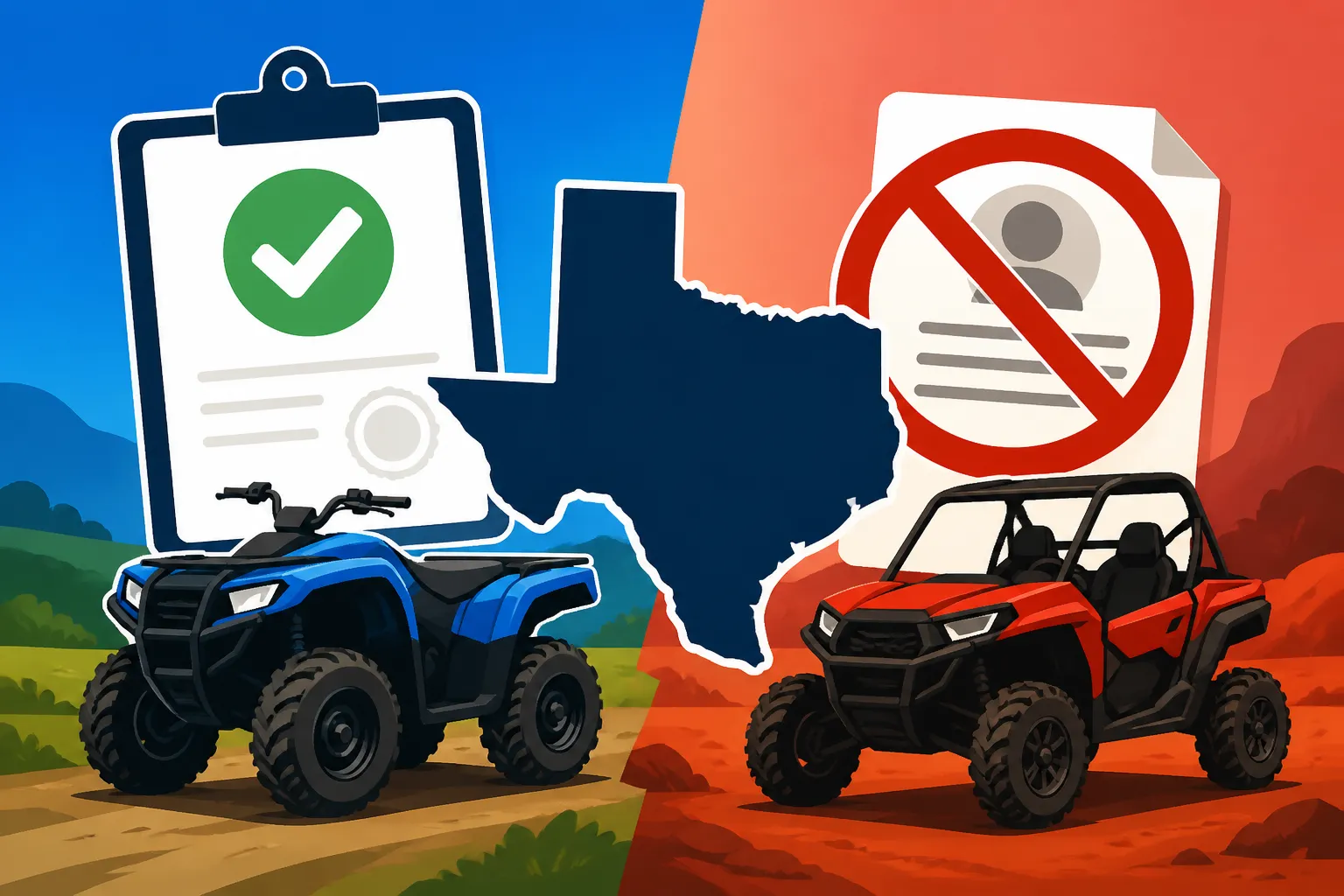
One of the most common questions new off-highway vehicle (OHV) owners in Texas grapple with is the difference between titling and registration. Many folks assume that if they have a title, their ATV or UTV is also "registered" in the traditional sense, like a car or truck, and can hit the open road. This guide will meticulously break down why Texas requires a title for your OHV but explicitly does not offer or require traditional road registration, helping you navigate the sometimes-confusing world of Texas OHV laws.
Understanding the Core Distinction: Title Versus Registration
It’s easy to get these two concepts mixed up, especially if you’re used to dealing with cars, trucks, and other on-road vehicles. For those, a title and registration usually go hand-in-hand. However, when it comes to your ATV, UTV, or sand rail here in the Lone Star State, the rules take a distinct turn. The distinction is crucial, not just for paperwork, but for understanding where and how you can legally operate your machine.
What an OHV Title Really Means in Texas
Think of an OHV title in Texas as the ultimate proof of ownership. Just like the title to your home or your primary vehicle, it’s the legal document that officially declares who owns that specific off-highway vehicle. This piece of paper is incredibly important for several reasons. First, it establishes clear legal ownership, which is absolutely vital when you buy a machine, especially from a private seller, or when you eventually decide to sell it yourself. Without a title, proving you are the rightful owner can become a nightmare, opening the door to disputes and potential legal headaches. The title includes critical information like the Vehicle Identification Number (VIN), make, model, and year, linking that specific machine to you. This also plays a huge role in preventing theft and aiding law enforcement in recovering stolen vehicles because it provides an indisputable record of who the OHV belongs to. When you take the step of [Titling an ATV in Texas], you’re solidifying your legal claim to that machine.
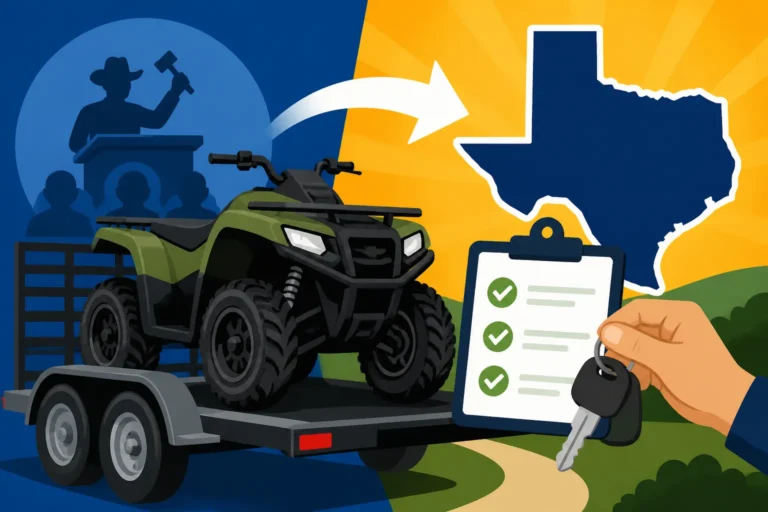
Secondly, the title facilitates the legal transfer of ownership. When you purchase an ATV or UTV, the seller will sign over the title to you, marking the official change of hands. This process is documented at your local county tax office, ensuring a clear chain of ownership. It’s a core document for any legitimate transaction and a safeguard against fraud. Even if you're not planning to sell anytime soon, having that title tucked away securely gives you peace of mind that your investment is legally protected.
Why "Registration" Doesn't Apply to OHVs for Road Use
Now, here’s where the confusion often sets in. For regular passenger vehicles, "registration" is the annual process of paying fees and receiving a sticker and license plates that permit the vehicle to be driven on public roads and highways. This registration confirms the vehicle meets certain state requirements (like emissions or inspection in some areas) and that all applicable taxes and fees for road use have been paid. For OHVs in Texas, this type of registration simply does not exist because these vehicles are fundamentally not designed or intended for public road use.
The Texas Legislature, in its wisdom, has classified ATVs, UTVs, and similar machines as "off-highway vehicles." This classification is key. It immediately sets them apart from vehicles meant for streets and highways. Because they are not built to meet the safety standards for public road travel – things like turn signals, proper lighting for street use, or even the basic structural integrity for high-speed road environments – the state does not provide a mechanism for them to be registered for such use. So, while you'll proudly hold a title proving ownership, you'll never receive a registration sticker or traditional license plate for your OHV that allows it to operate freely on Texas streets. This distinction is paramount to avoid fines and understand the legal limitations of your machine.
The Texas Legislature's Intent for Off-Highway Vehicles
The legal framework surrounding off-highway vehicles in Texas isn't arbitrary; it's the result of carefully considered legislative intent designed to promote safety and define appropriate vehicle usage. Understanding this background helps clarify why the "title but no registration" rule exists for OHVs.
The Legislative History Shaping OHV Laws
Texas’s approach to OHVs has evolved over time, reflecting changes in vehicle technology, rider popularity, and public safety concerns. For a long time, the laws governing these vehicles were housed under Chapter 663 of the Texas Transportation Code. This chapter laid out the foundational definitions and restrictions. However, recognizing the growing diversity and use of OHVs, and perhaps to streamline the regulations, the state made significant updates. In 2019, House Bill 1548 was passed, which essentially superseded and replaced Chapter 663 with a new framework under Chapter 681.
This legislative shift wasn't just about changing chapter numbers; it refined the definitions, updated safety requirements, and most importantly for our discussion, further solidified the distinction between off-highway and on-highway vehicles. The intent behind these changes was clear: to create a comprehensive legal structure that acknowledges the specific characteristics and uses of OHVs. The legislature recognized that while OHVs are powerful and useful machines, their design makes them unsuitable for general road travel. This historical context illustrates a deliberate choice by the state to treat OHVs differently from cars and trucks, establishing them as primarily recreational or utility vehicles confined to off-road environments.
Defining an Off-Highway Vehicle in Texas
So, what exactly does Texas consider an "off-highway vehicle"? This is a critical definition because it’s what triggers the title-only requirement and the absence of road registration. The law broadly defines an OHV as a motor vehicle that is:
- Equipped with a saddle for the use of the rider
- Designed to travel with three or more wheels in contact with the ground
- Is not designed for use on a public highway
- Does not comply with federal motor vehicle safety standards for motor vehicles.
This definition encompasses a wide range of machines you might own or be looking to buy. Common examples include:
- All-Terrain Vehicles (ATVs): These are typically four-wheeled vehicles, often ridden with a straddle seat and handlebars, designed for various terrains.
- Recreational Off-Highway Vehicles (ROVs) or Utility Terrain Vehicles (UTVs): Often called side-by-sides, these usually have bucket seats, a steering wheel, and a roll cage, resembling miniature cars, and are popular for recreation and utility work.
- Sand Rails: Custom-built vehicles primarily designed for sand dunes, often with an exposed frame.
Crucially, the definition explicitly states "not designed for use on a public highway." This is the linchpin of the title-only system. Because these vehicles don't meet the safety and design specifications for on-road travel, the state simply doesn't provide a way to register them for that purpose. Understanding [What Texas Counts as an Off-Highway Vehicle] is the first step to knowing how to legally own and operate your machine.
The Practical Implications of a Title-Only System
While the absence of road registration might initially seem like a burden or an oversight, the title-only system for OHVs in Texas actually serves several important practical purposes, primarily centered around proving ownership and facilitating legitimate transactions. It's a system designed to protect owners and maintain order in the secondary market for these specialized vehicles.
Proving Ownership and Preventing Theft
Imagine purchasing a brand-new ATV or UTV from a reputable dealer. You’ll receive a Manufacturer’s Statement of Origin (MSO), which is essentially the birth certificate of your vehicle. You then take this MSO to your county tax office to apply for your official Texas title. This title, once issued, becomes your unassailable proof of ownership. It contains all the identifying information about your machine, most importantly its unique Vehicle Identification Number (VIN). This VIN is stamped on the frame of your OHV, creating a direct link between the physical machine and your legal documentation.
This meticulous system is a powerful deterrent against theft. If an OHV is stolen, law enforcement can use the VIN to trace it back to the rightful owner through the state's titling records. Without a valid title in hand, selling a stolen OHV becomes significantly harder, as any legitimate buyer will demand to see the title to ensure they are not purchasing stolen property. This makes recovery more likely and provides a legal basis for reclaiming your property. Furthermore, if you ever need to file an insurance claim, your title will be a primary piece of evidence demonstrating your insurable interest in the vehicle. It's truly a foundational document for any OHV owner in Texas.
Facilitating Legitimate Sales and Transfers
The title-only system is essential for smooth and legal transfers of ownership, whether you're buying a used machine or selling your own. When you're buying from a private seller, the process centers around the seller signing over their existing Texas title to you. This endorsement on the back of the title officially transfers ownership. Without a clear title, a private sale can become incredibly risky, leaving the buyer vulnerable to past liens, undisclosed issues, or even unknowingly buying a stolen vehicle. That's why smart buyers insist on seeing a clean, properly endorsed title before handing over any cash.
For your part, when you decide it’s time to upgrade or simply sell your current OHV, the process will involve you signing the back of your Texas title in the designated sections, transferring it to the new owner. It's also wise to use a bill of sale to document the transaction details. A proper bill of sale, which you can easily find templates for through services like LawDepot, complements the title transfer by providing a record of the purchase price, date, and specific terms of the sale. This comprehensive approach, including the title transfer and a solid bill of sale, protects both the seller and the buyer. It solidifies the change of ownership and provides a paper trail for tax purposes. For a deeper dive into this process, check out our guide on [Selling an OHV and Signing a Texas Title] or [Buying a Used ATV in Texas].
| Feature | Texas OHV Title | Texas OHV Registration (Traditional Road) |
|---|---|---|
| Purpose | Proves legal ownership | Permits use on public roads |
| Requirement | Mandatory for OHVs (with few exceptions) | Not available for OHVs |
| Document | Paper certificate with owner/vehicle details | Annual sticker, traditional license plates |
| Issue Agency | County Tax Assessor-Collector | Texas Department of Motor Vehicles |
| Transfer | Signed over by seller to new owner | Tied to vehicle, renewed by owner |
| Road Use | Does not grant permission for public road use | Explicitly grants permission for road use |
| Cost Basis | One-time titling fee, sales/use tax | Annual renewal fees, inspection costs |
The Role of the Texas Department of Motor Vehicles and County Tax Offices
Navigating the administrative side of OHV ownership in Texas means understanding which governmental agencies handle what. It's a common misconception that the Texas Department of Motor Vehicles (TxDMV) handles all aspects of vehicle documentation. While they're central to road-legal vehicles, OHVs operate under a slightly different, more localized system for titling.
Your Journey Through the County Tax Office
When it comes to getting a Texas title for your OHV, your primary point of contact will be your local county tax assessor-collector's office. This is where the rubber meets the road, so to speak, for all things titling. You won't be heading to a large state-run DMV center like you might for a driver's license. Instead, you'll visit the same office where you might register your car, pay property taxes, or apply for a marriage license. This local office is empowered by the state to process title applications, collect necessary fees, and ultimately issue your official Texas OHV title.
The process at the county tax office usually involves presenting your proof of ownership (like the MSO for a new machine or a properly signed-over title from a previous owner), a completed application form, and payment for any applicable taxes and fees. These fees typically include a basic titling fee, plus any sales or use tax that might be due on the purchase. The friendly folks at the counter are there to guide you through the paperwork and ensure everything is correctly submitted. They will verify your identification, examine your documents, and process the transaction. Once approved, you'll either walk out with a temporary title or your official title will be mailed to you. For a step-by-step guide on what to expect, refer to our article on [Titling at a Texas County Tax Office].
Why the TxDMV Doesn't Issue OHV Registrations
It's natural to assume that the state's primary motor vehicle agency, the Texas Department of Motor Vehicles (TxDMV), would be involved in all aspects of vehicle oversight. However, for OHVs, their role is more removed, particularly when it comes to registration. The TxDMV’s mission is primarily centered on registering and regulating vehicles designed and intended for public highway use. This includes setting standards, issuing license plates, and overseeing the safety and emissions compliance for cars, trucks, and motorcycles that operate on Texas roads.
Because off-highway vehicles, by their very definition, are not designed for public highways and do not meet the federal motor vehicle safety standards required for such use, they fall outside the TxDMV's purview for traditional road registration. The agency doesn't have a mechanism or a mandate to "register" an ATV or UTV for street use because the state legislature has explicitly deemed these vehicles unsuitable for that purpose. While the TxDMV might have some oversight regarding the overarching laws, the actual hands-on process of titling and the enforcement of OHV-specific regulations are largely handled at the county level or by other state agencies like the Texas Parks and Wildlife Department for public land use. Understanding this division of labor, as detailed in [The Texas Department of Motor Vehicles and OHVs], helps clarify why you won't find a registration option for your OHV.
The "Off-Highway Use Only" Remark and Its Significance
If you’ve ever seen a Texas OHV title, you might have noticed a rather important statement stamped or printed on it: "Off-Highway Use Only." This isn't just a friendly reminder; it's a critical legal designation that profoundly impacts how and where you can operate your ATV or UTV in the state. Ignoring this remark can lead to significant legal consequences and put your safety, and the safety of others, at risk.
What the Stamp on Your Title Truly Implies
The "Off-Highway Use Only" remark on your Texas title is the state's unequivocal declaration that the vehicle is not street legal. It means that your ATV, UTV, or sand rail is restricted to private property, designated off-road parks, and specific, very limited public areas where OHV use is explicitly permitted. This stamp is the legal barrier that prevents these vehicles from being used on public streets, highways, or most county roads. It’s a direct reflection of the vehicle's design and its failure to meet the safety and equipment requirements set forth for on-road vehicles.
For example, an OHV typically lacks features common on street-legal vehicles, such as turn signals, rearview mirrors on both sides, proper headlights and taillights for night driving on roads, and often a differential for smooth turning on pavement. Trying to modify an OHV with aftermarket parts to appear street-legal does not override this designation. The "Off-Highway Use Only" stamp on the title means that, regardless of any additions you make, the vehicle's fundamental classification remains unchanged. This remark is a permanent part of the vehicle's legal identity in Texas and serves as a constant reminder of its intended purpose. To fully grasp its legal weight, our article on [The Off-Highway Use Only Remark on a Texas Title] provides an in-depth look.
Why Texas Will Not Register an ATV for the Road
The decision by Texas to not offer registration for ATVs and UTVs for road use is rooted deeply in safety and legislative principles. It’s not an oversight; it’s a deliberate policy choice. The state recognizes that these vehicles, while incredibly capable in their intended off-road environments, pose significant risks when operated on public highways.
Consider the design differences:
- Suspension and Tires: OHVs have suspensions designed for rough terrain, not smooth pavement, and their knobby tires offer poor traction and wear quickly on asphalt, potentially leading to instability.
- Speed and Handling: While some OHVs can reach high speeds, their handling characteristics at those speeds on paved roads are vastly different and less stable than a car. Quick maneuvers or emergency braking can be hazardous.
- Crash Protection: OHVs offer minimal crash protection compared to cars, lacking crumple zones, airbags, and robust passenger compartments. In a collision with a much heavier, faster road vehicle, the occupants of an OHV are at a severe disadvantage.
- Visibility: Many OHVs have a smaller profile and lower lighting, making them less visible to other drivers, especially in traffic or at higher speeds.
Because these inherent design characteristics make OHVs fundamentally unsafe for public road use, the state does not provide a legal pathway to register them for that purpose. Registering a vehicle implies that it meets certain standards for safe operation on public thoroughfares. Since OHVs do not, providing such registration would essentially sanction unsafe practices. This protective stance is why [Why Texas Will Not Register an ATV for the Road] is a non-negotiable aspect of Texas OHV law, designed to keep riders and the general public safe.
The Optional Texas OHV License Plate: A Point of Confusion
Here’s another point that frequently trips up OHV owners in Texas: the existence of an "OHV license plate." Many people see this plate and immediately think it's a form of registration that allows them to drive on the road. This assumption is incorrect and can lead to costly tickets and legal trouble. The Texas OHV plate is not a road registration; it serves a very specific, limited purpose related to public land access.
Understanding the Purpose of the OHV Plate
The Texas Off-Highway Vehicle License Plate is often misunderstood. It is an optional plate, issued by the county tax assessor-collector’s office, and its primary function is to signify that the OHV is eligible for use on certain public lands and trails managed by the state or federal government that require such identification. It allows park rangers or land managers to easily identify vehicles that are authorized to be on their specific OHV trails. This plate is not a substitute for traditional vehicle registration, and it absolutely does not grant permission to operate your ATV or UTV on public roads or highways, even if those roads are unpaved.
Think of it this way: for a regular car, a license plate allows you on any public road. For an OHV, this special plate merely grants access to specific off-road areas, like portions of the Sam Houston National Forest or certain state parks that have designated OHV trails. It's a land-use permit, not a road-use permit. The fee for this plate is also distinct from typical vehicle registration fees, often being a flat, relatively low cost because it isn’t tied to road maintenance or state infrastructure in the same way. When you see [The Texas Off-Highway Vehicle License Plate], remember its very narrow scope.
Where the OHV Plate Is Required and How It's Obtained
While the OHV plate is optional in the sense that you don’t have to get one if you only ride on private land, it becomes a necessity if you plan to access certain public riding areas in Texas. For instance, if you want to explore the trails at Sam Houston National Forest, or if a particular county or city park with OHV trails requires it, then you'll need this plate affixed to your machine. It serves as visual confirmation that your OHV is documented and, in some cases, that applicable fees for public land use have been paid. It is issued for the life of the machine, meaning you won’t need to renew it annually, further distinguishing it from typical road vehicle registration.
To obtain an OHV plate, you'll go through the same process as titling your OHV at your local county tax assessor-collector's office. You’ll usually need your title or proof of ownership, a completed application, and payment of the small, statutory fee. It's typically issued "on request," meaning you have to specifically ask for it when you're at the counter. The staff will process your request, and you'll typically receive the plate right there. Keep in mind that even with this plate, you're still bound by the "Off-Highway Use Only" designation on your title. It simply opens doors to specific off-road recreation areas, not paved streets. For more details on acquiring one, read [Getting a Plate on Request in Texas].
Exceptions and Nuances: When OHVs CAN Touch Public Roads
Despite the staunch "Off-Highway Use Only" rule, there are extremely narrow, legally defined circumstances where an OHV might legitimately find itself on a public road in Texas. These aren't loopholes for general street riding, but rather carefully crafted exceptions designed to accommodate specific, essential uses. Understanding these nuances is crucial for staying on the right side of the law.
Limited Road Use: Agricultural Operations and Crossing Highways
The most common and significant exception to the no-road-use rule for OHVs in Texas is for bona fide agricultural operations. If you're using your ATV or UTV exclusively for farming, ranching, or other agricultural purposes, the law allows you to operate it on public roads under very specific conditions. These include:
- Roads with a speed limit of 35 mph or less: You can generally operate on these roads during daylight hours.
- During agricultural operations: The use must be directly related to moving equipment, checking fences, herding livestock, or transporting supplies for farm or ranch work.
- Crossing highways: You can cross a public highway, but only at an intersection and at a right angle to the highway, making a complete stop before entering.
This exception is not for joyriding to the corner store, even if you live on a farm. It is strictly for legitimate agricultural use. The vehicle must be equipped with the appropriate safety items for road use in these circumstances, such as a 6-foot orange safety flag, headlights, and taillights. It's important to remember that this is an exception to the general rule, not an invitation for widespread road use. Any deviation from these strict conditions can result in a citation. These are the rare moments a machine that [Why Texas Will Not Register an ATV for the Road] ever touches asphalt.
Additionally, OHVs can cross certain public roads away from an intersection if necessary to reach another part of a property, but again, this requires extreme caution and adherence to safety protocols like stopping and yielding to all traffic. These are moments of necessity, not convenience, and they are rigorously policed.
Navigating Local Ordinances and Master-Planned Communities
Another nuanced area involves local governance. While the state of Texas broadly prohibits OHV use on public roads, it does grant certain municipalities or counties limited authority to create exceptions within their specific jurisdictions. This is where things can get a bit patchwork and confusing, as rules can vary from one community to another.
Some master-planned communities, often through specific covenants and approved plats, might permit the use of certain OHVs (like UTVs or golf carts) on their private or dedicated community roads, usually with strict limitations on speed, time of day, and driver age. These are typically self-contained communities where the roads are technically private or fall under specific agreements that allow for such use. However, this permission does not extend beyond the boundaries of that specific community. The moment you drive out onto a state highway or a county road outside the community’s special designation, you are subject to the statewide "off-highway use only" rule.
Furthermore, some very rural counties, particularly those bordering rivers like the Red River, or counties with very low populations (under 37,000 residents), have been given the option by the legislature to open certain low-volume public roads to OHV use. This is not automatic; the county commissioner's court must pass an ordinance specifically allowing it, and even then, there are usually conditions regarding speed limits, daylight-only operation, and safety equipment.
It is absolutely crucial to check with local county and city authorities before assuming you can ride your OHV on any public road, even a seemingly quiet one. What’s allowed in one small town or planned community can be illegal just a few miles down the road. Always consult local ordinances and err on the side of caution.
Ensuring Your OHV Compliance in Texas
Even though your OHV isn't registered for road use, there are still several vital steps you need to take to ensure you're compliant with Texas law. This isn't just about avoiding fines; it's about protecting your investment, your safety, and the legality of your off-road adventures.
Key Documents to Keep Handy
When you're out riding your OHV, whether on private land, at an OHV park, or under one of the limited public road exceptions, you should always have certain documents readily accessible. Think of it like driving a car – you wouldn't leave home without your driver's license, right? For OHVs, your essentials include:
- Your Texas OHV Title: While you don't need to carry the original title on you while riding (it's often best kept safe at home), knowing where it is and having a copy or at least the title number can be helpful in case of an incident or if questioned about ownership. The title is your ultimate proof of ownership.
- A Bill of Sale: Especially if you recently purchased the OHV, a bill of sale provides immediate documentation of the transaction details, including the purchase price, date, and seller's information. This is particularly useful until your new title is officially issued. You can create a robust one with tools like LawDepot, ensuring all necessary fields are covered. A comprehensive [Texas ATV Bill of Sale Template Requirements] will help you include all the essential details.
- Your Photo Identification: Always carry a valid driver's license or state-issued ID. While you don't need a specific OHV operator's license (unless you're under a certain age and operating on public land requiring a safety certificate), you need to be able to identify yourself.
- OHV Safety Certificate (if applicable): If you are under 14 years old and operating an OHV on public land, or in some instances, under direct adult supervision, you may need to have completed an approved OHV safety course and carry proof of certification. Texas honors certificates from other states, but it's crucial to understand the specific age and supervision rules.
- Texas OHV Decal (if applicable): If you plan to ride on state or federal land that requires it, ensure you have purchased and properly affixed the annual Texas OHV decal. This is different from the OHV license plate but serves a similar function for public land access.
Keeping these documents, or easily accessible copies, can save you a lot of hassle and quickly resolve any questions about your legal standing.
Avoiding Common Pitfalls and Misunderstandings
The complexities of Texas OHV law mean that misunderstandings are common, and these can lead to unfortunate consequences. Here are some key pitfalls to avoid:
- Assuming Road Legality: The biggest mistake is assuming that because you have an OHV title or even the special OHV license plate, you can legally drive your ATV or UTV on public roads. Remember, the "Off-Highway Use Only" stamp is definitive. Do not attempt to modify your OHV (adding mirrors, turn signals, etc.) and believe it makes it street legal; it doesn't. Texas law is very clear on this.
- Ignoring Local Ordinances: Never assume the rules are the same everywhere. What's permissible on private property in one county or in a specific master-planned community may be strictly forbidden on public roads in the next town over. Always verify local regulations before riding anywhere other than your own land or a designated OHV park.
- Relying on Outdated Information: Laws can and do change. Always seek current information from official state resources (like the Texas Parks and Wildlife Department or county tax offices) rather than relying on old forum posts or word-of-mouth. The legislative changes in 2019 are a good example of how easily information can become outdated.
- Neglecting Safety Requirements: Even off-road, safety is paramount. Texas has helmet laws for OHV riders under a certain age and encourages all riders to wear appropriate safety gear. Ignoring these not only puts you at risk but can also lead to citations.
- Improper Title Transfer: When buying or selling, ensure the title is properly signed over and submitted to the county tax office within the required timeframe. Failing to do so can leave legal ownership unclear and create problems for both parties. Always verify the VIN on the title matches the machine before finalizing any purchase.
By staying informed, respecting the legal distinctions between titling and registration, and adhering to both state and local regulations, you can enjoy your Texas OHV experiences safely and lawfully.
Disclaimer
This article is for general informational purposes only and does not constitute professional advice. Laws, prices and regulations vary by location and change over time. Consult a qualified professional for guidance on your specific situation.