When a Texas OHV Decal Expires
A Texas OHV decal has a set annual cycle, which can catch riders who buy one partway through the year. The key is that its expiration is tied to the decal year, not the date of purchase. Knowing when it expires—and which riding areas require a current decal—helps you avoid arriving at a trailhead with the wrong sticker.
When a Texas OHV decal expires
The Texas OHV decal year generally runs from September 1 through August 31. A decal for one year expires at the end of August, and a new decal is needed for the next decal year if you plan to ride somewhere that requires it.
That schedule does not give every buyer a full year from the day they purchase the decal. If you buy one late in the cycle, it still expires when that decal year ends. For example, a decal bought in August does not ordinarily remain valid until the following August; it expires at the end of that August.
| When you buy the decal | What to expect |
|---|---|
| Near the start of the decal year | It can cover most of the annual cycle |
| Partway through the decal year | It remains tied to the existing cycle, not a rolling 12-month term |
| Near the end of the decal year | It may have only a short time left before expiration |
| After the next decal year begins | You need the decal assigned to the new cycle for riding areas that require it |
The annual schedule is explained in A Texas Decal Year From September to August. Before a trip, check the current decal information from the Texas Parks and Wildlife Department or the land manager. That is especially useful if you are buying close to the changeover, when it is easy to confuse the year printed or indicated on a decal with the date you purchased it.
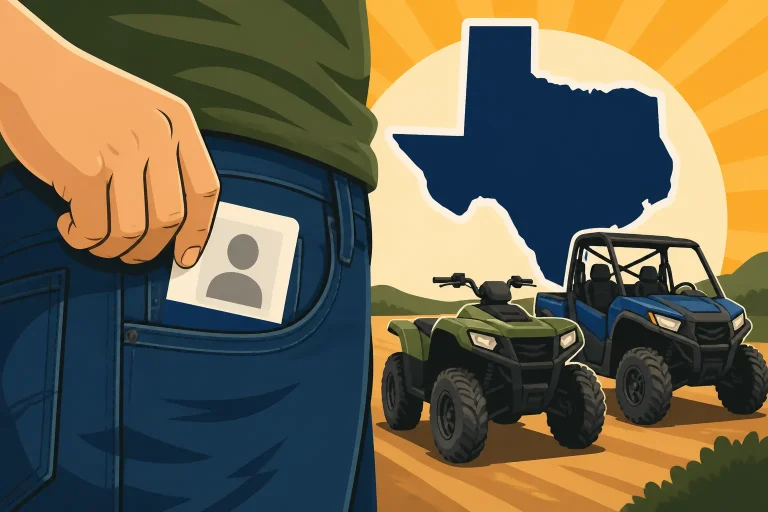
A decal can be required even when the machine is titled and has an OHV plate. The decal and plate serve different purposes. The title records ownership, and the plate is a separate state-issued item; the OHV decal relates to access requirements on certain riding areas. A plate is not a substitute for a current decal where one is required. For the distinction, see The Texas OHV Decal Explained and The Texas Off-Highway Vehicle License Plate.
Where an expired decal matters
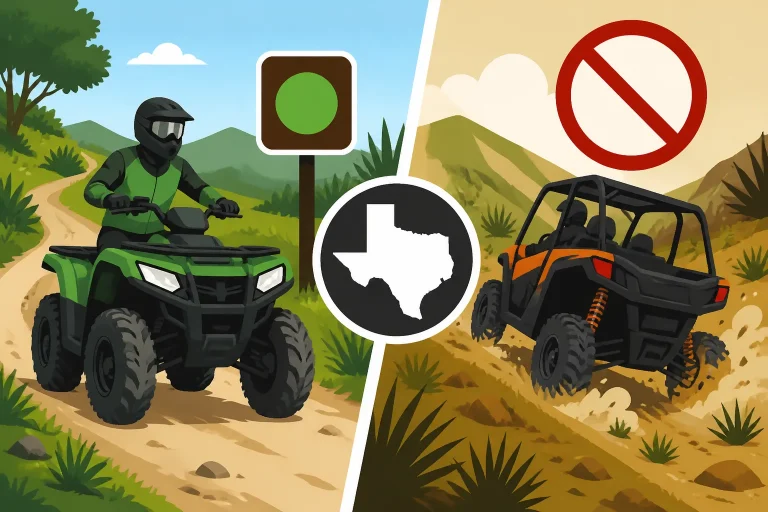
Expiration matters when you ride on land where Texas requires a current OHV decal. This can include public riding areas covered by the state decal requirement, including certain properties that receive funding through the state’s OHV grant program. A park or trail system may also have its own entry rules, fees, permits, or proof-of-payment requirements.
Do not assume that every place called a park has the same rules. Some riding areas require the state decal; others may not. A park can also charge its own admission or require a separate pass, even if your vehicle already has a current state decal. Confirm both the state requirement and the riding area’s specific rules before you load the machine.
Check the place, not just the machine
Before departure, check the current requirements for the exact trail system or property you plan to use. Look for whether:
- A Texas OHV decal is required for each machine.
- A separate park permit or day-use payment is needed.
- The decal must be displayed on the machine in a particular way.
- Out-of-state decals or other documents are accepted.
- There are additional rules for safety certificates, helmets, vehicle width, or trail access.
The decal requirement is generally tied to the machine, not to the number of people riding it. If a group brings several OHVs, do not assume one decal covers the whole group. The details are covered in Every Machine in the Group Needs Its Own Decal. Riders should also check whether a child needs a safety certificate; the decal does not replace that requirement. See Texas OHV Safety Certificates for the separate certificate rules.
An expired decal may cause a problem at a gate or during a compliance check, even if the machine has a valid title or plate. An officer or park employee may not treat a recently purchased but already expired decal as current. If you are unsure whether an old decal is still valid, verify the current decal year before riding rather than relying on the purchase receipt alone.
Out-of-state riders should check reciprocity
Having an out-of-state machine, plate, or decal does not automatically settle the Texas decal question. Texas has specific rules for nonresidents and reciprocity, and acceptance can depend on the place where you plan to ride. Check Does a Nonresident Need a Texas OHV Decal? and Texas Reciprocity and Why It Is One-Sided before traveling.
For a nonresident, it helps to distinguish three things that can be confused: the machine’s title or registration documents, any decal from the home state, and the Texas OHV decal. One does not necessarily stand in for another. Check the requirements for the particular Texas trail or property, and carry the documents the land manager asks riders to show.
How to plan for the next decal year
Treat the decal as an annual riding-area requirement, not as a one-time registration step. When the decal year changes, check whether your current sticker remains valid and obtain the appropriate decal for the new cycle before riding where one is required.
A simple pre-ride check
- Identify the riding location. Find out whether it requires the Texas OHV decal or a different permit.
- Check the decal year. Confirm that the decal on the machine is valid for the date of your ride.
- Look for separate charges or passes. A decal may not cover park admission, day use, camping, or other access requirements.
- Check the machine and rider requirements. Confirm any display, safety-certificate, age, or equipment rules that apply.
- Keep proof handy. Follow the park’s instructions for showing the decal or any related documentation.
A rider who buys near the end of August should pay particular attention to the changeover. If a trip falls after the new decal year begins, buying an old-cycle decal shortly beforehand may not meet the requirement for that trip. Ask the seller or check official information about which cycle is currently being issued; do not guess based on the day you plan to ride.
Also avoid treating an expired sticker as proof that the machine itself cannot be used anywhere. The decal requirement applies to specified riding access, not as a general vehicle registration. Private land, public trails, and managed parks can have different access rules. For the private-land distinction, see Why Private Land Needs No Texas Decal. Permission from a private landowner is still essential, and other safety or local rules can apply.
If you purchased a replacement decal, follow the instructions for attaching and displaying it. Do not assume that an older sticker remains acceptable because it is still physically attached, or that a receipt alone replaces the required decal. If the decal is missing, damaged, or difficult to read, check [Texas OHV Decal Replacement] for the appropriate next step.
The most reliable routine is to check the decal year at the start of each riding season and again before a trip that crosses the September changeover. Confirm the location’s rules, too: a current decal does not guarantee entry if a park has additional requirements, and a park pass does not automatically satisfy the state decal rule. The annual dates are straightforward once separated from the machine’s title, plate, and any location-specific permit.
Disclaimer
This article is for general informational purposes only and does not constitute professional advice. Laws, prices and regulations vary by location and change over time. Consult a qualified professional for guidance on your specific situation.