Why a Texas OHV Plate Never Expires
You've just invested in a fantastic off-highway vehicle, maybe a zippy ATV or a robust side-by-side, and you're getting ready to tackle the Texas trails or put it to work on your ranch. You might hear whispers about a "Texas OHV plate" and immediately think of annual registration fees, renewal stickers, and expiration dates, just like with your car or truck. It's a natural assumption, but here in Texas, the OHV plate operates under a completely different set of rules, and a big part of that is its unique, non-expiring nature. This guide is here to clear up that confusion, explain precisely why your Texas OHV plate never expires, and what that means for you as an owner.
The Texas OHV Plate: A Permanent Marker, Not a Yearly Permit
When you first hear about an "OHV plate" in Texas, it's totally understandable to assume it functions like any other vehicle license plate. We're conditioned to think of plates as requiring annual renewal, coming with stickers, and generally being a recurring expense. But Texas decided to chart a different course for off-highway vehicles, treating their plates not as a yearly registration, but as a permanent identification marker for the machine itself.
Distinguishing OHV Plates from Standard Vehicle Registrations
Let's be real: the name "plate" itself is probably the biggest source of confusion. When you register a passenger car, truck, or even a motorcycle in Texas, you receive a plate, and that plate comes with a registration sticker that you need to renew every single year. This annual renewal process is tied to paying road use taxes, insurance verification, and ensuring your vehicle meets certain standards to be on public roads. It's a cyclical process that generates revenue for road maintenance and other state services.
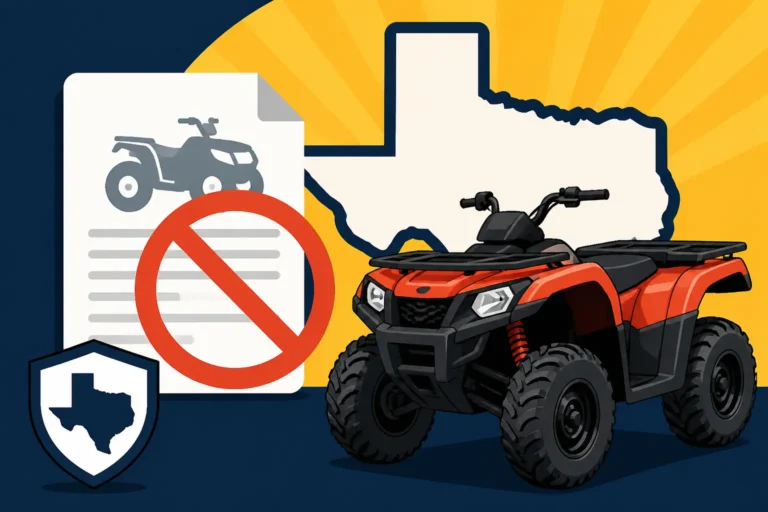
The Texas OHV plate, on the other hand, is a one-time issuance. It's designed to be a permanent fixture on your ATV or UTV, much like a vehicle identification number (VIN) is stamped onto the frame. Its purpose is primarily to aid in identification and ownership tracking, not to grant annual road-use privileges or to collect recurring fees. This fundamental difference is why you'll never see an expiration date on an OHV plate itself, nor will you receive an annual renewal notice in the mail for it. It's issued once, and it's good for the life of the machine, or at least until it's destroyed or permanently removed from service. This distinction is crucial to understanding [Why Texas Titles But Never Registers an OHV].
The Underlying Legal Framework for OHVs
The unique treatment of OHV plates stems directly from how Texas law defines and categorizes off-highway vehicles. Unlike cars or trucks, ATVs, UTVs, and other OHVs are explicitly not considered "motor vehicles" for the purposes of highway registration and operation. The state decided many years ago that these machines are primarily for off-road use, and therefore, the traditional motor vehicle registration system simply didn't fit.
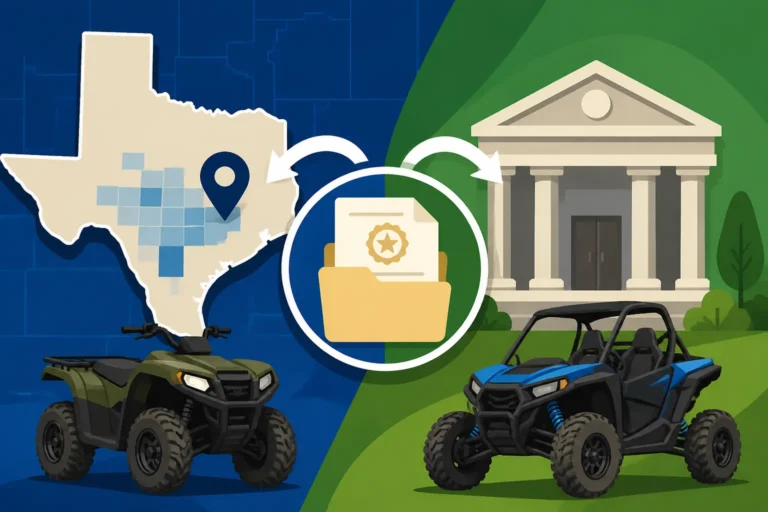
Instead of registering them, Texas opts for a titling system combined with this unique, non-expiring plate. The titling process establishes legal ownership, much like a car title. The plate then acts as a visible, physical manifestation of that title, making it easier for law enforcement or other agencies to identify a specific machine if, say, it's stolen or involved in an incident. It's a system tailored to the specific nature of off-road riding, acknowledging that these machines spend their lives off the asphalt and shouldn't be burdened with the same annual road taxes and fees.
Why "Off-Highway Use Only" Changes Everything
The most significant phrase you'll encounter when dealing with a Texas OHV plate, and perhaps even stamped right on your title, is "Off-Highway Use Only." This isn't just a suggestion; it's the core principle that dictates the nature of the plate and your vehicle's legal operation. This remark fundamentally alters how the state views and manages these machines, directly impacting why the plate has no expiration.
The Explicit Prohibition of Road Use
That "Off-Highway Use Only" stamp on your title, or the understanding behind your OHV plate, means precisely what it says: your ATV or UTV is legally designated for use off public roads and highways. This is a critical point that many new OHV owners misunderstand, often leading to frustration and potential legal trouble. The issuance of an OHV plate absolutely does not grant you permission to operate your machine on public streets, roads, or highways in Texas, with very limited exceptions that are defined elsewhere in the law.
Because the plate does not grant road-use privileges, there's no need for an annual "road tax" or a recurring fee structure tied to yearly renewals. Regular vehicle registrations include a substantial portion of their fees dedicated to maintaining public infrastructure. Since OHVs aren't intended for this infrastructure, the state doesn't collect those recurring fees, which in turn eliminates the need for an annual renewal process. It's a logical consequence of their legal status. If you're looking at your title and seeing this remark, you're experiencing [The Off-Highway Use Only Remark on a Texas Title] firsthand.
The Plate as an Identification Tool
So, if it's not for road use and doesn't expire, what exactly is the OHV plate for? Its primary function is identification. Think of it as a permanent, external VIN tag. In situations where an ATV or UTV needs to be identified – for example, by a game warden on a hunting lease, by law enforcement investigating a theft, or by a county clerk looking up ownership records – the OHV plate provides a readily visible, officially issued number linked directly to the vehicle's title.
This identification function is particularly valuable in cases of theft. If your OHV is stolen, having an official, non-expiring plate number linked to its title makes it easier for authorities to track and recover the machine. It provides a unique, state-issued identifier that complements the VIN, giving multiple avenues for positive identification. It also simplifies the process for county tax assessor-collectors when transferring ownership, as the plate confirms the machine has been properly titled in Texas before.
Why No Annual Fees for "Off-Highway Use Only"
The lack of annual fees for the OHV plate is a direct reflection of its "Off-Highway Use Only" status. There's no ongoing benefit or service being provided by the state that would necessitate yearly charges. For cars and trucks, annual registration fees fund road maintenance, traffic enforcement, and various other public services related to their operation on public roadways. Since OHVs are, by definition, not meant for those roadways, the rationale for collecting those recurring fees simply doesn't exist.
This design choice aims to keep the cost of OHV ownership lower for Texans who primarily use their machines for recreation on private land, at designated OHV parks, or for agricultural purposes. It's a user-friendly approach that acknowledges the distinct nature of off-road vehicles and their limited impact on the public road system. The minimal, one-time fee for the plate covers the administrative cost of its issuance and linking it to the title record, rather than funding ongoing infrastructure or services.
The Statutory Cap: Why the Plate Costs So Little
One of the pleasant surprises for many OHV owners in Texas is the remarkably low cost of the plate itself. This isn't an oversight or a temporary discount; it's mandated by state law. The legislature intentionally placed a statutory cap on the fee for an OHV plate, further reinforcing its status as a permanent identifier rather than a revenue-generating registration.
Understanding the Legislative Intent Behind the Cap
The decision to cap the cost of the OHV plate at a very modest amount reflects a specific legislative intent: to make titling and identification of off-highway vehicles accessible and affordable for Texans. Lawmakers recognized that imposing hefty annual registration fees on machines not intended for public road use would be an unfair burden on owners, many of whom use their ATVs and UTVs for agricultural work, ranching, or recreational riding on private property.
By setting a low, one-time fee, the state ensures that the administrative costs of issuing the plate and updating ownership records are covered, without turning the process into a significant source of recurring revenue. This approach encourages compliance with titling requirements, as the barrier to entry is minimal. It also aligns with the "Off-Highway Use Only" philosophy, acknowledging that these vehicles don't contribute to road wear and tear in the same way as street-legal vehicles. This low fee is precisely [The $10 Cap on a Texas Plate] that many owners appreciate.
The County Tax Assessor-Collector's Role and the Fee
When you go to get your OHV plate, you'll visit your local County Tax Assessor-Collector's office. This is the same office where you'd handle car registrations and titles, which can sometimes add to the initial confusion about the OHV plate's function. However, the procedures and fees are different. While the county office handles the transaction, the fee for the OHV plate itself is strictly capped by state law.
This means that no matter which of Texas's 254 counties you live in, the fee for the physical OHV plate should be uniform and capped. Any additional costs you encounter will typically be related to the titling process itself – such as the titling fee, any applicable sales or use tax, and possibly a small processing fee from the county – but not an inflated price for the plate. So, when you ask [What the Counter Charges for the Plate], you'll find it's a fixed, minimal amount. This separation of the plate fee from other titling costs underscores its unique, non-expiring status.
Why the Plate Fee Doesn't Increase Over Time
Unlike many government fees that tend to creep up over time due to inflation or increased operational costs, the statutory cap on the Texas OHV plate means its cost remains fixed unless the legislature actively amends the law. This stability is another testament to its nature as a permanent identifier rather than a revenue stream. There's no mechanism built into the system for annual increases or adjustments because there's no ongoing service or infrastructure cost tied to the plate itself.
This predictability in cost is a definite benefit for OHV owners. Once you've paid that initial, low fee and received your plate, you know that particular expense is off your books permanently for that machine. It removes the uncertainty and budgeting burden associated with recurring fees, allowing owners to focus on other aspects of OHV maintenance and enjoyment. It truly is a one-and-done administrative cost, designed to be as unobtrusive as possible while still achieving its identification goals.
How to Get Your Non-Expiring OHV Plate
Getting your Texas OHV plate is a straightforward process, typically handled at the same time you title your machine. Since the plate is a permanent fixture linked to the title, it makes sense that you'd acquire both simultaneously. Understanding the steps and what to expect can save you a headache at the county office.
When to Request the Plate
The ideal time to request your OHV plate is during the initial titling process. Whether you're titling a brand-new machine purchased from a dealer or transferring the title of a used OHV bought from a private seller, you'll be completing a Texas Title Application, commonly known as Form 130-U. This is your opportunity to request the plate.
While the titling itself is mandatory for most OHVs in Texas, the OHV plate is issued upon request. This distinction is important: you have to specifically ask for it, as it's not automatically included with every title. However, considering its low cost and permanent identification benefits, most owners choose to get one. Make sure you indicate your desire for the plate on the application form or verbally confirm with the clerk when you are [Titling at a Texas County Tax Office]. It's a small step that provides significant peace of mind.
Required Documents and Process at the County Office
When you head to the County Tax Assessor-Collector's office, you'll need a few key documents to title your OHV and get your plate. This process is largely the same for all off-highway vehicles. You'll need:
- Texas Application for Title and/or Registration (Form 130-U): This form is the cornerstone of the titling process. You'll fill out details about yourself and the OHV, including the VIN. If you're unsure how to complete it, there are resources like [Filling Out Texas Form 130-U for an OHV] that can walk you through it.
- Proof of Ownership: This could be the Manufacturer's Statement of Origin (MSO) for a new machine, or the properly assigned title from the previous owner for a used one. If you're dealing with a private sale, make sure the seller has correctly filled out their portion of the existing title.
- Proof of Identity: A valid driver's license or state ID.
- Payment for Fees: Be prepared to pay the title fee, any applicable sales or use tax (which can vary depending on where and how you bought the machine), and the modest fee for the OHV plate itself.
The clerk at the counter will review your documents, process your application, and collect the fees. Once everything is approved, they will issue you a temporary receipt and, typically, hand you your OHV plate right then and there. Your official title document will usually be mailed to you within a few weeks. The entire process, assuming you have all your documents in order, is usually quite efficient.
Attaching and Displaying Your OHV Plate
Once you have your non-expiring OHV plate in hand, it's your responsibility to properly attach it to your machine. Texas law requires that the plate be displayed in a visible location on the rear of the OHV. While the law specifies the "rear," the exact mounting point can vary depending on your specific ATV or UTV model. Most manufacturers include designated mounting points or areas where a plate can be easily affixed without obscuring lights or other essential components.
It's important to secure the plate firmly so it doesn't rattle loose during rough rides or fall off. Using bolts or strong zip ties through the plate's mounting holes is a common practice. Remember, this plate is permanent and meant to stay with the machine indefinitely, so choose a mounting method that will withstand the rigors of off-road use. Unlike street-legal vehicles that often have specific visibility requirements for license plates (e.g., specific height off the ground, unobstructed view), the OHV plate requirement is simpler: just make sure it's on the rear and visible.
Beyond the Plate: Other OHV Requirements in Texas
While your Texas OHV plate is a permanent, non-expiring identifier, it's critical to understand that it's just one piece of the puzzle when it comes to legal OHV operation in the Lone Star State. There are other requirements, especially if you plan to ride on public lands or if certain riders in your group are minors, that operate completely independently of your plate. Confusing these separate requirements can lead to fines or being turned away from riding areas.
The Texas OHV Decal: A Different Kind of Sticker
Many OHV owners eventually discover the Texas OHV Decal and mistakenly believe it's a renewal for their plate. It's not. The OHV Decal is a completely separate requirement, and unlike your plate, it does expire annually. This decal is required for operation on public lands, including designated OHV trails in state parks, national forests, and other public riding areas. It's an administrative fee that helps fund the maintenance and development of these public riding opportunities.
The OHV Decal typically runs on a September 1st to August 31st cycle each year. You purchase it through the Texas Parks and Wildlife Department (TPWD) or authorized vendors. So, you might have a non-expiring plate, but if you plan to hit the trails at Barnwell Mountain Recreation Area or Sam Houston National Forest, you absolutely need a current OHV Decal displayed on your machine. Think of the plate as permanent ID and the decal as your annual "trail pass." For more details on this, you can check out [The Texas OHV Decal Explained].
Safety Certificates and Age Restrictions
Another crucial requirement, especially for younger riders, is the Texas OHV Safety Certificate. This is a certificate of completion from an approved safety course, and it's generally required for anyone born after January 1, 1999, who operates an OHV on public land. Again, this has absolutely nothing to do with your non-expiring OHV plate. It's about rider education and safety, ensuring that operators understand how to safely handle their machines.
Children under the age of 14 face additional restrictions and supervision requirements, regardless of whether they have a certificate. The safety certificate is about proving competence, not just being old enough to ride. Even if an adult has a plate on their machine, any eligible rider operating it on public land must meet the safety certification requirements. These rules are in place to reduce accidents and promote responsible riding habits. You can learn more about these requirements in [Texas OHV Safety Certificate Requirements].
Insurance and Other Equipment Rules
While Texas does not generally require liability insurance specifically for off-road operation of ATVs and UTVs (unlike street-legal vehicles), having coverage is always a wise decision. Your OHV plate certainly doesn't come with insurance attached. Many homeowners' policies offer limited coverage, but dedicated OHV insurance can protect you from theft, damage, and liability if an accident occurs on private land or at a park.
Beyond the plate, remember that certain equipment rules still apply to your OHV. Things like functional brakes, a muffler with a spark arrester (especially important for reducing fire risk in dry conditions), and proper lighting (if riding at dusk or dawn) are often necessary, both for safety and to comply with park rules or even general good practice on private property. The non-expiring plate is simply one part of your compliance checklist, not an exhaustive list of all OHV regulations.
Common Misconceptions About Texas OHV Plates
Given the unique nature of the Texas OHV plate, it's not surprising that many myths and misunderstandings have cropped up over the years. These misconceptions can lead to confusion, frustration, and even legal issues if not properly addressed. Let's debunk some of the most common ones.
Myth 1: The Plate Makes My ATV/UTV Street Legal
This is by far the most prevalent and dangerous misconception. Many people assume that if their off-highway vehicle has a state-issued plate, it must be street legal, or at least legal to cross roads. Nothing could be further from the truth. As we've discussed, the Texas OHV plate is explicitly for "Off-Highway Use Only." It does not grant permission to operate on public streets, roads, or highways.
Attempting to drive your ATV or UTV on a public road, even if it has the non-expiring OHV plate, will likely result in a ticket, and potentially other legal consequences. There are extremely limited exceptions where an OHV might legally operate on a public road, such as for agricultural purposes, utility work, or in very specific, designated master-planned communities or small counties that have opted in. However, these are exceptions, not the rule, and they come with their own stringent conditions (e.g., daylight only, specific equipment, limited distance). The plate itself does not confer street legality. If you're wondering about road legality, you should check out [Are ATVs Street Legal in Texas?].
Myth 2: I Need to Renew My OHV Plate Annually
This misconception stems from the natural association of "plate" with "annual registration." Many owners, especially those new to Texas OHV laws, fully expect to receive a renewal notice in the mail or to have to pay a yearly fee to keep their plate current. This is simply not the case. The Texas OHV plate is a one-time issuance, a permanent identifier that stays with the machine.
You will never receive a renewal notice for your OHV plate, nor will you be asked to pay an annual fee for it. The cost you paid when you first acquired it was the only cost for the plate itself. Any other annual fees you encounter related to your OHV will be for things like the separate OHV Decal (if riding on public land) or perhaps a membership fee for a private riding park. So, breathe easy – once that OHV plate is on your machine, you're done with that particular administrative step forever. This is the core message of Why a Texas OHV Plate Never Expires.
Myth 3: The Plate Is for My Individual Riding Permit
Another misunderstanding is that the OHV plate is somehow tied to the rider or acts as a riding permit for an individual. This isn't accurate. The OHV plate identifies the machine, not the person operating it. It's a vehicle identifier, similar to a VIN, not a driver's license or an individual riding permit.
If you lend your OHV to a friend, or if multiple family members ride it, the non-expiring plate remains on the machine, identifying it. The requirements for the rider (like a safety certificate, if applicable, or age restrictions) are separate and depend on the individual and the location of use, not the plate itself. The plate provides a distinct identity for your physical asset, regardless of who is in the driver's seat (as long as they are legally permitted to operate the machine).
What Happens When You Sell an OHV with a Plate
Because the Texas OHV plate is designed to be a permanent identifier for the machine, its role in a sale or transfer of ownership is also unique. Understanding this process is key for both sellers and buyers to ensure a smooth and legal transaction.
The Plate Stays with the Machine Permanently
When you sell your ATV or UTV that has a Texas OHV plate, the plate goes with it. You do not remove the plate and keep it, nor do you surrender it to the state. This is a fundamental difference from standard vehicle license plates, which typically remain with the seller or are surrendered upon sale. The non-expiring OHV plate is considered part of the vehicle's permanent identification record, like the VIN. This is why you cannot just reuse an old plate; a buyer cannot reuse the seller's plate because it is already a part of that specific machine.
This permanency simplifies things in one respect: you don't have to worry about disposing of the plate or transferring it to a new machine. However, it means that as a buyer, you should ensure the machine does have a plate if it's been previously titled in Texas and the seller requested one. As a seller, your responsibility is primarily to properly assign the title to the new owner, and the plate simply travels with the machine. The plate itself signifies that the OHV has been properly titled in Texas at some point.
Transferring Ownership with the Non-Expiring Plate
When you sell an OHV, the critical step is the proper transfer of the title. The new owner will need the correctly assigned title from you to go to the County Tax Assessor-Collector's office and put the title in their name. This is where the official change of ownership is recorded. The non-expiring OHV plate already on the machine serves as part of its existing identification for the state's records.
As a seller, you'll sign over the title to the buyer, and it's highly recommended to use a bill of sale. A detailed bill of sale protects both parties by documenting the transaction, the agreed-upon price, the VIN, and the date of sale. Services like LawDepot can help you generate a professional and legally sound bill of sale, ensuring all the necessary details are captured. The buyer will then take the signed title and bill of sale to the county office to complete the title transfer. At this point, the county will update their records to show the new owner, but the physical OHV plate on the machine remains unchanged and still does not expire. [Selling an OHV and Signing a Texas Title] covers this process in more detail.
What a Buyer Should Expect Regarding the Plate
If you're buying a used ATV or UTV in Texas that has been previously titled, there's a good chance it will already have an OHV plate. As a buyer, this is a positive sign, as it indicates the machine has been properly accounted for by the state. You should verify that the VIN on the plate (if visible) matches the VIN on the title and on the machine's frame.
When you complete the title transfer, the existing OHV plate will continue to identify the machine under your new ownership. You won't get a new plate unless the original was lost or damaged, and you specifically request a replacement. The non-expiring nature means less hassle for you as the new owner; once the title is in your name, that plate continues its function as a permanent identifier without any further action required on your part regarding its "renewal" or expiration. This simplifies the ongoing ownership experience significantly compared to traditional vehicle registrations.
| Feature | Texas OHV Plate | Standard Vehicle Registration Plate |
|---|---|---|
| Purpose | Permanent machine identification | Annual road use authorization |
| Expiration | Never expires | Annually (with renewal sticker) |
| Cost Structure | One-time, statutorily capped fee | Annual fees, varies by vehicle |
| Road Legality | No road use permission (generally) | Grants road use privileges |
| Transfer | Stays with the machine | Usually surrendered/retained by seller |
| Renewal Notice | Not issued | Issued annually |
Disclaimer
This article is for general informational purposes only and does not constitute professional advice. Laws, prices and regulations vary by location and change over time. Consult a qualified professional for guidance on your specific situation.