Why a Buyer Cannot Reuse the Seller’s Plate
It's a common scenario: you've just found that perfect used ATV or UTV in Texas, the deal is done, and you're ready to hit the trails. The seller even left their off-highway vehicle (OHV) plate on the machine, and it seems like you're good to go. But then you hear it from a friend, or perhaps you run into trouble at an OHV park: that plate isn't valid for you. It's incredibly frustrating to think you've cleared all the hurdles, only to discover a key piece of paperwork doesn't transfer. This guide is here to untangle that confusion, explain why you absolutely cannot reuse the seller's OHV plate in Texas, and walk you through what you actually need to do to get your own.
Understanding Texas OHV Plates – A Quick Primer
Before we dive into why you can't reuse a plate, let's make sure we're all on the same page about what an OHV plate is in Texas and what it's not. This isn't your grandma's car registration; it's a completely different animal, and understanding its purpose is key to grasping the non-transferability rule.
The Purpose of the OHV Plate in Texas
In Texas, the off-highway vehicle plate is a specific identifier for your ATV, UTV, or other off-highway vehicle. It's essentially a state-issued acknowledgement that your machine is indeed an OHV, designed for use off public roads. While it might look like a miniature license plate, its function is very distinct. Primarily, it's used to identify your machine when you're riding on public lands or in designated OHV parks that require it. Think of it as a form of compliance. It helps park officials confirm that you're operating a legally recognized off-highway vehicle. It's not about giving you street legal status – far from it – but rather about ensuring accountability and proper usage on the trails. It's a small but mighty piece of metal that signifies you've gone through the proper channels for your off-road adventures.
Why Texas Titles But Never Registers an OHV
This is a critical distinction that many new OHV owners overlook, leading to a lot of confusion about plates and legality. In Texas, you absolutely title an ATV or UTV to prove ownership. This process, often handled at your county tax office, establishes who the legal owner of the machine is, much like titling a car. This title is crucial for buying, selling, or proving your machine isn't stolen. However, Texas explicitly does not "register" an OHV in the way it registers a street-legal car or truck. Why? Because registration implies that the vehicle is approved for general public road use, and OHVs, by their very design and definition, are not.
The state draws a clear line: an off-highway vehicle is built for dirt, mud, and trails, not highways and city streets. Therefore, applying traditional vehicle registration to an OHV would be a contradiction of its intended purpose. This is why you'll never find annual registration stickers or renewals for an OHV in Texas, nor will you ever get a traditional license plate that allows you to cruise down Main Street. The entire framework around OHVs is separate from on-road vehicles, impacting everything from insurance requirements to the plates themselves. For more on this, check out [Why Texas Titles But Never Registers an OHV]. The Texas Department of Motor Vehicles and other state agencies treat these machines differently from the ground up because their function is inherently different. If you want to know more about the broader reasons, you can look into [Why Texas Will Not Register an ATV for the Road].
The Non-Transferability Rule Explained
Now that we understand what an OHV plate is and why OHVs are titled but not registered, the non-transferability rule starts to make a lot more sense. It's not an arbitrary rule designed to make your life harder; it's a direct consequence of how the state categorizes and manages these machines.
The Legal Basis for Non-Transfer
The fundamental reason you cannot reuse a seller's OHV plate stems from the fact that in Texas, the off-highway vehicle plate is issued to the individual owner in connection with the titling transaction, not as a permanent fixture of the machine itself that follows it from owner to owner. When an OHV is sold, the transaction triggers a requirement for the new owner to apply for a new title in their name. During this process, if they want an OHV plate, they request one. The plate is essentially a receipt or proof of a specific transaction involving a specific owner and a specific machine at a specific time. It's not an enduring identifier for the machine regardless of owner, unlike a Vehicle Identification Number (VIN) which is permanently etched into the frame.
Because the plate is tied to the original titling owner and their initial request, it doesn't automatically transfer ownership or validity when the machine is sold. The state considers the previous owner's request for a plate fulfilled, and any new owner must make their own request during their titling process. This approach helps the state track ownership and ensure that each new owner has actively engaged with the titling system for their specific machine.
How the OHV Plate Differs from a Car License Plate
Think about how you handle a traditional car license plate when you sell a vehicle in Texas. Typically, you keep your plates and transfer them to your next vehicle, or you surrender them. The new owner of your old car then applies for new plates for that car in their name. The OHV plate follows a similar principle but with an added twist: it's not even meant to be transferred by the seller to another machine. The key difference lies in the concept of "registration renewal" versus "single issuance."
A car's license plate requires annual renewal, and during that renewal, the state confirms that the vehicle is still owned by the person who registered it and is still street legal. An OHV plate, however, is issued once and, famously, [Why a Texas OHV Plate Never Expires]. This means it doesn't have an annual renewal cycle that would allow the state to re-verify ownership or transferability. Since there's no expiration date or renewal process to tie it to the current owner, the state's solution is simply to issue a new plate with each change of ownership, upon request. This reinforces the idea that the plate signifies the original titling event for that owner, not a continuous registration for the machine itself. Therefore, the seller's plate is, by design, rendered irrelevant for the new owner once the sale is complete. This system ensures clarity of ownership for off-highway use only.
What Happens During a Sale Transaction
When you're buying or selling a used OHV in Texas, understanding the fate of the OHV plate is crucial for both parties to avoid misunderstandings and ensure a smooth transaction. It's often one of those little details that can trip people up if they're not fully aware of Texas's unique rules for off-highway vehicles.
The Seller's Responsibility with the Plate
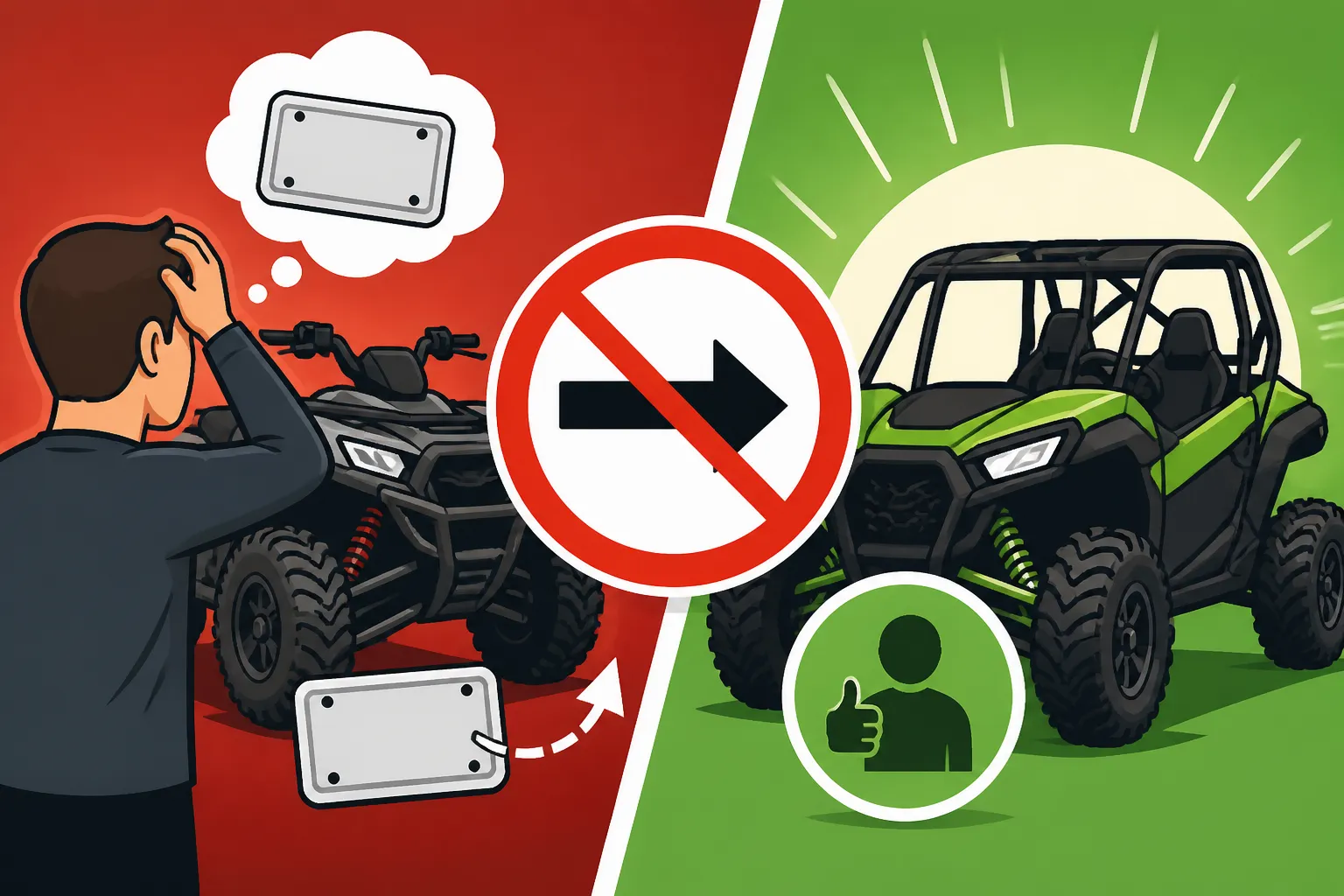
As the seller of an ATV or UTV in Texas, your responsibility regarding the off-highway vehicle plate is quite straightforward: you need to remove it from the machine before handing it over to the buyer. Unlike traditional vehicle license plates which you might transfer to another vehicle or surrender to the state, the OHV plate simply belongs to your prior ownership of that specific machine. It's not something the buyer can or should use, and it holds no residual value or legal standing for them.
What you do with the removed plate is up to you. Some sellers might keep it as a memento of their time with the machine, especially if it was a beloved quad that saw many adventures. Others might simply discard it. There's no formal surrender process for an OHV plate like there might be for a passenger car plate. The most important thing is to ensure it's not on the machine when the buyer takes possession, preventing any potential confusion or misuse by the new owner. If you're using a bill of sale, perhaps drafted with a resource like LawDepot, you might even consider adding a line that explicitly states the seller retains or removes the OHV plate, just to ensure there are no ambiguities during the handover.
The Buyer's Path to Getting a New Plate
For the buyer, the process of getting an OHV plate in Texas is directly tied to the titling of their newly acquired machine. You won't be able to just "register" the seller's old plate; you'll need to obtain a completely new one in your name. The good news is that this is typically a straightforward step that happens concurrently with your title application.
When you go to your local county tax office to [Titling at a Texas County Tax Office] for your ATV or UTV, you'll complete the necessary paperwork, including the [The Texas Title Application Every OHV Buyer Files]. This is the point where you request your new OHV plate. It's not an automatic issuance; you specifically need to ask for it. The clerk at the counter will process your title application, verify all your documents (like your bill of sale and proof of identity), and then, upon your request, issue you a new off-highway vehicle plate that will be assigned to your machine under your ownership. It's a fresh start, ensuring that the plate is properly linked to you as the current legal owner. So, don't leave the county office without asking for your plate if you intend to use public OHV trails that require it. This entire process is covered in more detail in [Getting a Plate on Request in Texas]. It's a minor step but a crucial one for legal riding.
Costs and Common Misconceptions
Dealing with government agencies and vehicle-related paperwork can often feel like navigating a maze, especially when it comes to specific rules for off-highway vehicles. The costs and expectations surrounding OHV plates in Texas are prime examples of where common sense based on car ownership can lead you astray.
The Cost of a New OHV Plate
One of the pleasant surprises for many new OHV owners in Texas is the relatively low cost of obtaining a new off-highway vehicle plate. Unlike the potentially hundreds of dollars you might pay for annual car registration, the fee for a Texas OHV plate is quite modest. In fact, by statute, [The $10 Cap on a Texas Plate]. This means that while county tax offices may add a small processing fee to cover their administrative costs, the base fee for the plate itself is set at this very reasonable amount.
When you're at the county tax office to title your machine, [What the Counter Charges for the Plate] will be presented to you as part of the overall titling transaction. It’s typically a small addition to the title fee and any sales or use tax you might owe. This minimal fee ensures that accessibility to public lands and proper identification remains affordable for OHV enthusiasts across the state. It's a one-time charge per ownership transfer, reinforcing that it's not an annually renewing fee like car registration. For a clearer breakdown, you can also refer to [Texas OHV License Plate Cost].
Addressing Buyer Confusion and Expectations
It's completely understandable why buyers often expect the seller's OHV plate to transfer with the machine. For generations, most people's experience with vehicles involves license plates that, while perhaps changing numbers, largely stay with the vehicle, with the new owner simply "renewing" or registering them in their name. This deeply ingrained expectation from passenger car ownership naturally extends to ATVs and UTVs. However, as we've discussed, Texas treats OHVs differently dueowing to their "off-highway use only" status.
This common misconception can lead to frustration and even legal issues if a buyer tries to use an invalid plate. They might show up at an OHV park only to be turned away because their plate isn't properly assigned to them, or worse, they could face fines if operating on public lands without a valid plate where one is required. This highlights the importance of thorough due diligence when [Buying a Used ATV in Texas]. Both buyers and sellers need to be informed about these specific OHV rules, not just general vehicle laws. Sellers should clearly communicate that the plate is being removed, and buyers should budget for the small cost and time to acquire their own. Using a well-drafted bill of sale, perhaps sourced from a reputable platform like LawDepot, can help ensure that all aspects of the sale, from condition to paperwork responsibilities, are clearly laid out, even if LawDepot itself doesn't directly manage the state's plate issuance rules. Transparency from both sides prevents disappointment down the trail.
Practical Implications for Riders
Understanding the rules about OHV plates isn't just about avoiding a minor inconvenience; it has real, tangible impacts on your ability to enjoy your ATV or UTV legally and without hassle. For Texas riders, knowing these implications means being prepared and ensuring every ride is a good one.
Why a New Plate is Essential for Public Land Access
For many Texas OHV enthusiasts, the primary reason to even bother with an OHV plate is for access to the state's incredible network of public lands and designated OHV parks. While the OHV plate doesn't make your machine street legal, it does serve as a vital piece of identification and compliance when you want to ride on specific state-managed trails or parks that explicitly require it. Without a current OHV plate issued in your name, you might find yourself turned away at the gate, despite having traveled hours to reach your destination.
This is a common requirement at many popular riding spots, and park rangers or staff will verify that your plate is valid and corresponds to your machine. It’s important not to confuse the OHV plate with the Texas OHV decal, which is a separate, annually renewable sticker required for machines used on state-funded OHV trails. The plate is a one-time issuance tied to your ownership, while the decal is an annual fee for trail access. Both, however, are often required. So, if you plan on exploring places like Barnwell Mountain Recreation Area or Hidden Falls Adventure Park, getting your own plate during the titling process is a non-negotiable step to ensure you can legally access these fantastic areas. If you're looking for [Where to Ride an ATV in Texas], make sure your paperwork is in order first!
Avoiding Problems After Purchase
The last thing any new OHV owner wants is to run into trouble right after a purchase. By understanding and adhering to the non-transferability rule for OHV plates, you can proactively avoid a number of headaches. First and foremost, you'll avoid the embarrassment and potential fines of trying to use an invalid plate on public lands. Trying to pass off a previous owner's plate as your own, even unknowingly, isn't worth the risk.
Secondly, ensuring you get your own plate during the titling process is part of fully formalizing your ownership. It ties your name directly to the machine and its compliance requirements. It's a small administrative step, but it confirms to any authority that you are the legitimate owner operating a legally identified off-highway vehicle. When considering the [Texas ATV Title Application Deadline], remember to also request your plate during that same visit to the county tax office. This streamlined approach saves you a second trip and ensures you're ready to ride legally as soon as possible. Making sure all your paperwork is correct from the start, perhaps with the aid of comprehensive legal document templates from resources like LawDepot for your bill of sale, builds a solid foundation for years of enjoyable and worry-free off-road adventures in Texas.
Disclaimer
This article is for general informational purposes only and does not constitute professional advice. Laws, prices and regulations vary by location and change over time. Consult a qualified professional for guidance on your specific situation.