Texas ATV Bill of Sale Template Requirements
When you're diving into the world of buying or selling an ATV or UTV here in the Lone Star State, one document often gets overlooked, or worse, completely misunderstood: the bill of sale. It might seem like just a simple receipt, but in Texas, a properly completed bill of sale is your best friend for avoiding headaches, proving ownership, and making sure you sail smoothly through the titling process. This guide will walk you through exactly what you need to know about Texas ATV bill of sale template requirements, so you can handle your transaction with confidence and clarity.
Why a Bill of Sale Is More Than Just a Receipt in Texas
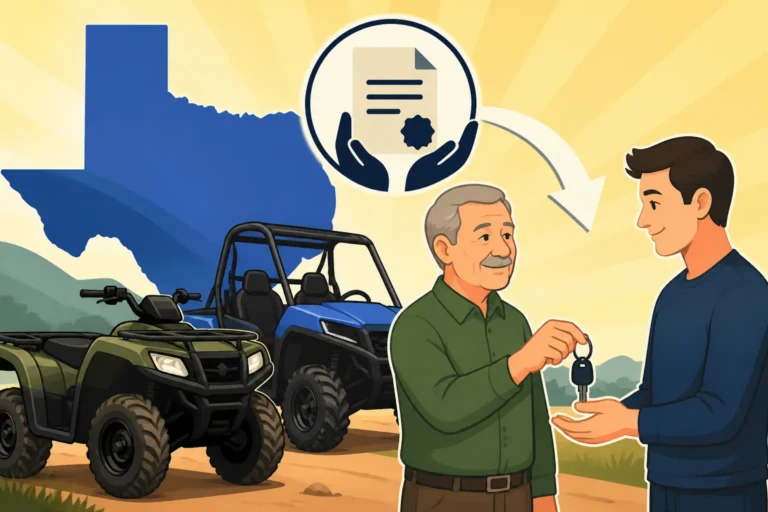
Let's face it, when you're buying or selling a used ATV from a private party in Texas, it's easy to think a handshake and a transfer of cash are enough. But believe me, that's a recipe for trouble down the line. A bill of sale isn't just a courtesy; it's a legally significant document that serves multiple critical purposes for both the buyer and the seller. It formalizes the transaction, provides a clear record, and protects everyone involved from potential disputes or legal snags.
Protecting Both Buyer and Seller
For the buyer, a well-drafted bill of sale provides irrefutable proof that you are the new owner of the off-highway vehicle (OHV). Imagine buying a beautiful side-by-side, only for the previous owner to claim they never sold it to you, or that you only borrowed it. Without a bill of sale, it's your word against theirs, and that's a tough spot to be in. This document establishes your ownership, making it much easier to eventually get your [Texas ATV Title for a Side-by-Side] and prove that the machine is legally yours. It also records the agreed-upon price, protecting you from any later claims of underpayment.
On the flip side, the seller benefits just as much. Once you hand over your ATV, you want to be completely out of the picture. A bill of sale clearly states that you sold the machine, on what date, and for how much. This is crucial if, for example, the buyer were to be involved in an incident with the ATV shortly after the sale. Without a bill of sale, you could potentially be held liable or at least find yourself entangled in a dispute. It formally transfers responsibility, giving you peace of mind that your involvement with that particular machine is concluded.
Proof for Texas Titling and Tax Purposes
Beyond just ownership, the bill of sale plays a vital role in the official processes here in Texas. When you go to title your newly acquired ATV or UTV, the county tax assessor-collector's office will absolutely want to see proof of the transaction. While the signed-over title certificate is primary, a bill of sale backs up the information on the title, especially regarding the purchase price. This is particularly important for calculating sales tax. Texas collects sales tax on most private-party OHV sales, and the bill of sale is where that taxable value is officially recorded.
The state sales tax rate in Texas is 6.25 percent, and there might be local taxes on top of that, capping out at 8.25 percent. The county office will use the sale price listed on your bill of sale, in conjunction with the [Filling Out Texas Form 130-U for an OHV], to determine how much [Texas ATV Sales Tax on a Private Sale] you owe. Without a clear bill of sale, the county might use a presumptive value, which could be higher than what you actually paid. Having a detailed bill of sale ensures you only pay tax on the true purchase price, protecting your wallet from unnecessary fees. It’s also crucial if you're trying to claim certain exemptions, like the [Ag and Timber Exemptions on Form 130-U], as the bill of sale will support the nature of the transaction.
Essential Elements of a Valid Texas ATV Bill of Sale
A good bill of sale isn't just a random scribbled note; it needs specific details to be legally sound and effective. Think of it as a checklist of crucial information that leaves no room for doubt or misinterpretation. Skipping even one of these elements could lead to problems later on, so pay close attention to each section. You can find excellent, comprehensive templates online from resources like LawDepot, which guide you through including all these critical pieces.
Identifying the ATV or UTV
First and foremost, the document must precisely identify the machine being sold. This is probably the most critical part to get absolutely right, as it ties the transaction to a specific physical asset.
- Make, Model, and Year: Start with the basics. List the manufacturer (e.g., Honda, Polaris, Can-Am), the specific model (e.g., Foreman, Ranger, Maverick), and the model year. This helps differentiate it from other machines.
- Vehicle Identification Number (VIN): This is non-negotiable. The VIN is the unique identifier for your ATV or UTV, much like a fingerprint. It must be accurately recorded on the bill of sale. Take the time to physically inspect the machine and write down the VIN exactly as it appears on the frame. Do not rely on memory or an old piece of paper. This is also your chance to perform a [Checking a VIN Before a Texas Purchase] to ensure the machine hasn't been reported stolen or has a hidden past.
- Odometer/Hour Meter Reading (if applicable): While not all ATVs have odometers like cars, many UTVs do, and some ATVs might have hour meters. If your machine has one, record the reading at the time of sale. This helps document the condition and use of the vehicle at the point of transfer.
- Description of Condition: It's wise to include a brief, factual description of the machine's condition. Is it "as-is," or are there any known defects or recent repairs? While an "as-is" clause is common in private sales, documenting its general state can prevent disputes about its condition after the sale.
Buyer and Seller Information
The bill of sale needs to clearly state who is buying and who is selling. This seems obvious, but accuracy here is paramount.
- Full Legal Names: List the complete legal names of both the buyer and the seller, exactly as they appear on their official identification. No nicknames, please!
- Current Addresses: Include the full mailing address for both parties. This provides a clear contact point if there's ever a need to follow up.
- Contact Information: While not strictly legally required on the bill of sale itself, it's a good idea to exchange phone numbers and email addresses. This facilitates smooth communication before, during, and immediately after the sale. Just make sure the information on the bill of sale matches the parties signing it.
- Identification Verification: As the seller, you should ask to see the buyer's driver's license or other valid government-issued ID to confirm their identity matches the name on the bill of sale. As a buyer, do the same for the seller. This step is often overlooked but provides an important layer of security, protecting you from fraud.
The Transaction Details
This section covers the financial aspects and the date of the transfer. These details are critical for both legal and tax purposes.
- Date of Sale: The exact date the transaction takes place is crucial. This establishes when ownership officially transferred, which has implications for liability, insurance, and tax deadlines.
- Purchase Price: Clearly state the agreed-upon purchase price in both numerical and written form (e.g., "$5,000.00 (Five Thousand Dollars and Zero Cents)"). This prevents any ambiguity about the amount exchanged. Be honest here, especially for tax purposes, to avoid issues with the county office.
- Method of Payment: Note how the payment was made (e.g., "cash," "cashier's check," "bank transfer"). This detail can be helpful as a record for both parties.
- Trade-in Information (if applicable): If a trade-in was part of the deal, include details about the trade-in vehicle, including its VIN and agreed-upon value. This is particularly relevant if you're trying to claim a [Texas ATV Trade-In Tax Credit], as the trade-in must be itemized on the invoice or bill of sale to reduce the taxable amount of the new purchase.
Important Disclaimers and Signatures
The final section solidifies the agreement and includes any necessary legal language.
- "As Is" Clause: In private sales, it's very common to include an "as-is" clause. This states that the buyer is purchasing the ATV in its current condition, without any warranties or guarantees from the seller regarding its future performance or condition. While it doesn't shield sellers from misrepresentation, it does limit future claims about defects discovered after the sale. Templates from LawDepot often include robust "as-is" language that can provide comprehensive protection.
- Lien Statement: The seller should confirm that the ATV is free and clear of any liens, or, if there is a lien, that it will be satisfied with the proceeds of the sale. Buyers should always perform a [Texas ATV Title Lien Release] check to verify this independently before handing over cash.
- Signatures: Both the buyer and seller must sign and date the bill of sale. This signifies their agreement to the terms outlined in the document. Without signatures, the document is essentially worthless.
- Witness Signatures (Optional but Recommended): While not always required, having one or two disinterested witnesses sign the bill of sale can add an extra layer of legal protection. Their signatures confirm that they observed both parties signing the document, adding credibility in case of a dispute.
Common Pitfalls and Best Practices When Using a Bill of Sale
Even with a comprehensive template, it’s easy to make mistakes if you’re not careful. After all, most of us aren't legal experts or professional vehicle dealers! Understanding these common errors and adopting best practices can save you a ton of stress. Remember, the goal is to make the transaction as smooth and legally watertight as possible. This is especially true in Texas, where precise documentation for OHVs is often requested by county offices.
Avoiding Ambiguity and Missing Information
The biggest mistake people make is rushing through the bill of sale or leaving sections blank. A vague document is almost as bad as no document at all. For instance, if you just write "ATV" instead of "2020 Polaris Ranger XP 1000 Crew," you're creating ambiguity. What if the seller owns multiple ATVs? Or what if the VIN is incorrect or incomplete? These seemingly small details can unravel the entire agreement.
Always double-check every piece of information. Read it over slowly, even have another person look at it. Does the VIN on the bill of sale perfectly match the one stamped on the machine itself? Is the purchase price clearly stated and agreed upon by both parties? If you're using a generic bill of sale you found online, make sure it's comprehensive enough for an OHV sale and tailored to Texas requirements. Many general bill of sale templates for personal property might not include specific fields like the VIN or an odometer reading, which are critical for vehicles. Resources like LawDepot specialize in these types of specific legal documents, ensuring all necessary fields are present for a Texas ATV Bill of Sale Template Requirements.
The Importance of Accurate Dates and Signatures
The date of sale is more than just a formality; it determines when ownership legally transferred. This has implications for things like insurance coverage, liability, and the deadline for the buyer to title the vehicle. If the bill of sale is backdated or postdated, it could raise questions during the titling process or worse, complicate any legal proceedings. Imagine a scenario where the buyer gets into an accident before the official sale date on paper, but after they physically took possession. Who is liable then? A clean, accurate date eliminates this gray area.
Similarly, signatures are the ultimate sign-off. Ensure both parties sign clearly and legibly. If there are multiple owners, all owners listed on the title should sign as sellers. Make sure the signatures match the names printed on the document. If you have witnesses, ensure they also sign and print their names. Always make copies! Both the buyer and the seller should walk away with a signed, original copy of the bill of sale. This is a critical piece of paperwork, and you don't want to be scrambling for it later.
What to Do If the Seller Lost the Title
This is a common and frustrating scenario that often throws a wrench into a private sale: the seller has a machine but can't find the title. In Texas, you absolutely need a valid, properly assigned title to transfer ownership legally. While a bill of sale proves the transaction, it cannot replace a missing title when it comes to official titling at the county office. The county tax assessor-collector will reject your application for a [Texas ATV Title Without a Bill of Sale] if you don't have a title to accompany it.
If the seller has lost their title, the first step is for the seller to apply for a duplicate title. This is their responsibility, not the buyer's. They can do this through their local county tax office or by mail to the Texas Department of Motor Vehicles (TxDMV). The seller must be the registered owner to apply for a duplicate. Once they receive the duplicate title, they can then properly assign it to you, the buyer, and you can proceed with your [Texas ATV Title Transfer After a Sale]. Never buy an ATV without a title, even with a bill of sale, unless you are prepared for a potentially very difficult and lengthy process to obtain a bonded title or overcome other hurdles. It’s always best to insist the seller produce a clear title before you finalize the purchase.
Where to Find and What to Do with Your Bill of Sale
So you know what needs to be in a bill of sale, but where do you actually get one, and what happens after it's signed? The process is thankfully straightforward once you have the right template and understand the subsequent steps. Having this document ready to go will make the transaction smoother and ensure you meet all the necessary requirements for transferring ownership in Texas.
Online Resources and County Offices
You have a few good options for obtaining a suitable bill of sale template. For comprehensive, legally sound documents, I highly recommend checking out online legal form providers. Websites like LawDepot offer customizable bill of sale templates specifically designed for vehicle sales, which you can easily adapt for an ATV or UTV. These often come with clear instructions and ensure you cover all the necessary legal bases, including the "as-is" clauses and identification fields we discussed earlier. Using a professionally designed template minimizes the risk of forgetting a critical piece of information.
Another option is to check with your local Texas county tax assessor-collector's office. While they don't always provide blank bill of sale forms, some offices might have general templates or at least be able to point you to reliable state resources. Sometimes, a basic bill of sale can be found on the Texas Department of Motor Vehicles (TxDMV) website as part of their general forms, though these might be more generic. Remember, you can also draft your own, but unless you're familiar with legal requirements, it's safer to use a well-vetted template to ensure all essential elements are included.
After the Sale: Your Next Steps
Once the bill of sale is signed, dated, and copies are made for both parties, your work isn't quite done, especially as the buyer. This document is a critical part of your journey to becoming the legal, titled owner of your new machine.
- Keep It Safe: Treat your copy of the bill of sale like gold. Store it in a secure place with other important documents. You'll need it when you head to the county office to title and potentially get an [Texas OHV Plate Application].
- Titling the ATV: In Texas, ATVs and UTVs are required to be titled. You have 30 days from the date of purchase (as recorded on your bill of sale) to apply for a new title in your name. Head to your local county tax assessor-collector's office with your signed bill of sale, the properly assigned title from the seller, and your completed [Texas Title Application Every OHV Buyer Files] (Form 130-U). You'll also need proof of identity and payment for any applicable title and sales tax fees. Don't drag your feet on this; missing the 30-day window can sometimes result in penalties.
- Paying Use Tax: If you bought your ATV from an out-of-state private seller or dealer, you'll still owe Texas use tax. The bill of sale will be crucial here to prove the purchase price. You might need to file a [Texas Use Tax Form for an Out-of-State ATV] directly with the Texas Comptroller of Public Accounts if the seller didn't collect the tax for you. This often applies to machines bought from states like Oklahoma or Louisiana.
- Getting an OHV Plate (Optional but Recommended): While Texas does not register OHVs for road use, you can obtain an off-highway vehicle (OHV) license plate for a nominal fee. This plate, often capped at around $10, is issued on request and demonstrates that your machine is properly titled in Texas. Your bill of sale and title will be necessary for this too. You can learn more about [What the Counter Charges for the Plate] when you apply at the county office.
By understanding these requirements and taking the necessary steps, you can ensure your ATV or UTV transaction in Texas is legally sound, protects everyone involved, and sets you up for hassle-free enjoyment of your off-road adventures.
Disclaimer
This article is for general informational purposes only and does not constitute professional advice. Laws, prices and regulations vary by location and change over time. Consult a qualified professional for guidance on your specific situation.