Signing the Back of the Title
Selling an all-terrain vehicle (ATV) or utility terrain vehicle (UTV) in Texas can feel like navigating a winding, dusty trail – exciting, but with a few critical turns you can't afford to miss. One of the most important steps, and often a source of anxiety, is correctly signing over the title. This guide will walk you through the process, clarifying exactly what you need to do to ensure a smooth, legal transfer for both you and the buyer.
Understanding the Texas OHV Title Document
Before you put pen to paper, it's really helpful to understand what you're actually signing. The Texas Off-Highway Vehicle (OHV) title isn't just any old piece of paper; it's the official document that proves legal ownership of your ATV, UTV, or other off-highway machine. Getting familiar with its layout can save you a lot of headaches later on.
What a Texas OHV Title Looks Like
When you pull out your Texas OHV title, you'll notice it has a distinct look. It's typically a green or blue piece of paper, thicker than regular printer paper, and will have official state seals and watermarks to prevent fraud. It's designed to be secure and hard to alter, which is why making mistakes on it can be such a problem. You'll find sections clearly outlining information about the vehicle itself – the make, model, year, and that all-important Vehicle Identification Number (VIN). The VIN, usually located on the frame of your machine, should always match what's printed on the title. It's essentially the machine's fingerprint. There will also be a section detailing the current owner's information, which is, of course, you. Having a good grasp of [What a Texas OHV Title Looks Like] can boost your confidence during the sale.
Key Sections for the Seller to Understand
As the seller, your primary focus will be on the back of the title. This is where the magic of transfer happens! Look for a section often labeled "Assignment of Title" or "Seller's Signature." This area is specifically designed for you to formally transfer your ownership to the buyer. Precision is absolutely vital here. Any scratch-outs, white-outs, or illegible marks can cause the county tax office to reject the title transfer, forcing you and the buyer to jump through hoops to get a duplicate title or corrections. It's a real pain, so let's try to avoid that!
You might also notice a section for odometer disclosure. However, this is a common point of confusion for OHV sellers. Unlike cars and trucks, Texas law generally exempts off-highway vehicles from the odometer disclosure requirement for title transfers. So, while you might see a space for it, you typically won't need to fill out an odometer reading for your ATV or UTV. If your title had a lien on it, there will also be a section for the lienholder to release their interest in the vehicle. Make sure that's squared away before you even think about selling.
The Step-by-Step Process of Signing Your Texas OHV Title
Okay, you've got your title in hand, and a buyer is ready to make your off-highway dream machine their own. Now comes the moment of truth: signing that title. While it might seem straightforward, taking a methodical approach can prevent common errors and ensure a smooth transaction.
Preparing for the Signature
Before anyone puts a pen to paper, it's crucial to have everything lined up. First and foremost, make sure all parties involved are present. That includes you, the seller, and the buyer. If the title lists multiple owners, such as "John Doe AND Jane Doe," then both John and Jane will need to be there to sign, unless one holds a valid power of attorney for the other, which is a whole other layer of paperwork. The buyer should have their full legal name and current residential address handy, as this information will need to be accurately recorded on the title.
Beyond the title itself, it's always a smart move to have a separate [Texas Bill of Sale for an ATV]. This document provides an additional record of the transaction, detailing the sale price, date, VIN, and explicit agreement between both parties. Sites like LawDepot offer customizable templates that can help ensure you're including all the necessary legal protections for both sides. Think of it as your safety net, especially if any questions arise after the sale. Finally, ensure you have a pen that writes clearly and won't smudge. A clear, legible signature and neat handwriting are your best friends here.
Where and How to Sign
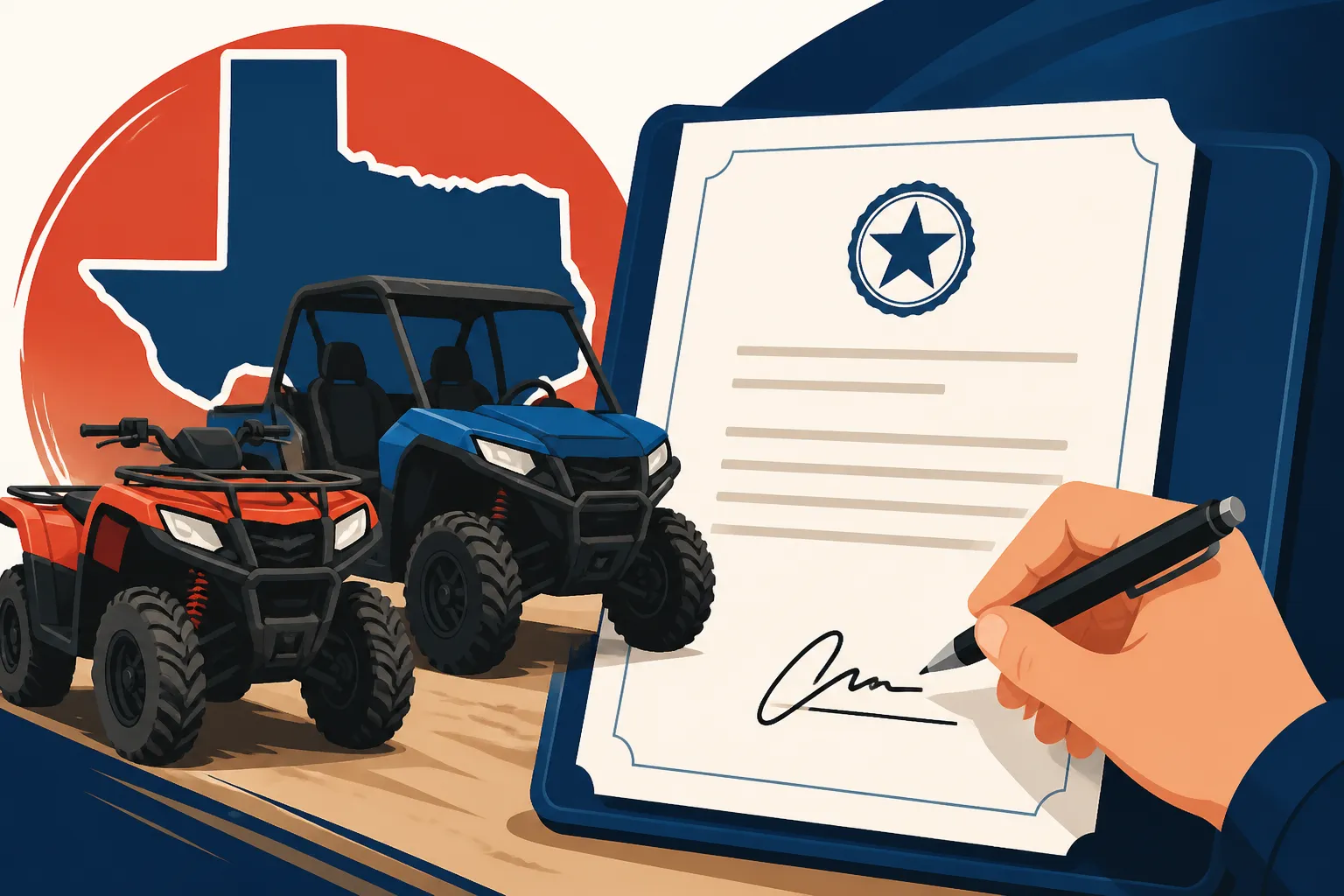
Now for the actual signing! Turn your title over and locate the "Assignment of Title" or "Seller's Signature" section. There will be a specific line or box for the "Seller's Signature." You need to sign your name exactly as it appears on the front of the title. If your name is "John A. Doe" on the title, don't sign "J. Allen Doe." Consistency is key! If there are multiple owners listed on the title, each owner must sign in their designated spot. For example, if it says "John Doe OR Jane Doe," either one can sign. If it says "John Doe AND Jane Doe," then both signatures are required. You might find a spot for the buyer's signature and printed name on the same side; make sure they fill this out clearly as well.
It's absolutely critical that you do not sign the title until you have received full payment for your OHV and both you and the buyer have agreed on all aspects of the sale. Once you sign and hand over that title, you've effectively transferred ownership, even if the buyer hasn't yet completed their part at the county office. This is also why having a comprehensive [A Texas Bill of Sale for an ATV] is so important—it details the exact terms of the exchange, protecting you in case of disputes.
Handing Over the Signed Title and Other Documents
Once the title is signed by all necessary parties, and you've confirmed payment, you'll hand the original, signed title over to the buyer. This is their golden ticket to establishing legal ownership. But don't stop there! Also provide them with the original [Texas Bill of Sale for an ATV] that you both signed. If there was a lien on the machine, you must also provide the original lien release document from the lienholder. Without this, the buyer won't be able to title the OHV in their name.
Before the buyer drives off into the sunset with their new machine, take a moment for yourself. Snap a photo of the front and back of the signed title for your personal records. Do the same for the bill of sale. This documentation can be invaluable if there are any future questions about the date of sale or the transfer of liability. While the ultimate responsibility for transferring the title at the county tax office falls on the buyer, providing them with all the correct paperwork and understanding the next steps they need to take, such as completing [The Texas Title Application Every OHV Buyer Files], can make the process smoother for everyone involved.
Common Pitfalls and How to Avoid Them When Signing an OHV Title
The process of signing an OHV title in Texas, while seemingly simple, is ripe for small errors that can lead to big headaches. Understanding these common mistakes and how to proactively avoid them will save you immense time and frustration.
Mistakes to Avoid During the Signing Process
One of the most frequent errors sellers make is signing in the wrong spot. I've heard stories of sellers accidentally signing in the buyer's section, or even worse, the lienholder release section. Double-check before you mark anything! Another major pitfall is making any alterations, such as scratching out information or using white-out. The Texas Department of Motor Vehicles and county tax offices are very strict about pristine titles; any perceived alteration can immediately invalidate the title, requiring you to get a replacement before the transfer can proceed. This means more fees, more waiting, and a frustrated buyer.
Also, be sure to fill in all the necessary fields completely. Leaving blanks, especially for the buyer's name or address, can cause delays. Remember the point about multiple owners? If "John Doe AND Jane Doe" are on the title, and only John signs, the title transfer will be rejected. Both registered owners must sign. Finally, while it seems obvious, verify the buyer's identity and ensure the details they provide for the title application (name, address) match their identification. Any discrepancy can stall the process, which is why a robust [Texas Bill of Sale Template Requirements] can provide another layer of defense against errors.
What Happens After You Sign: Seller's Responsibilities
Once you've signed the title and handed it over, your legal ownership intention has been transferred. However, your involvement isn't entirely over. While the primary responsibility for completing the title transfer with the county lies with the buyer, it's in your best interest to ensure that the sale is properly recorded. You can do this by keeping a detailed record of the sale yourself, including copies of the signed title and bill of sale.
Some sellers choose to file a Vehicle Transfer Notification (Form VTR-346) with the Texas Department of Motor Vehicles, although this is more commonly associated with on-road vehicles. For OHVs, simply having clear documentation of the sale date and buyer's information is usually sufficient for your protection. It essentially serves as proof that you no longer own the machine should it be involved in an incident after the sale. Encouraging the buyer to promptly complete the title transfer at their local [Titling at a Texas County Tax Office] is also a good practice, as it finalizes the change of ownership in the state's records.
Addressing Specific Situations
Life isn't always straightforward, and sometimes you encounter unique situations when selling an OHV. What if your title has a lien on it? This is a crucial step to address before you sell. You must obtain a formal [Releasing a Lien Before a Sale] document from the lienholder (the bank or finance company) stating that the loan has been paid off and they no longer have a claim on the vehicle. This document must be given to the buyer along with the signed title. Without it, the buyer cannot get a clear title in their name.
Another common scenario is a lost title. You simply cannot sell an OHV without a valid title. If you've misplaced yours, you'll need to apply for a [Replacing a Lost Texas OHV Title] through the Texas Department of Motor Vehicles before you can proceed with the sale. This process can take some time, so plan accordingly. In all these situations, clear communication with your buyer and diligence in preparing all documentation are paramount. Utilizing reliable resources, such as LawDepot for generating precise [Texas ATV Bill of Sale Template Requirements] or other legal forms, can significantly help in navigating these complexities and ensuring a legally sound transaction. Before any money changes hands, it's also a good idea for the buyer to perform their due diligence, like [Checking a VIN Before a Texas Purchase] to ensure the machine hasn't been reported stolen or has a hidden lien.
Here's a quick summary of key responsibilities:
| Responsibility | Seller's Role | Buyer's Role |
|---|---|---|
| Title Signature | Signs the "Assignment of Title" section accurately. | Verifies seller's signature and fills in their info. |
| Documents Provided | Original signed title, bill of sale, lien release. | Receives all original documents. |
| Payment | Receives full payment. | Provides full payment. |
| Bill of Sale | Provides and signs a bill of sale. | Receives and signs a bill of sale. |
| Lien Release | Obtains and provides original lien release (if any). | Verifies and receives original lien release (if any). |
| Transfer Completion | No longer legally owns the vehicle once signed. | Responsible for filing title transfer at county. |
| Records | Keeps copies of signed title and bill of sale. | Keeps all original documents. |
Disclaimer
This article is for general informational purposes only and does not constitute professional advice. Laws, prices and regulations vary by location and change over time. Consult a qualified professional for guidance on your specific situation.