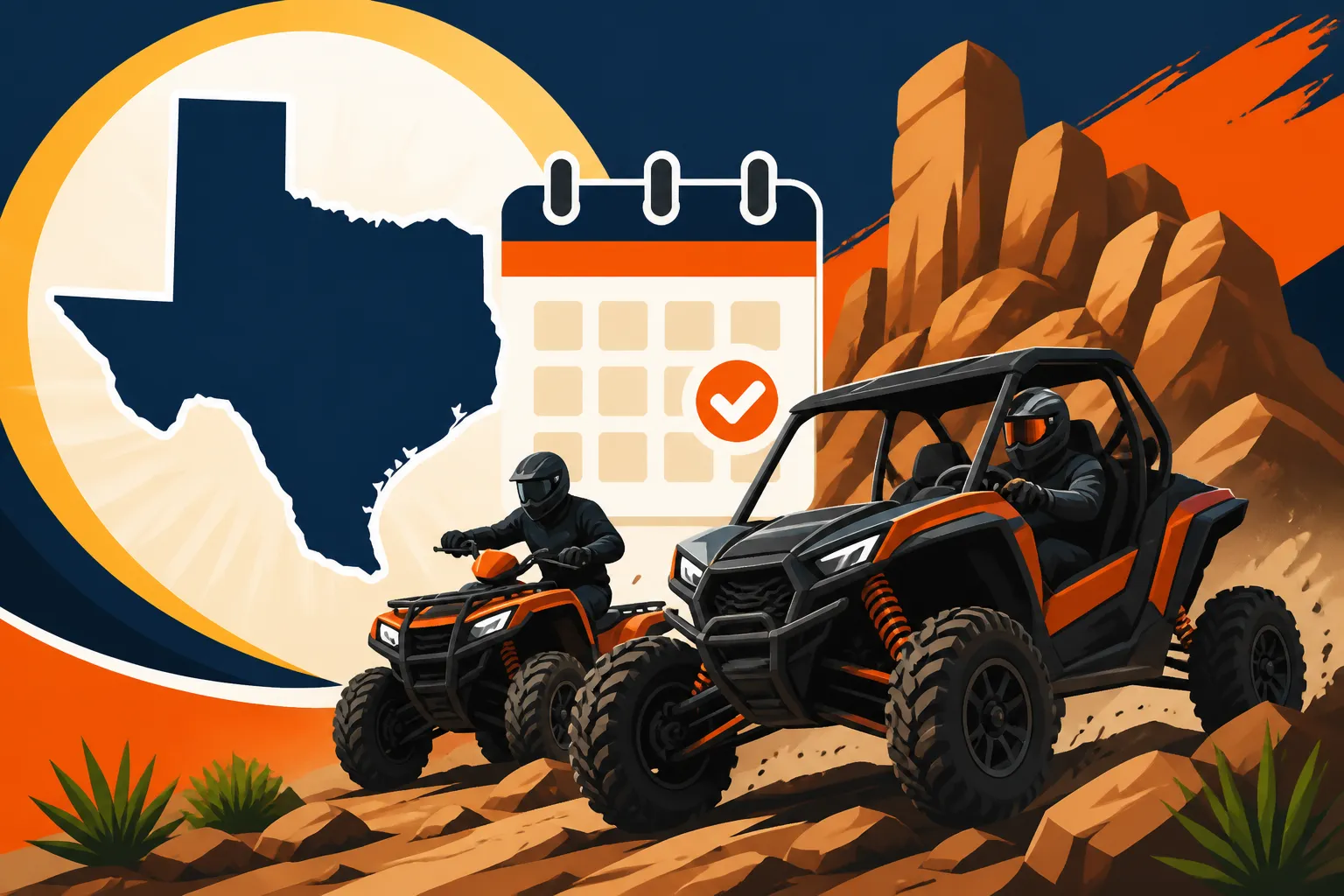
Katemcy Rocks and Its Scheduled Dates
Katemcy Rocks is not the kind of riding area you should assume is open whenever the weather looks good. Its access is tied to scheduled dates, and a long drive to Mason County can turn into a frustrating trip if you arrive without confirming the event, entry rules, or vehicle requirements. This guide explains how to plan a visit and prepare for the terrain.
How Katemcy Rocks’ scheduled dates work
Why the calendar matters
Katemcy Rocks is a private off-road riding area in Mason County, known for rugged granite terrain. Unlike a public trail system that may have regular operating hours, access can depend on designated ride dates or organized events. That means a date appearing in an old post, a rider’s photo, or a third-party calendar is not enough to assume the property will be open.
Before making plans, confirm the date directly through the park’s official information or event organizer. Check whether the date is open to the public, whether advance arrangements are needed, and whether there are limits on the type of machine or riding group. If a weekend is listed as an event, find out whether it is a general ride, a private gathering, or an activity with its own registration process.
This scheduling can be inconvenient, especially if you are coordinating several people, a trailer, lodging, and time off work. But it is also useful to think of the date as part of the admission plan, not just a detail on the calendar. Keep a copy of the confirmation and any instructions you receive so the whole group knows where to go and what to expect.
What to confirm before committing to a trip
A scheduled date can answer only one question: whether riding may be available then. It does not automatically settle the details of entry. Before you leave home, confirm the arrival window, check-in process, property access directions, payment arrangements, waiver requirements, and whether camping or overnight parking is permitted. Ask whether your exact machine type is allowed if you are bringing a side-by-side, full-size four-wheel-drive vehicle, dirt bike, or a mix of machines.
It is also worth checking whether a date has changed or been canceled. Weather and trail conditions can affect access, and rocky ground does not make every route safe after rain. A quick confirmation close to departure can prevent the particular disappointment of towing several hours only to find that the schedule or conditions have shifted.
For background on how an open date differs from a scheduled ride, see [Katemcy Rocks on an Open Date]. If you are comparing it with other destinations, [Texas OHV Parks by Region] can help you think through the broader range of riding options around the state.
Planning the drive to Mason County
Build the route around the park’s instructions
Katemcy Rocks is in the Mason area, west of the Austin region and within the wider Hill Country and Edwards Plateau landscape. Your navigation app may get you close, but private-property access can involve a specific entrance, gate, or approach route. Use the directions supplied by the park or event organizer rather than assuming that a map pin tells the whole story.
Before the trip, save the route and the important contact details somewhere you can reach without reliable mobile service. A paper note or downloaded map can be useful if your phone loses reception, especially when you are coordinating several vehicles. onX Offroad can help you plan and review off-road routes, but use it as a planning aid—not as proof that a road or track is open to the public. The property’s current instructions take priority.
If you are traveling with a group, share the same route and meeting point with every driver. It is easy for a convoy to split when one vehicle follows a different navigation app or stops for fuel. Agree on a regrouping point before entering the area, and avoid blocking gates or narrow roads while waiting for someone to catch up.
Plan the logistics as carefully as the ride
Mason and nearby communities can be practical places to think about fuel, food, lodging, and supplies, but do not assume every service will be close to the entrance or open at the hour you need it. Identify a fuel stop before turning onto rural roads, and top off when it makes sense for your vehicle. Carry water and basic food so a delayed arrival or a longer-than-planned day does not leave your group scrambling.
If you are staying overnight, verify the available arrangements directly. Do not assume that a scheduled ride includes a campsite, a cabin, or permission to sleep in your vehicle. Ask about the location of permitted camping, restroom access, quiet hours, and whether your reservation covers the whole group or only the person who made it.
For a longer outing, a route-planning app such as onX Offroad can help you organize your approach and keep relevant map information available offline. Still, download maps before leaving dependable service, and do not rely on a phone as your only navigation or communication tool. A printed route, charged power bank, and a clear plan for regrouping are simple backups that can make a remote ride feel much less stressful.
Understanding the terrain and choosing a suitable machine
Granite is beautiful, but it changes the ride
The granite slabs around Katemcy Rocks are a major part of the area’s appeal. They also create a very different ride from a sandy trail or a broad, smooth forest road. Rock ledges, uneven surfaces, exposed stone, and changing traction can demand slower, more deliberate driving. A route that looks manageable from a distance may involve a steep approach, a tight turn, or a drop that feels quite different from the driver’s seat.
Take time to assess an obstacle before attempting it. Walk the line when it is safe and permitted, look for a spotter, and agree on simple signals before the vehicle moves. Avoid letting a passenger stand in a potential roll or slide path. If a line feels beyond the ability of the driver or the vehicle, choosing a different route is good judgment—not a failure to make the most of the park.
The terrain also makes damage prevention part of trip planning. Tire sidewalls, underbody components, steering parts, and wheels may be exposed to sharp edges or hard impacts. Check your machine before the trip and again after a challenging section. If your group is new to rocky terrain, take time to learn the park’s route ratings and ask about easier options rather than treating the most difficult-looking obstacle as the main attraction.
For a closer look at the area’s surface and riding character, read [Granite Slabs in Mason County]. To compare how terrain difficulty can vary between destinations, [Texas Trail Difficulty by Park] is a useful companion.
Match the vehicle to the group and the routes
A capable vehicle is not automatically a suitable vehicle for every route. Consider ground clearance, wheelbase, tire condition, turning room, protective equipment, and the experience of the driver. A modified machine may handle some obstacles well but still be awkward in tight spaces. Conversely, a stock vehicle may be perfectly enjoyable if the group chooses routes that suit it.
If you are bringing a full-size rig, ask specifically whether it is allowed on the scheduled date and which areas are appropriate for its width and turning radius. Do not rely on a general statement that the park welcomes off-road vehicles; verify fit for your particular machine and intended route. [Texas OHV Parks That Allow Full-Size Rigs] can help you compare the considerations involved in taking a larger vehicle to Texas riding areas.
The same careful approach applies to youth riders and passengers. Confirm age and supervision rules, seat capacity, and whether the machine is designed for the number of people riding in it. A child who is comfortable on a wide, level trail may feel overwhelmed by a rough climb or exposed rock. Plan a ride that lets the youngest or least experienced person participate safely, rather than expecting them to keep up with the most confident driver.
| Planning question | What to confirm | Why it matters |
|---|---|---|
| Is the property open on your date? | Official calendar or direct confirmation | Scheduled access may not mean everyday access |
| Is your vehicle permitted? | Vehicle type, dimensions, and any event limits | Side-by-sides and full-size rigs may have different needs |
| What are the entry arrangements? | Check-in, payment, waivers, and arrival window | Prevents confusion at a private entrance |
| Are overnight stays allowed? | Camping or lodging options and any reservation details | A ride date does not automatically include overnight access |
| What are conditions like? | Weather, closures, and route status | Rain or changing conditions can affect safe travel |
| What should you carry? | Recovery gear, water, tools, and navigation backup | Rocky terrain and rural travel reward preparation |
Preparing for a safe day on the rocks
Inspect the machine and recovery gear
Start with the basics: tires, wheels, brakes, steering, fluids, battery connections, and lights. Look for cuts or bulges in tire sidewalls and check that the spare, if you carry one, is usable. Tighten or inspect components according to the vehicle manufacturer’s guidance, particularly if the machine has recently taken a hard hit or has been used on rough terrain.
Bring recovery equipment appropriate to your vehicle and make sure someone in the group knows how to use it. A strap, winch, or other gear is only helpful when it is in good condition and used safely. Identify suitable recovery points before the ride, keep people clear of loaded straps and cables, and do not improvise with parts that are not designed for recovery. If your group is inexperienced, ask the event organizer what equipment is expected and whether recovery assistance is available.
Pack drinking water, basic tools, a first-aid kit, a tire repair option suitable for your machine, and a charged phone or radio if your group uses one. Store items so they will not become loose during a steep climb or sudden stop. It is also sensible to share a simple plan: who is leading, who is sweeping, and what everyone should do if a vehicle becomes separated from the group.
Treat weather and trail conditions as part of the schedule
A scheduled ride does not guarantee that every route will be suitable on the day. Rain can change traction, obscure hazards, and make certain areas unsafe or unavailable. Check the forecast for the property and the route you will drive to reach it, then contact the organizer if conditions are uncertain. A dry-looking forecast at home may not reflect conditions in Mason County.
Heat deserves equal attention. Long hours in a vehicle, physical spotting, and repeated climbs can leave riders tired before they notice how much water they have lost. Carry more water than you expect to need, take breaks in the shade when available, and be willing to shorten the day if someone is becoming fatigued. [Texas Riding Seasons and Heat] offers more context for planning around hot-weather riding, while [Texas Trails After Heavy Rain] explains why wet conditions can affect a ride even when the terrain is rocky.
Use onX Offroad or another navigation tool to help keep your group oriented, but remember that a map cannot tell you whether a route is currently open, safe, or authorized for your vehicle. Respect signs, barriers, staff directions, and any route closures. Staying on approved routes helps protect the property and keeps a challenging day from becoming a recovery problem—or a trespass issue.
Rules, equipment, and a smoother visit
Check both Texas requirements and park-specific rules
Riding on private property does not mean every rule disappears. The property may set its own requirements for entry, helmets, passengers, speed, vehicle condition, alcohol, fires, pets, and route use. Read the instructions for your scheduled date, and ask questions before arrival if anything is unclear. A park’s rules may be more specific than a general description of Texas riding laws.
Requirements can also depend on where you ride. Rules for a private off-road property are not identical to rules for public land or a public road. If your itinerary includes a public trail or other public riding area, check the applicable requirements separately. For example, [The Texas OHV Decal Explained] covers the decal question, and [Texas OHV Safety Certificates] provides context on rider certification. Do not assume that a requirement for one type of land automatically applies—or does not apply—to another.
Bring any documents or proof the organizer requests, and make sure every driver understands the rules before unloading. If your group includes younger riders, confirm the supervision and age expectations ahead of time. Clear expectations are especially helpful when several families are sharing a weekend: it avoids trying to sort out a waiver, helmet, or passenger question at the gate.
Set expectations for the group
A good group ride is not a race to the hardest obstacle. Talk about the pace, the skill range, and how the group will handle a section that one vehicle cannot or should not attempt. Let a driver decline an obstacle without pressure, and make sure the group knows where to wait so no one feels compelled to rush.
Agree on practical signals and spacing. Leave room between vehicles on climbs, avoid stopping where another driver may need momentum, and keep spectators well away from moving machines. A spotter should stay visible to the driver while standing in a safe location, and the driver should stop if they lose sight of that spotter. If a maneuver is not going as planned, pause and reassess rather than adding throttle in frustration.
After the ride, inspect the vehicles and account for everyone before leaving the property. Check for loose equipment, new tire damage, fluid leaks, or anything that could become a roadside issue on the drive home. If you are staying overnight, follow the property’s instructions for parking and quiet hours. A little care at the end of the day helps protect the access that makes these scheduled rides possible in the first place.
A practical Katemcy Rocks planning checklist
In the days before your ride
Start by confirming the date, access details, and vehicle eligibility. Save the organizer’s directions and contact information, then verify the route and any overnight arrangements. Check the weather and ask about closures or conditions if rain is in the forecast. If you are coordinating a group, send one shared plan rather than relying on everyone to interpret separate messages.
Next, prepare the machine and the people riding in it. Inspect tires and safety-critical components, pack recovery equipment, and make sure each driver understands the vehicle’s limits. Gather water, food, protective gear, first-aid supplies, and any requested documents. Download the maps you need before the trip, and bring a backup way to navigate if cell service is limited.
If you are still deciding whether the date and terrain suit your group, compare this visit with other destinations and riding styles. [Texas OHV Parks With Camping] may help if overnight logistics matter, while [Texas Parks That Require Helmets at All Times] is relevant when you are comparing park-specific safety expectations.
On arrival and during the ride
Follow the check-in process and stay within the routes the organizer identifies as open. Ask about current trail conditions before heading out, especially if the weather has changed. Keep the group together without crowding, use a spotter when needed, and take breaks before fatigue affects decision-making.
The best Katemcy Rocks trip is one that fits your group’s skills and leaves everyone wanting to ride again. Confirming the schedule, respecting the property rules, and choosing routes thoughtfully can make the day far more enjoyable than arriving with an overconfident plan and no room to adjust.
Disclaimer
This article is for general informational purposes only and does not constitute professional advice. Laws, prices and regulations vary by location and change over time. Consult a qualified professional for guidance on your specific situation.