What Texas Counts as an Off-Highway Vehicle
Texas Transportation Code Chapter 663 defines off-highway vehicles, explaining rules for state titles, plates, and riding locations.
Start here, or nothing else is legal.
Resident registration, titling and renewal, and public-use versus private-land fees — plus the age and safety-course rules that decide who may ride.

Texas Transportation Code Chapter 663 defines off-highway vehicles, explaining rules for state titles, plates, and riding locations.

Purchasing a used ATV or UTV in Texas requires understanding state titles and OHV decals instead of standard car registration.
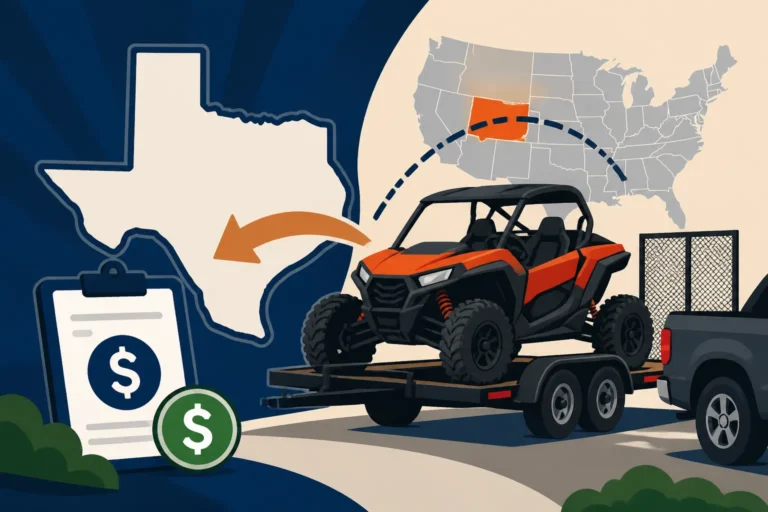
Texas use tax rules for out-of-state off-highway vehicles require buyers to pay taxes when bringing ATVs and UTVs into the state.

Texas off-highway vehicle plates act as permanent identification markers and never expire, unlike standard vehicle registrations.

The Texas title application process for off-highway vehicles explains how buyers properly file Form 130-U at the county office.

The Texas off-highway vehicle license plate explains ownership and title tracking without granting general road access for your ATV or UTV.
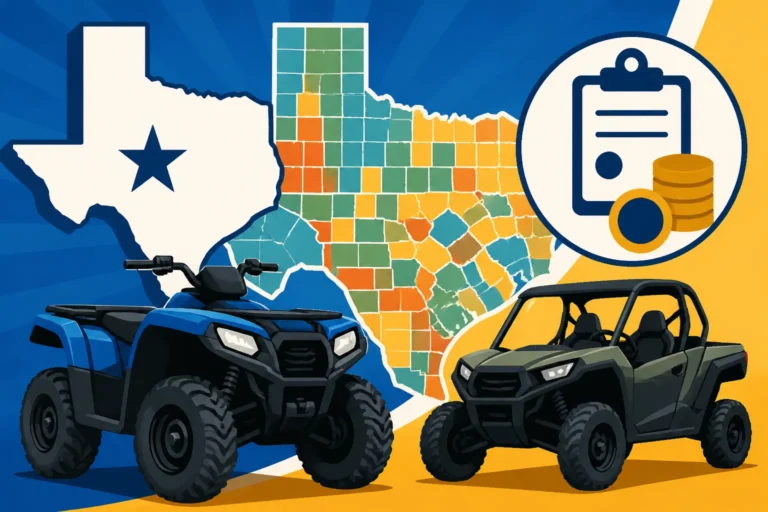
Texas ATV title fees vary by county because local tax assessor-collector offices set independent administrative charges.
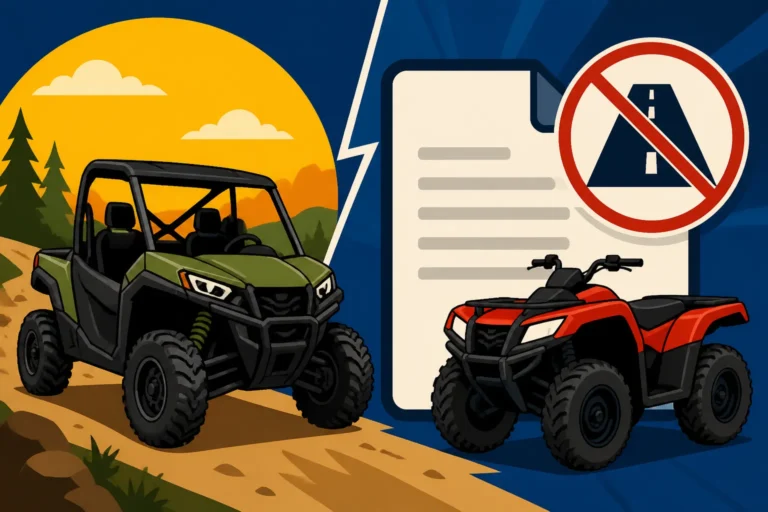
The Texas Transportation Code Chapter 551 requires an off highway use only remark on ATV and UTV titles, restricting road operation.
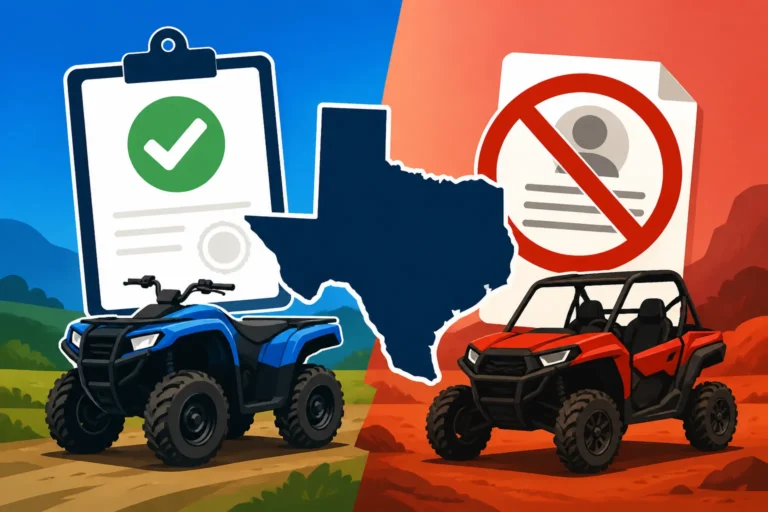
Texas off-highway vehicle laws explain why ATVs and UTVs require ownership titles but never receive traditional road registration.

Texas ATV titling laws establish legal ownership, prevent theft, and clarify off-highway vehicle rules without requiring traditional road registration.