Texas OHV Parks With Electric Hookups
A long ride is easier to enjoy when you can plug in at camp, keep the fridge cold, and avoid relying on a generator after dark. In Texas, electric hookups at OHV parks are limited and may be available only at certain campsites. This guide covers the main parks to check, how to choose a site, and what to confirm before you tow out.
Texas OHV parks to check for electric hookups
For riders looking to camp close to their trails, Barnwell Mountain Recreation Area near Gilmer and Hidden Falls Adventure Park near Marble Falls are two leading places to investigate. Both pair off-road riding with camping options, but the exact hookup type, site availability, and reservation rules can vary. Confirm the details with the park before making plans.
Barnwell Mountain Recreation Area near Gilmer
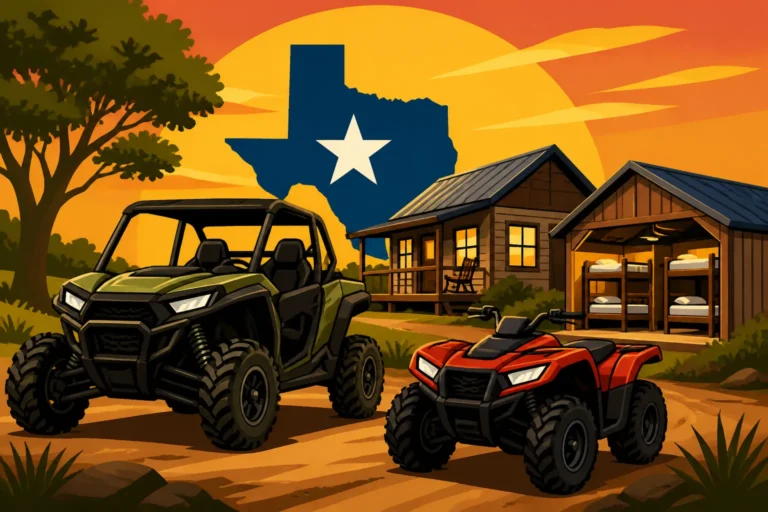
Barnwell Mountain Recreation Area is a popular destination in East Texas, with trail terrain that ranges from wooded routes to rocky sections. Its camping options include electric hookup sites, making it a strong candidate if you want to park your RV near the riding area and recharge devices or run compatible campsite equipment without depending entirely on a generator.
The important detail is that “electric hookup” does not necessarily mean every site has the same service. Before choosing a site, ask what electrical connection is available, whether the spot suits your RV, and whether water or sewer is provided at the site or elsewhere in the camping area. A smaller travel trailer and a large motorhome can have very different needs, so mention your rig’s size and power requirements when you contact the park.
Barnwell’s trails and camping can make for a convenient weekend, but plan the riding and overnight stay as two connected parts of the trip. Check the park’s current trail status and camping rules, and bring riding equipment that suits the terrain. For a broader look at the property, see [Barnwell Mountain Recreation Area] and [Camping Options at Barnwell Mountain].
Hidden Falls Adventure Park near Marble Falls
Hidden Falls Adventure Park, in the Texas Hill Country near Marble Falls, is another place to check when electric service is part of your camping plan. The park offers off-road riding and camping, but don’t assume that every camping option has the same hookup arrangement. Ask whether the specific site you’re considering has electricity and what other utilities, if any, come with it.
The Hill Country setting makes it especially worthwhile to plan for changing conditions. A hot weekend can put extra demand on an RV’s cooling system, while a wet stretch can affect trail conditions. Confirm both campsite details and riding access before you leave home. If your group includes different machines or experience levels, review the park’s trail options and requirements in advance rather than choosing routes on the fly.
For more trip-planning context, see [Hidden Falls Adventure Park at Marble Falls] and [Camping Overnight at Hidden Falls]. The park’s own information is the best place to confirm the current campsite setup, booking process, and any restrictions that could affect your visit.
| Park | Area | Why it may suit a hookup-focused trip | What to confirm |
|---|---|---|---|
| Barnwell Mountain Recreation Area | Near Gilmer in East Texas | Electric hookup camping is available among its camping options | Connection type, site dimensions, utilities, and availability |
| Hidden Falls Adventure Park | Near Marble Falls in the Hill Country | Combines off-road riding with camping options to investigate | Which sites have electricity, utility details, and reservation rules |
A hookup listing is only a starting point. Ask the park whether electricity is included at the campsite itself, whether the site can accommodate your vehicle, and whether you need to reserve camping separately from riding access.
How to choose an electric campsite for an ATV or UTV weekend
An electric site can make a multi-day trip more comfortable, but the wrong site can create its own hassle. The best choice depends on your RV or trailer, how much power you use, and whether you want the campsite to be close to the trails or simply close enough to make the trip convenient.
Match the hookup to your RV
Before booking, check the electrical connection your RV uses and ask the park what the site provides. Don’t rely on a general listing that just says “electric.” A connection may not match your rig, and the campsite may have limits on vehicle length, parking, or the number of vehicles.
Think through your usual power use, too. A family running air conditioning, cooking appliances, chargers, and a refrigerator may need a different setup from someone charging a phone and using a few lights. If you typically use an adapter, bring the right equipment and make sure it is suitable for your setup. Avoid assuming a standard household outlet will support high-demand RV appliances.
Ask about the site’s layout as well. Will your trailer fit without blocking access? Is there room to unload the ATV or UTV and park a tow vehicle? Are the electrical connection and parking area positioned in a way that works with your rig? Those small logistics are easy to overlook until you arrive after a long drive.
Check the reservation and riding rules together
Camping and riding may involve separate reservations, fees, permits, or check-in steps. Ask whether booking a campsite includes riding access or whether those arrangements are handled separately. Confirm the arrival window, where to check in, and what happens if you arrive after the office closes.
Then review the rules for the specific park and the machines in your group. Requirements can vary by property and riding area. For wider context on riding in Texas, read [Texas OHV Parks With Camping] and [Texas Rules for Riding Public Land]. If you’re visiting a forest trail or another public riding area rather than a private OHV park, don’t assume the same camping or riding arrangements apply.
If you use a navigation app to plan routes, treat it as a planning aid—not as permission to ride. onX Offroad can help you review mapped riding areas and plan around your route, but always follow the land manager’s current rules, posted signs, and trail closures. It’s especially helpful to agree on a meeting spot before the group splits up, since riders may have different comfort levels or phone reception.
What to bring when your campsite has electricity
Electricity can simplify camp life, but it won’t solve every problem on an off-road trip. A little preparation helps prevent the familiar scramble of discovering that an extension cord is too short, a charger is missing, or your riding gear is still covered in mud when it’s time to head home.
Pack for power, heat, and trail cleanup
Bring the cords, adapters, and charging equipment that match your RV and the site’s confirmed connection. Keep those items together in a dry storage bin so they don’t get buried under helmets, tie-downs, or recovery gear. If you have a portable power station or generator as backup, check the park’s rules on its use and placement before relying on it.
Texas weather also deserves a place on your packing list. In warm conditions, plan for plenty of drinking water, shade, and a way to keep food safely stored. After a dusty or muddy ride, you may want towels, a brush, and bags for wet clothing and gear. Electricity is useful for charging devices and running compatible equipment, but it does not replace basic heat and hydration planning.
Keep campsite electrical equipment away from standing water, mud, and vehicle traffic. Route cords where people won’t trip over them and where tires won’t crush them. If anything looks damaged or the connection seems unsafe, stop and ask the campground staff for guidance rather than improvising with a questionable setup.
Prepare for trail navigation and group communication
Download maps or other trip information before leaving reliable service. Mobile coverage can be uneven in rural riding areas, so don’t assume every rider can reach the group by phone. Share the campsite location, the day’s plan, and an agreed return time. Carry a paper map or another backup navigation option if that suits your group.
onX Offroad may help you look over an area and plan a route before the ride, but map lines are not a substitute for posted trail signs or park staff instructions. Trail access can change with weather, maintenance, or land-management decisions. Check the latest park guidance when you arrive, and keep the group on authorized routes.
If children or less-experienced riders are coming along, keep the day’s plan manageable. Agree on a simple turnaround point, make sure everyone knows how to regroup, and carry water and basic supplies on the machine. A convenient electric campsite makes it easier to settle in afterward, but thoughtful riding plans are what help keep the day comfortable and safe.
If on-site electric camping is unavailable
Hookup sites can be limited, especially on busy weekends. If the park’s electric sites are full—or the available sites don’t fit your rig—you may still be able to ride by staying elsewhere and towing your machine to the park. That option takes more coordination, but it can open up additional lodging choices.
Compare nearby camping with staying at the park
A private RV park or campground in the surrounding area may offer electric service even when the OHV park’s own sites are booked. Before choosing one, check the driving distance to the trail entrance, the campground’s vehicle and trailer rules, and whether it has a suitable place to park your machine or trailer. A nearby site is not necessarily convenient if it adds a long tow each morning.
Ask whether the campground allows ATV or UTV trailers, whether there is room to turn around, and whether machines must be secured in a particular area. Also check whether you can store muddy gear outside or rinse equipment on the property. These details matter when you’re returning from a ride and don’t want to track dirt through the RV.
If you’re considering another riding destination, compare the camping setup as carefully as the trails. [Texas OHV Parks With Electric Hookups] is a useful topic to revisit as you narrow down options, while [Texas OHV Parks Near Austin] may help if your group is planning around a central Texas starting point. Confirm campsite amenities with the campground directly; a general directory listing may not explain what a specific site provides.
Use a pre-trip checklist before you book
A quick call or message can save you from arriving with the wrong expectations. Ask these questions before confirming your stay:
- Which specific campsites have electric hookups?
- What connection does the site provide, and will it work with your RV?
- Are water and sewer available at the site or elsewhere?
- Will your RV, tow vehicle, and machine trailer fit together?
- Does the camping reservation include riding access, or is that separate?
- What are the check-in times, cancellation rules, and arrival instructions?
- Are generators allowed, and are there restrictions on their use?
- Are trails or camping areas affected by weather or maintenance?
Keep the answers with your reservation details and share the important ones with everyone traveling in your group. If you use onX Offroad or another navigation tool, save your route information before departure and still verify access rules with the park. A little confirmation beforehand makes it much easier to focus on the reason you planned the trip: riding, relaxing at camp, and getting home without a preventable surprise.
Disclaimer
This article is for general informational purposes only and does not constitute professional advice. Laws, prices and regulations vary by location and change over time. Consult a qualified professional for guidance on your specific situation.