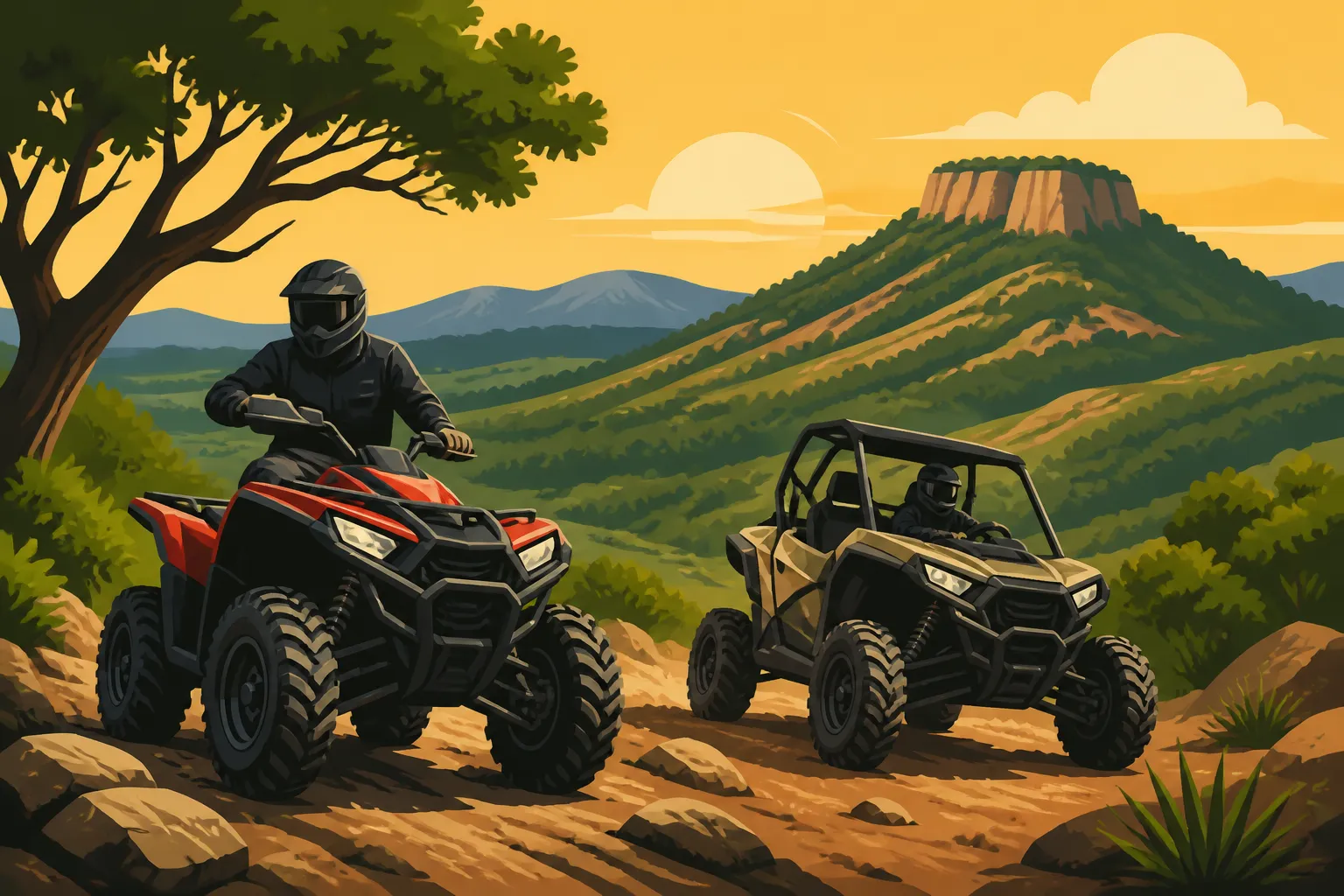
Barnwell Mountain’s 1,850 Acres
Barnwell Mountain’s 1,850 acres sound like a lot of room to roam, but acreage alone won’t tell you whether the trails suit your machine, your experience, or your weekend plans. This guide explains what the East Texas riding area is like, how to prepare for its terrain, and what to check before loading up and heading toward Gilmer.
What Barnwell Mountain’s 1,850 Acres Really Mean
A large property is not one continuous trail
Barnwell Mountain Recreation Area sits near Gilmer in Upshur County, in the Piney Woods of East Texas. Its 1,850 acres describe the broader recreation property, not a promise that every acre is an open, easy-to-follow riding route. The rideable experience is shaped by designated trails, connections, terrain, and any temporary closures or restrictions in effect when you visit.
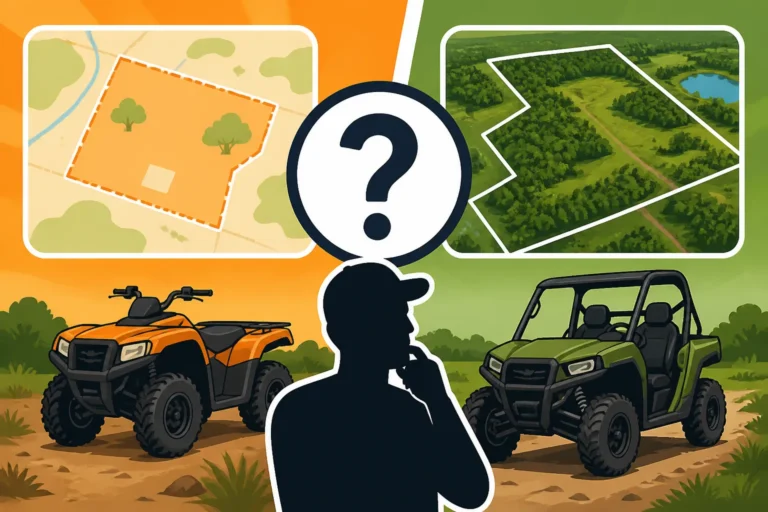
That distinction matters when you’re planning with a mixed group. A newer rider may picture a broad, forgiving loop, while an experienced driver may hope for rock features and tight, technical sections. Both expectations can fit within a large off-road park, but they don’t necessarily describe the same route. Think of the acreage as the setting for a network of riding options rather than one enormous trail.
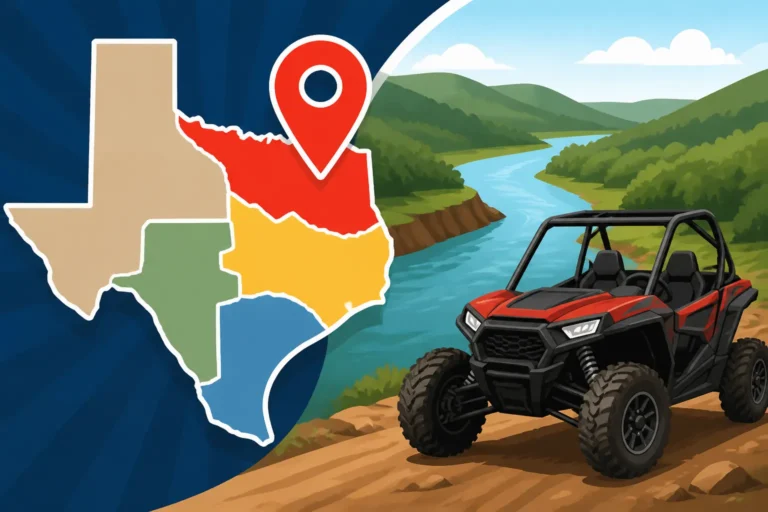
For a broader look at what the state offers, [Texas OHV Parks by Region] can help you compare Barnwell Mountain with riding areas in other parts of Texas. And if you’re deciding whether to make the trip from farther away, [Texas Riding Areas Worth a Weekend] puts the practical question in context: how much time do you want to spend traveling, riding, and recovering before the drive home?
East Texas terrain changes the riding experience
The Piney Woods feel different from the open, dry landscapes many riders associate with West Texas. Trees, shaded stretches, changing ground conditions, and uneven surfaces can make it harder to see far ahead. Trails may feel narrower than a wide-open field, and a turn can hide a feature or a change in footing until you’re close to it.
Rain adds another layer. A route that feels manageable on firm ground may become slick, muddy, or difficult to climb after wet weather. Even experienced riders can find that familiar-looking trails demand slower decisions when the surface has changed. Before setting out, check the park’s own trail status and access notices rather than assuming that a trail you rode on a previous visit is open and in the same condition.
Planning tools such as onX Offroad can help you review route information and orient yourself before a trip. Treat any map as a planning aid, not a replacement for the park’s official signs, directions, or closures. The most useful approach is to know the route options before you start, then adjust based on posted guidance and what you encounter on the ground.
Why the listed acreage should not dictate your day’s route
A common planning mistake is to imagine that a big property automatically means a full day of unrestricted exploring. In practice, your ride may be shaped by your group’s pace, the route choices available to your vehicle, weather, daylight, and how often you stop. A rider learning to navigate rocky terrain may cover less ground than someone cruising familiar routes, even if both spend the same number of hours on the property.
It’s also worth distinguishing between “there’s a lot to ride” and “every trail is appropriate for everyone.” Technical features can take time to assess, and a group may need to wait while a rider chooses a line or gets assistance. If your goal is to see as much of the park as possible, rushing from one section to another can turn a fun day into a tiring one.
Set a realistic goal instead. You might plan a shorter first outing to get familiar with the trail layout, then return for a longer visit after you know how your machine and group handle the terrain. For more detail on riding in the region, [Texas OHV Parks Near Dallas] and [Texas OHV Parks Near Houston] can help riders from those metro areas compare travel plans and nearby alternatives.
Choosing Trails for Your ATV or UTV
Match the route to the least experienced rider
The best route for a group is rarely the one that suits only its most confident driver. A technically demanding trail can be exciting for one person and stressful for another, especially if the less-experienced rider feels pressured to keep up. Agree in advance that the group will choose routes appropriate for the least experienced rider, and make it easy for anyone to ask for a pause or a change of plan.
If your group has children or first-time riders, talk through basic expectations before the engines start. Stay together where appropriate, leave room between vehicles, and avoid encouraging someone to tackle an obstacle just because another rider made it through. A cautious approach is not a failure; it’s how you keep a day enjoyable and reduce the chance of a preventable breakdown or injury.
A beginner-friendly outing can still be memorable. Give newer riders time to practice smooth throttle control, braking, and reading the trail. If they’re comfortable, they’ll be more likely to enjoy progressively challenging routes on another visit. The overview at [Texas OHV Parks for Beginners] is also useful when comparing parks based on how approachable a first trip may feel.
Check machine fit, width, and trail conditions
ATVs and UTVs don’t always fit the same way on every trail. A wider side-by-side may need more room to turn and pass through obstacles than a quad, while a compact machine may have different limits on steep or uneven ground. Before you go, review Barnwell Mountain’s vehicle rules and any trail-specific restrictions. Don’t rely on a friend’s description of a route without checking whether it applies to your particular machine.
Width is especially worth considering if your plans include other Texas riding areas. The Sam Houston National Forest OHV trail, for example, has a width restriction that can affect which machines may use it. Barnwell Mountain and a national forest trail are not interchangeable experiences, so check each property’s rules independently. [Texas's 50-Inch National Forest Width Limit] explains why a machine that works for one destination may not be allowed on another.
Your machine’s condition matters as much as its size. Check the tires, brakes, throttle, steering, fluids, battery, and protective equipment before the trip. On a UTV, inspect seat belts and confirm that every passenger has a manufacturer-designed seat. If you’re buying gear or changing equipment for a particular route, don’t assume an accessory makes a machine suitable for every trail; the park’s rules and the machine manufacturer’s guidance still matter.
Use maps as a supplement, not as trail permission
Trail maps are handy for getting a sense of the park before arrival, but a line on a screen doesn’t necessarily tell you the trail’s current condition, difficulty, or permitted vehicle type. Use the official information provided by the recreation area as your primary reference. A map app, including onX Offroad, can offer a helpful way to review your plan and stay oriented, but it should not override a closure sign or a posted instruction.
Before your first ride, identify the trailhead or starting point, review the map legend, and make sure everyone knows how to regroup if the group becomes separated. Keep a phone charged, but don’t build your whole plan around having reliable cell service in wooded or remote areas. If the park provides specific navigation guidance, follow it even if your preferred app shows a different route.
A simple practice helps: stop at a junction, check the posted information, and make the next decision together. That brief pause is safer than having riders make separate assumptions and discover later that they have split up. For additional route-planning considerations, [Texas Trail Difficulty by Park] can help you think about how riding conditions and skill levels affect a day on the trail.
| Planning question | Why it matters at Barnwell Mountain | What to do |
|---|---|---|
| Is the route open? | Conditions and closures can change | Check official park updates before riding |
| Does it suit the group? | Riders may have different skill levels | Choose for the least experienced rider |
| Does it fit the machine? | ATVs and UTVs differ in width and handling | Review vehicle and trail rules |
| Has the weather changed the ground? | Wet conditions can make trails more difficult | Reassess after rain and follow closures |
| Can everyone navigate the plan? | Wooded trails and junctions can be confusing | Review maps and agree on regrouping points |
Preparing for a Barnwell Mountain Riding Day
Check access information before you leave
Park rules, access arrangements, and trail conditions are the details most likely to disrupt a trip if you assume rather than check. Before loading, confirm that the area will be open to your group, review current visitor information, and note any requirements for riders, machines, or equipment. If you are traveling with a large group or bringing a less common vehicle, ask the park directly whether your plans fit its current rules.
This step is especially helpful for first-time visitors. People often spend time planning the drive and packing gear, then discover at the entrance that they misunderstood a requirement. A quick review of official information can prevent a long drive from ending in confusion. Keep the park’s contact details available, and share the key access information with everyone in the group rather than relying on one person to remember it.
Texas riding areas can also have separate decal, permit, or land-use requirements. Don’t assume that a decal or pass used at one property automatically covers another. [The Texas OHV Decal Explained] gives an overview of the state decal, while [Texas Rules for Riding Public Land] can help clarify why access requirements depend on the land and its rules. Check Barnwell Mountain’s own instructions for what applies to your visit.
Pack for the ride and the return trip
Bring the items that help you manage ordinary problems without turning a small inconvenience into an emergency. That usually means water, appropriate riding gear, a basic first-aid kit, a charged phone, and tools or supplies suited to your machine. If you’re riding with a UTV, think about storage and passenger comfort; if you’re on an ATV, secure essentials so they won’t shift or interfere with controls.
In East Texas, a shaded trail can still be physically demanding. Wear protective clothing that suits the weather and terrain, and plan to take breaks before riders become exhausted. Fatigue can make it harder to judge an obstacle, control speed, or keep track of the group. A water plan is particularly important when the day is warm, when you’re riding for several hours, or when the group includes children.
Prepare for the trip home, too. Bring tie-downs that fit your trailer and machine, check that the tow vehicle is ready, and leave enough time to load safely. Mud and dust can travel home with you, so carrying a tarp or basic cleanup supplies may save frustration at the end of the day. A little preparation turns the return trip from an afterthought into part of the plan.
Make a plan for groups and changing conditions
Agree on a few simple group rules before setting out. Decide who leads and who stays at the back, how often the group will regroup, and what to do if someone has a mechanical problem. Keep the group moving at a pace where riders can see one another without crowding. If a rider stops, communicate clearly so the next person does not approach an obstacle or turn without knowing what is happening.
Weather should influence your decisions once you’re on site, not just during the drive. After rain, reassess whether your planned routes still make sense. If a trail is closed, avoid trying to get around the barrier or find an unofficial bypass. A closure may protect riders, the trail surface, or both. Stick to open routes and be willing to shorten the day if conditions or fatigue make continuing a poor choice.
For multi-day visits, think about where you’ll sleep, eat, and store equipment, and confirm those details through the park’s current information. [Texas OHV Parks With Camping] can help you compare the broader camping picture across the state. If your group expects to ride more than once in a season, [Texas Park Memberships Versus Day Rates] may also help you understand the kinds of visit options parks can offer; check Barnwell Mountain for its own current arrangements.
Riding Responsibly on the Property
Respect signs, closures, and other riders
A designated trail system works best when riders stick to marked routes and follow posted instructions. Leaving a route to bypass a difficult section can create new damage, confuse other visitors, or put riders somewhere they aren’t meant to be. If a section feels beyond your group’s ability, turn around where it is safe to do so or choose an appropriate open route instead of improvising a shortcut.
Keep speed appropriate to visibility and traffic. Trees and bends can limit sight lines, and a rider coming the other way may not have room to avoid a fast-moving machine. Slow down near junctions, give other riders space, and avoid stopping in a spot where someone approaching from behind may not see you in time. Courteous trail behavior is a practical safety measure, not just good manners.
Noise and litter are also part of responsible riding. Use the machine as intended, follow the park’s sound and equipment rules, and pack out what you bring in. A small piece of trash can be easy to overlook at the end of a tiring day, so do a final check of your parking and staging area before leaving.
Know the difference between park riding and road riding
A ride inside an off-road recreation area does not make an ATV or UTV street legal. Texas has specific rules and limited exceptions for some road use, and those rules are separate from permission to ride on a designated off-road trail. Don’t leave the park and assume that lights, mirrors, a plate, or a short distance on a road make a machine legal for general road travel.
If you are planning to ride between a parking area and another destination, verify the route and its legal status before leaving private property or a designated trail. The rules can depend on the road, location, and circumstances. [Street Legal ATVs in Texas: The Short Answer] explains why equipment modifications alone do not settle the question, while [Texas Rules for Getting Across a Road] covers a narrow situation that is different from riding along a public road.
The simplest trip plan is to transport the machine to the riding area and keep the ride within the permitted property. If your visit involves a special road-use exception, confirm every condition before relying on it. A park outing is more enjoyable when you don’t have to guess whether the next stretch is legal.
Treat a difficult obstacle as a choice, not a dare
Rocky, steep, muddy, or uneven sections can tempt riders to keep going because they have already made the trip. That pressure is understandable, especially when a group is watching, but it can lead people to attempt an obstacle that doesn’t match their experience or machine. Pause, assess the route, and decide whether turning around is the safer choice.
If someone gets stuck or has a minor problem, keep the rest of the group in a safe position while one or two people help. Avoid standing directly in a machine’s path or placing hands near moving parts. Use recovery equipment only if you know how to use it safely, and follow the equipment manufacturer’s instructions. When a situation exceeds your group’s ability, seek help through the park’s appropriate process rather than taking a risky guess.
Good trail judgment includes knowing when to stop. A successful ride is not measured by the hardest obstacle attempted or the largest portion of the acreage covered. It’s a day when the group finishes in good shape, the machines are ready for the trip home, and everyone would be glad to ride again.
Deciding Whether Barnwell Mountain Fits Your Trip
It may suit riders looking for a wooded East Texas setting
Barnwell Mountain can be a compelling choice if you want to ride in a wooded East Texas environment and explore a designated off-road area near Gilmer. The acreage gives the property room for varied riding experiences, but your individual day will depend on route selection, weather, machine fit, group ability, and current access information.
It may be less suitable for a visitor who expects every trail to be easy, dry, or open regardless of recent weather. Riders who want a particular type of experience should check the park’s current trail details rather than making a decision from the acreage figure alone. That is particularly important for a group bringing both ATVs and wider UTVs, or riders with a wide range of experience.
If you’re comparing destinations, [Best Places to Ride an ATV in Texas] can help you consider other options alongside Barnwell Mountain. The right park is the one that fits your location, machine, riding ability, and expectations—not simply the one with the biggest-sounding number.
A first visit is easier with modest expectations
For a first trip, plan enough time to get oriented and avoid packing the schedule so tightly that every delay feels like a problem. Start with the official map and rules, take note of where you enter and park, and agree on how the group will communicate. Give newer riders time to settle in before moving to more challenging terrain.
A modest plan also makes it easier to respond to conditions. If rain has changed the surface, if a rider is tired, or if a route is closed, you can adapt without feeling that the whole trip has failed. You might ride fewer trails than expected and still leave with a useful understanding of the property and a list of routes to explore next time.
Before you head out, check current park information, prepare the machine and safety gear, and make sure everyone understands the plan. Those simple steps turn Barnwell Mountain’s 1,850 acres from an abstract number into a more manageable riding day—one shaped by the terrain, your group, and the choices you make on the trail.
Disclaimer
This article is for general informational purposes only and does not constitute professional advice. Laws, prices and regulations vary by location and change over time. Consult a qualified professional for guidance on your specific situation.