Which Gulf Beaches Stay Open to Vehicles
The lure of the Texas Gulf Coast, with its vast stretches of sand and rhythmic waves, is undeniable, especially when you dream of cruising along the shoreline in your ATV or UTV. However, the reality of where you can actually take your off-highway vehicle (OHV) on a Texas beach can be a confusing maze of state laws, county ordinances, and city regulations. This guide is here to untangle that web for you, helping you understand which Gulf beaches in Texas are generally open to vehicles, what conditions apply, and what you need to know before you load up your rig.
The Evolving Landscape of Texas Beach Access for Vehicles
For many of us who love the outdoors, the idea of driving right onto a beach, setting up camp, or finding that perfect fishing spot without hauling gear across miles of sand is a dream come true. Texas has a long history of allowing vehicles on its beautiful Gulf Coast, a tradition deeply embedded in the culture of beach-going here. But just like anything else, things change, and what was once a free-for-all has evolved into a more structured, and sometimes restricted, experience.
Why Beach Driving is Such a Hot Topic
The romance of beach driving is easy to understand. Imagine pulling your side-by-side right up to the water's edge on a quiet morning, casting your line, and enjoying the sunrise. Or, for the more adventurous, navigating softer sands, looking for that secluded spot to unwind. For families, having the vehicle close by makes hauling coolers, chairs, and kids' toys a breeze. It's about convenience, access to less-trafficked areas, and the unique freedom that comes with driving on nature's open road.
However, this freedom comes with its challenges and criticisms. As Texas coastal populations grow and environmental awareness increases, the impact of vehicles on fragile ecosystems becomes a focal point. Concerns about nesting sea turtles, shorebirds, dune preservation, and general pedestrian safety often lead to calls for tighter restrictions or outright bans. Local communities grapple with balancing public access and enjoyment with conservation efforts and the desire to maintain peaceful, family-friendly beach environments. This constant push and pull means that rules are always under review, and what holds true one year might change the next.
The Legal Framework Governing Beach Access
Understanding where you can drive on a Texas beach with your OHV starts with knowing the legal layers. It’s not just one blanket rule for the entire 367 miles of coastline. Instead, it's a intricate tapestry woven from state statutes, county commissioners' court orders, and individual city ordinances.
At the state level, Texas has the Open Beaches Act, which generally guarantees public access to the "wet beach" – the area from the line of mean low tide to the line of vegetation. This means you can walk, run, and enjoy these areas. However, "public access" does not automatically translate to "public vehicle access." The state empowers counties and cities to manage vehicle traffic on their respective stretches of beach, primarily for safety and environmental protection. This is why you'll find such varied rules as you travel from one coastal town to another. A county might allow driving, but a city within that county could have its own, stricter ban. It's crucial to remember that your OHV is subject to these varying local rules, and many areas that permit "vehicles" are primarily referring to street-legal automobiles, not necessarily ATVs or UTVs, unless specifically designated.
Understanding What "Open to Vehicles" Really Means
When you hear that a Texas Gulf beach is "open to vehicles," it's easy to imagine wide-open stretches where you can drive anywhere, anytime. The reality is usually more nuanced. "Open to vehicles" rarely means "unrestricted driving," especially for specialized machines like ATVs and UTVs.
Permitted Access vs. Unrestricted Driving
Even on beaches that do allow vehicles, there are almost always rules of the road, so to speak. You might encounter posted speed limits, often quite low (think 15-20 mph), designed to protect pedestrians and wildlife. Some beaches designate specific lanes or areas for driving, keeping vehicles off sensitive dunes or away from high-density swimming areas. Time restrictions can also apply, such as daylight-only driving or bans during certain seasons (like sea turtle nesting).
A common feature of vehicle-friendly beaches along the Texas coast is the requirement for a beach permit. These permits are typically issued by the county or city that manages the beach and serve multiple purposes. They help fund beach maintenance, provide a way to track vehicle numbers, and act as a visual identifier that you're authorized to be there. You'll often see these stickers proudly displayed on windshields. For most ATVs and UTVs, if the beach allows them at all, you'll still need to secure one of these permits, displaying it prominently on your machine. Without one, even if you’re on an otherwise vehicle-friendly beach, you could face a fine. [Texas Beach Driving License Requirement] touches on the need for a license, but remember, the permit is for the vehicle's presence on the sand.
Key Factors Influencing Beach Vehicle Rules
Several major factors weigh heavily on whether a beach allows vehicles, and what kind. These considerations explain why rules can differ so dramatically just a few miles down the coast.
- Environmental Sensitivity: Texas beaches are vital habitats. Sea turtles use them for nesting, and countless species of shorebirds forage and nest in the sandy expanses and delicate dune systems. Vehicle traffic, especially off-road use, can disturb these animals, crush nests, and damage fragile vegetation that stabilizes the coastline. Areas with significant environmental concerns are often the first to see vehicle restrictions or bans. You can imagine the frustration of preparing your rig, maybe even equipping it with some heavy-duty accessories from SuperATV for a rough ride, only to find the very stretch of beach you hoped to explore is now off-limits due to nesting season.
- Safety and Crowding: Picture a packed beach on a holiday weekend, teeming with families, children playing, and sunbathers. Introducing vehicles, particularly fast-moving or less-visible OHVs, into such an environment poses a significant safety risk. Beaches with high pedestrian traffic, or those hosting major events like concerts or festivals, are almost always designated as pedestrian-only zones, at least for those specific times or areas.
- Local Control: This is perhaps the biggest variable. Texas law gives a good deal of autonomy to counties and cities to manage their beachfronts. A county might declare all unincorporated beaches open to vehicles with a permit, but then a city like Galveston, located within that county, can pass its own ordinance banning vehicles from its city-managed beaches. This patchwork of regulations means you can't just assume uniform access across the entire coast. It's always a good idea to check the specific city or county website before heading out.
Navigating Specific Texas Gulf Beaches with Your ATV/UTV
Now that we understand the underlying principles, let's talk about specific places. While rules can and do change, here's a general overview of some popular Texas Gulf beaches and their typical vehicle access policies. Remember, the best policy is always to verify with local authorities (county or city parks and recreation, or tax assessor's office) before you load up your machine.
Popular Beaches Where Vehicle Access is Often Allowed (with Permits/Rules)
These are the stretches of sand where you're most likely to find vehicles, including sometimes ATVs and UTVs, provided you follow the rules and secure the necessary permits.
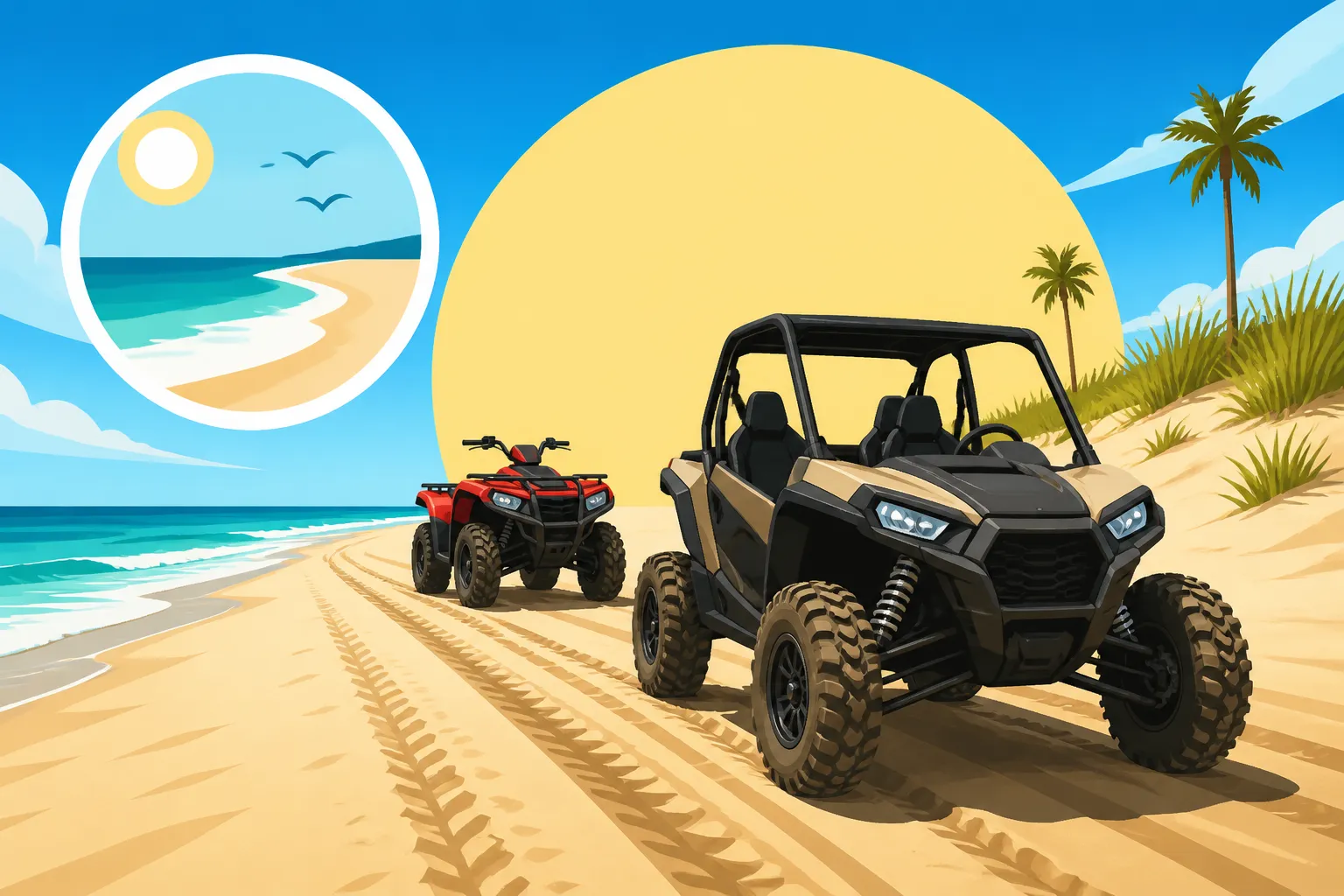
- Bolivar Peninsula (Galveston County): This is one of the most well-known vehicle-friendly beaches in Texas. Stretching from High Island almost to Galveston's ferry landing, Bolivar offers long, wide beaches. Vehicle access is generally allowed, and it's a popular spot for camping, fishing, and general beach enjoyment with your vehicle. A beach parking sticker (permit) is required and can typically be purchased at local convenience stores or online through Galveston County. While four-wheel-drive trucks are common, ATVs and UTVs often share the sand, especially outside the busiest areas. Just be mindful of other beachgoers and respect posted speed limits.
- Brazoria County Beaches (e.g., Quintana Beach, Bryan Beach): South of Galveston, Brazoria County also offers several beaches that typically allow vehicle access with a permit. Quintana Beach County Park and Bryan Beach are good examples. These areas are known for fishing and birdwatching, and having your vehicle on the sand can be a real convenience. Like Bolivar, a county-issued permit is usually required. Check the Brazoria County Parks Department for the latest information on specific beach access points and permit requirements.
- Matagorda Bay Area (Matagorda County): Further down the coast, Matagorda offers some incredibly remote and pristine beaches, particularly east of the Colorado River mouth. These long, undeveloped stretches are fantastic for self-contained camping and exploring. Vehicle access is generally allowed, and you'll often find dedicated off-road enthusiasts here. Be prepared for softer sand in some areas; having a good recovery kit is highly recommended. A Matagorda County beach permit is typically required.
- Port Aransas/Mustang Island (Nueces County): This is another iconic Texas beach destination that embraces vehicle access. The beaches along Mustang Island, including much of the Port Aransas beachfront, generally allow vehicles with a city- or county-issued permit. These permits are usually inexpensive and valid for the calendar year, available at numerous local retail outlets. While 4×4 trucks are prevalent, UTVs can also be found. However, be aware that very specific rules might apply to ATVs, especially within Port Aransas city limits, where some areas are heavily pedestrianized. Always look for signage. [Texas Rules for Riding a Quad on Sand] apply here, and airing down your tires is a smart move.
- Padre Island National Seashore (PINS): This unique federal park offers some of the most extensive stretches of undeveloped beach in Texas. While vehicles are allowed on the 60-mile stretch of beach south of the Yarborough Pass, it's primarily intended for street-legal 4×4 vehicles. ATVs and UTVs are generally not permitted for general recreational driving within the National Seashore's vehicle access areas, as they are considered off-road vehicles. This is a critical distinction. PINS is about experiencing wilderness in a 4×4, not an OHV playground. There are specific rules for camping and accessing certain parts, and you'll need to pay the National Seashore entrance fee. Always check the official National Park Service website for the most current and detailed regulations before planning a trip here.
Beaches With Strict Restrictions or Bans on Vehicle Driving
Some of Texas's most popular tourist beaches have either highly restricted or outright banned vehicle traffic to prioritize pedestrian use and safety.
- Galveston Island (City of Galveston sections): While Bolivar Peninsula (in Galveston County) is vehicle-friendly, much of Galveston Island itself, particularly within the City of Galveston's managed beachfront areas (e.g., Seawall beaches, Stewart Beach, East Beach), has strict vehicle prohibitions. These areas are designed for swimming, sunbathing, and traditional beach activities, making vehicles a safety hazard. You will not be able to drive your ATV or UTV on most of these city-managed Galveston beaches.
- South Padre Island (City of South Padre Island sections): Similarly, the highly developed areas of South Padre Island, particularly within the city limits, generally prohibit private vehicle driving on the beach. This is a densely populated tourist destination with resorts and many pedestrians. You might see beach patrol vehicles or concessionaire trucks, but personal vehicles, especially OHVs, are not welcome on most of the main city beaches. Heading north of the city limits, past public access #5, the rules become more relaxed, and vehicle driving (often 4x4s, not necessarily OHVs) is generally allowed in the unincorporated county sections of Padre Island.
- Corpus Christi Beaches (within city limits): Certain beaches within the Corpus Christi city limits, particularly those close to residential areas or popular parks, may have restrictions or bans on vehicle access. Always check local signage and the City of Corpus Christi Parks and Recreation Department's rules.
Always Check Local Ordinances Before You Go
Seriously, I cannot stress this enough: rules change, and interpretations vary. A blog post or even a quick search online can give you a general idea, but the definitive source for current beach driving regulations is always the specific county or city's official website. Look for sections on "beach permits," "beach access rules," "beach ordinances," or "parks and recreation." A quick phone call to the county sheriff's office or city hall can also clear up any confusion. It's far better to spend a few minutes researching than to drive for hours only to be turned away, or worse, get a ticket for illegal beach driving. [Texas Cities That Ban ATVs on the Beach] is a good resource for understanding which municipal areas are generally off-limits.
Essential Considerations for Beach Driving in Texas
So, you've found a beach that welcomes vehicles, and you're ready to roll. Before you hit the sand, there are a few more critical details to keep in mind to ensure your trip is safe, legal, and enjoyable.
Understanding Beach Permits and Fees
As mentioned, many coastal counties and cities require a permit to drive on their beaches. Think of it like a day-use fee or an annual pass for a park, but specifically for beach access.
| Location Category | Typical Access | Permit Required? | General Fee Shape | Where to Buy |
|---|---|---|---|---|
| Bolivar Peninsula | Vehicles generally allowed | Yes | Low annual fee | Local convenience stores, online (Galveston County) |
| Brazoria County Beaches | Vehicles generally allowed | Yes | Low annual fee | Local stores, county park offices |
| Matagorda County Beaches | Vehicles generally allowed | Yes | Low annual fee | Local stores, county park offices |
| Port Aransas/Mustang Island | Vehicles generally allowed | Yes | Low annual fee | Local convenience stores, city park offices |
| Galveston Island (City) | Mostly banned, very limited | N/A | N/A (no access) | N/A |
| South Padre Island (City) | Mostly banned, very limited | N/A | N/A (no access) | N/A |
| Padre Island National Seashore | 4x4s allowed, OHVs generally not | Park Entrance Fee | Standard federal park fee | Entrance gate, online (NPS) |
These permits are usually quite affordable, often just a few dollars for an annual sticker that's good for the calendar year. They are typically placed on your vehicle's windshield or, for an ATV/UTV, a visible spot on the fender or dash. The money collected usually goes directly back into beach maintenance, trash removal, and ensuring facilities like restrooms and access points are kept up. Carrying your driver's license is also a must, as [Texas Beach Driving License Requirement] means you're operating a vehicle in a public area.
Responsible Riding and Safety on the Sand
Driving on sand is different from pavement or even dirt trails. It requires a different approach and heightened awareness.
- Air Down Your Tires: This is perhaps the most crucial tip for sand driving. Reducing your tire pressure (often to 15-20 PSI for trucks, consult your OHV manual for sand pressure) significantly increases your tire's footprint, providing better floatation and traction on soft sand. Don't forget to reinflate your tires once you're back on solid ground.
- Awareness of Tides and Soft Sand: The Texas coast has relatively gentle tides, but they are still a factor. Always be aware of the tide schedule, especially if you venture further out or plan to camp. Getting stuck as the tide comes in can ruin your day quickly. Also, different sections of the beach will have varying sand conditions – soft, dry sand higher up the beach can be a challenge, while the wetter, packed sand closer to the water is often easier to drive on. Avoid going too close to the water's edge where waves can hit your engine or electronics.
- Respecting Wildlife and Dunes: The dunes, even small ones, are critical for coastal protection and habitat. Never drive on or through them. Stick to the designated driving areas. Be vigilant for wildlife, especially nesting birds or turtles, and give them a wide berth. [Texas Rules for Riding a Beach] covers a lot of these general etiquette guidelines.
- General Beach Etiquette: Keep your speed down, especially around pedestrians. Give plenty of space to other vehicles and beachgoers. Pack out everything you pack in – leaving trash on the beach is not only disrespectful but illegal. If you're using your UTV for hauling, maybe to transport your fishing gear, ensure everything is secured.
- Essential Equipment: A shovel, a sturdy tow strap, and a tire pressure gauge are absolute must-haves for beach driving. A small air compressor to reinflate your tires is also incredibly useful. For longer trips or more remote areas, consider a first-aid kit, extra water, and a way to communicate in case of emergency. Some folks even carry recovery boards.
Vehicle Requirements and Restrictions
While the general rule is "vehicles allowed," specific allowances for ATVs and UTVs are not always explicit. Most Texas beaches that allow "vehicles" are thinking of street-legal passenger cars and trucks. For your ATV or UTV, the situation can be trickier.
- Street-Legal Status: Many Texas beaches require any vehicle driving on them to be street-legal. This is a significant hurdle for most ATVs and UTVs, as Texas has very strict rules about OHVs on public roads. [Are ATVs Street Legal in Texas?] and [Can You Make a UTV Street Legal in Texas?] dive deep into this. Even if you've added turn signals and a horn, it doesn't automatically make your OHV street-legal in Texas, meaning it might still be restricted from public beach access that's open to cars. Some counties and cities make specific exceptions for OHVs on beaches, but you need to confirm this.
- Safety Equipment: For any driving, regardless of location, always prioritize safety. While the beach might feel relaxed, helmets are always a wise choice for ATV riders. [Texas Helmet Law for ATV Riders] outlines requirements, and though they might vary on private land or specific beaches, protecting your head is non-negotiable. UTVs typically have seat belts, and wearing them is crucial, especially over uneven sand.
- Spark Arresters and Mufflers: If you're on a beach that's part of a state or federal park system (like Padre Island National Seashore, even with its OHV restrictions), or adjacent to sensitive natural areas, you might find requirements for spark arresters on your exhaust. This is to prevent wildfires from sparks escaping the exhaust, even on a beach. Your stock muffler is usually fine, but loud aftermarket exhausts could attract unwanted attention or violate local noise ordinances.
The beauty of the Texas Gulf Coast is a treasure, and with a little research and responsible planning, you can absolutely enjoy some incredible beach driving experiences with your ATV or UTV. Just remember to respect the rules, the environment, and your fellow beachgoers.
Disclaimer
This article is for general informational purposes only and does not constitute professional advice. Laws, prices and regulations vary by location and change over time. Consult a qualified professional for guidance on your specific situation.